Das Auto

vw beetle

F/5.6, 48.0, ISO 100.

Day 84 / 365

Beetle still puts a big smile on my face.     🙂

Interesting Fact: The Beetle will float: The Beetle may have been inexpensive, but it was never cheap. Gaps were tight and doors sealed well. Additionally, it was a unibody car with a very flat floor with few openings. All of this meant that the car would actually float for at least several minutes after hitting the water before turning into a small U-boat.  ( http://www.hagerty.com/articles-videos/Articles/2013/01/25/Secrets-of-the-Volkswagen-Beetle )

Church, Club, Market, Gym!

Limelight

F/5.6, 1/100, ISO 400.

Day 80 / 365

Amazing building design, and so much history pass through those doors.

Interesting Fact: From 1983 until 2007, the church was utilized as a nightclub, The Limelight. After frequent problems with the police and charges of rampant drug abuse in the club, it was closed, but reopened in 2003 under the name “Avalon”. It closed permanently in 2007.  ( http://en.wikipedia.org/wiki/Church_of_the_Holy_Communion_and_Buildings )

A Foggy Day

fog

F/5.6, 1/500, ISO 900.

Day 69 / 365

Cause you had a foggy day
You sing a sad song just to turn it around and the road is gone.     🙂

Interesting Fact: The presence of fog has often played a key role in historical events, such as strategic battles. One example is the Battle of Long Island (August 27, 1776), when General George Washington and his command were able to escape capture by the British Army by using fog to conceal their location. Another example is D-Day during World War II when the allies landed on the beaches of Normandy, France (June 6, 1944) during fog conditions. Both positive and negative results were reported from both sides during that battle due to fog conditions. ( http://en.wikipedia.org/wiki/Fog )

Making Crepes!

making crepes1

F/ 5.6, 1/250, ISO 320.

Day 63 /365

Yummy. And now they’re gone.

Interesting Fact: A crêpe (pronounced /kreɪp/, French IPA: [kʀɛp]) is a type of very thin, cooked pancake usually made from wheat flour. The word, like the pancake itself, is of French origin, deriving from the Latin crispa, meaning “curled.” While crêpes originate from Brittany, a region in the northwest of France, their consumption is nowadays widespread in France and is considered the national dish. Crêpes can be compared to the African injera, the tortilla, the Indian dosa and the Mexican sope. Crêpes often have a fruit filling of syrup, mixed berries, fresh fruit or lemon cream. ( http://www.excusemyfrench.co.nz/a-little-crepe-history/ )


I Got The Power!!!

batteries

F/5.6, 1/60, ISO 100.

Day 61 / 365

We are energetic and really positive, but we have a negative side.

Interesting Fact:  In 1800 Alessandro Volta invented the first voltaic cell battery. This battery did not look like modern batteries, but still worked the same. ( http://sciencewithkids.com/science-facts/facts-about-batteries.html )

Can You Smell The Flowers!

tulips

F/5.6, 1/60, ISO 100.

Tulips

Day 50 / 365

STOP! Tulips Time.    🙂

Interesting Fact:  During WWII, some people in the Netherlands were forced to eat tulips because there wasn’t any other food. “Bread made from tulips is not very good … like wet sawdust” according to a Dutch man who grew up on a tulip farm during the war. (Also, part of the bulb is poisonous, apparently.) ( http://alloveralbany.com/archive/2011/05/06/20-facts-about-tulips )

Stay Classy!

kodak

F/5.6, 1/80, ISO 100.

Day 42 / 365

“You press the button, we do the rest.”

Interesting Fact: George Eastman and his mother devised the name Kodak with an anagrams set. Eastman said that there were three principal concepts he used in creating the name: it should be short, easy to pronounce, and not resemble any other name or be associated with anything else. ( http://en.wikipedia.org/wiki/Eastman_Kodak )

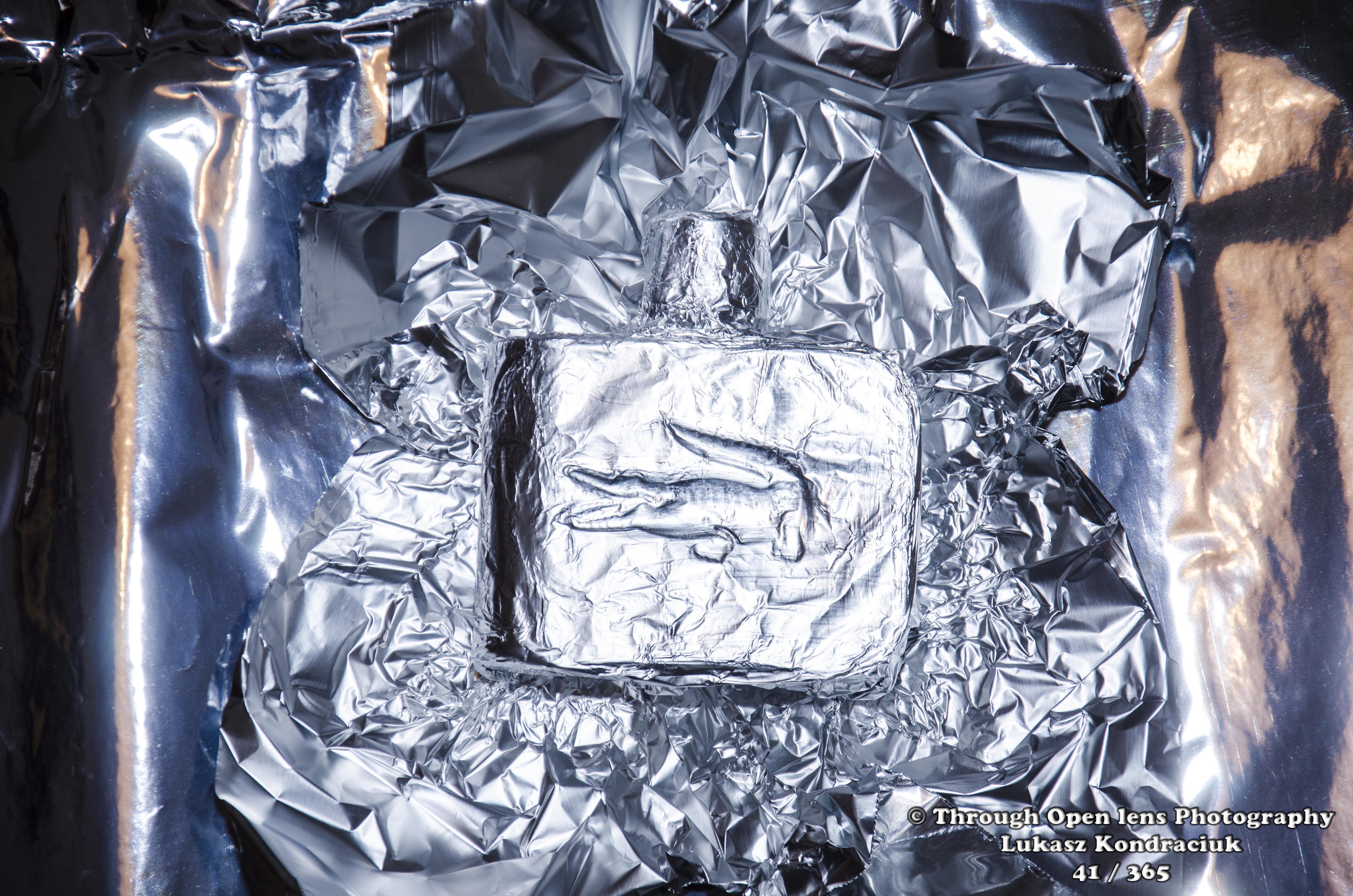
Tin Tin Foil!

Aluminium foil

F/5.6, 1/60, ISO 100.

Day 41 / 365

Fun with Foil.

Interesting Fact: Foil made from a thin leaf of tin was commercially available before its aluminium counterpart. Tin foil was marketed commercially from the late nineteenth into the early twentieth century. The term “tin foil” survives in the English language as a term for the newer aluminium foil. Tin foil is less malleable than aluminium foil and tends to give a slight tin taste to food wrapped in it. Tin foil has been supplanted by aluminium and other materials for wrapping food. ( http://en.wikipedia.org/wiki/Aluminium_foil )

Check this!!!

Devils

F/5.6, 1/250, ISO 450.

Day 34 / 365

You don’t have to be crazy to play hockey but it does help.  🙂

Interesting Fact: The first player to accumulate more than 300 penalty minutes in one season was Philadelphia Flyer Dave “The Hammer” Schultz, who had 348 in 1974. The next year, he had 472 penalty minutes, still the most ever. ( http://www.factmonster.com/ipka/A0771579.html )

Best Way To Escape!

fire escape

F/5.6, 1/500, ISO 320.

Day 31 / 365

Old fire escape wheel looks very interesting…

Interesting Fact: One of the first fire escapes of any type was invented in 18th-century England. In 1784, Daniel Maseres, of England, invented a machine called a fire escape, which, being fastened to the window, would enable him or anyone for that matter, to descend to the street without injury.[citation needed] Abraham Wivell created an improved design, including an escape chute, after becoming superintendent of the “Royal Society for the Protection of Life from Fire.”[2] Henry Vieregg patented the first US fire escape in Grand Island, NE in November 8, 1898 U.S. Patent 614,043, serial number 681,672, which was designed for traveling businessmen. ( http://en.wikipedia.org/wiki/Fire_escape )