Let’s Go For A Little Ride

let's go for a ride

F/29.0, 30.0, ISO 100.

Day 236 /365

A guy walks into a bar and demands to know “Who’s the strongest in here?”
The toughest guy looks at him and says “I am the strongest around here!”
The other guy politely asks “Can you help me push my car to the gas station?”

Interesting Fact:  By 1932, the name fiasco between Horch the man, and Horch the company was water under the bridge. Horch (the company) and Audi entered an agreement along with two other German car manufacturers, DKW and Wanderer, to form Auto Union. The four rings, which Audi still uses today, originally represented the four companies of Auto Union. After the merger, Auto Union became the second biggest car company in Germany after Mercedes-Benz. Each of the companies were allocated a market segment: Horch would build high-end luxury cars, Audi focused on deluxe mid-size cars, Wanderer was put in charge of standard mid-size cars, and DKW was tasked with small cars and motorcycles. ( http://www.carcrushing.com/12-things-didnt-know-audi/)

Park Closes At Dusk!

park bench

F/10.0, 30.0, ISO 100.

Day 245 / 365

I woke up on a park bench and had no idea where I had been

And then I remembered, I’d been to the park

Interesting Fact: The first parks were English deer parks,[citation needed] land set aside for hunting by royalty and the aristocracy in medieval times. They had walls or thick hedges around them to keep game animals (e.g., stags) in and people out. It was strictly forbidden for commoners to hunt animals in these deer parks. ( https://en.wikipedia.org/wiki/Park#History )


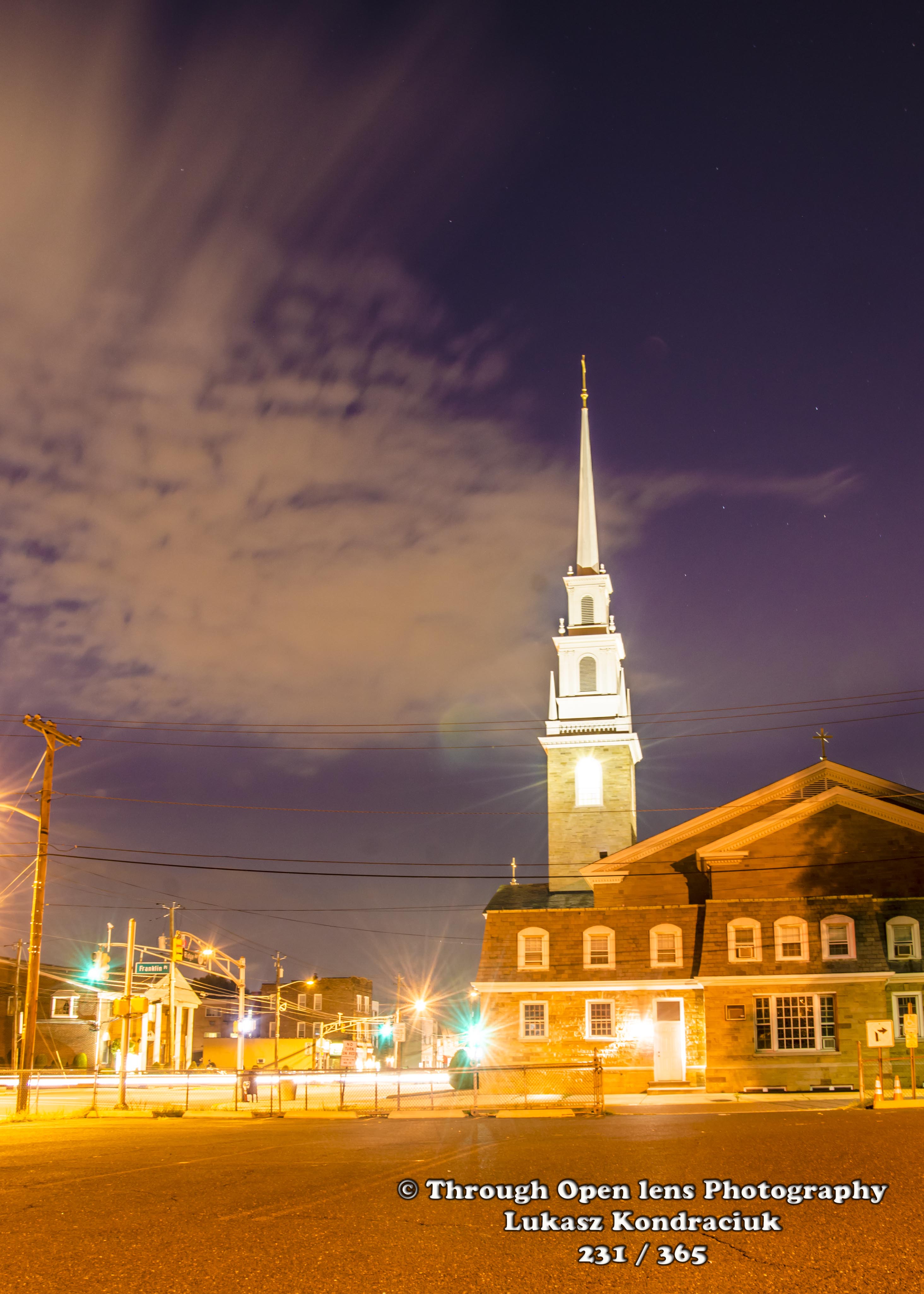
At Night I Can’t Sleep, In The Morning I Can’t Wake Up.

north arlington

F/ 14.0, 30.0, ISO 100.

Day 231 / 365

How can you go without sleep for seven days and not be tired?

Sleep at night.

Interesting Fact: In the early 1900s, a few notable photographers, Alfred Stieglitz and William Fraser, began working at night. The first known female night photographer is Jessie Tarbox Beals. The first photographers known to have produced large bodies of work at night were Brassai and Bill Brandt. In 1932, Brassai published Paris de Nuit, a book of black-and-white photographs of the streets of Paris at night. During World War II, British photographer Brandt took advantage of the black-out conditions to photograph the streets of London by moonlight. ( https://en.wikipedia.org/wiki/Night_photography )

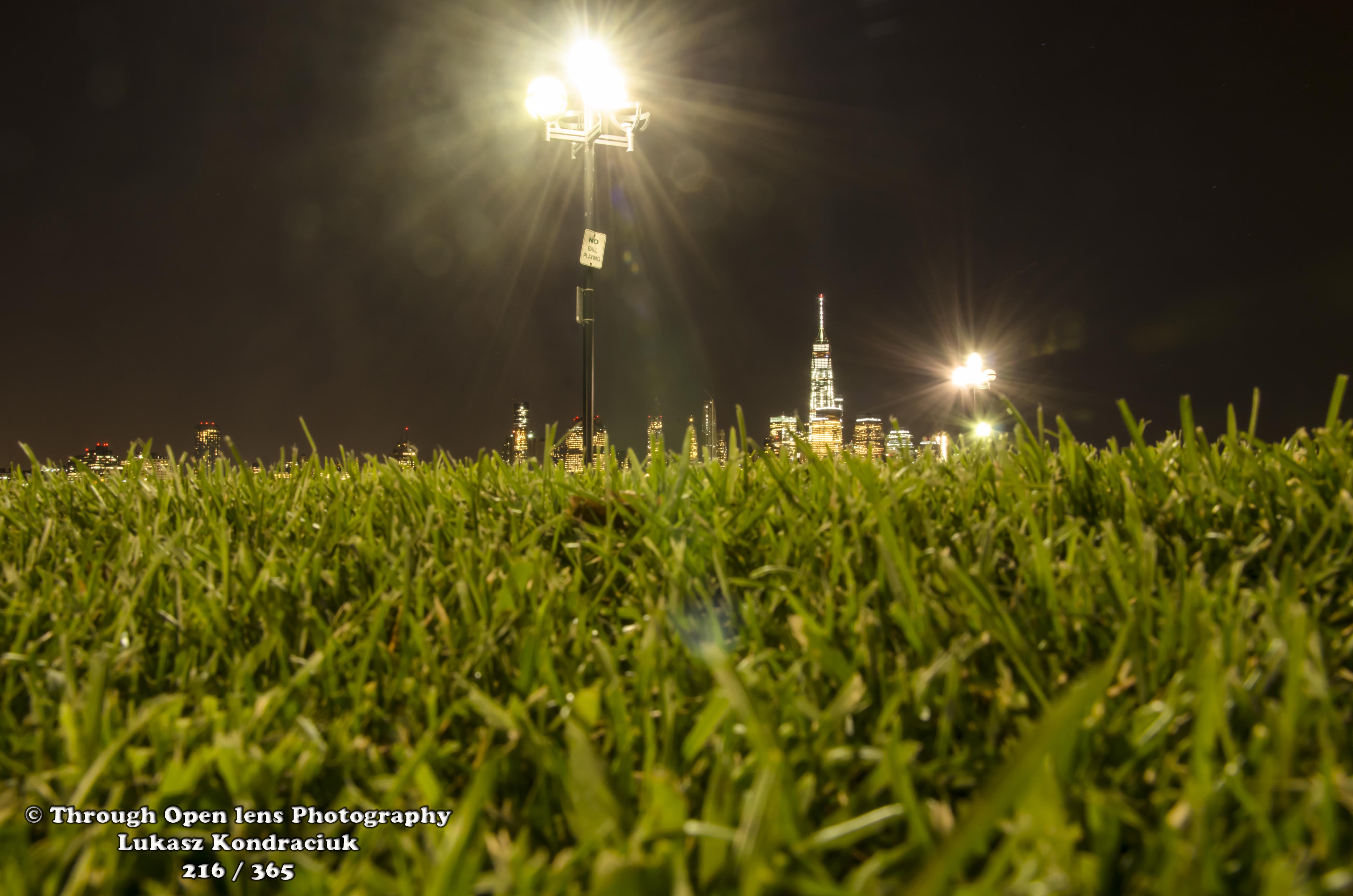
Grass Is Always Greener On The Other Side!

grass nyc

F/22.0, 30.0, ISO 100.

Day 216 / 365

What do you call a cow who works for a gardener?

A lawn moo-er.

Interesting Fact:  There are over 6000 different species of grass in the world; some examples are rice, wheat, corn, oats and sugarcane. Grass is the familiar name given to the family of plants known as the graminae. The sizes vary from short lawn grasses, to as tall as 40m, which is 120 feet. ( http://www.thefactsite.com/2010/08/facts-about-grass.html )

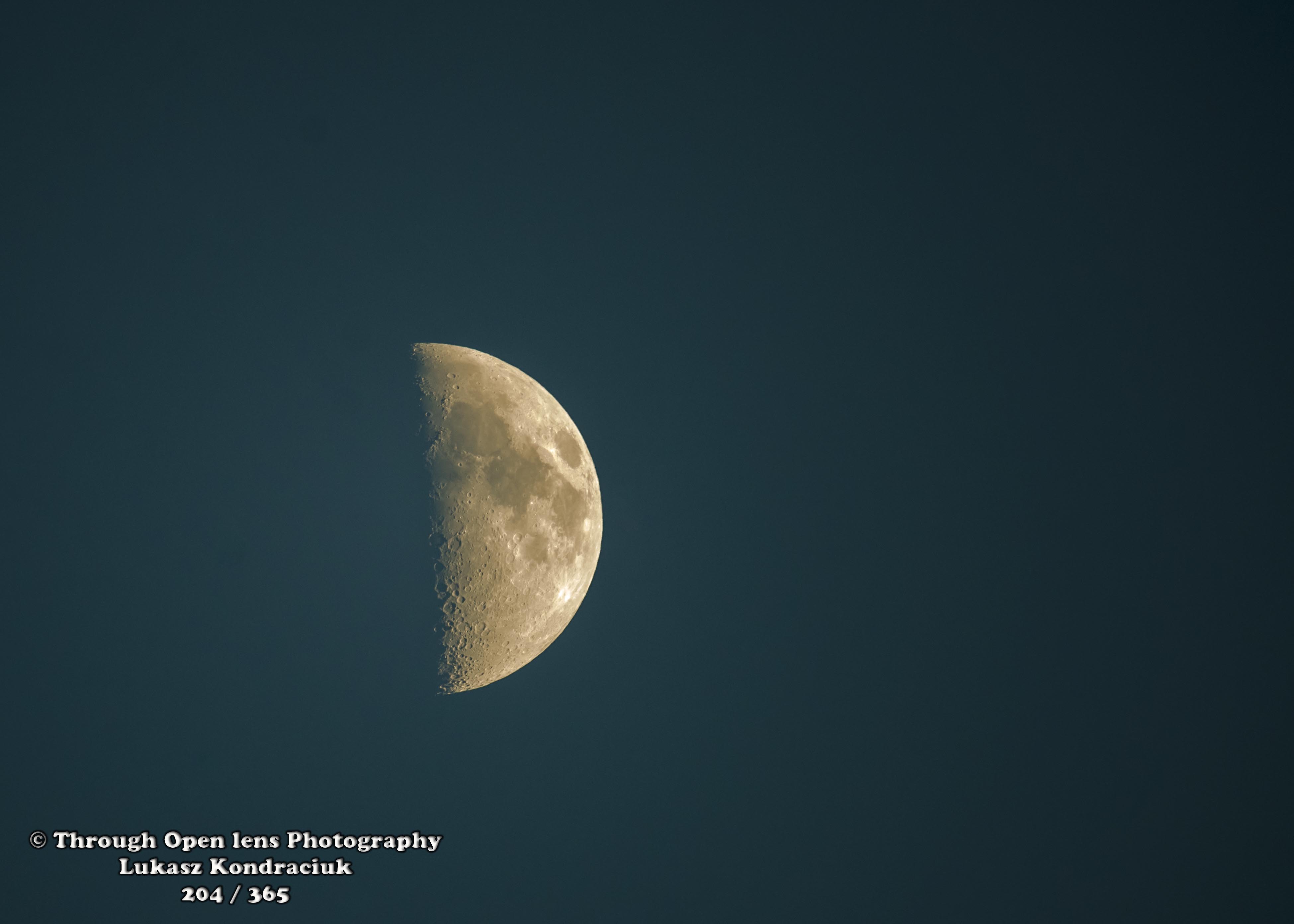
The Dark Side Of The Moon!

moon half

F/6.3, 1/250, ISO 800.

Day 204 / 365

Ted and Fred were walking home from the pub.  Ted says to Fred, “What a beautiful evening, look at the moon.”              Fred stops and looks at Ted, “You are wrong, that’s not the moon, that’s the sun.” Both started arguing for a while when they come upon a real drunk walking in the other direction, so they stopped him.                                                                                        “Sir, could you please help settle our argument?                                                                                                                                            Tell us what that thing is up in the sky that’s shining. Is it the moon or the sun?’  The drunk looked at the sky and then looked at them, and said,

“Sorry, I don’t live around here.”

Interesting Fact: The moon rotates at 10 miles per hour compared to the earth’s rotation of 1000 miles per hour. ( http://www.moonconnection.com/moon_facts.phtml )

I Have Made Fire!

stove

F/4.5, 13.0, ISO 100.

Day 201 / 365

Who invented fire?  Some bright spark!

Interesting Fact: A major improvement in fuel technology came with the advent of gas. The first gas stoves were developed as early as the 1820s, but these remained isolated experiments. James Sharp patented a gas stove in Northampton, England in 1826 and opened a gas stove factory in 1836. His invention was marketed by the firm Smith & Philips from 1828. An important figure in the early acceptance of this new technology, was Alexis Soyer, the renowned chef at the Reform Club in London. From 1841, he converted his kitchen to consume piped gas, arguing that gas was cheaper overall because the supply could be turned off when the stove was not in use. ( https://en.wikipedia.org/wiki/Gas_stove )

Make A Wish! 

Fountain

F/22.0, 30.0, ISO 250.

Day 114 / 365

What did you wish for?

Who cleans all the coins out of fountain?

Interesting Fact:  Ancient civilizations built stone basins to capture and hold precious drinking water. A carved stone basin, dating to around 2000 BC, was discovered in the ruins of the ancient Sumerian city of Lagash in modern Iraq. The ancient Assyrians constructed a series of basins in the gorge of the Comel River, carved in solid rock, connected by small channels, descending to a stream. The lowest basin was decorated with carved reliefs of two lions.[3] The ancient Egyptians had ingenious systems for hoisting water up from the Nile for drinking and irrigation, but without a higher source of water it was not possible to make water flow by gravity, and no Egyptian fountains or pictures of fountains have been found. ( http://en.wikipedia.org/wiki/Fountain )

Play Your Cards Right!

playing cards

F/20.0, 128.0, ISO 160.

Day 8 / 365

Life is like playing cards, you can win some or you can loose some, but at least at the end you had some fun.

Interesting Fact:  Playing cards were invented in Ancient China. They were found in China as early as the 9th Century during the Tang Dynasty (618–907). ( http://www.theplayingcardfactory.com/history.html )