You Would Think, It Would Be Another Knock Knock Joke

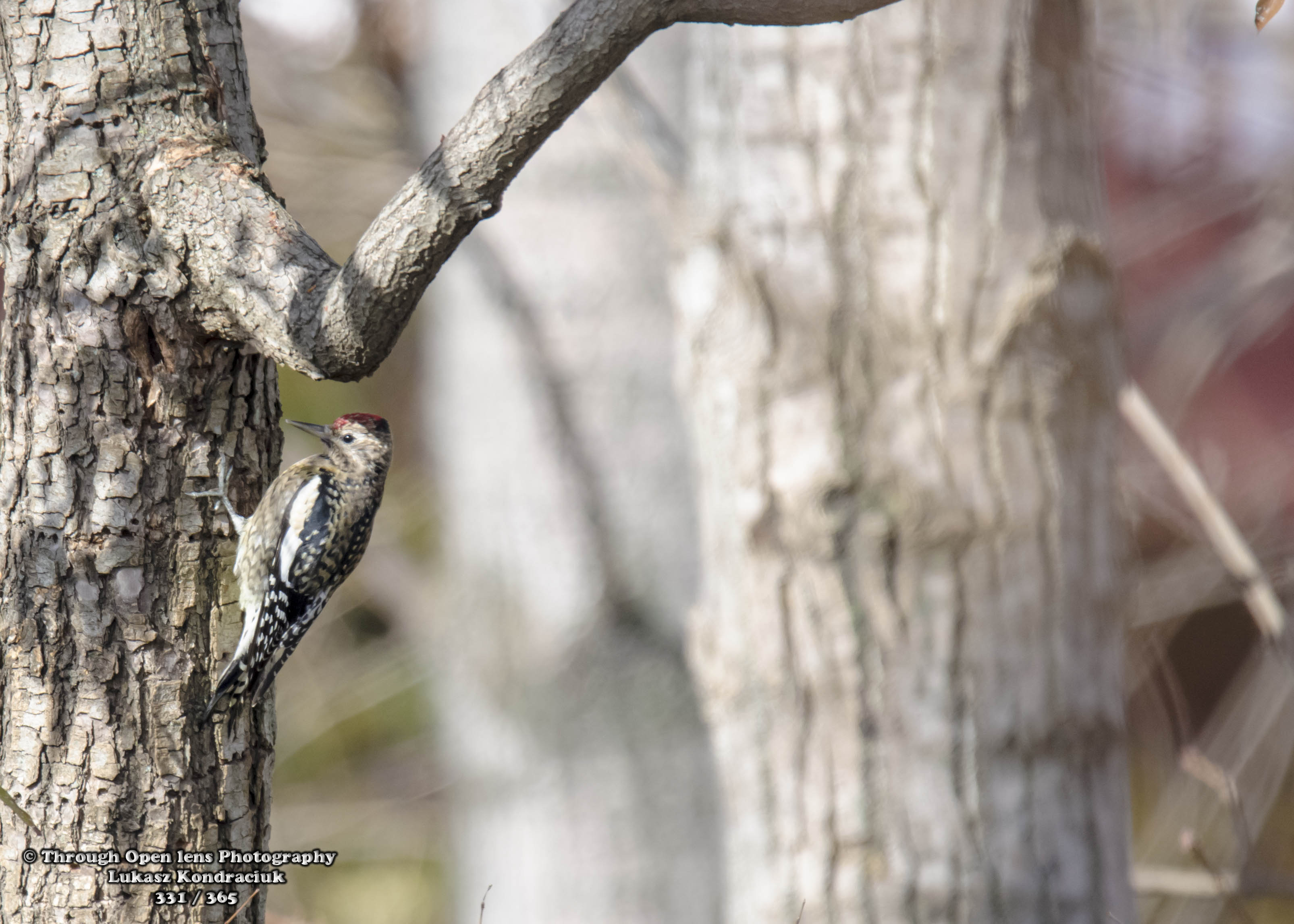
Yellow Bellied Sapsucker

F/ 6.3, 1/800, ISO 800.

Yellow Bellied Sapsucker

Day 331 / 365

What do you get if you cross a parrot with a woodpecker?

A bird that talks in mores code!

Interesting Fact: The sapwells made by Yellow-bellied Sapsuckers attract hummingbirds, which also feed off the sap flowing from the tree. In some parts of Canada, Ruby-throated Hummingbirds rely so much on sapwells that they time their spring migration with the arrival of sapsuckers. Other birds as well as bats and porcupines also visit sapsucker sapwells. ( https://www.allaboutbirds.org/guide/Yellow-bellied_Sapsucker/lifehistory )

I’m Glad I’m Not a Turkey!

Dark-eyed Junco

HAPPY THANKSGIVING EVERONE!!!

F/ 6.3, 1/640, ISO 900.

Dark-eyed Junco 

Day 330 / 365

Chicken talking to the turkey: “Only Thanksgiving and Christmas??? You’re lucky, with us its any Sunday.”

Interesting Fact: Juncos are the “snowbirds” of the middle latitudes. Over most of the eastern United States, they appear as winter sets in and then retreat northward each spring. Some juncos in the Appalachian Mountains remain there all year round, breeding at the higher elevations. These residents have shorter wings than the migrants that join them each winter. Longer wings are better suited to flying long distances, a pattern commonly noted among other studies of migratory vs. resident species.  ( https://www.allaboutbirds.org/guide/Dark-eyed_Junco/lifehistory )

How Is My Mohawk!

Tufted Titmouse

F/8.0, 1/125, ISO 320.

Tufted Titmouse

Day 329 / 365

Why did the chicken say, “Meow, oink, bow-wow, and moo?”

He was studying foreign languages.

Interesting Fact: Tufted Titmice hoard food in fall and winter, a behavior they share with many of their relatives, including the chickadees and tits. Titmice take advantage of a bird feeder’s bounty by storing many of the seeds they get. Usually, the storage sites are within 130 feet of the feeder. The birds take only one seed per trip and usually shell the seeds before hiding them. ( https://www.allaboutbirds.org/guide/Tufted_Titmouse/lifehistory )

Times Sure Have Changed

video recording

F/ 11.0, 1/60, ISO 200.

Day 328 / 365

Just when I discovered the meaning of life, they changed it.

Interesting Fact: After several attempts by other companies, the first commercially successful VTR, the Ampex VRX-1000, was introduced in 1956 by Ampex Corporation.[17] At a price of US$50,000 in 1956, and US$300 for a 90-minute reel of tape, it was intended only for the professional market.  ( https://en.wikipedia.org/wiki/VHS#History )

It’s 5 O’clock Somewhere!!

The Hamilton Inn

F/ 18.0, 38.0, ISO 64.

Day 327 / 365

A man goes into a bar and seats himself on a stool. The bartender looks at him and says, “What’ll it be buddy?”

The man says, “Set me up with seven whiskey shots and make them doubles.” The bartender does this and watches the man slug one down, then the next, then the next, and so on until all seven are gone almost as quickly as they were served. Staring in disbelief, the bartender asks why he’s doing all this drinking.

“You’d drink them this fast too if you had what I have.”

The bartender hastily asks, “What do you have pal?”

The man quickly replies, “I have a dollar.”

Interesting Fact: The inhabitants of Great Britain have been drinking ale since the Bronze Age, but it was with the arrival of the Romans and the establishment of the Roman road network that the first inns called tabernae,[5] in which the traveller could obtain refreshment, began to appear. After the departure of Roman authority and the fall of the Romano-British kingdoms, the Anglo-Saxons established alehouses that grew out of domestic dwellings. The Anglo-Saxon alewife would put a green bush up on a pole to let people know her brew was ready.[6] These alehouses formed meeting houses for the villagers to meet and gossip and arrange mutual help within their communities. Here lie the beginnings of the modern pub. They became so commonplace that in 965 King Edgar decreed that there should be no more than one alehouse per village.  ( https://en.wikipedia.org/wiki/Pub#History )


I Am Watching But You Can’t See Me

ninja

F/4.8, 19.0, ISO 64.

Day 326 / 365

You don’t see many ninjas these days.

Which means they’re only getting better.

Interesting Fact: Despite many popular folktales, historical accounts of the ninja are scarce. Historian Stephen Turnbull asserts that the ninja were mostly recruited from the lower class, and therefore little literary interest was taken in them.[15] Instead, war epics such as the Tale of Hōgen (Hōgen Monogatari) and the Tale of the Heike (Heike Monogatari) focus mainly on the aristocratic samurai, whose deeds were apparently more appealing to the audience.[13] Historian Kiyoshi Watatani states that the ninja were trained to be particularly secretive about their actions and existence. ( https://en.wikipedia.org/wiki/Ninja#History )

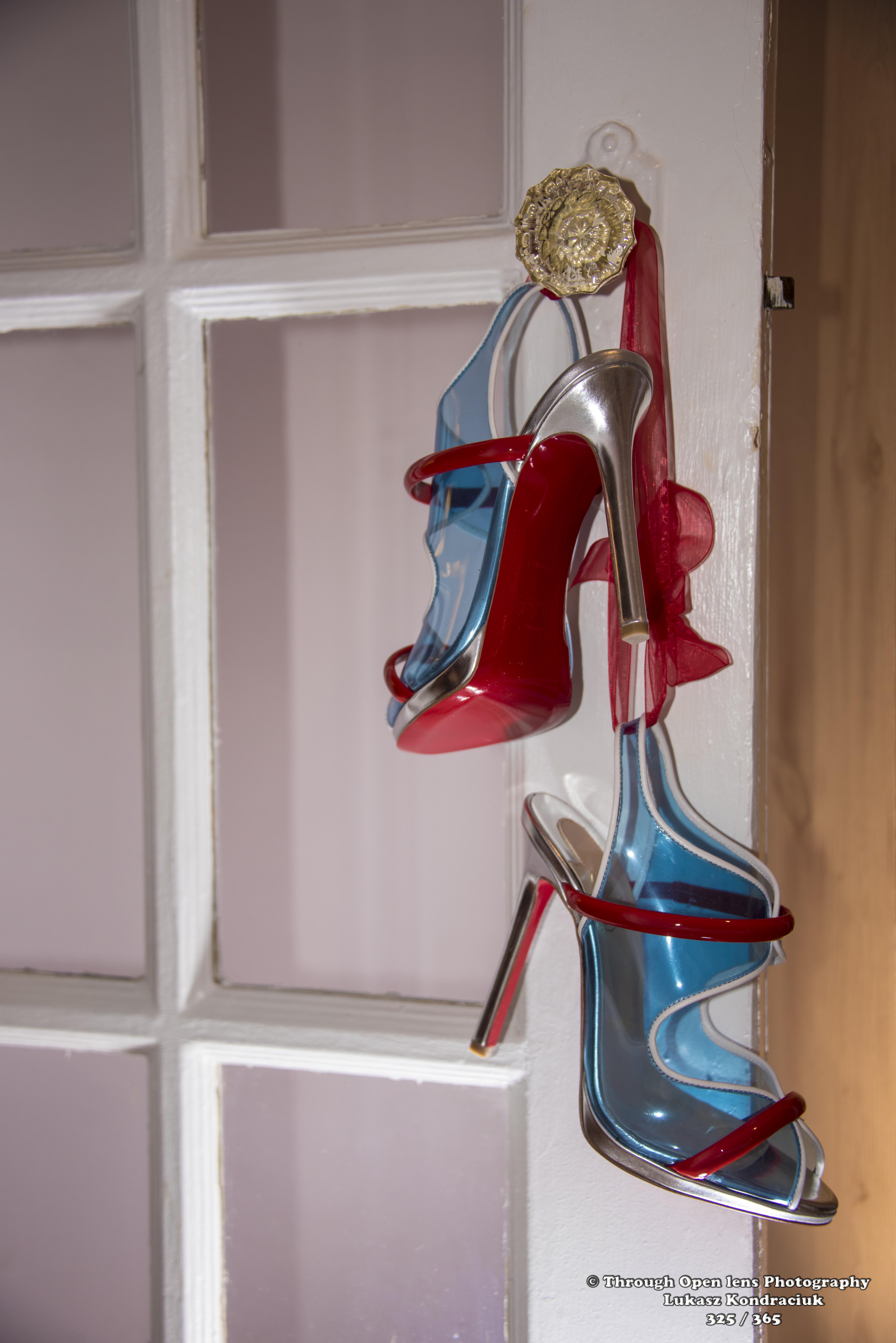
Cinderella Is Proof That A New Pair Of Shoes Can Change Your Life

Louboutin

F/4.2 , 1/60, ISO 200.

Day 325 / 365

A woman shopping for shoes does better research than the FBI.

Interesting Fact: Louboutin helped bring stilettos back into fashion in the 1990s and 2000s,[citation needed] designing dozens of styles with heel heights of 120 mm (4.72 inches) and higher. The designer’s professed goal has been to “make a woman look sexy, beautiful, to make her legs look as long as [he] can”.[23][24] While he does offer some lower-heeled styles, Louboutin is generally associated with his dressier evening-wear designs incorporating jeweled straps, bows, feathers, patent leather, red soles, and other similar decorative touches. He is most popularly known for the red leather soles on his high heel shoes, commonly referred to as “sammy red-bottoms”.[25] Christian Louboutin’s red-bottom colour code is Pantone 18-1663 TPX. ( https://en.wikipedia.org/wiki/Christian_Louboutin )

Let Future Worry About Itself, You Have Enough For Today.

Chivas Regal

F/ 22.0, 1/60, ISO 250.

Day 324/ 365

HOW TO MAKE A TURKEY

Step 1: Go buy a turkey
Step 2: Take a drink of whisky
Step 3: Put turkey in the oven
Step 4: Take another 2 drinks of whisky
Step 5: Set the degree at 375 ovens
Step 6: Take 3 more whiskeys of drink
Step 7: Turn oven the on
Step 8: Take 4 whisks of drinky
Step 9: Turk the bastey
Step 10: Whiskey another bottle of get
Step 11: Stick a turkey in the thermometer
Step 12: Glass yourself a pour of whiskey
Step 13: Bake the whiskey for 4 hours
Step 14: Take the oven out of the turkey
Step 15: Take the oven out of the turkey
Step 16: Floor the turkey up off of the pick
Step 17: Turk the carvey
Step 18: Get yourself another scottle of botch
Step 19: Tet the sable and pour yourself a glass of turkey

Courtesy of Sickipedia.org: http://www.sickipedia.org/illness-and-mortality/alcohol-and-drugs/how-to-make-a-turkey-step-1-go-buy-a-30257#ixzz3s58PSxpP

Interesting Fact:  It is possible that distillation was practised by the Babylonians in Mesopotamia in the 2nd millennium BC, with perfumes and aromatics being distilled,[9] but this is subject to uncertain and disputed interpretation of evidence.[10] The earliest certain chemical distillations were by Greeks in Alexandria in the 1st century AD,[11] but these were not distillations of alcohol. The medieval Arabs adopted the distillation technique of the Alexandrian Greeks, and written records in Arabic begin in the 9th century, but again these were not distillations of alcohol.[10] Distilling technology passed from the medieval Arabs to the medieval Latins, with the earliest records in Latin in the early 12th century.[10][12] The earliest records of the distillation of alcohol are in Italy in the 13th century, where alcohol was distilled from wine.[10] An early description of the technique was given by Ramon Llull (1232 – 1315).[10] Its use spread through medieval monasteries,[13] largely for medicinal purposes, such as the treatment of colic and smallpox. ( https://en.m.wikipedia.org/wiki/Whisky )

Don’t Push My Buttons

keyboard

F/ 14.0, 10.0, ISO 160.

Day 323 / 365

Conversation between tech support and customer

Tech Support: Your password is the small letter ‘a’ as in apple, a capital letter ‘V’ as in Victor, and the number ‘7’.

Customer: Is that ‘7’ in capital letters?

Interesting Fact: From the 1940s until the late 1960s, typewriters were the main means of data entry and output for computing, becoming integrated into what were known as computer terminals. Because of the limitations of terminals based upon printed text in comparison to the growth in data storage, processing and transmission, a general move toward video-based computer terminals was effected by the 1970s, starting with the Datapoint 3300 in 1967. ( https://en.wikipedia.org/wiki/Computer_keyboard#History )

Those Boots Are Made For Walking

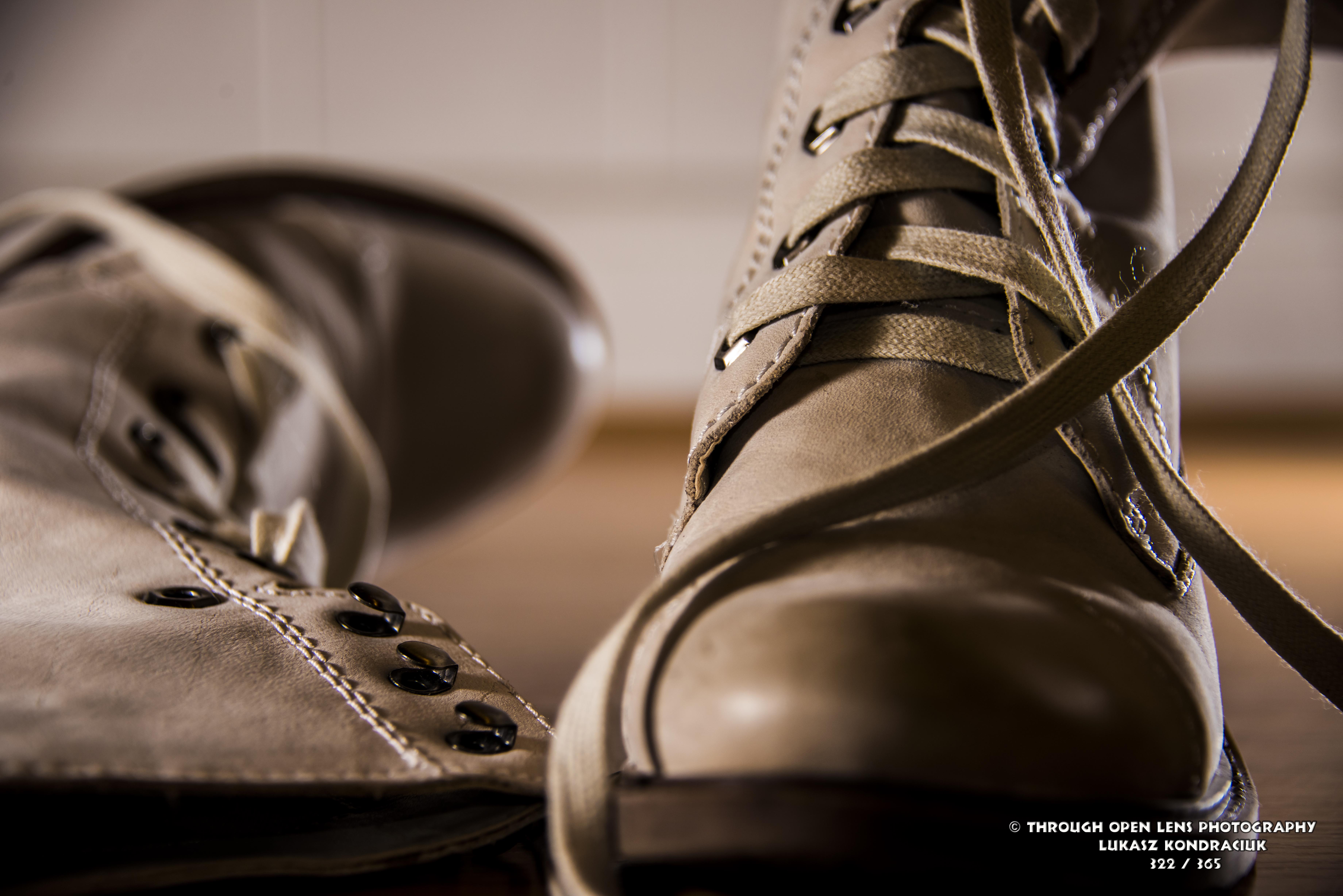
boots

F/5.3, 1/60, ISO 200.

Day 322 / 365

A little boy was standing and crying in the classroom, so the teacher asked him what was wrong. “I can’t find my boots,” the little boy sobbed.
The teacher looked around the room and saw a pair of boots. “Are these yours?” she asked. “No, those aren’t mine,” he cried.
The teacher and the little boy searched all over the classroom for his boots. Finally, the teacher gave up and said, “Are you SURE those aren’t your boots?” “Yes, I’m sure,” sobbed the boy. “Mine had snow on them!”

Interesting Fact: Early boots consisted of separate leggings, soles, and uppers worn together to provide greater ankle protection than shoes or sandals. Around 1000 BC, these components were more permanently joined to form a single unit that covered the feet and lower leg, often up to the knee. A type of soft leather ankle boots were worn by nomads in eastern Asia, and carried to China to India and Russia around AD 1200 to 1500 by Mongol invaders. The Inuit and Aleut natives of Alaska developed traditional winter boots of caribou skin or sealskin featuring decorative touches of seal intestine, dog hair and wolverine fur. 17th century European boots were influenced by military styles, featuring thick soles and turnover tops that were originally designed to protect horse mounted soldiers. In the 1700s, distinctive, knee-high boots worn by Hessian soldiers fighting in the American Revolutionary War influenced the development of the iconic heeled cowboy boots worn by cattlemen in the American west. ( https://en.wikipedia.org/wiki/Boot#History )