Bee Mine!

bee

F/ 8.0, 1/200, ISO 100.

Bumblebee

Why did the bee get married?

Because he found his honey

Interesting Fact: Queen hibernates during the winter and starts laying eggs in the spring. She lays 8 to 12 eggs at a time. Young bumblebees emerge after 21 days.  ( http://www.softschools.com/facts/animals/bumblebee_facts/582/ )

Where flowers bloom, so does hope.

Crocus

F/8.0, 1/250, IOS 320.

Crocus

What did the big flower say to the little one?

You’re really growing, bud!

Interesting Fact: The first crocus seen in the Netherlands, where crocus species are not native, were from corms brought back in the 1560s from Constantinople by the Holy Roman Emperor’s ambassador to the Sublime Porte, Ogier Ghiselin de Busbecq. A few corms were forwarded to Carolus Clusius at the botanical garden in Leiden. By 1620, the approximate date of Ambrosius Bosschaert‘s painting (illustration, below), new garden varieties had been developed, such as the cream-colored crocus feathered with bronze at the base of the bouquet, similar to varieties still on the market. Bosschaert, working from a preparatory drawing to paint his composed piece spanning the whole of spring, exaggerated the crocus so that it passes for a tulip, but its narrow, grass-like leaves give it away. ( https://en.wikipedia.org/wiki/Crocus#History )

Spring Is A Nature’s Way Of Saying “Let’s Party!”

Happy First Day Of Spring!

Narcissus

F/8.0, 1/250, ISO 320.

Narcissus ( Daffodils )

When do people start using their trampoline?

Spring-Time

Interesting Fact: Spring is one of the four conventional temperate seasons, following winter and preceding summer. There are various technical definitions of spring, but local usage of the term varies according to local climate, cultures and customs. When it is spring in the Northern Hemisphere, it will be autumn in the Southern Hemisphere. At the spring equinox, days are approximately 12 hours long with day length increasing as the season progresses. Spring and “springtime” refer to the season, and also to ideas of rebirth, rejuvenation, renewal, resurrection and regrowth. Subtropical and tropical areas have climates better described in terms of other seasons, e.g. dry or wet, monsoonal or cyclonic. Often, cultures have locally defined names for seasons which have little equivalence to the terms originating in Europe. ( https://en.wikipedia.org/wiki/Spring_(season)#Meteorological_reckoning )

Roses Are Red Violets Are Blue I Will Post This And You Will Read It Too

rose petals

F/ 5.6, 1/60, ISO 400.

Day 337 / 365

Why couldn’t the flower ride its bike?

It lost its petals.

Interesting Fact: The rose hip, usually from R. canina, is used as a minor source of Vitamin C. The fruits of many species have significant levels of vitamins and have been used as a food supplement. Many roses have been used in herbal and folk medicines. Rosa chinensis has long been used in Chinese traditional medicine. This and other species have been used for stomach problems, and are being investigated for controlling cancer growth. ( https://en.wikipedia.org/wiki/Rose#Medicine )

You Can’t See Me I’m A Flower!

The American Goldfinch

F/6.3, 1/800, ISO 800.

The American Goldfinch

Day 244 / 365

Why did the little bird get in trouble at school?

He got caught peeping on a test.

Interesting Fact: The American Goldfinch changes from winter plumage to breeding plumage by a complete molt of its body feathers. It is the only member of its family to have this second molt in the spring; all the other species have just one molt each year in the fall. ( http://identify.whatbird.com/obj/91/_/American_Goldfinch.aspx )

I Choose To Shine!

Sunflowers

F/6.0, 1/60, ISO 250.

Sunflowers

Day 236 / 365

Roses are red, violets are blue. sunflowers are yellow, i bet you were expecting something romantic but no this is just gardening facts.

Interesting Fact: The sunflower is native to the America’s and was used extensively by Native American Indians for food, as oil, in bread, medical ointments, dyes and body paints. ( http://www.sciencekids.co.nz/sciencefacts/plants/sunflowers.html )


Hey Honey!

Bumblebee flower

F/ 6.3, 1/1000, ISO 800.

Bumblebee

Day 233 / 365

What did the bee say to the other bee when they landed on the same flower?

Buzz off.

Interesting Fact: Bumblebees live in society that consists of up to 400 individuals. They are divided in three groups: queen, worker bees and drones. Worker bees develop from the eggs during the spring. They collect pollen and feed newly born bees. Drones develop from the eggs during the summer. They die immediately after fertilization. ( http://www.softschools.com/facts/animals/bumblebee_facts/582/ )


Buzzing Around!

Bumblebee

F/6.3, 1/800, ISO 800.

Bumblebee

Day 212 / 365

Who is the bees favorite singer?

Sting!

Interesting Fact: Bumblebees produce buzzing sound as a result of vibration of muscles used for flying. These muscles increase temperature of the body and facilitate gathering of pollen. ( http://www.softschools.com/facts/animals/bumblebee_facts/582/ )


Every Flower Must Grow Through Dirt.

Light Pink Gladiolas

F/14.0, 1/60, ISO 160.

Light Pink Gladiolus

Day 211 / 365

What did the old flower say to the younger flower?

What’s up, bud?

Interesting Fact: The British and Mediterranean gladiolus plants were often used for medicinal purposes. For example, the English used the plant’s corms (stem base) as a bandage and to extract thorns or splinters. The corms were also powdered and mixed with goat’s milk to soothe symptoms of colic. Parts of the gladiolus, however, are poisonous if eaten, and certain species cause irritation or allergic reaction when handled. Today we primarily use the gladiolus as a decorative flower in gardens and bouquets. ( http://www.nanzandkraft.com/blog/5-fun-facts-gladiolus-augusts-official-flower/ )

Let It Grow!

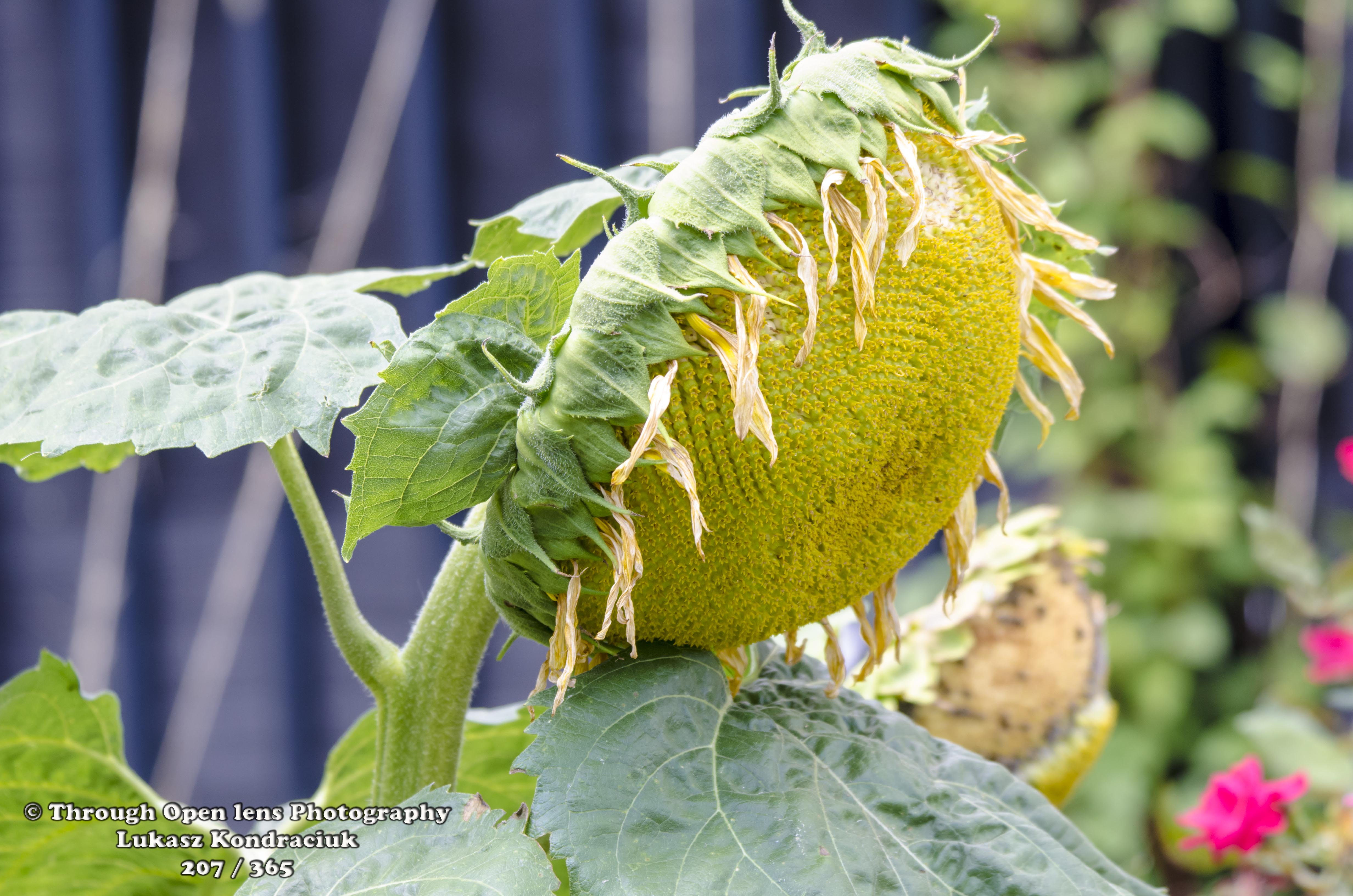
Sunflower

F/5.6, 1/250, ISO 400.

Sunflower

Day 207 / 365

Why does a farmer have to wear dark sunglasses?

Because he grows sunflowers.

Interesting Fact: Sunflowers are very fast growing plants, in the right conditions they can grow 8-12 feet (2.4 m – 3.7 m) tall in six months. As of 2012, the Guinness World Record for the tallest sunflower is 8.23 m (27 ft) for a sunflower grown in Germany. ( http://www.sciencekids.co.nz/sciencefacts/plants/sunflowers.html )