Don’t Sneak Up On Me! I See You!

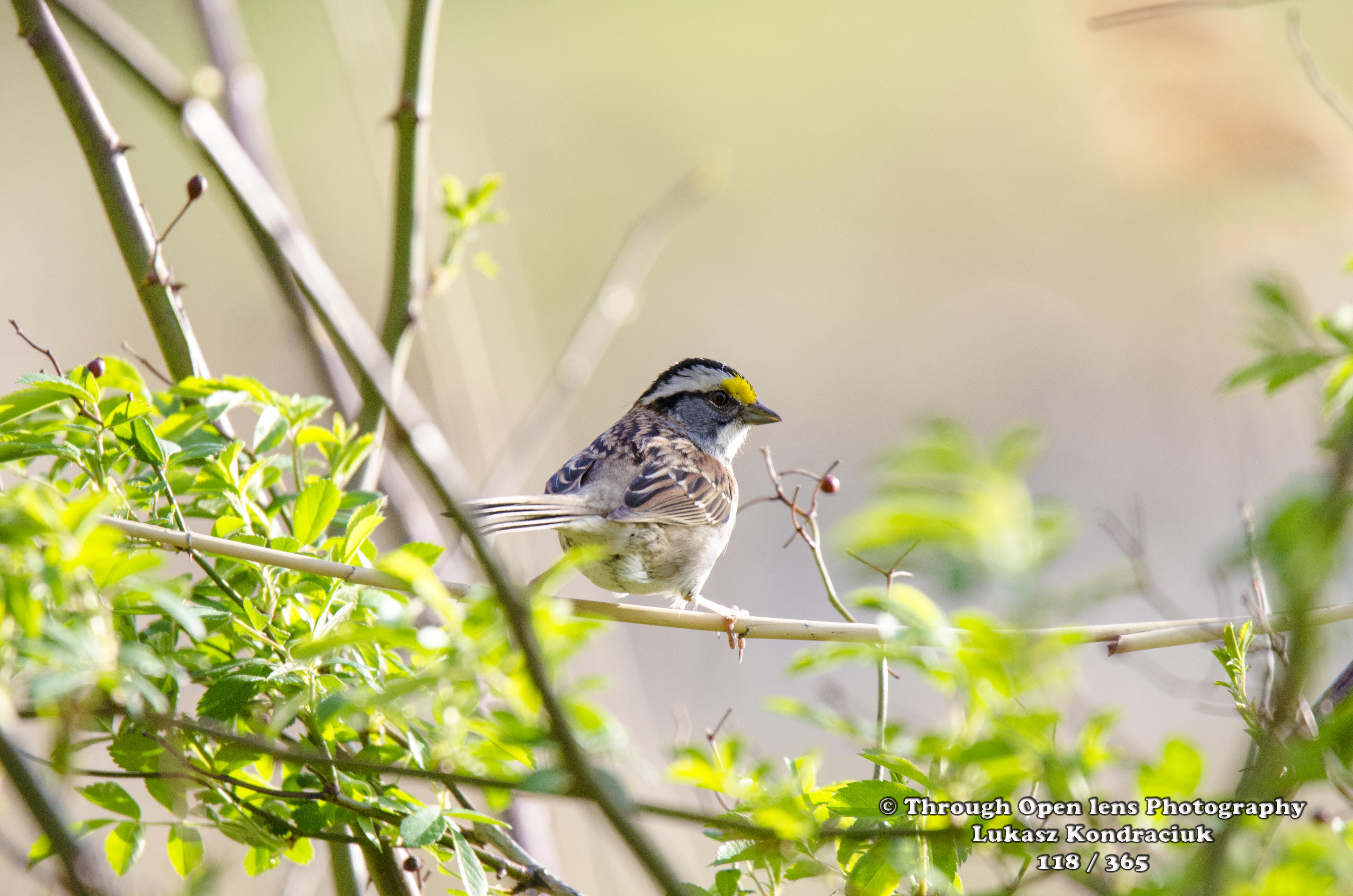
White-throated Sparrow

F/6.3, 1/640, ISO 800.

White-throated Sparrow

Day 118 / 365

How does a bird with a broken wing manage to land safely?
With its sparrowchute.

Interesting Fact: The White-throated Sparrow comes in two color forms: white-crowned and tan-crowned. The two forms are genetically determined, and they persist because individuals almost always mate with a bird of the opposite morph. Males of both color types prefer females with white stripes, but both kinds of females prefer tan-striped males. White-striped birds are more aggressive than tan-striped ones, and white-striped females may be able to outcompete their tan-striped sisters for tan-striped males. ( http://www.allaboutbirds.org/guide/White-throated_Sparrow/lifehistory )

Angry Bird!

Northern Cardinal

F/6.3, 1/200, ISO 125

Northern Cardinal

Day 117 / 365

You wouldn’t like him when he’s angry. For more info ask the pigs!   🙂

Interesting Fact: Many people are perplexed each spring by the sight of a cardinal attacking its reflection in a window, car mirror, or shiny bumper. Both males and females do this, and most often in spring and early summer when they are obsessed with defending their territory against any intruders. Birds may spend hours fighting these intruders without giving up. A few weeks later, as levels of aggressive hormones subside, these attacks should end (though one female kept up this behavior every day or so for six months without stopping).  ( http://www.allaboutbirds.org/guide/Northern_Cardinal/lifehistory )

Don’t Worry Be Happy!

Yellow Warbler

F/6.3, 1/640, ISO 800.

Yellow Warbler

Day 116 / 365

You’re the yellow bird that I’ve been waiting for!

Interesting Fact: Their open, cuplike nests are easy to find, and cowbirds often lay eggs in them. Yellow Warblers in some areas thwart these parasites by building a new floor over the cowbird eggs and laying a new clutch of their own. In one case, persistent cowbirds returned five times to lay more eggs in one nest, and an even more persistent warbler built six layers of nest floors to cover up the cowbird eggs. ( http://www.audubon.org/field-guide/bird/yellow-warbler )

Just Tweeting Around Town!

American Redstart

F/6.3, 1/100, ISO 1600.

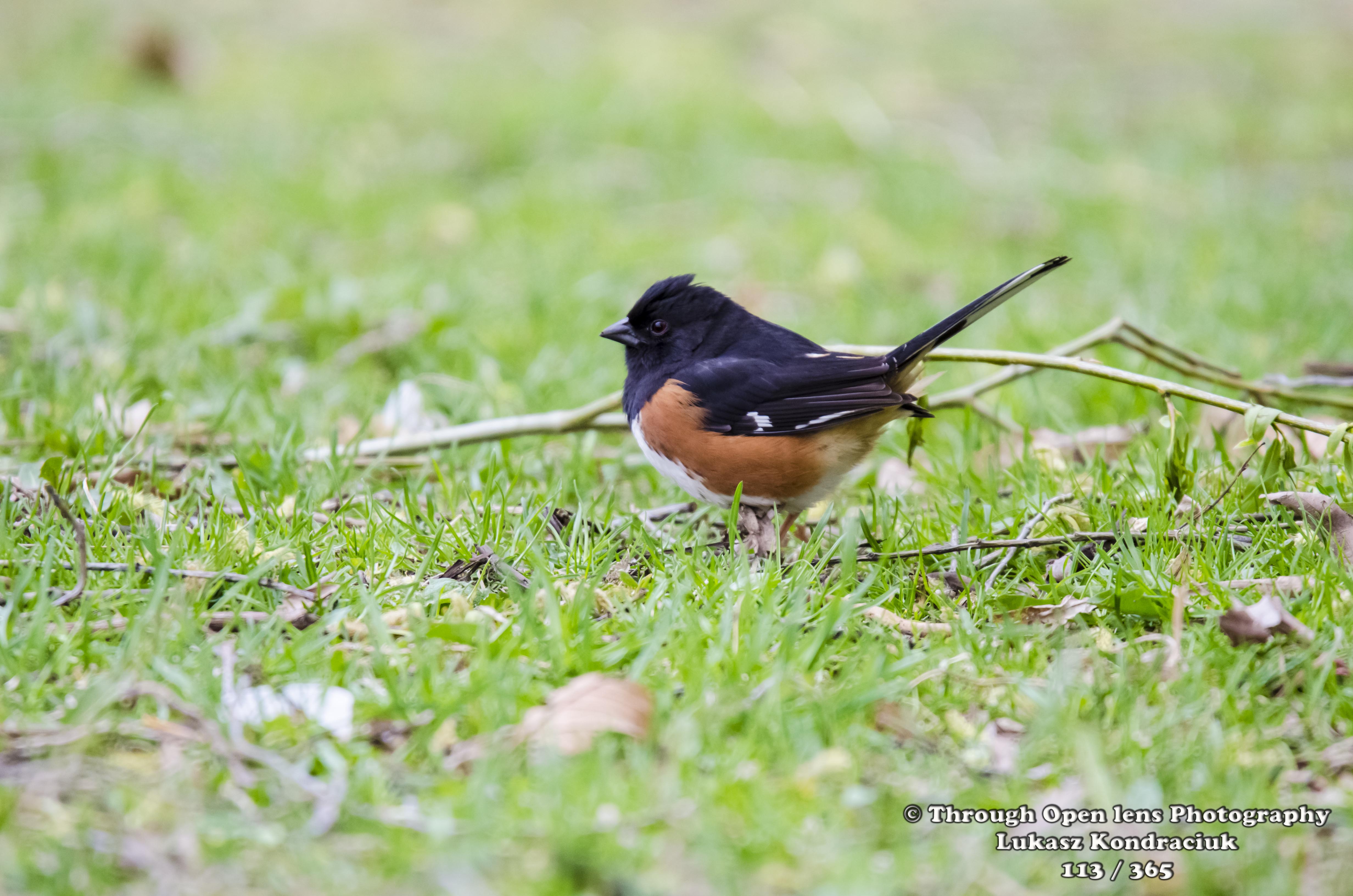
Eastern Towhee 
Day 113 / 365

What do you give a sick bird?
Tweetment!

Interesting Fact: Eastern Towhees tend to be pretty solitary, and they use a number of threat displays to tell other towhees they’re not welcome. You may see contentious males lift, spread, or droop one or both wings, fan their tails, or flick their tails to show off the white spots at the corners. Studies have shown that male towhees tend to defend territories many times larger than needed simply to provide food.  ( http://www.allaboutbirds.org/guide/Eastern_Towhee/lifehistory

Happy Earth Day!

Cape May Warbler

F/6.3, 1/80, ISO 1600.

Cape May Warbler

Day 112 /365

Why did the little bird get in trouble at school?
Because he was caught tweeting on a test.

Interesting Fact:  The tongue of the Cape May Warbler is unique among warblers. It is curled and semitubular, and is used to collect nectar during winter. ( http://www.allaboutbirds.org/guide/Cape_May_Warbler/lifehistory )

Guess who? Wha ha hahaha! Wha ha hahaha! Hahahahahahahaha!

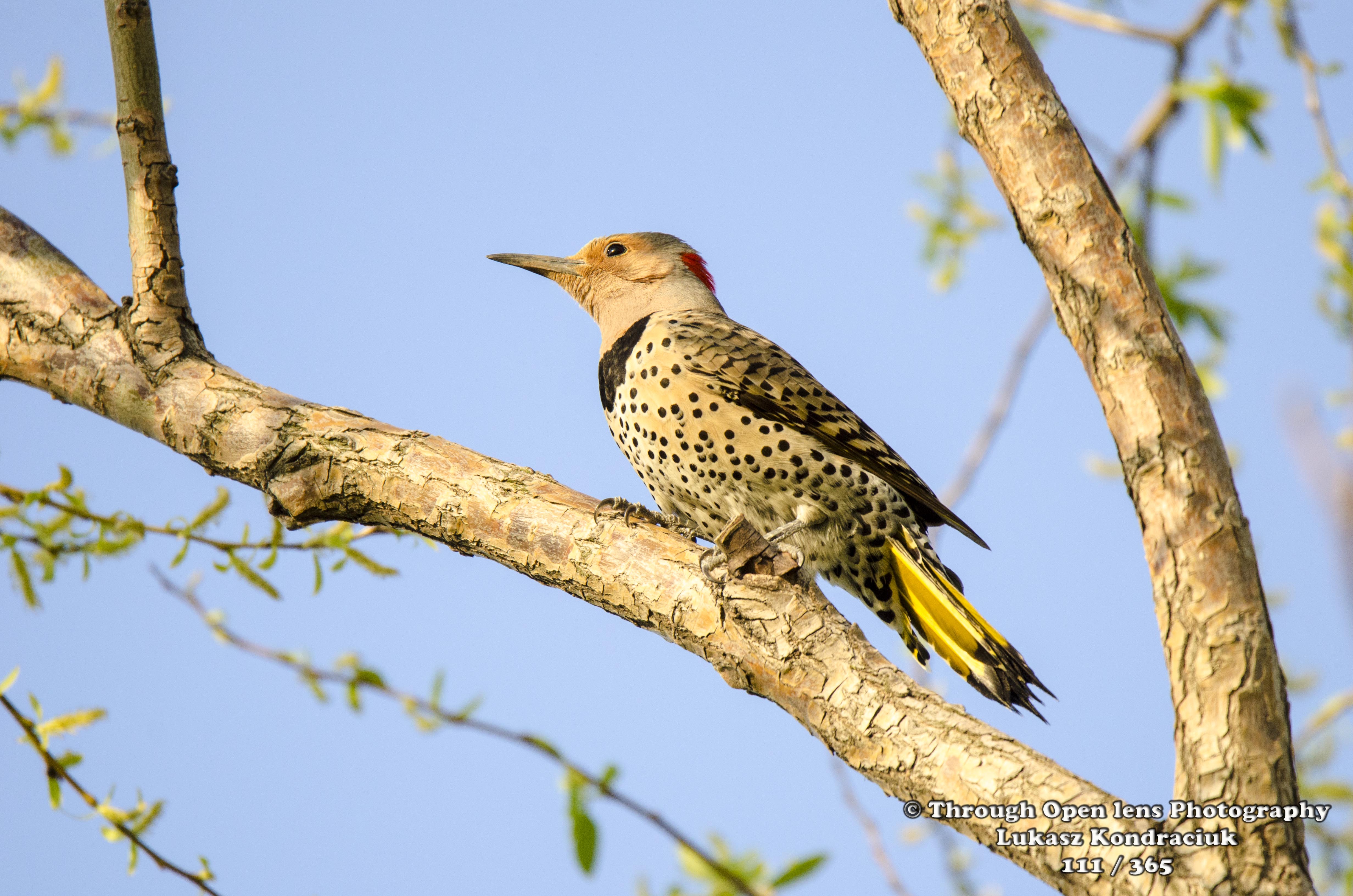
Northern Flicker woodpacker

F/6.3, 1/1000, ISO 800.

Northern Flicker

Day 111 / 365

What do you call a woodpecker that lost his beak?

A Head-Banger.

Interesting Fact: Although it can climb up the trunks of trees and hammer on wood like other woodpeckers, the Northern Flicker prefers to find food on the ground. Ants are its main food, and the flicker digs in the dirt to find them. It uses its long barbed tongue to lap up the ants. ( http://www.allaboutbirds.org/guide/Northern_Flicker/lifehistory )

“So, What Are We Looking At ?”

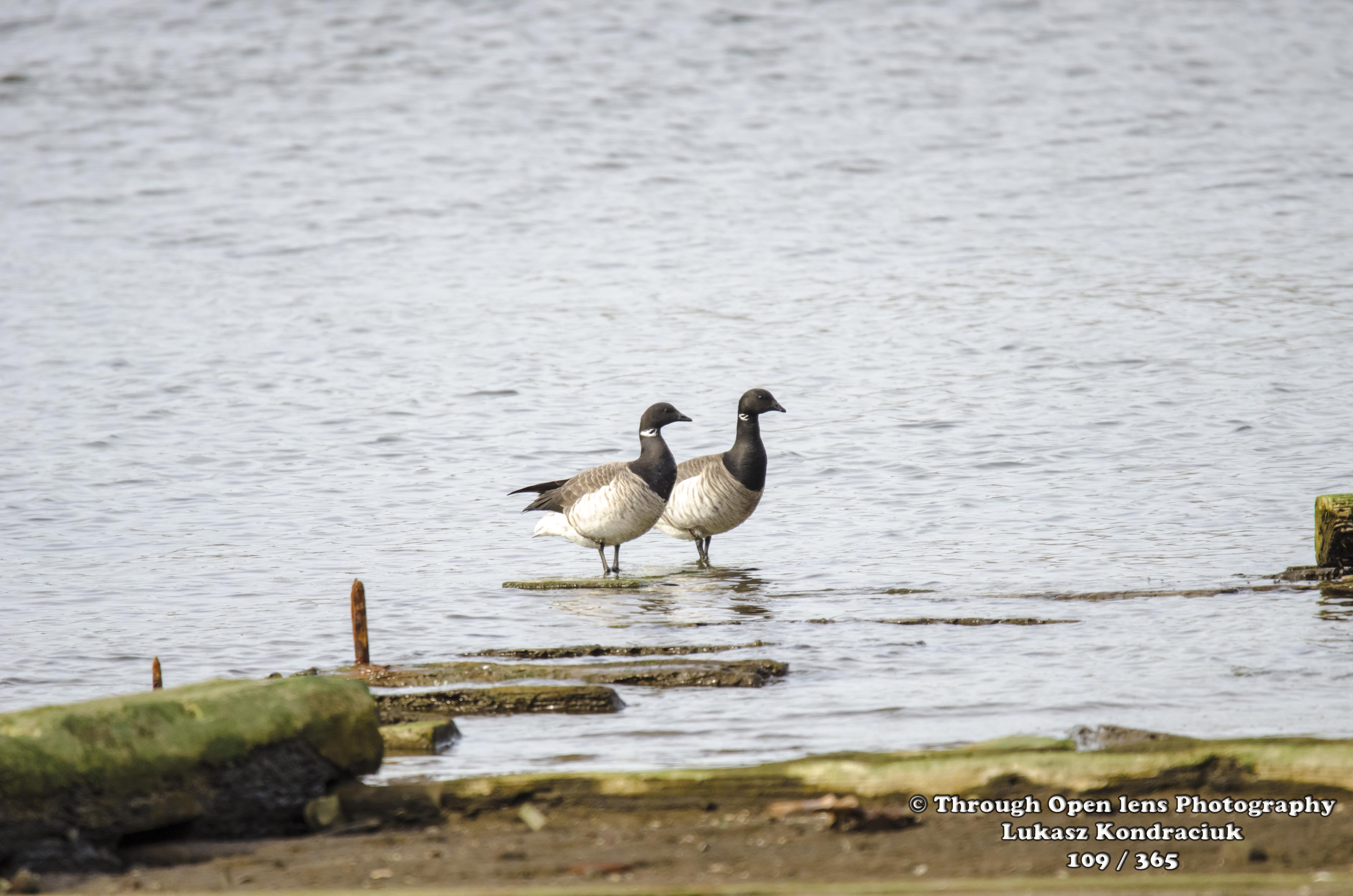
Brant goose

F/6.3, 1/1000, ISO 450.

Brant Goose

Day 109 / 365

What does a farmer call an escaped bird?
A loose goose.

Interesting Fact: Brant goose possess a highly developed salt gland that allows them to drink salt water. ( http://identify.whatbird.com/obj/290/overview/Brant.aspx )

Check Out My Split!

Red-winged blackbird

F/6.3, 1/500, ISO 1250.

Day 106 / 365

“Eat your heart out John Claude Van Dam”

Interesting Fact: Red-winged Blackbirds roost in flocks in all months of the year. In summer small numbers roost in the wetlands where the birds breed. Winter flocks can be congregations of several million birds, including other blackbird species and starlings. Each morning the roosts spread out, traveling as far as 50 miles to feed, then re-forming at night. ( http://www.allaboutbirds.org/guide/Red-winged_Blackbird/lifehistory )

Holy Smokes Batman!

American Robin

F/6.3, 1/320, ISO 400.

American Robin

Day 96 / 365

Where do birds invest their money?
In the stork market!

Interesting Fact: Although robins are considered harbingers of spring, many American Robins spend the whole winter in their breeding range. But because they spend more time roosting in trees and less time in your yard, you’re much less likely to see them. The number of robins present in the northern parts of the range varies each year with the local conditions. ( http://www.allaboutbirds.org/guide/American_Robin/lifehistory )

Parakeets Guard Post!

Monk Parakeets

F/6.3, 1/125, ISO 1600.

Monk Parakeets

Black and White  Day 5 of 5

Day 93 / 365

” I will watch this side, you take the other side and no one will slip by us “.

Interesting Fact: Its large, communal nests of sticks are easily identifiable and are often built on support poles of electrical lines. ( http://identify.whatbird.com/obj/932/overview/Monk_Parakeet.aspx )

I was challenged by Cynthia at http://cynthiamvoss.wordpress.com/  to take up the Black and White 5-Day Challenge.  Part of the fun is to nominate another blogger, one on each day.

Today, I nominate Susan  of http://suejudd.com/ Susan, if you accept, the goal is to post one B&W photo each day for five days, and to nominate a fellow blogger each day to join in.

There is no pressure to accept this challenge. It’s just for fun!    🙂