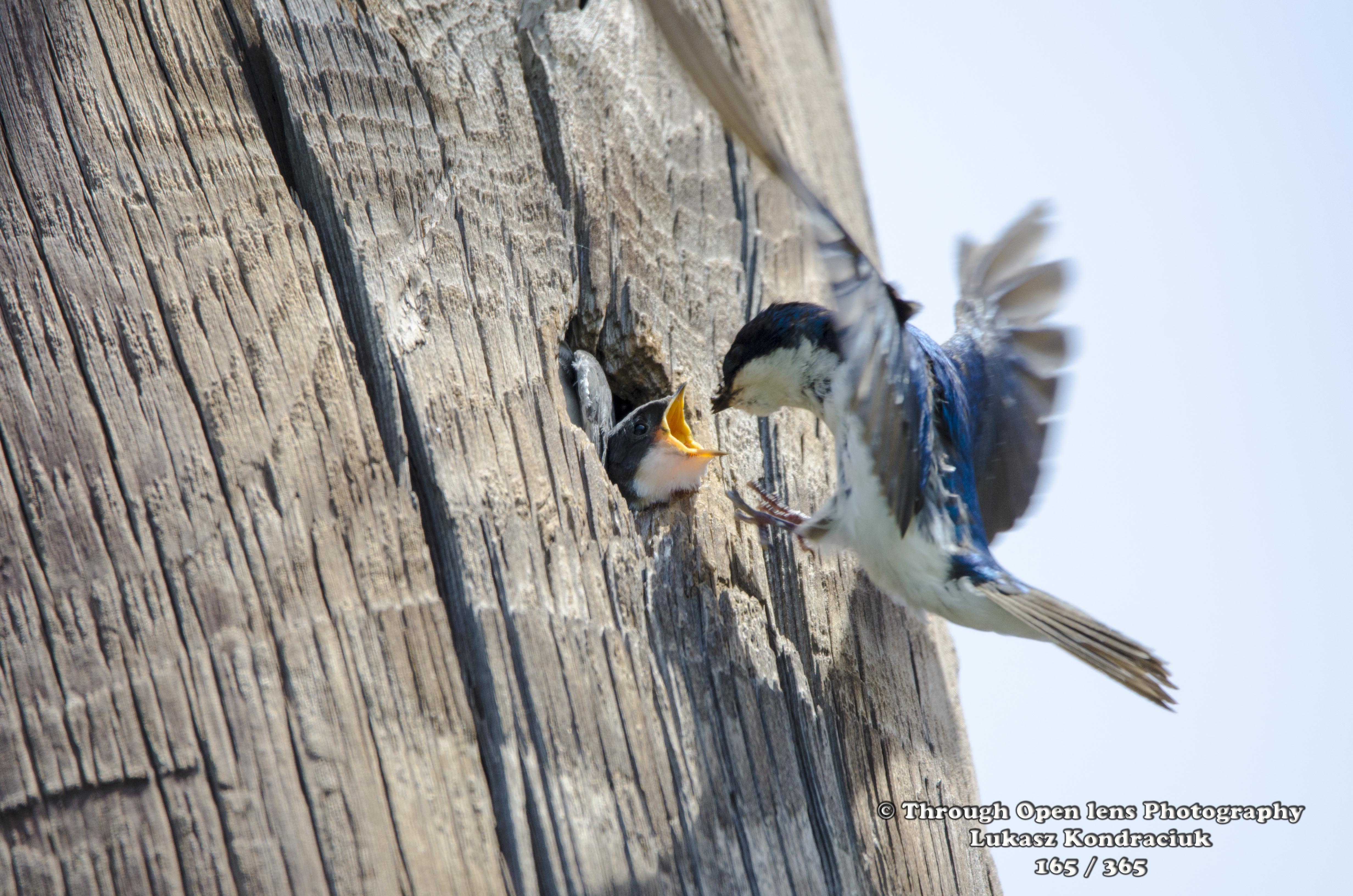
Feed Me Seymour! Feed Me!

Tree Swallow

F/6.3, 1/1000, ISO 450.

Tree Swallow

Day 165 / 365

What did the little bird say to the big bird?

Peck on someone your own size!

Interesting Fact: Tree Swallows winter farther north than any other American swallows and return to their nesting grounds long before other swallows come back. They can eat plant foods as well as their normal insect prey, which helps them survive the cold snaps and wintry weather of early spring. ( http://www.allaboutbirds.org/guide/tree_swallow/lifehistory )

Eat, Sleep, Fish, Repeat!

Snowy Egret 1

F/6.3, 1/1250, ISO 400.

Snowy Egret

Day 164 / 365

Why does the Egret stand on one leg?

Because if it lifts the other leg, it falls.

Interesting Fact: At the end of the nineteenth century, the beautiful plumes of the Snowy Egret were in great demand by market hunters as decorations for women’s hats. In 1886, plumes were valued at $32 per ounce, which was twice the price of gold at the time. They were hunted nearly to extinction before laws were passed to protect them. ( http://identify.whatbird.com/obj/48/_/Snowy_Egret.aspx )


Hungry Much!

First course meal.  Crab.

Double-crested Cormorant

F/ 6.3, 1/1000, ISO 500.

Double-crested Cormorant

Day 163 / 365

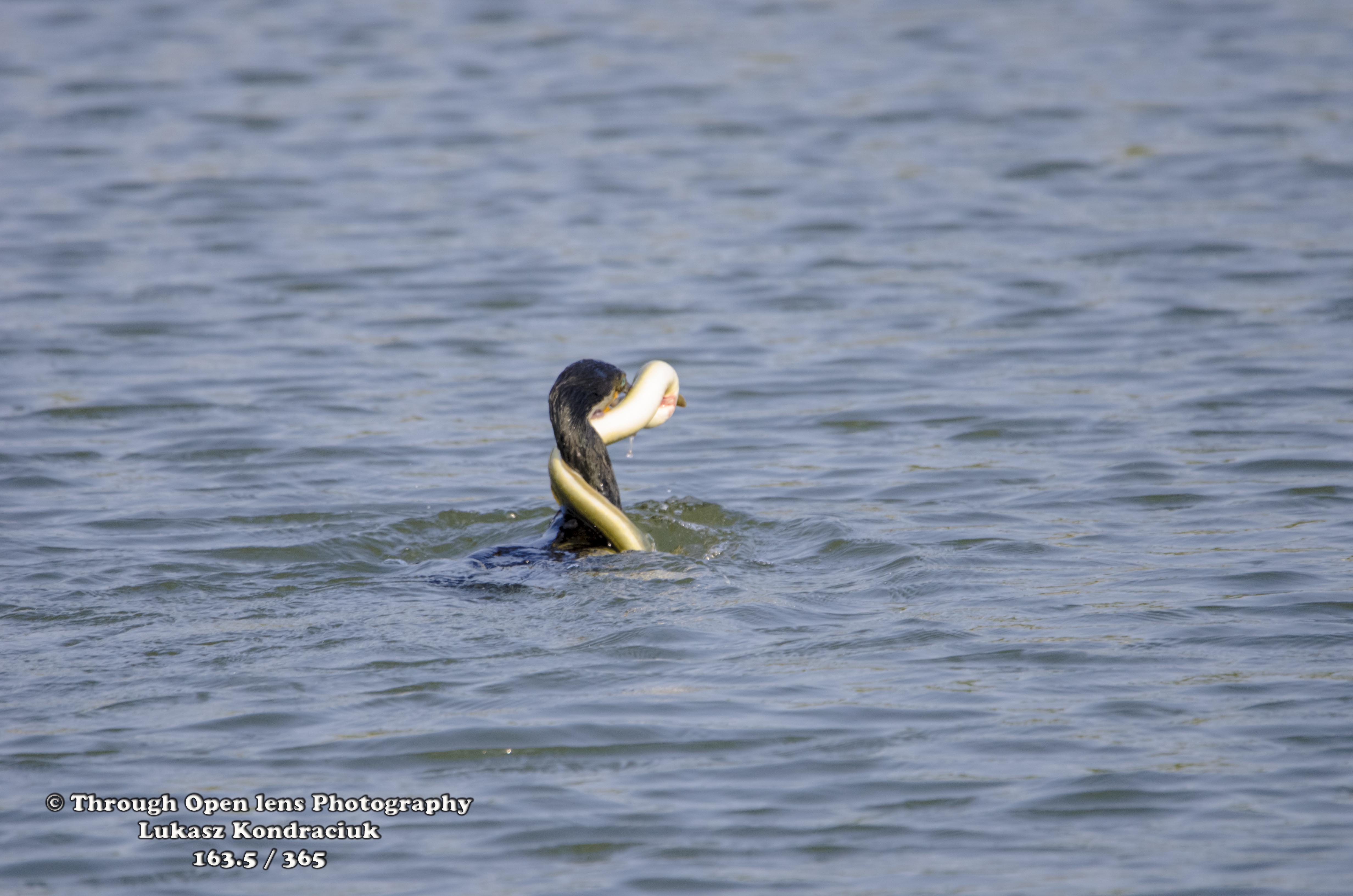
Second course meal.  Eel.

Double-crested Cormorant 1

F/6.3,  1/1000, ISO 720.

Don’t forget, you are what you eat.

Interesting Fact: A cormorant’s diet is almost all fish, with just a few insects, crustaceans, or amphibians. They eat a wide variety of fish (more than 250 species have been reported), and they have impressive fishing technique: diving and chasing fish underwater with powerful propulsion from webbed feet. The tip of a cormorant’s upper bill is shaped like a hook, which is helpful for catching prey. When cormorants happen to catch a crustacean like a crayfish, they exhibit a little flair in eating it—hammering the prey on the water to shake its legs off, then flipping it in the air and catching it headfirst for easy swallowing. ( http://www.allaboutbirds.org/guide/Double-crested_Cormorant/lifehistory#at_food )

Save The Clocktower! ( Back To The Future ) 

Lightning Strike Over Hoboken

F/4.5, 13.0, ISO 100.

Day 162 / 365

What did the lightning bolt say to the other lightning bolt?

You’re shocking!

Interesting Fact: The average temperature of lightning is around 20000 °C (36000 °F). When lightning strikes the ground it seeks out the shortest route to something with a positive charge, this might be a tree, a tall building or if they’re very unlucky, a person. ( http://www.sciencekids.co.nz/sciencefacts/weather/lightning.html )

I Ain’t Afraid Of Nobody

Eastern Kingbird

F/6.3, 1/320, ISO 1600

Eastern Kingbird

Day 161 / 365

I see you, if you come any closer I will show you why they call me kingbird.

Interesting Fact: The scientific name Tyrannus means “tyrant, despot, or king,” referring to the aggression kingbirds exhibit with each other and with other species. When defending their nests they will attack much larger predators like hawks, crows, and squirrels. They have been known to knock unsuspecting Blue Jays out of trees. ( http://www.allaboutbirds.org/guide/Eastern_Kingbird/lifehistory )

My Name Is Zorro!

Cedar Waxwing

F/6.3, 1/250, ISO 1600.

Cedar Waxwing

Day 160 / 365

“I hear trouble over there it’s time to fly”.

Interesting Fact: Because they eat so much fruit, Cedar Waxwings occasionally become intoxicated or even die when they run across overripe berries that have started to ferment and produce alcohol. The name “waxwing” comes from the waxy red secretions found on the tips of the secondaries of some birds. The exact function of these tips is not known, but they may help attract mates. ( http://www.allaboutbirds.org/guide/Cedar_Waxwing/lifehistory )

Who’s That Meowing In The Tree?

Gray Catbird

F/6.3, 1/1000, ISO 560.

Gray Catbird

Day 158 / 365

I thought there was a kitty cat stuck in the tree, but that bird definitely tricked me.     🙂

Interesting Fact: Their calls include the catlike meow call that gives them their name. Gray Catbirds are able to recognize their own eggs making them less susceptible to brood parasites such as the Brown-headed Cowbird.( http://identify.whatbird.com/obj/557/overview/Gray_Catbird.aspx )

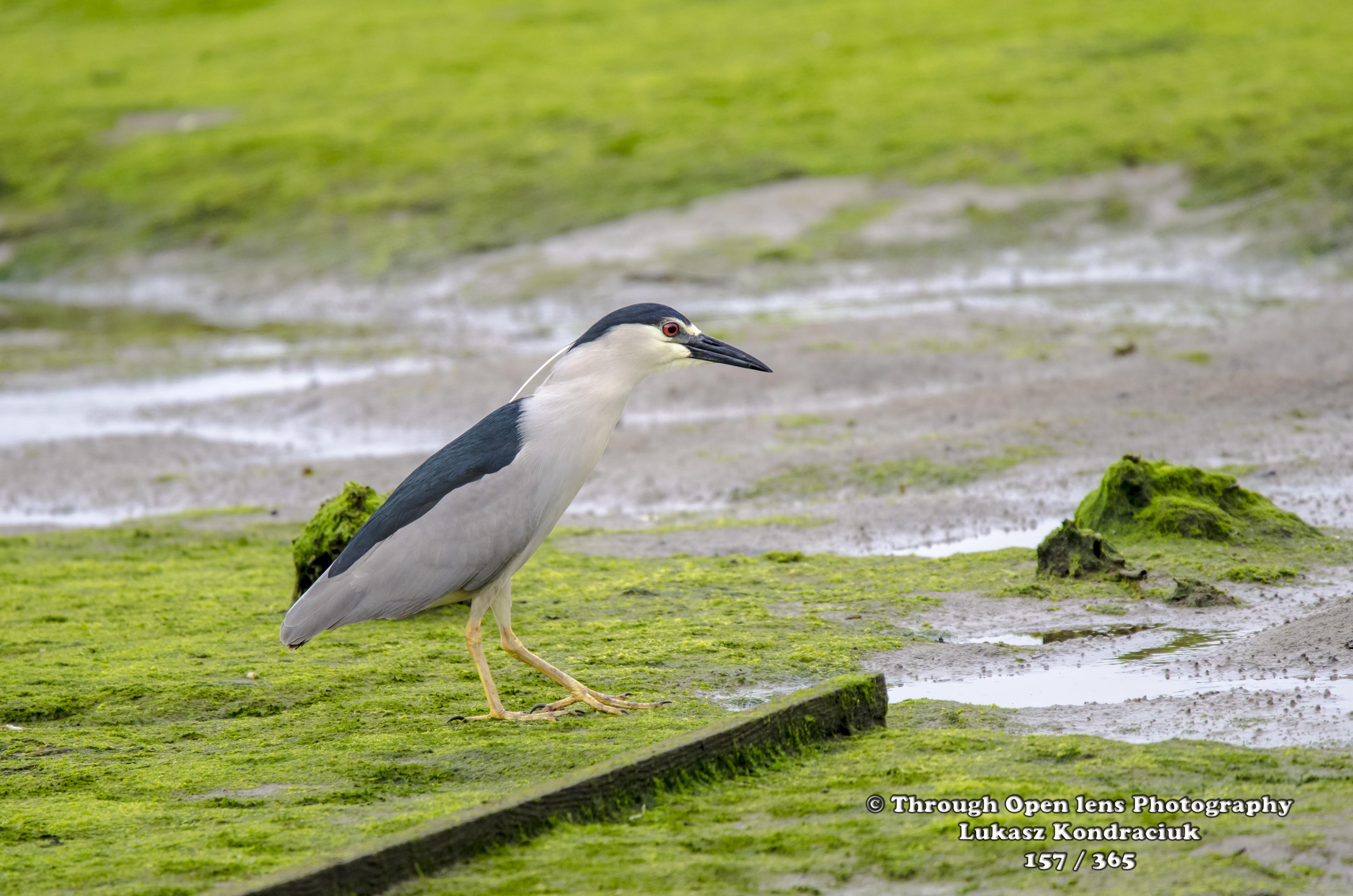
Hey! Where did the water go?

Black-crowned Night-Heron

F/6.3, 1/800, ISO 800.

Black-crowned Night-Heron

Day 157 / 365

Why did the heron cross the road?
To prove he wasn’t chicken.

Interesting Fact: The Black-crowned Night-Heron is a patient hunter. It will often stand still and just wait for a frog or other small animals to pass by. They may also hunt by vibrating their bills in the water to lure prey into investigating the disturbance.  ( http://identify.whatbird.com/obj/24/overview/Black-crowned_Night-Heron.aspx )

New Yoga Pose?

Killdeer

F/6.3, 1/1000, ISO 720.

Killdeer

Day 156 / 365

At first I thought she was doing yoga, and I was going to join in. Then I notice she might have a broken wing, but all of it was just an act. Very convincing broken-wing act, I would give her an Oscar for outstanding performance.

Interesting Fact: Killdeer exhibit a clever “broken wing display” in which they appear to be struggling with a broken wing while leading the predator away from their babies. ( http://identify.whatbird.com/obj/101/overview/Killdeer.aspx )


Come Fly With Me, Let’s Fly, Let’s Fly Away

Great Egret 1

F/6.3, 1/500, ISO 1400.

Great Egret

Day 155 / 365

What kind of bird can carry the most weight?
The crane

Interesting Fact: Though it mainly hunts while wading, the Great Egret occasionally swims to capture prey or hovers (somewhat laboriously) over the water and dips for fish. ( http://www.allaboutbirds.org/guide/Great_Egret/lifehistory )