Make A Wish! 

Fountain

F/22.0, 30.0, ISO 250.

Day 114 / 365

What did you wish for?

Who cleans all the coins out of fountain?

Interesting Fact:  Ancient civilizations built stone basins to capture and hold precious drinking water. A carved stone basin, dating to around 2000 BC, was discovered in the ruins of the ancient Sumerian city of Lagash in modern Iraq. The ancient Assyrians constructed a series of basins in the gorge of the Comel River, carved in solid rock, connected by small channels, descending to a stream. The lowest basin was decorated with carved reliefs of two lions.[3] The ancient Egyptians had ingenious systems for hoisting water up from the Nile for drinking and irrigation, but without a higher source of water it was not possible to make water flow by gravity, and no Egyptian fountains or pictures of fountains have been found. ( http://en.wikipedia.org/wiki/Fountain )
Just Tweeting Around Town!

American Redstart

F/6.3, 1/100, ISO 1600.

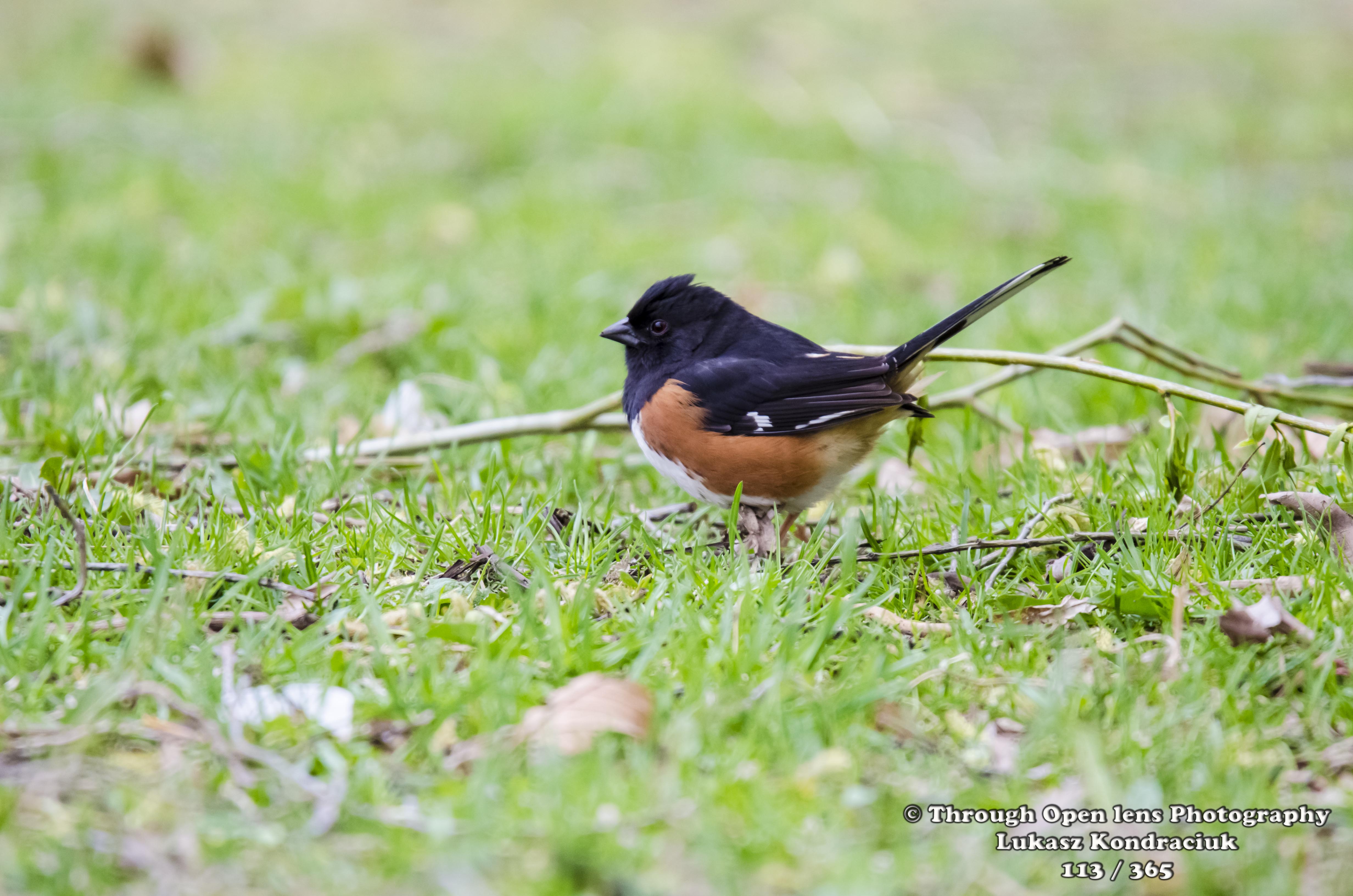
Eastern Towhee 
Day 113 / 365

What do you give a sick bird?
Tweetment!

Interesting Fact: Eastern Towhees tend to be pretty solitary, and they use a number of threat displays to tell other towhees they’re not welcome. You may see contentious males lift, spread, or droop one or both wings, fan their tails, or flick their tails to show off the white spots at the corners. Studies have shown that male towhees tend to defend territories many times larger than needed simply to provide food.  ( http://www.allaboutbirds.org/guide/Eastern_Towhee/lifehistory

Happy Earth Day!

Cape May Warbler

F/6.3, 1/80, ISO 1600.

Cape May Warbler

Day 112 /365

Why did the little bird get in trouble at school?
Because he was caught tweeting on a test.

Interesting Fact:  The tongue of the Cape May Warbler is unique among warblers. It is curled and semitubular, and is used to collect nectar during winter. ( http://www.allaboutbirds.org/guide/Cape_May_Warbler/lifehistory )

Guess who? Wha ha hahaha! Wha ha hahaha! Hahahahahahahaha!

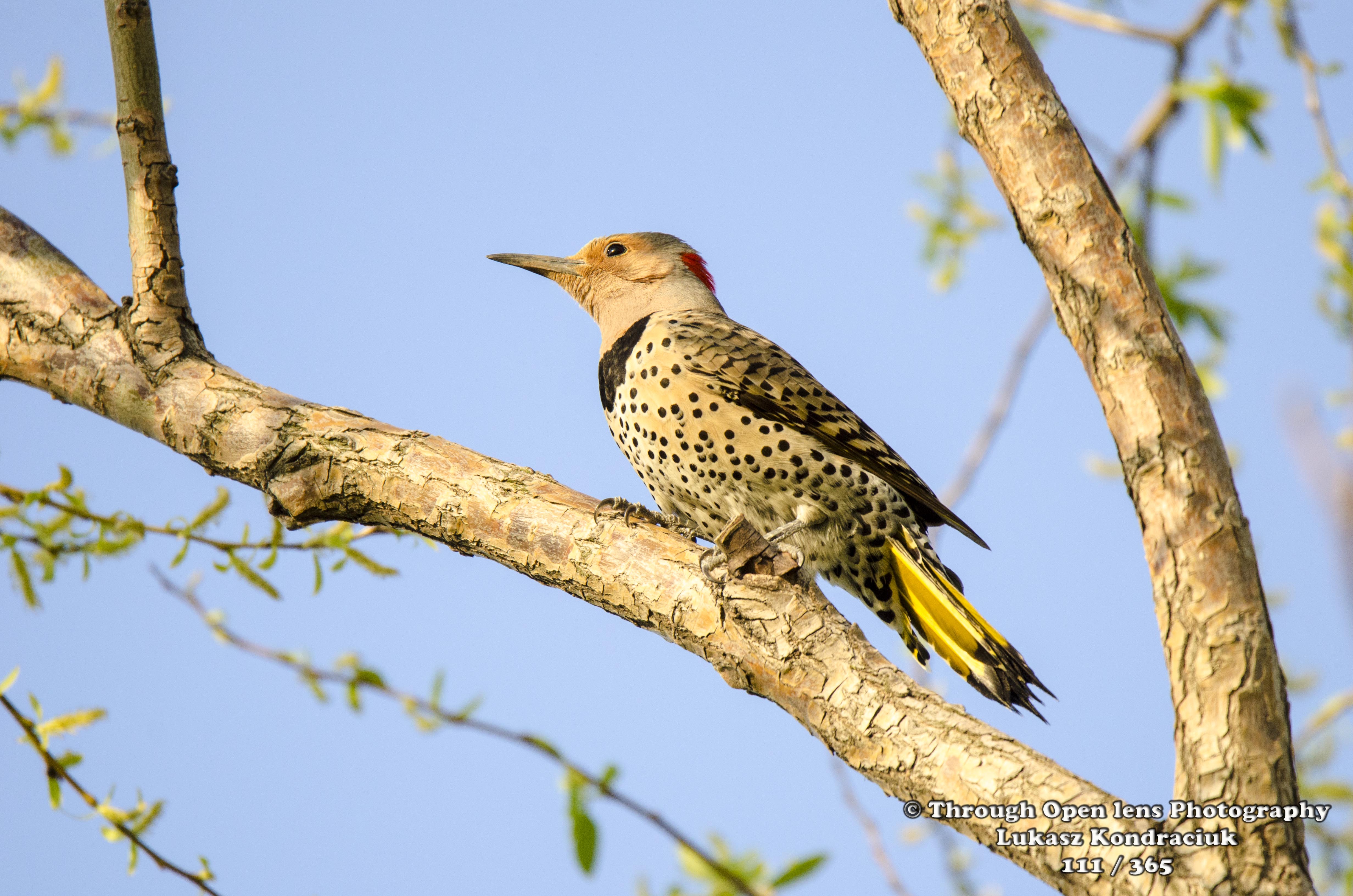
Northern Flicker woodpacker

F/6.3, 1/1000, ISO 800.

Northern Flicker

Day 111 / 365

What do you call a woodpecker that lost his beak?

A Head-Banger.

Interesting Fact: Although it can climb up the trunks of trees and hammer on wood like other woodpeckers, the Northern Flicker prefers to find food on the ground. Ants are its main food, and the flicker digs in the dirt to find them. It uses its long barbed tongue to lap up the ants. ( http://www.allaboutbirds.org/guide/Northern_Flicker/lifehistory )

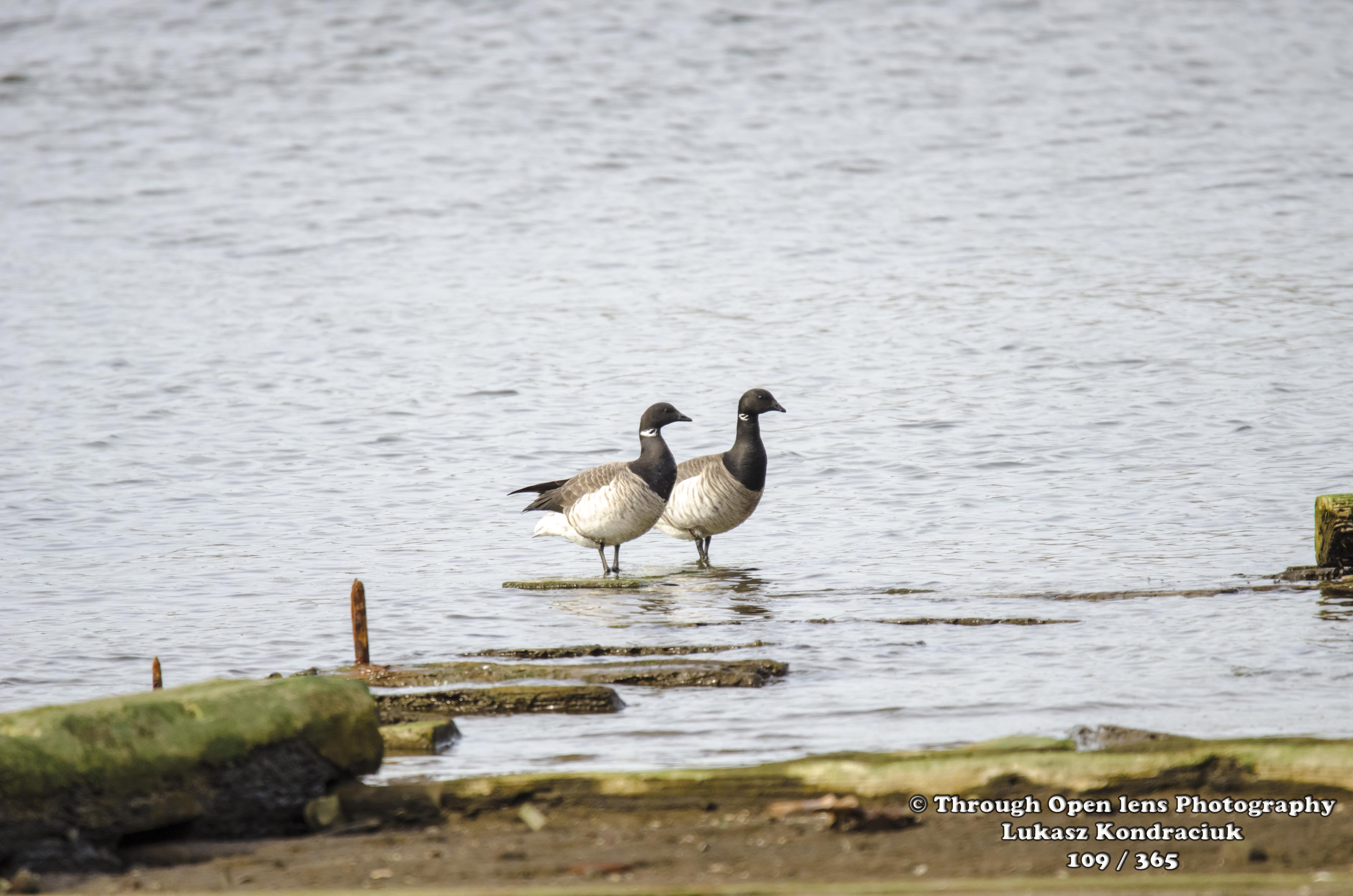
“So, What Are We Looking At ?”

Brant goose

F/6.3, 1/1000, ISO 450.

Brant Goose

Day 109 / 365

What does a farmer call an escaped bird?
A loose goose.

Interesting Fact: Brant goose possess a highly developed salt gland that allows them to drink salt water. ( http://identify.whatbird.com/obj/290/overview/Brant.aspx )

Piano Man

piano man

F/11.0, 1/500, ISO 100.

Day 108 /365

Perfect end to a perfect day, listening to classical music as the sun is setting.

Interesting Fact: Pianos generally have 220-230 strings. The strings are made of steel and are strung tightly to create the tension needed to produce the sound. They are strung so tightly to about 168 pounds per string, the total tension can equal 18-20 tons. ( http://www.houstonpianocompany.com/20-fun-facts-about-piano/ )

It Time To Get Ready For Vacation!

Dive mask

F/29.0, 1/60, ISO 250.

Day 107 / 365

This is how the Pros get ready.  Haha      🙂

Interesting Fact: Be thankful for silicone mask skirts. In the early days, when masks had rubber skirts, divers sometimes surfaced with their faces tinged with a ring of black.  ( http://www.sportdiver.com/article/news/seven-things-you-didnt-know-about-dive-masks-fins-and-snorkels-should )

Check Out My Split!

Red-winged blackbird

F/6.3, 1/500, ISO 1250.

Day 106 / 365

“Eat your heart out John Claude Van Dam”

Interesting Fact: Red-winged Blackbirds roost in flocks in all months of the year. In summer small numbers roost in the wetlands where the birds breed. Winter flocks can be congregations of several million birds, including other blackbird species and starlings. Each morning the roosts spread out, traveling as far as 50 miles to feed, then re-forming at night. ( http://www.allaboutbirds.org/guide/Red-winged_Blackbird/lifehistory )

Holy Smokes Batman!

American Robin

F/6.3, 1/320, ISO 400.

American Robin

Day 96 / 365

Where do birds invest their money?
In the stork market!

Interesting Fact: Although robins are considered harbingers of spring, many American Robins spend the whole winter in their breeding range. But because they spend more time roosting in trees and less time in your yard, you’re much less likely to see them. The number of robins present in the northern parts of the range varies each year with the local conditions. ( http://www.allaboutbirds.org/guide/American_Robin/lifehistory )

Finally First Sight Of Spring

Crocus

F/6.0, 1/250, ISO 1600.

Day 95 / 365

Happy Easter Everyone!

Can February March?
No, but April May!

Interesting Fact: Certain species of crocus, such as Crocus Autumnale are poisonous. Besides being dangerous (if consumed), this type of crocus shows the greatest tolerance toward low temperatures. ( http://www.softschools.com/facts/plants/crocus_facts/502/ )