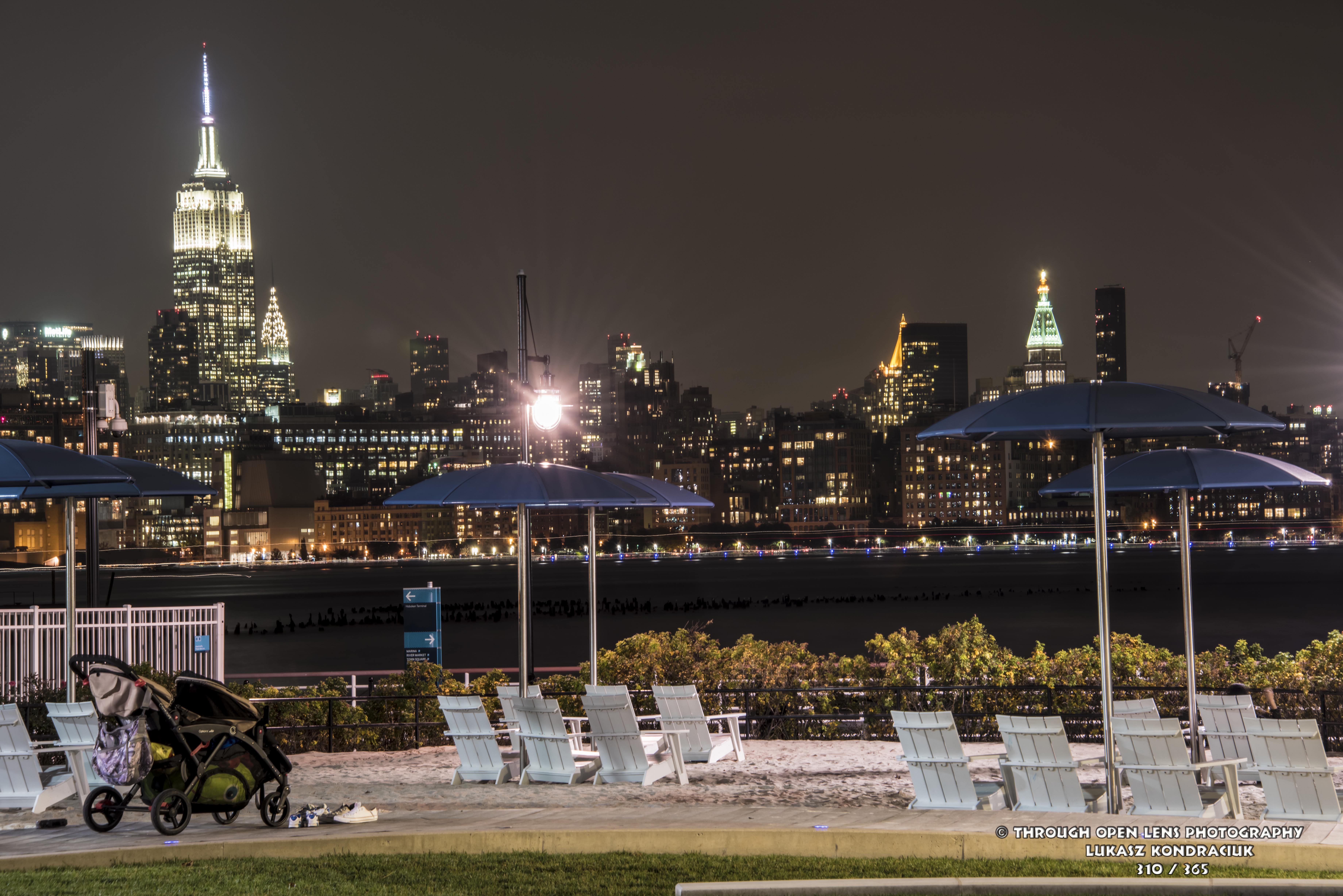
New York, Concrete Jungle Where Dreams Are Made Of There’s Nothin’ You Can’t Do Now You’re In New York

Empire State Building

F/16.0, 57.0, ISO 64.

Day 310 / 365

Two men are sitting drinking at a bar at the top of the Empire State
Building when the first man turns to the other and says, “You know,
last week I discovered that if you jump from the top of this building,
by the time you fall to the 10th floor, the winds around the building
are so intense that they carry you around the building and back into
the window.”

The bartender just shakes his head in disapproval while wiping the
bar.

The second guy says, “What are you a nut? There is no way that could
happen.” “No, it’s true,” said the first man, let me prove it to you.”
He gets up from the bar, jumps over the balcony, and plummets to the
street below. When he passes the 10th floor, the high wind whips him
around the building and back into the 10th floor window and he takes
the elevator back up to the bar. He met the second man, who looked
quite astonished. “You know, I saw that with my own eyes, but that
must have been a one time fluke.”

“No, I’ll prove it again,” says the first man as he jumps. Again just
as he is hurling toward the street, the 10th floor wind gently carries
him around the building and into the window.

Once upstairs he urges his fellow drinker to try it. “Well, what the
hey,” the second guy says, “it works, I’ll try it!” He jumps over the
balcony plunges downward, passes the 11th, 10th, 9th, 8th floors
…and hits the sidewalk with a ‘splat.’ Back upstairs the Bartender
turns to the other drinker, saying “You know, Superman, sometimes you
can be a real jerk.”

Interesting Fact: On July 28, 1945, a B-25 bomber that was lost in fog slammed into Empire State Building north wall of the 78th and 79th floors. Fourteen people were killed (it was a Saturday, so many offices were empty). Elevator operator Betty Lou Oliver survived a plunge of 75 stories inside an elevator, the Guinness World Record for the longest survived elevator fall recorded. There was no important structural damage to the building, which opened for business on the following Monday. ( https://www.walksofnewyork.com/blog/empire-state-building-facts )
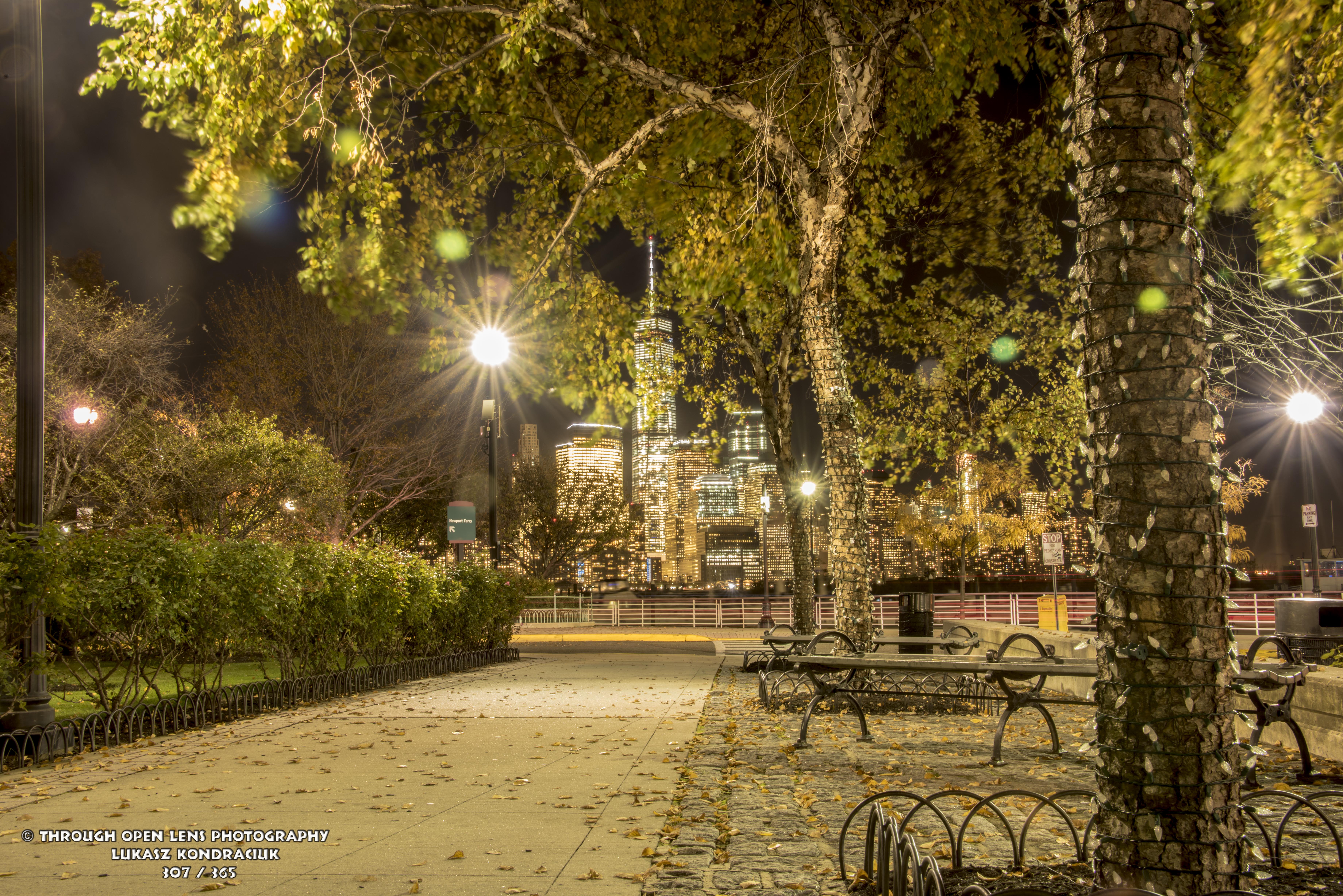
Dear Autumn, I Am Not Ready For What Comes Next

autumn night

F/ 25.0, 393.0, ISO 64.

Day 307 / 365

A couple goes to an art gallery. They find a picture of a naked women with only her privates covered with leaves.
The wife doesn’t like it and moves on but the husband keeps looking.
The wife asks: “What are you waiting for?”
The husband replies: “Autumn.”

Interesting Fact: As winter approaches, leaves make a coating for themselves which blocks their water source; in the absence of water, the leaves no longer produce chlorophyll (chlorophyll is what makes leaves green). ( http://www.metoffice.gov.uk/learning/learn-about-the-weather/how-weather-works/autumn-facts )

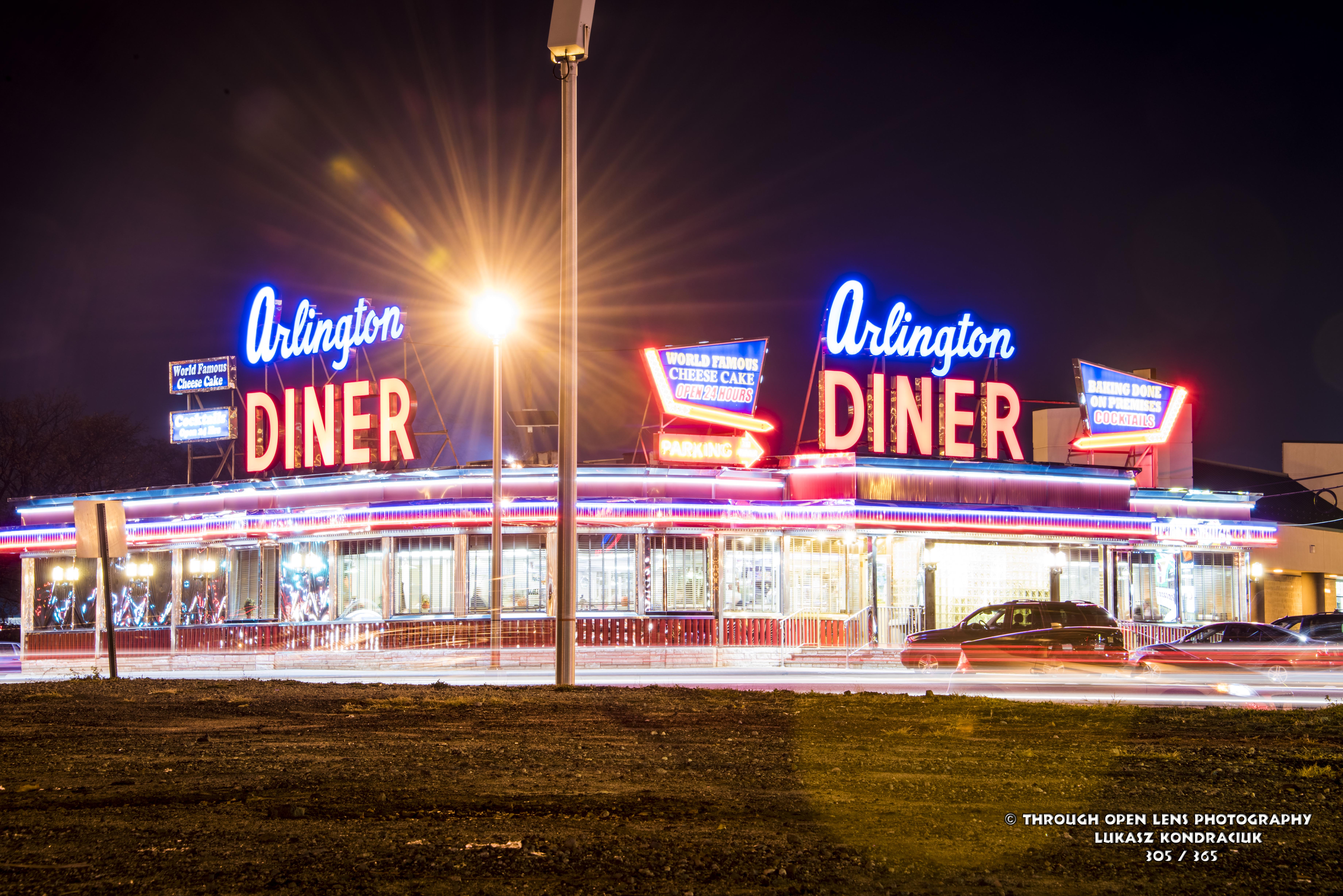
Eat Drink And Be Merry!!

diner

F/16.0, 71.0, ISO 64.

Day 305 / 365

A man entered a diner restaurant and sat at the only open table. As he sat down, he knocked the spoon off the table with his elbow. A nearby waiter reached into his shirt pocket, pulled out a clean spoon and set it on the table. The diner was impressed. “Do all the waiters carry spoons in their pockets?”

The waiter replied, “Yes. Ever since we had that efficiency expert out; he determined that 17.8% of our diners knock the spoon off the table. By carrying clean spoons with us, we save trips to the kitchen.”

The diner ate his meal. As he was paying the waiter, he commented, “Forgive the intrusion, but do you know that you have a string hanging from your fly?”

The waiter replied, “Yes, we all do. Seems that the same efficiency expert determined that we spend too much time washing our hands after using the men’s room. So, the other end of that string is tied to my penis. When I need to go, I simply pull the string to pull out my penis, go, and return to work. Having never touched myself, there is no need to wash my hands. Saves a lot of time.”

Wait a minute,” said the diner, “how do you get your penis back in your pants?”

“Well, I don’t know about the other guys, but I use the spoon.”

Interesting Fact: The first diner was created in 1872, by a man named Walter Scott. He decided to sell food out of a horse-pulled wagon to employees of the Providence Journal, in Providence, Rhode Island. Scott’s diner can be considered the first diner with “walk up” windows that were located on each side of the wagon. Commercial production of lunch wagons began in Worcester, Massachusetts, in 1887, by Thomas Buckley. Buckley was very successful and became known for his “White House Cafe” wagons. Charles Palmer received the first patent (1893) for the diner, which he billed as a “Night-Lunch Wagon.” He built his “fancy night cafes” and “night lunch wagons” in the Worcester area until 1901. ( https://en.m.wikipedia.org/wiki/Diner )


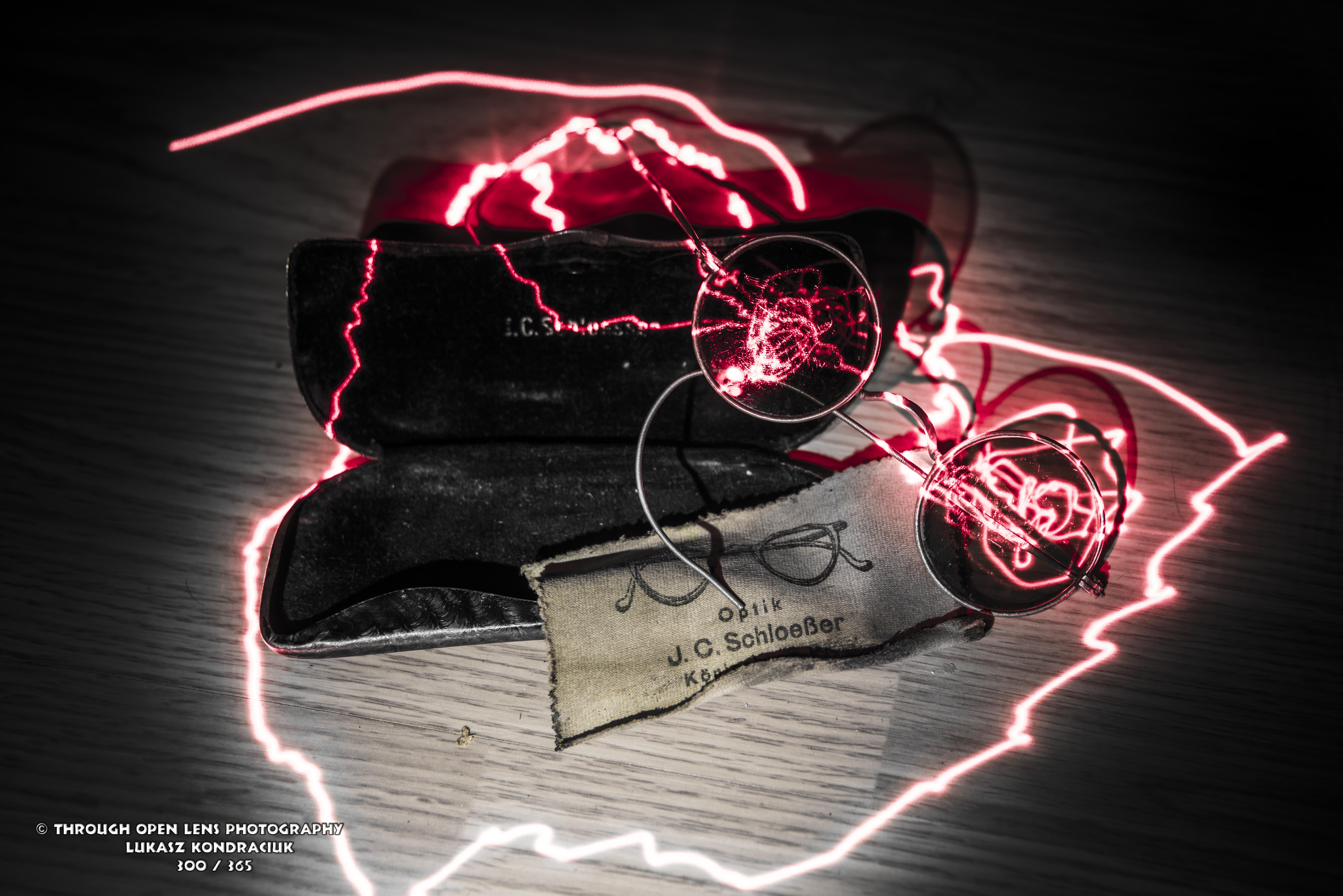
I Wear My Sunglasses At Night

sunglasses

F/ 5.3, 46.0, ISO 64.

Day 300 / 365

Two men who are out walking their dogs meet on a street corner.
One says to the other, “Boy it sure is hot today. I’d really like to go into the bar and get a beer, but the sign on the front door says, ‘No Pets Allowed,’ and I can’t leave Fido alone on the street.”
The other man replies, “No problem, just stand by the door and watch me, and you’ll be having that beer real soon!”
The second man reaches into his pocket and puts on a pair of dark sunglasses, and then walks into the bar. The bartender looks up and says, “Hey buddy, you can’t bring that dog in here!”
The man says, “But I’m blind, and this is my seeing-eye dog!”
The bartender says, “Oh, OK then.” The man drinks his beer and leaves.
The first man then puts on dark sunglasses and goes into the bar. The bartender looks up and says, “Hey buddy, you can’t bring that dog in here!”
The man says, “But I’m blind, and this is my seeing-eye dog!”
The bartender says, “Oh really? I’ve never heard of a Chihuahua seeing-eye dog!!”
The man, thinking quickly, blurts out, “Oh, man! You mean they gave me a Chihuahua?!?”

Interesting Fact: In prehistoric and historic time, Inuit peoples wore flattened walrus ivory “glasses,” looking through narrow slits to block harmful reflected rays of the sun. It is said that the Roman emperor Nero liked to watch gladiator fights with emeralds. These, however, appear to have worked rather like mirrors. Sunglasses made from flat panes of smoky quartz, which offered no corrective powers but did protect the eyes from glare were used in China in the 12th century or possibly earlier. Ancient documents describe the use of such crystal sunglasses by judges in ancient Chinese courts to conceal their facial expressions while questioning witnesses. ( https://en.wikipedia.org/wiki/Sunglasses#History )


Rock Out!

guitar

F/3.5, 118.0, ISO 64.

Day 299 / 365

How do you know someone’s a really good guitarist?

He’ll tell you!

Interesting Fact: Before the development of the electric guitar and the use of synthetic materials, a guitar was defined as being an instrument having “a long, fretted neck, flat wooden soundboard, ribs, and a flat back, most often with incurved sides”.[1] The term is used to refer to a number of chordophones that were developed and used across Europe, beginning in the 12th century and, later, in the Americas.[2] A 3,300-year-old stone carving of a Hittite bard playing a stringed instrument is the oldest iconographic representation of a chordophone and clay plaques from Babylonia show people playing an instrument that has a strong resemblance to the guitar, indicating a possible Babylonian origin for the guitar. ( https://en.wikipedia.org/wiki/Guitar )


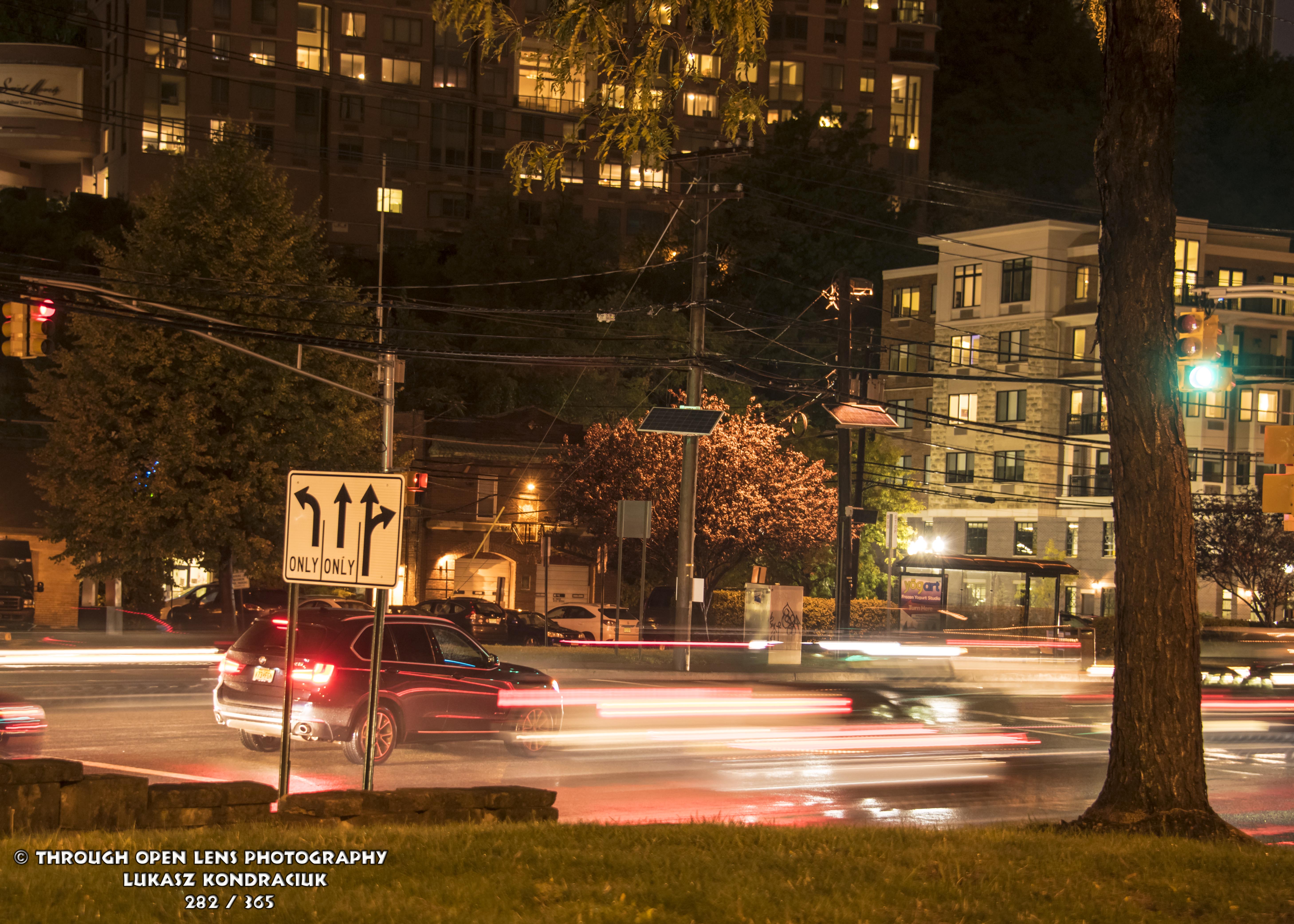
The Best Thing One Can Do When It’s Raining, Is To Let It Rain!

raining night

F/ 4.8, 5.0, ISO 500.

Day 282 / 365

What often falls but never gets hurt?

Rain

Interesting Fact: Rain occurs on other planets in our Solar System but it is different to the rain we experience here on Earth. For example, rain on Venus is made of sulfuric acid and due to the intense heat it evaporates before it even reaches the surface! ( http://www.sciencekids.co.nz/sciencefacts/weather/rain.html )

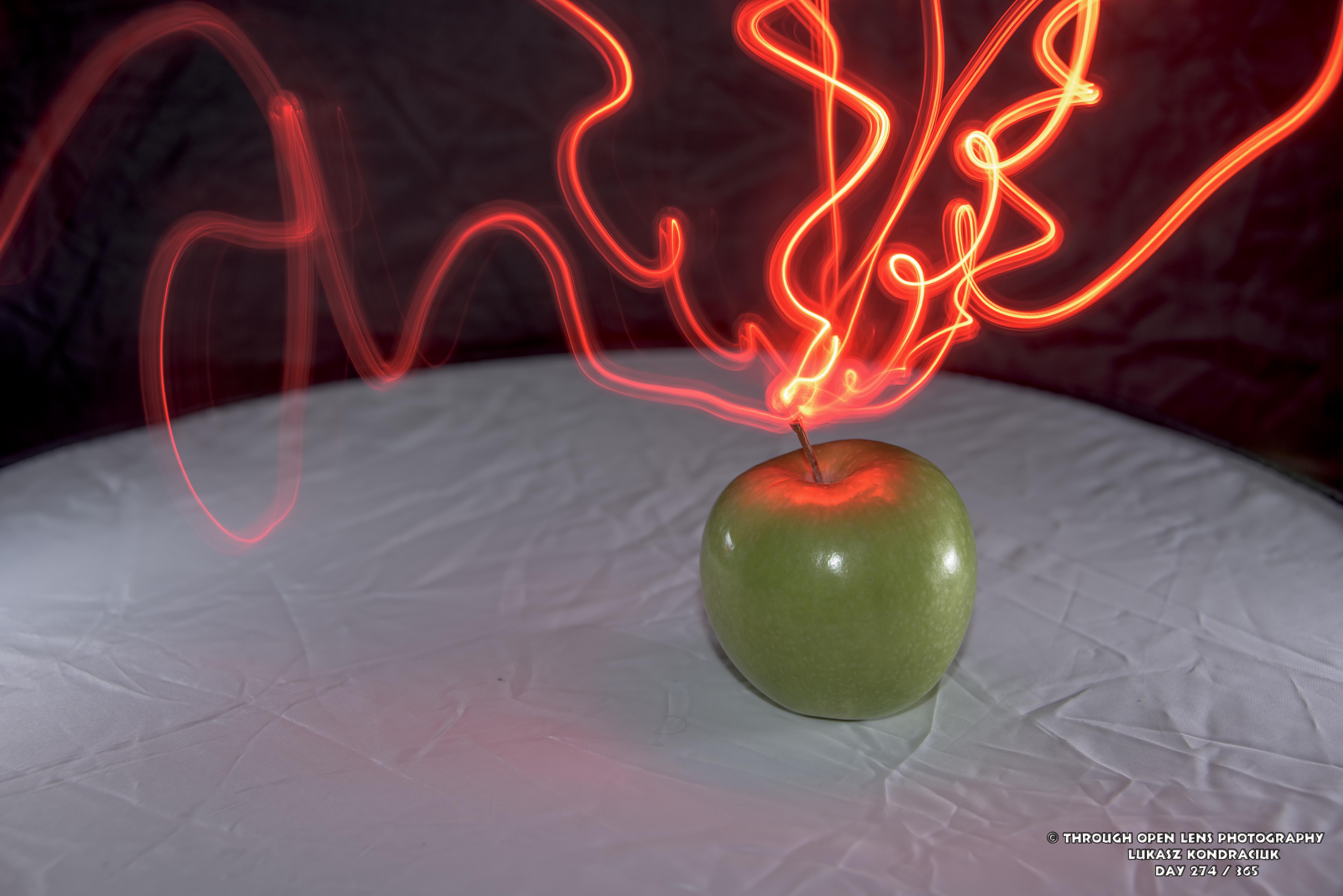
An Apple A Day Keeps The Doctor Away!

apple

F/5.0, 36.0, ISO 64.

Day 274 / 365

How do you make an apple turnover?
Push it down hill.

Interesting Fact: Two-thirds of the fiber and lots of antioxidants in apples are found in the peel. ( http://stylecaster.com/beauty-high/apple-facts/ )


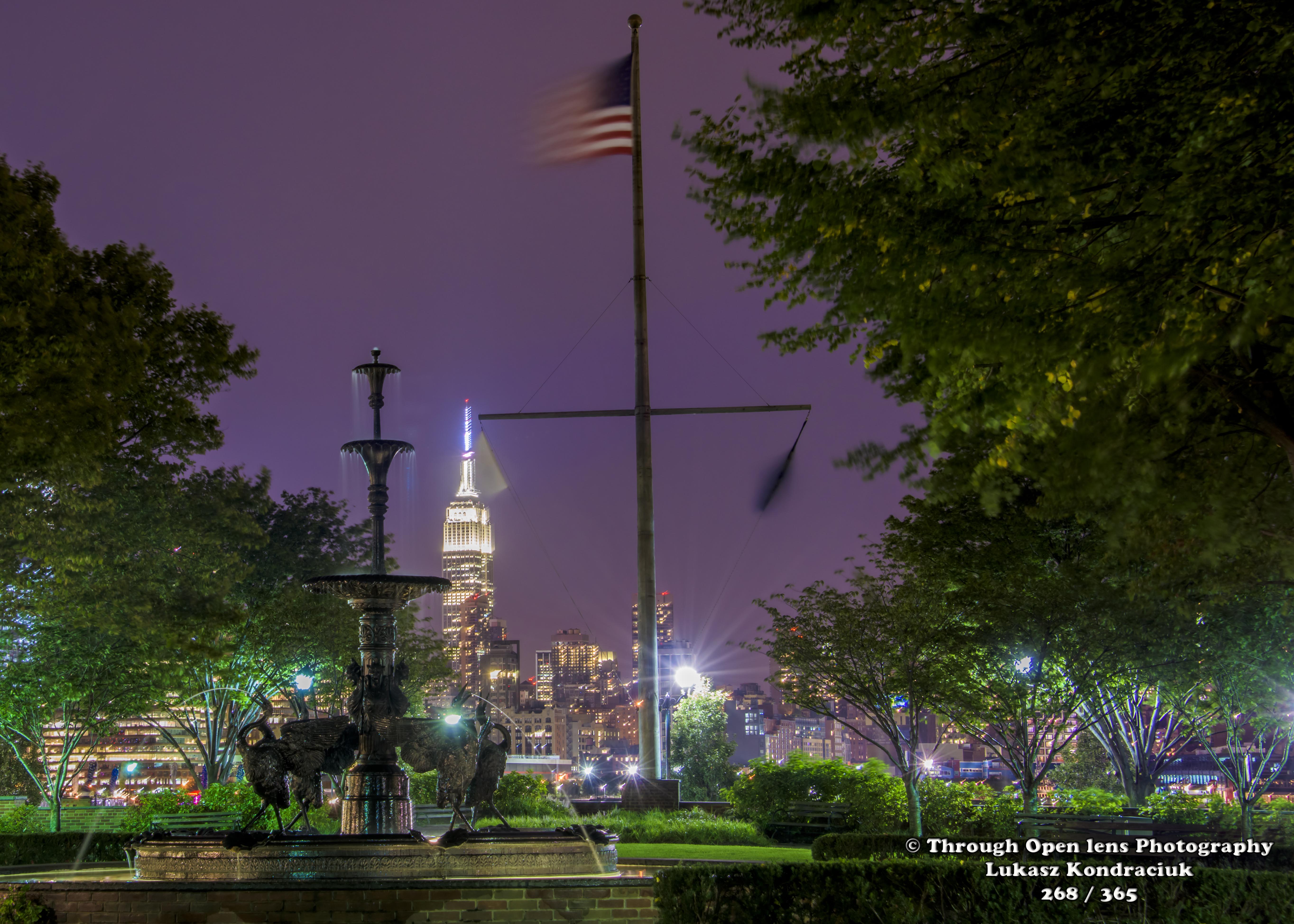
I Found Fountain Of Youth, But I Wasn’t Thirsty.

hoboken park

F/10.0, 30.0, ISO 100.

Day 268 / 365

A drunk falls into one of the fountains in Trafalgar Square. Floundering around, he looks up and sees Nelson standing on his column.

“Don’t jump!” he shouts. “This is the shallow end!”

Interesting Fact: The ancient Greeks were apparently the first to use aqueducts and gravity-powered fountains to distribute water. According to ancient historians, fountains existed in Athens, Corinth, and other ancient Greek cities in the 6th century BC as the terminating points of aqueducts which brought water from springs and rivers into the cities. In the 6th century BC the Athenian ruler Peisistratos built the main fountain of Athens, the Enneacrounos, in the Agora, or main square. It had nine large cannons, or spouts, which supplied drinking water to local residents. ( https://en.wikipedia.org/wiki/Fountain )

Imagine What Else Is Out There.

Jersey City

F/ 14.0, 30.0, ISO 100.

Day 253 / 365

What did the painter say to the wall?

One more crack like that and I’ll plaster ya.

Interesting Fact: The land comprising what is now Jersey City was inhabited by the Lenape, a collection of tribes (later called Delaware Indian). In 1609, Henry Hudson, seeking an alternate route to East Asia, anchored his small vessel Halve Maen (English: Half Moon) at Sandy Hook, Harsimus Cove and Weehawken Cove, and elsewhere along what was later named the North River. After spending nine days surveying the area and meeting its inhabitants, he sailed as far north as Albany. By 1621, the Dutch West India Company was organized to manage this new territory and in June 1623, New Netherland became a Dutch province, with headquarters in New Amsterdam. Michael Reyniersz Pauw received a land grant as patroon on the condition that he would establish a settlement of not fewer than fifty persons within four years. He chose the west bank of the North River (Hudson River) and purchased the land from the Lenape. This grant is dated November 22, 1630 and is the earliest known conveyance for what are now Hoboken and Jersey City. Pauw, however, was an absentee landlord who neglected to populate the area and was obliged to sell his holdings back to the Company in 1633.[29] That year, a house was built at Communipaw for Jan Evertsen Bout, superintendent of the colony, which had been named Pavonia (the Latinized form of Pauw’s name, which means peacock).[30] Shortly after, another house was built at Harsimus Cove and became the home of Cornelius Van Vorst, who had succeeded Bout as superintendent, and whose family would become influential in the development of the city. Relations with the Lenape deteriorated, in part because of the colonialist’s mismanagement and misunderstanding of the indigenous people, and led to series of raids and reprisals and the virtual destruction of the settlement on the west bank. During Kieft’s War, approximately eighty Lenapes were killed by the Dutch in a massacre at Pavonia on the night of February 25, 1643. ( https://en.wikipedia.org/wiki/Jersey_City,_New_Jersey#Lenape_and_New_Netherland )

Tick Tock Goes The Clock!

Colgate Clock

F/18.0, 30.0, ISO 100.

Day 249 / 365

What does a wall clock do after it stops ticking?

It hangs around.

Interesting Fact: The current Colgate Clock was built in 1924 to replace an earlier clock designed by Colgate engineer Warren Davey, which was constructed by the Seth Thomas Clock Company for Colgate’s centennial in 1906. After the current clock’s construction, the earlier clock was relocated to a Colgate factory in Clarksville, Indiana.[1][2][3] The Jersey City clock was maintained by John A. Winters from the 1930s until his retirement in 1976. ( https://en.wikipedia.org/wiki/Colgate_Clock_(Jersey_City))