I Don’t Think You Want To Pull His Finger

Skunk

F/6.3, 1/160, ISO 1600.

Skunk

Day 256 / 365

Have you heard the skunk joke?

You don’t want to; it really stinks!

Interesting Fact: Skunks are legendary for their powerful predator-deterrent—a hard-to-remove, horrible-smelling spray. A skunk’s spray is an oily liquid produced by glands under its large tail. To employ this scent bomb, a skunk turns around and blasts its foe with a foul mist that can travel as far as ten feet (three meters). ( http://animals.nationalgeographic.com/animals/mammals/skunk/ )

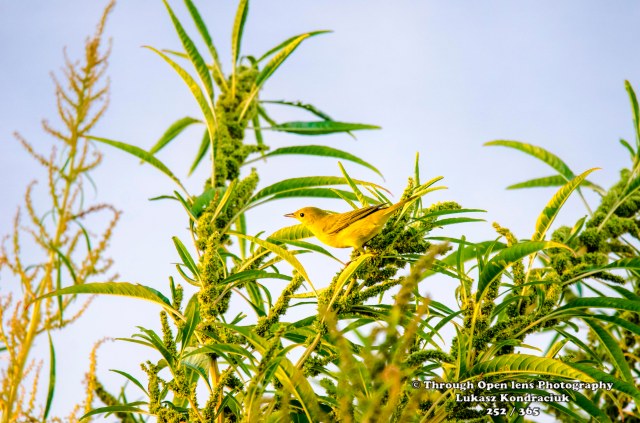
Yellow Is Back!

Yellow Warbler 2

F/6.3, 1/500, ISO 1600.

Yellow Warbler

Day 252 / 365

Daughter: Mom, can I have a yellow bird for Christmas?
Mom: NO! You’ll have turkey like everyone else.

Interesting Fact: Yellow Warblers forage along slender branches of shrubs and small trees, picking off insect prey as they go or briefly hovering to get at prey on leaves. Singing males perch near the tops of the bushes or trees in their territory. As male Yellow Warblers are setting up territories they may perform a “circle flight” in which they fly toward a neighboring male or female in a horizontal, semicircular path. A male may also fly slowly with fast, exaggerated wingbeats away from a female he is courting or a male he is competing with. As these territorial encounters proceed, males start by singing at each other; as the dispute goes on, the songs get quieter or switch to chip notes as the males begin to chase each other. Yellow Warblers typically form monogamous pairs that sometimes last more than one breeding season and reform the next. Yellow Warblers defend their nesting territories from many species, including other warbler species, chickadees, House Wrens, blackbirds, and Eastern Kingbirds. They may even chase off other warbler species while on their wintering grounds. Common predators of Yellow Warbler nests include garter snakes, red squirrels, jays, crows, raccoons, weasels, skunks, and domestic or feral cats. ( http://www.allaboutbirds.org/guide/Yellow_Warbler/lifehistory )

I Choose To Shine!

Sunflowers

F/6.0, 1/60, ISO 250.

Sunflowers

Day 236 / 365

Roses are red, violets are blue. sunflowers are yellow, i bet you were expecting something romantic but no this is just gardening facts.

Interesting Fact: The sunflower is native to the America’s and was used extensively by Native American Indians for food, as oil, in bread, medical ointments, dyes and body paints. ( http://www.sciencekids.co.nz/sciencefacts/plants/sunflowers.html )


Yeah We Lift!

cranes

F/9.0, 1/320, ISO 100.

Day 225 / 365

Crane party, they can get down and they can really raise the roof!

Interesting Fact: The crane for lifting heavy loads was invented by the Ancient Greeks in the late 6th century BC.[1] The archaeological record shows that no later than c.515 BC distinctive cuttings for both lifting tongs and lewis irons begin to appear on stone blocks of Greek temples. Since these holes point at the use of a lifting device, and since they are to be found either above the center of gravity of the block, or in pairs equidistant from a point over the center of gravity, they are regarded by archaeologists as the positive evidence required for the existence of the crane. ( https://en.wikipedia.org/wiki/Crane_(machine)#History )

Families Are Like Fudge Mostly Sweet With A Few Nuts

Greater Yellowlegs 1

F/ 6.3, 1/1000, ISO 640.

Greater Yellowlegs

Day 223 / 365

How do baby birds learn to fly?

They wing it!

Interesting Fact: They often feed actively, running after fish or other fast-moving aquatic prey. ( http://identify.whatbird.com/obj/252/overview/Greater_Yellowlegs.aspx )

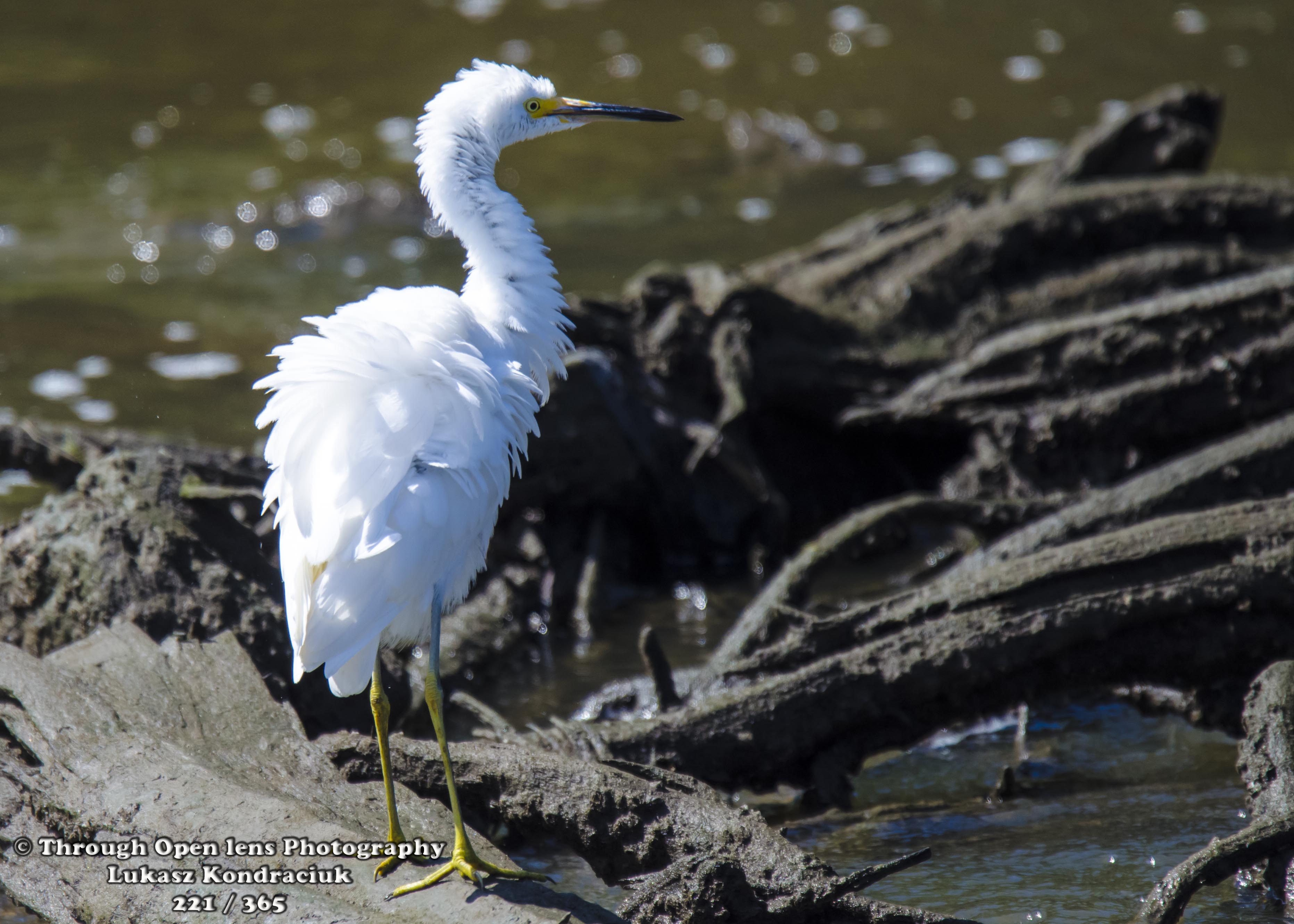
I Got Chills. They’re Multiplying. And I’m Losing Control ‘Cause The Power You’re Supplying. It’s Electrifying!

© Through Open lens Photography

F/6.3, 1/1250, ISO 400.

Great Egret

Day 221 / 365

What do you get when you kiss a diseased bird?

Cherpies

Interesting Fact: Resident to medium-distance migrant. Most Great Egrets move south for winter, traveling as far as the West Indies or southern Central America. They migrate by day in small flocks. During mild years, Great Egrets may stay as far north as Massachusetts. Individuals from the southern U.S. may not migrate at all. In late summer and fall, Great Egrets range widely over the continent. ( http://www.allaboutbirds.org/guide/Great_Egret/lifehistory )


Check Out My Split!

Red-winged blackbird

F/6.3, 1/500, ISO 1250.

Day 106 / 365

“Eat your heart out John Claude Van Dam”

Interesting Fact: Red-winged Blackbirds roost in flocks in all months of the year. In summer small numbers roost in the wetlands where the birds breed. Winter flocks can be congregations of several million birds, including other blackbird species and starlings. Each morning the roosts spread out, traveling as far as 50 miles to feed, then re-forming at night. ( http://www.allaboutbirds.org/guide/Red-winged_Blackbird/lifehistory )

Holy Smokes Batman!

American Robin

F/6.3, 1/320, ISO 400.

American Robin

Day 96 / 365

Where do birds invest their money?
In the stork market!

Interesting Fact: Although robins are considered harbingers of spring, many American Robins spend the whole winter in their breeding range. But because they spend more time roosting in trees and less time in your yard, you’re much less likely to see them. The number of robins present in the northern parts of the range varies each year with the local conditions. ( http://www.allaboutbirds.org/guide/American_Robin/lifehistory )

Nite Nite Sleep Tight

Mallard

F/6.3, 1/320, ISO 1600.

Mallard Ducks

Black and White  Day 4 of 5

Day 92 / 365

What time does a duck wake up?

At the quack of dawn!

Interesting Fact: Ducks are strong fliers; migrating flocks of Mallards have been estimated traveling at 55 miles per hour.  ( http://www.allaboutbirds.org/guide/Mallard/lifehistory )

I was challenged by Cynthia at http://cynthiamvoss.wordpress.com/  to take up the Black and White 5-Day Challenge.  Part of the fun is to nominate another blogger, one on each day.

Today, I nominate Alix  of https://alixbleus.wordpress.com/ Alix, if you accept, the goal is to post one B&W photo each day for five days, and to nominate a fellow blogger each day to join in.

There is no pressure to accept this challenge. It’s just for fun!    🙂


Quack, Quack, Another Duck!

Green-winged Teal

F/6.3, 1/40, 1600.

Green-winged teal

Day 83 / 365

Why did the duck fly south for the winter?

Because it was too far to walk.

Interesting Fact:   This is the smallest North American dabbling duck.  ( http://identify.whatbird.com/obj/350/overview/Green-winged_Teal.aspx )