“Make Sure You Get My Good Side.”

Bananaquit

F/6.3, 1/50, ISO 1600.

Bananaquit

Day 134 /365

Why do birds fly south for the winter?
Because it’s too far to walk!

Interesting Fact: It uses its sharp beak to pierce a flower from the side, taking the nectar without actually pollinating the plant. They cannot hover like a hummingbird, and must always perch while feeding. ( http://identify.whatbird.com/obj/1014/overview/Bananaquit.aspx )

Upside Down You’re Turning Me!

Black-and-white Warbler

F/6.3, 1/500, ISO 1100.

Black-and-white Warbler

Day 120 / 365

I too used to swinging upside down from the tree when I was young. But I think he has me beat.   🙂

Interesting Fact: Black-and-white Warblers have an extra-long hind claw and heavier legs than other wood-warblers, which help them hold onto and move around on bark. ( http://www.allaboutbirds.org/guide/Black-and-white_Warbler/lifehistory )

Beautiful Flowers, But They Smell Terrible.

tree flowers

F/6.3, 1/200, ISO 125.

Day 119 / 356

Why is the letter A like a flower?
A bee (B) comes after it!

Interesting Fact: The oldest living organism on Earth is believed to be the “Pando” colony of Quaking Aspen (Populus tremuloides) in Utah, also known as the Trembling Giant. The colony of trees covers some 41.7 hectares (103 acres) and is estimated to weigh nearly 6,000,000 kilograms (6,600 tons), making it also the heaviest known organism. Being a clonal colony, the tree “trunks” all share identical genetic makeup. It is estimated that parts of the inter-connected root stock that links the colony together is in excess of 80,000 years old! ( http://landarchs.com/8-amazing-facts-trees-didnt-know/ )

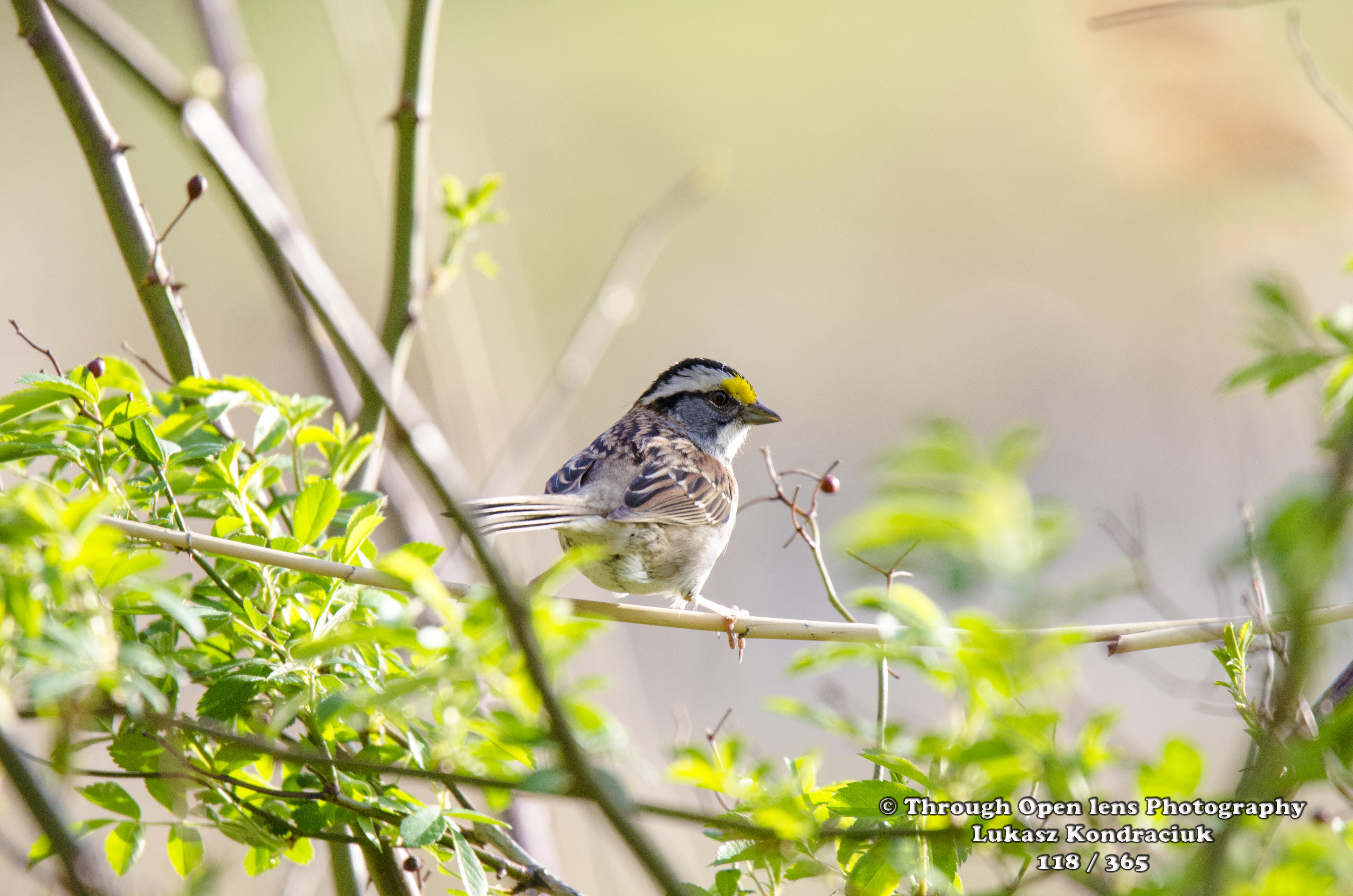
Don’t Sneak Up On Me! I See You!

White-throated Sparrow

F/6.3, 1/640, ISO 800.

White-throated Sparrow

Day 118 / 365

How does a bird with a broken wing manage to land safely?
With its sparrowchute.

Interesting Fact: The White-throated Sparrow comes in two color forms: white-crowned and tan-crowned. The two forms are genetically determined, and they persist because individuals almost always mate with a bird of the opposite morph. Males of both color types prefer females with white stripes, but both kinds of females prefer tan-striped males. White-striped birds are more aggressive than tan-striped ones, and white-striped females may be able to outcompete their tan-striped sisters for tan-striped males. ( http://www.allaboutbirds.org/guide/White-throated_Sparrow/lifehistory )

Angry Bird!

Northern Cardinal

F/6.3, 1/200, ISO 125

Northern Cardinal

Day 117 / 365

You wouldn’t like him when he’s angry. For more info ask the pigs!   🙂

Interesting Fact: Many people are perplexed each spring by the sight of a cardinal attacking its reflection in a window, car mirror, or shiny bumper. Both males and females do this, and most often in spring and early summer when they are obsessed with defending their territory against any intruders. Birds may spend hours fighting these intruders without giving up. A few weeks later, as levels of aggressive hormones subside, these attacks should end (though one female kept up this behavior every day or so for six months without stopping).  ( http://www.allaboutbirds.org/guide/Northern_Cardinal/lifehistory )

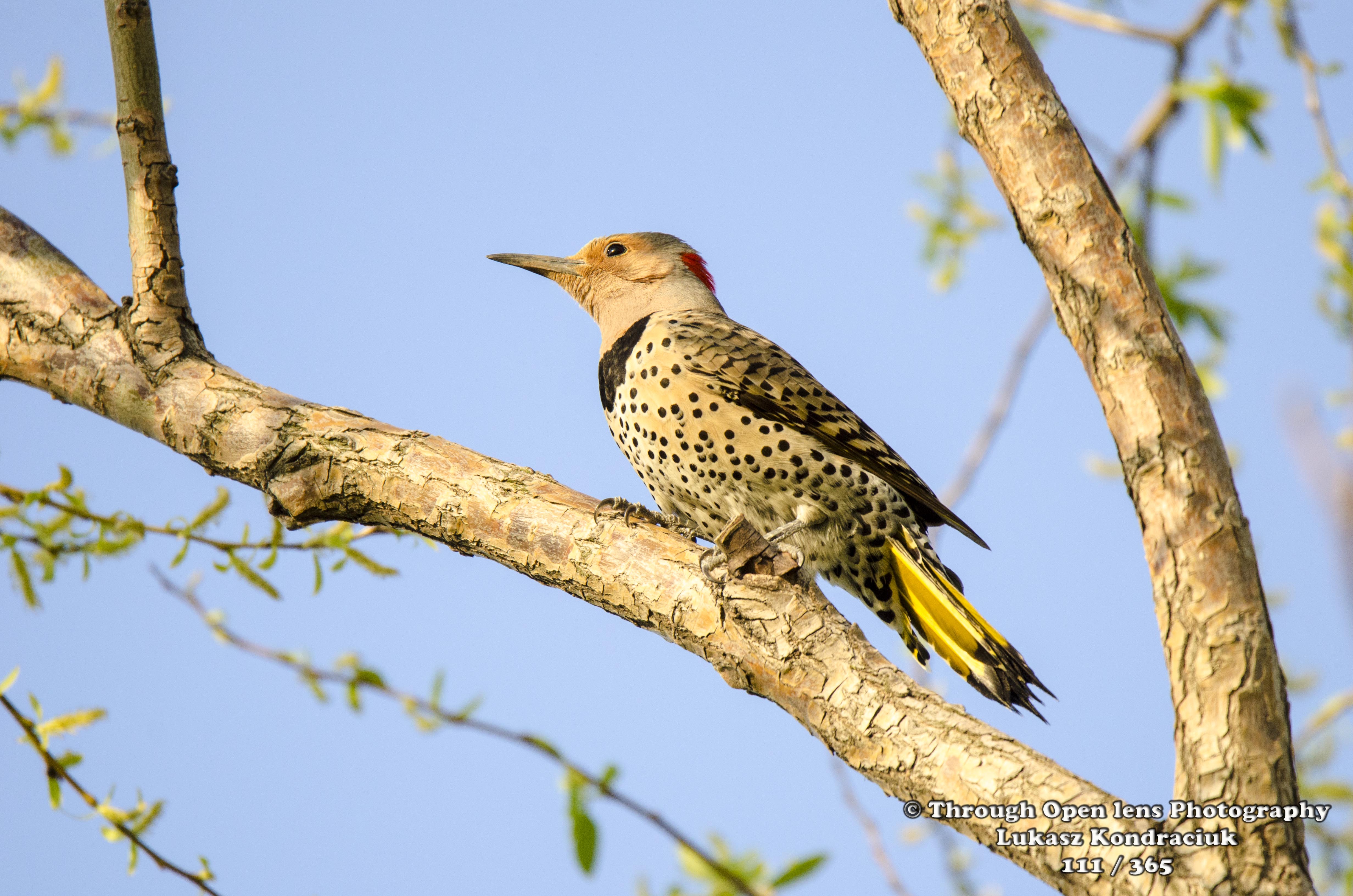
Guess who? Wha ha hahaha! Wha ha hahaha! Hahahahahahahaha!

Northern Flicker woodpacker

F/6.3, 1/1000, ISO 800.

Northern Flicker

Day 111 / 365

What do you call a woodpecker that lost his beak?

A Head-Banger.

Interesting Fact: Although it can climb up the trunks of trees and hammer on wood like other woodpeckers, the Northern Flicker prefers to find food on the ground. Ants are its main food, and the flicker digs in the dirt to find them. It uses its long barbed tongue to lap up the ants. ( http://www.allaboutbirds.org/guide/Northern_Flicker/lifehistory )

Check Out My Split!

Red-winged blackbird

F/6.3, 1/500, ISO 1250.

Day 106 / 365

“Eat your heart out John Claude Van Dam”

Interesting Fact: Red-winged Blackbirds roost in flocks in all months of the year. In summer small numbers roost in the wetlands where the birds breed. Winter flocks can be congregations of several million birds, including other blackbird species and starlings. Each morning the roosts spread out, traveling as far as 50 miles to feed, then re-forming at night. ( http://www.allaboutbirds.org/guide/Red-winged_Blackbird/lifehistory )

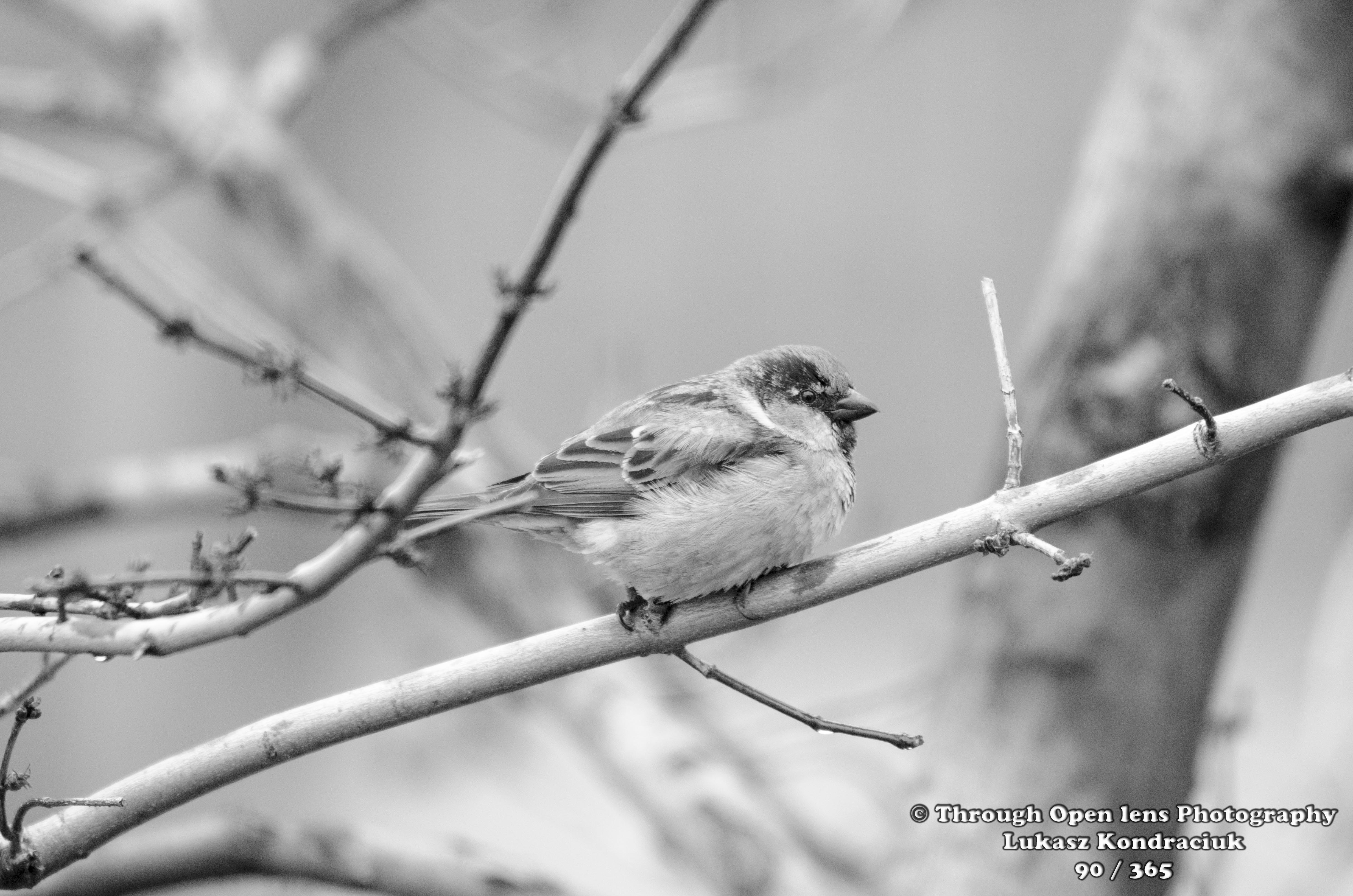
Backyard Bully!

House Sparrow

F/6.3, 1/320, ISO 1600.

House Sparrow

Black and White  Day 2 of 5

Day 90 / 365

This little guy was bullying all the other birds today. So small yet so feisty.

Interesting Fact: The House Sparrow takes frequent dust baths. It throws soil and dust over its body feathers, just as if it were bathing with water. In doing so, a sparrow may make a small depression in the ground, and sometimes defends this spot against other sparrows. ( http://www.allaboutbirds.org/guide/House_Sparrow/lifehistory )

I was challenged by Cynthia at http://cynthiamvoss.wordpress.com/  to take up the Black and White 5-Day Challenge.  Part of the fun is to nominate another blogger, one on each day.

Today, I nominate Maggie of https://magscorner.wordpress.com/ Maggie, if you accept, the goal is to post one B&W photo each day for five days, and to nominate a fellow blogger each day to join in.

There is no pressure to accept this challenge. It’s just for fun!    🙂

First Day Of Spring

snow

F/5.0, 1/125, ISO 900.

Day 79 / 365

It is the first day of spring and winter is not giving up. I would say it is kicking spring butt.

Interesting Fact: On the first day of Spring the sunrise and sunset are about 12 hours apart, everywhere on the Earth and the hours of daylight and night are almost equal. Daylight is a little longer. ( http://www.kidsplayandcreate.com/what-happens-in-spring-when-is-spring-spring-facts-for-kids/ )

I Am Branching Out!

squirrel

F/6.3, 1/125, ISO 800.

Day 78 / 365

I made a flute out of this branch.  Now watch me play.  ♪ ♫ ♪ ♫ ♪ ♫       🙂

Interesting Fact: Squirrels communicate with each other through various vocalisations and scent marking. They also use their tails as a signalling device, twitching it when uneasy to alert other squirrels of potential danger. ( http://www.onekind.org/be_inspired/animals_a_z/squirrel/ )