You Would Think, It Would Be Another Knock Knock Joke

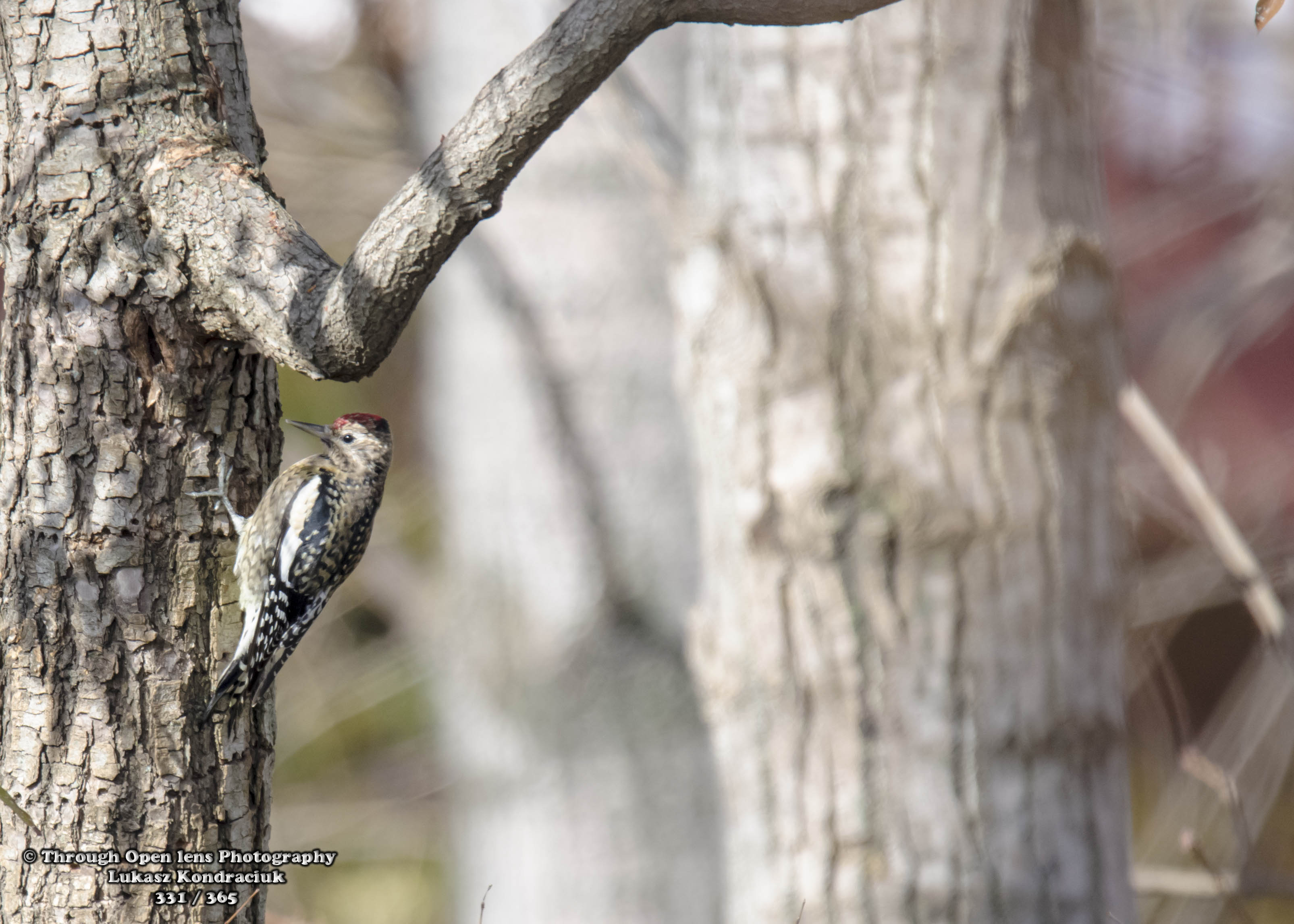
Yellow Bellied Sapsucker

F/ 6.3, 1/800, ISO 800.

Yellow Bellied Sapsucker

Day 331 / 365

What do you get if you cross a parrot with a woodpecker?

A bird that talks in mores code!

Interesting Fact: The sapwells made by Yellow-bellied Sapsuckers attract hummingbirds, which also feed off the sap flowing from the tree. In some parts of Canada, Ruby-throated Hummingbirds rely so much on sapwells that they time their spring migration with the arrival of sapsuckers. Other birds as well as bats and porcupines also visit sapsucker sapwells. ( https://www.allaboutbirds.org/guide/Yellow-bellied_Sapsucker/lifehistory )
Knock, Knock, Knocking On Heavens Door!

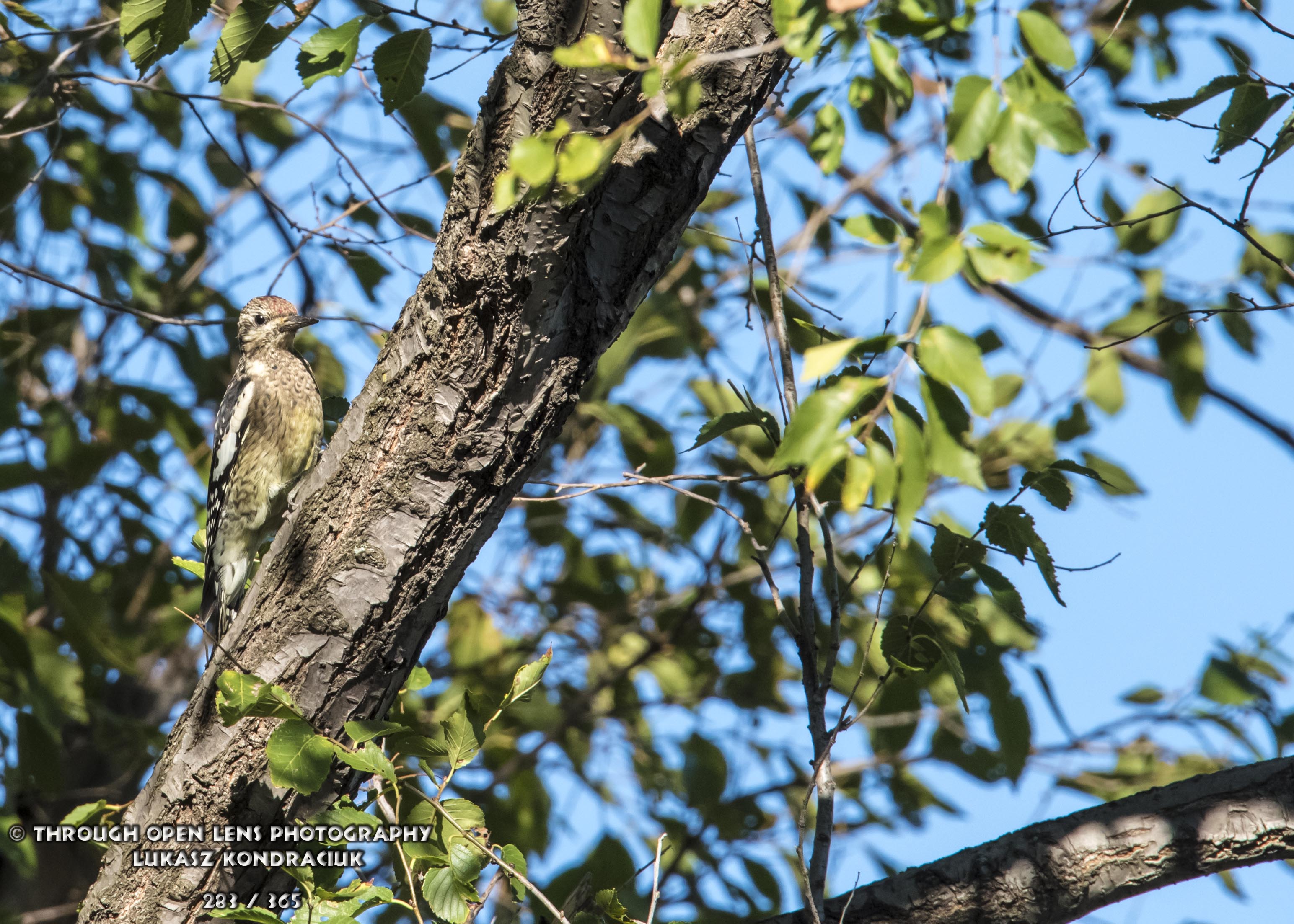
Yellow bellied sapsucker juvenile

F/11.0, 1/640, ISO800.

Yellow Bellied Sapsucker ( Juvenile )

Day 284 / 365

I used to have a woodpecker called Woody, until he attacked my fiancé.

I still can’t believe Woody would peck her.

Interesting Fact: The Yellow-bellied Sapsucker makes two kinds of holes in trees to harvest sap. Round holes extend deep in the tree and are not enlarged. The sapsucker inserts its bill into the hole to probe for sap. Rectangular holes are shallower, and must be maintained continually for the sap to flow. The sapsucker licks the sap from these holes, and eats the cambium of the tree too. New holes usually are made in a line with old holes, or in a new line above the old.  ( http://www.allaboutbirds.org/guide/Yellow-bellied_Sapsucker/lifehistory )
Guess who? Wha ha hahaha! Wha ha hahaha! Hahahahahahahaha!

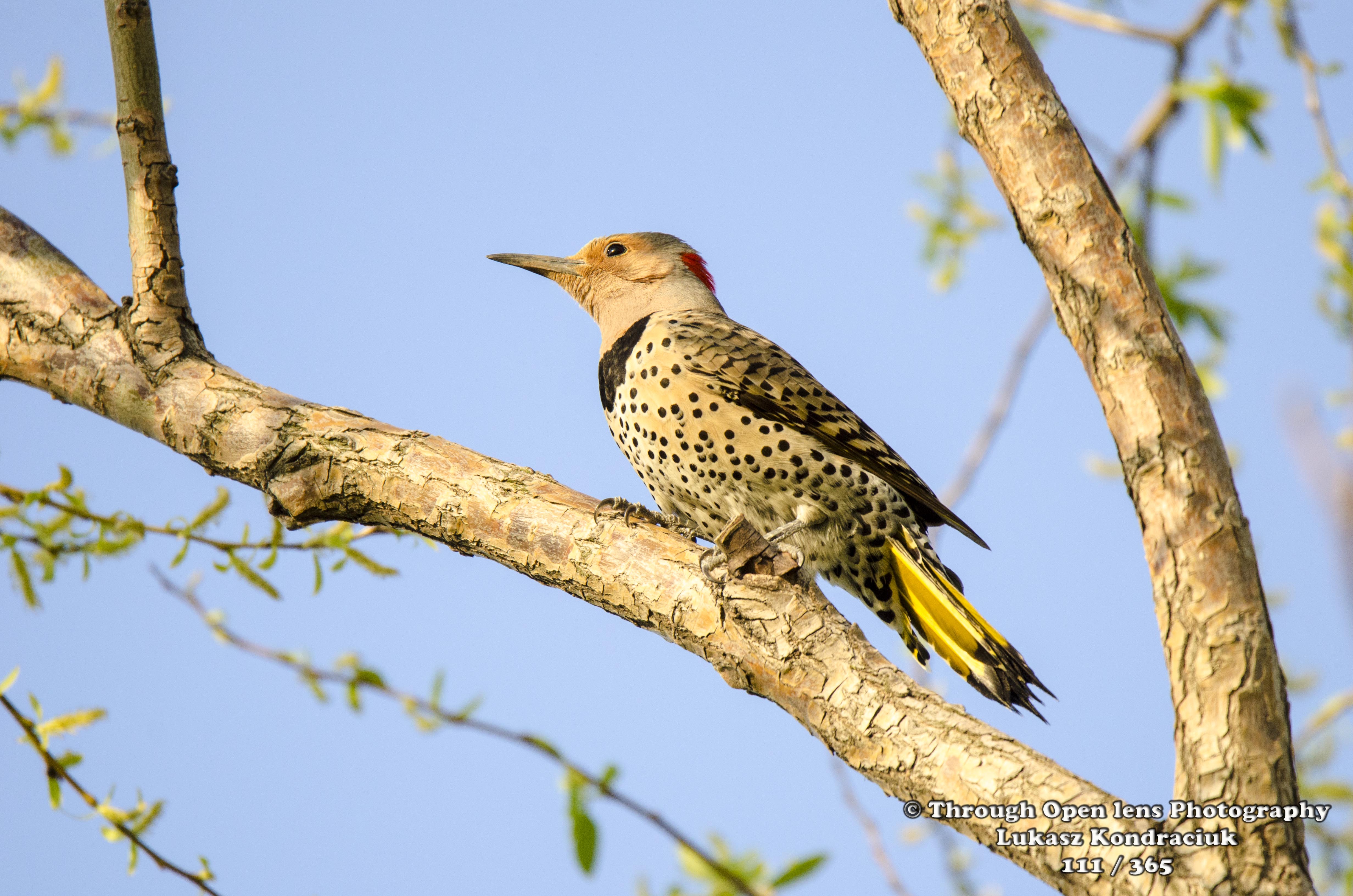
Northern Flicker woodpacker

F/6.3, 1/1000, ISO 800.

Northern Flicker

Day 111 / 365

What do you call a woodpecker that lost his beak?

A Head-Banger.

Interesting Fact: Although it can climb up the trunks of trees and hammer on wood like other woodpeckers, the Northern Flicker prefers to find food on the ground. Ants are its main food, and the flicker digs in the dirt to find them. It uses its long barbed tongue to lap up the ants. ( http://www.allaboutbirds.org/guide/Northern_Flicker/lifehistory )

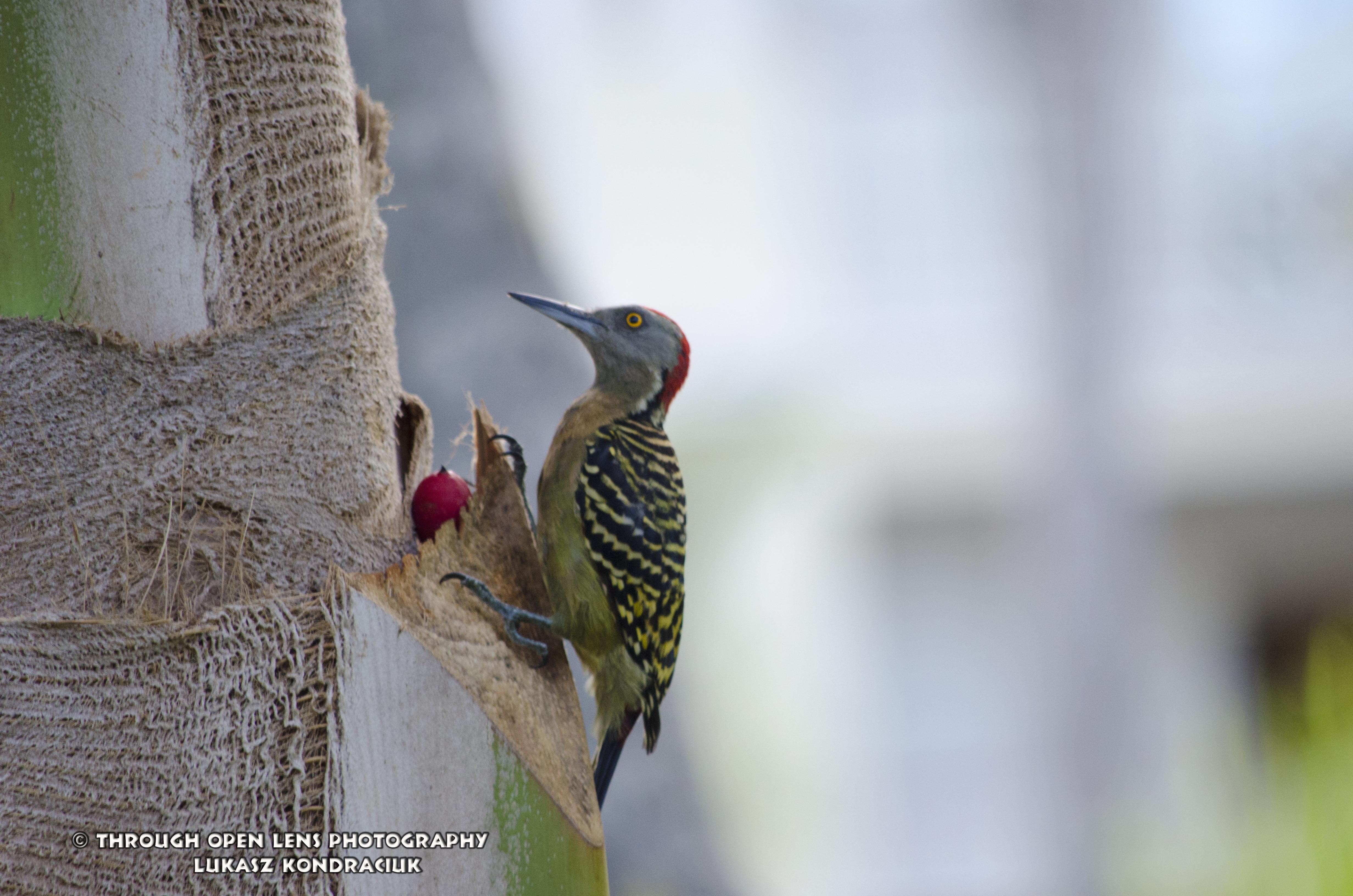
Dominican Brother From Another Mother

hispaniolan woodpecker

Hispaniolan Woodpecker

f/5.6, 1/125, ISO 900.

Caught this pecker, pecking away, pecking so hard that the palm tree kept swaying. Don’t peck so hard my little friend because you may go limp at the end.

I came across Hispaniolan Woodpecker in Dominican Republic, its very similar to Red-Bellied Woodpecker of my very first post.


Red-bellied Woodpecker

Red-Bellied Woodpecker

F/8.0, 1/1000, ISO 800.


Interesting Fact: Their habitat, which is restricted to Haiti and the Dominican Republic, extends from the coasts, over the deserts to the mountains of the island.  ( http://en.wikipedia.org/wiki/Hispaniolan_woodpecker )

Keep On Knocking But You Can’t Come In.

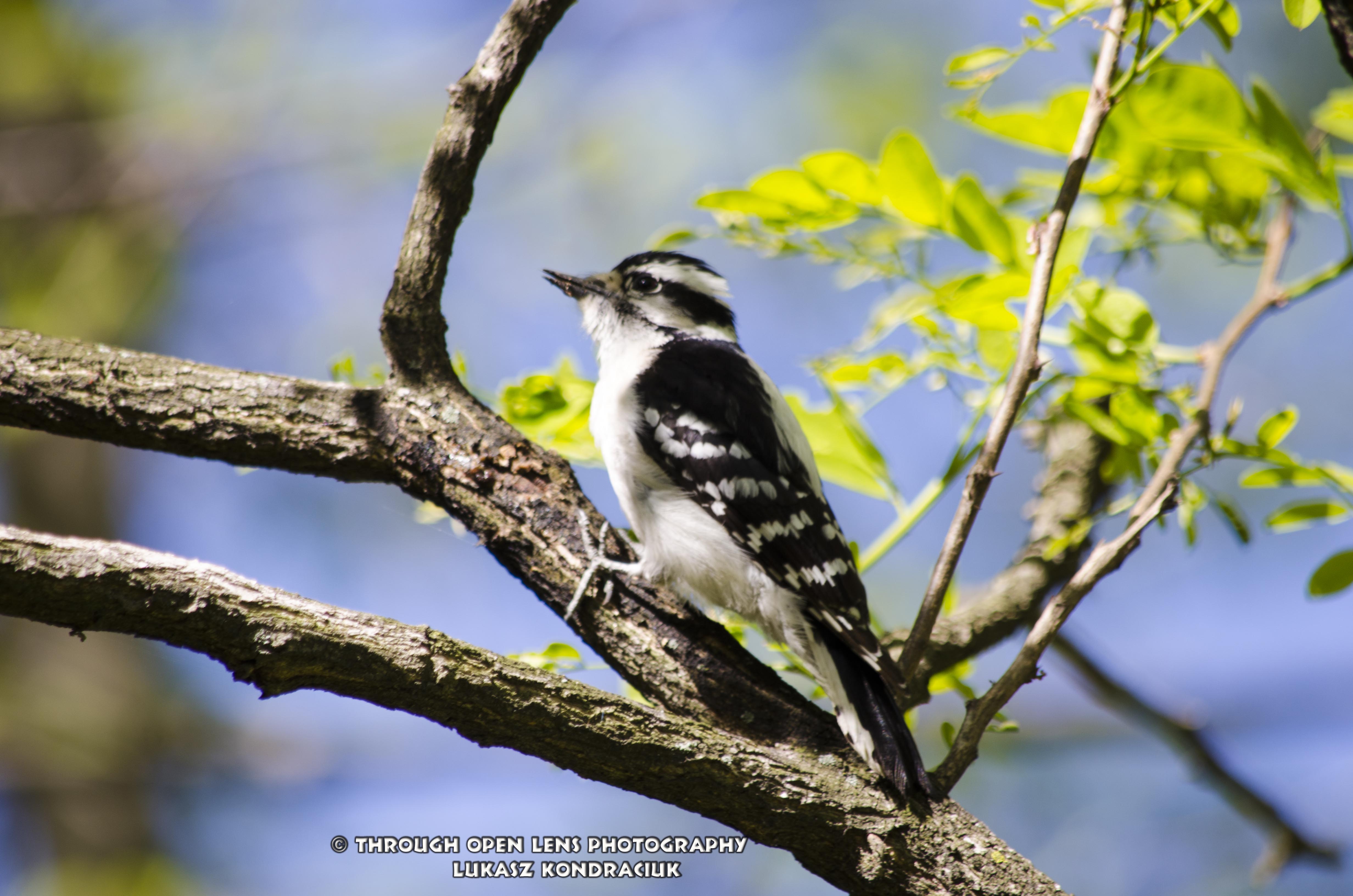
Downy Woodpecker

F/5.6, 1/160, ISO 100

Away on vacation strange knock I hear,

I open the door and what do I see

a Downy Woodpecker up In a tree.

I rush for my camera and run out the door

I snap a few photos and that’s about all.


Interesting Fact: Woodpeckers don’t sing songs, but they drum loudly against pieces of wood or metal to achieve the same effect. People sometimes think this drumming is part of the birds’ feeding habits, but it isn’t. In fact, feeding birds make surprisingly little noise even when they’re digging vigorously into wood. ( http://www.allaboutbirds.org/guide/downy_woodpecker/lifehistory )


Red-bellied Woodpecker

Red-bellied Woodpecker

Came across this little guy in Paterson, NJ.

Interesting Fact: The red-bellied woodpecker often creates “caches” of  food by drumming rows upon rows of small holes and wedging a single nut or seed  into each one.

300mm lens, F/8.0, 1/1000, with ISO 800