Knock, Knock, Knocking On Heavens Door!

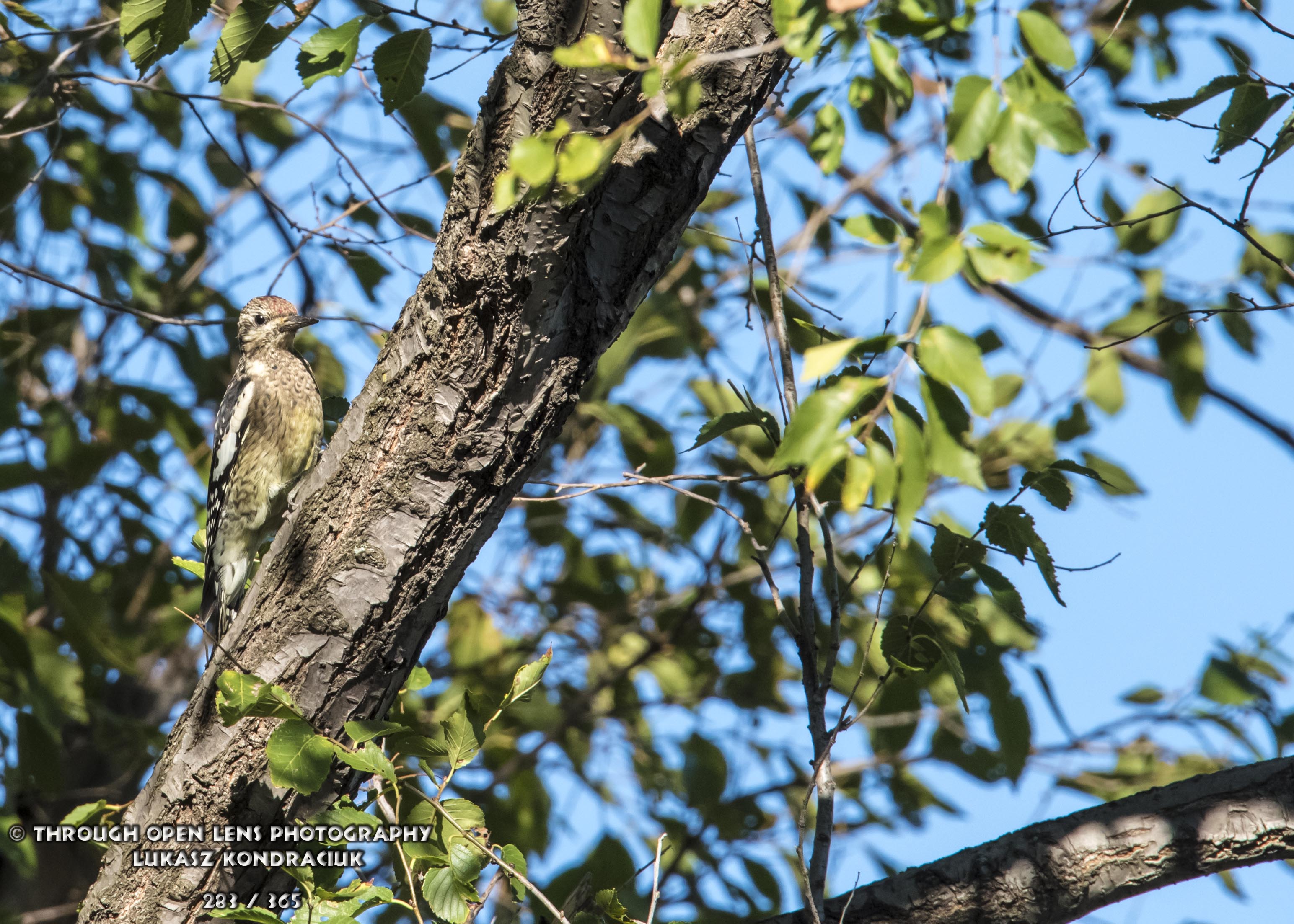
Yellow bellied sapsucker juvenile

F/11.0, 1/640, ISO800.

Yellow Bellied Sapsucker ( Juvenile )

Day 284 / 365

I used to have a woodpecker called Woody, until he attacked my fiancé.

I still can’t believe Woody would peck her.

Interesting Fact: The Yellow-bellied Sapsucker makes two kinds of holes in trees to harvest sap. Round holes extend deep in the tree and are not enlarged. The sapsucker inserts its bill into the hole to probe for sap. Rectangular holes are shallower, and must be maintained continually for the sap to flow. The sapsucker licks the sap from these holes, and eats the cambium of the tree too. New holes usually are made in a line with old holes, or in a new line above the old.  ( http://www.allaboutbirds.org/guide/Yellow-bellied_Sapsucker/lifehistory )

Having A Lathe Can Really Turn Things Around…

lathe

F/ 5.6, 1/250, ISO320.

Day 283 / 365

My friend applied for a job at a engineering firm to work on a lathe.

They turned him down!

Interesting Fact: In 1887, R. K. LeBlond founded the R. K. LeBlond Machine Tool Company to manufacture metal cutting lathes.[1] As a result of a joint venture with Makino Milling Machine, LeBlond Makino Machine Tool Company was formed in 1981. In 1996, LeBlond Makino Machine Tool Company changed its name to Makino. Then in 1997, LeBlond Lathe Parts was founded to focus on the service and support of all LeBlond lathe equipment manufactured since 1887. In 1998, after acquiring the W. F. & John Barnes Company, the company’s name was changed to LeBlond Ltd to reflect a broader business purpose. LeBlond continued its acquisition strategy by acquiring the Standard Modern lathe service parts business in 1999. The Johnson Press and Deka Drill service parts businesses were acquired from South Bend Lathe in 2001 and the South Bend Lathe and Dynablast parts businesses in March, 2002. LeBlond’s product support team had collectively 160 years of service with LeBlond Machine Tool Company, LeBlond Makino and Makino. ( https://en.m.wikipedia.org/wiki/R._K._LeBlond_Machine_Tool_Company )

The Best Thing One Can Do When It’s Raining, Is To Let It Rain!

raining night

F/ 4.8, 5.0, ISO 500.

Day 282 / 365

What often falls but never gets hurt?

Rain

Interesting Fact: Rain occurs on other planets in our Solar System but it is different to the rain we experience here on Earth. For example, rain on Venus is made of sulfuric acid and due to the intense heat it evaporates before it even reaches the surface! ( http://www.sciencekids.co.nz/sciencefacts/weather/rain.html )

Wiggle It Just A Little Bit

Palm Warbler

F/6.3, 1/80, ISO 500.

Palm Warbler

Day 281 / 365

A little boy comes in to a pet store.

Little boy : I’d like to buy some bird seed.
Clerk: How many birds do you have?
Little boy : None! I want to grow some!


Interesting Fact: The Palm Warbler can be most easily recognized by the tail-wagging habit that shows off its yellow undertail. ( http://identify.whatbird.com/obj/335/overview/Palm_Warbler.aspx )

Got Wood?

wooden coaster

F/5.3, 1/60, ISO160.

Day 280 / 365

What’s the best way to carve wood?

Whittle by whittle.

Interesting Fact: Wood, in the strict sense, is yielded by trees, which increase in diameter by the formation, between the existing wood and the inner bark, of new woody layers which envelop the entire stem, living branches, and roots. This process is known as secondary growth; it is the result of cell division in the vascular cambium, a lateral meristem, and subsequent expansion of the new cells. Where there are clear seasons, growth can occur in a discrete annual or seasonal pattern, leading to growth rings; these can usually be most clearly seen on the end of a log, but are also visible on the other surfaces. If these seasons are annual these growth rings are referred to as annual rings. Where there is no seasonal difference growth rings are likely to be indistinct or absent. ( https://en.wikipedia.org/wiki/Wood#History )

I’ve Been Waiting Patiently For You To Come In And Now! Get out!

Killdeer

F/8.0, 1/250, ISO 400.

Killdeer

Day 279 / 365

Why do birds fly south for the winter?

It’s quicker than driving.

Interesting Fact: They are ground-nesting birds that are famous for hiding their nests right out in the open. They really use no nesting materials and rely on distraction displays to protect their offspring. ( http://identify.whatbird.com/obj/101/overview/Killdeer.aspx )

Birds Of A Feather Flock Together

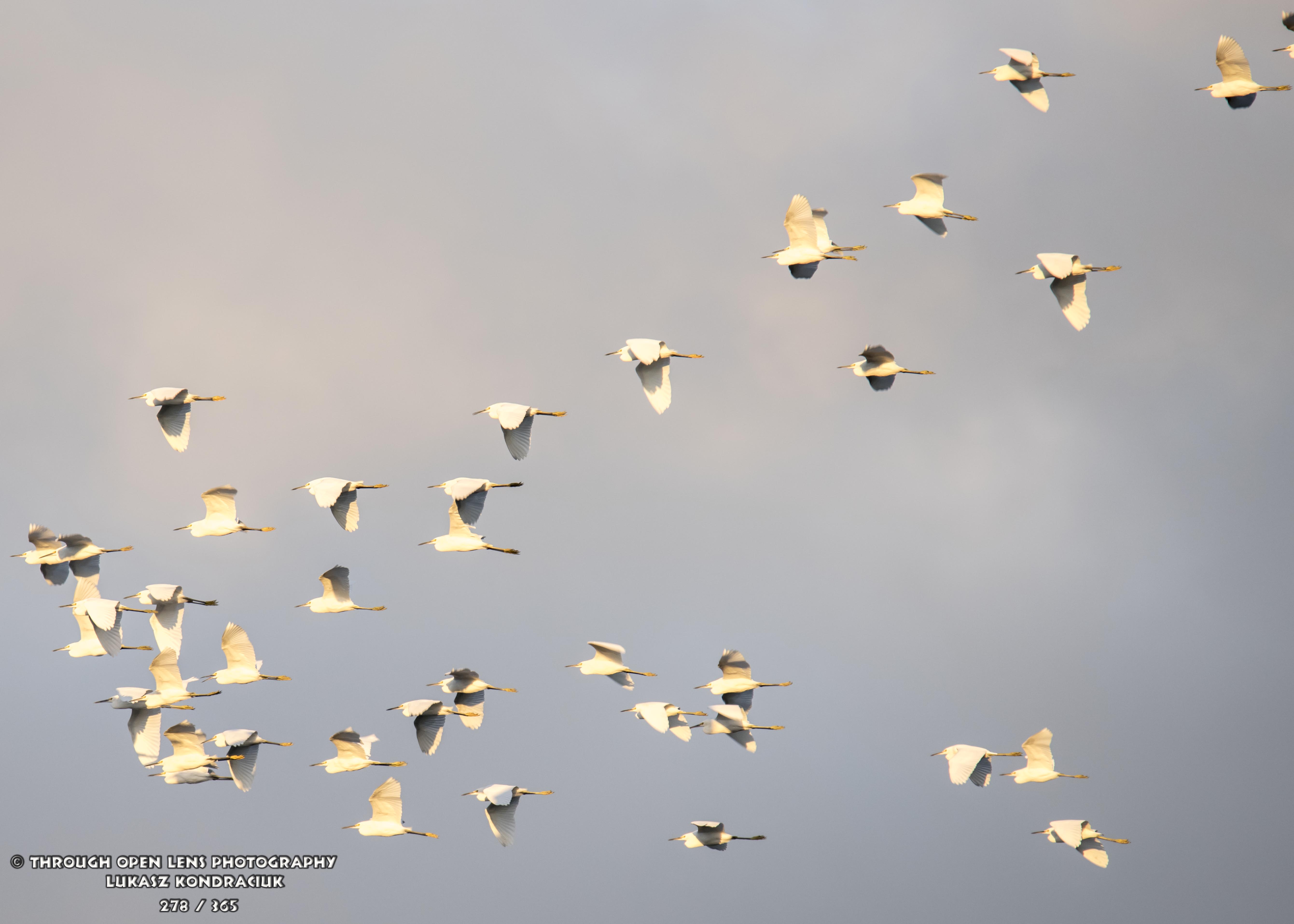
Snowy Egrets Flock

F/9.0, 1/320, ISO 320.

Snowy Egrets

Day 278 / 365

Why did the Snowy Egret fly away when they get scared?

Because it didn’t want to run away like a chicken.

Interesting Fact: There is evidence that a pair of Snowy Egrets cannot recognize each other except at the nest. Even there, a bird arriving to relieve its mate must perform an elaborate greeting ceremony in order to avoid being attacked as an intruder. ( http://identify.whatbird.com/obj/48/_/Snowy_Egret.aspx )

Don’t Worry We Goat This! 

Goats 1

F/13.0, 1/125, ISO 320.

Goats

Day 277 / 365

What do you call a goat with a beard?

Goatee!

Interesting Fact: Goats have excellent coordination. They have great balance and are thus able to survive in precarious areas such as steep mountains. They can even climb trees and some species can jump over 5 feet high. ( http://www.onekind.org/be_inspired/animals_a_z/goat/ )

Wanna Screw?

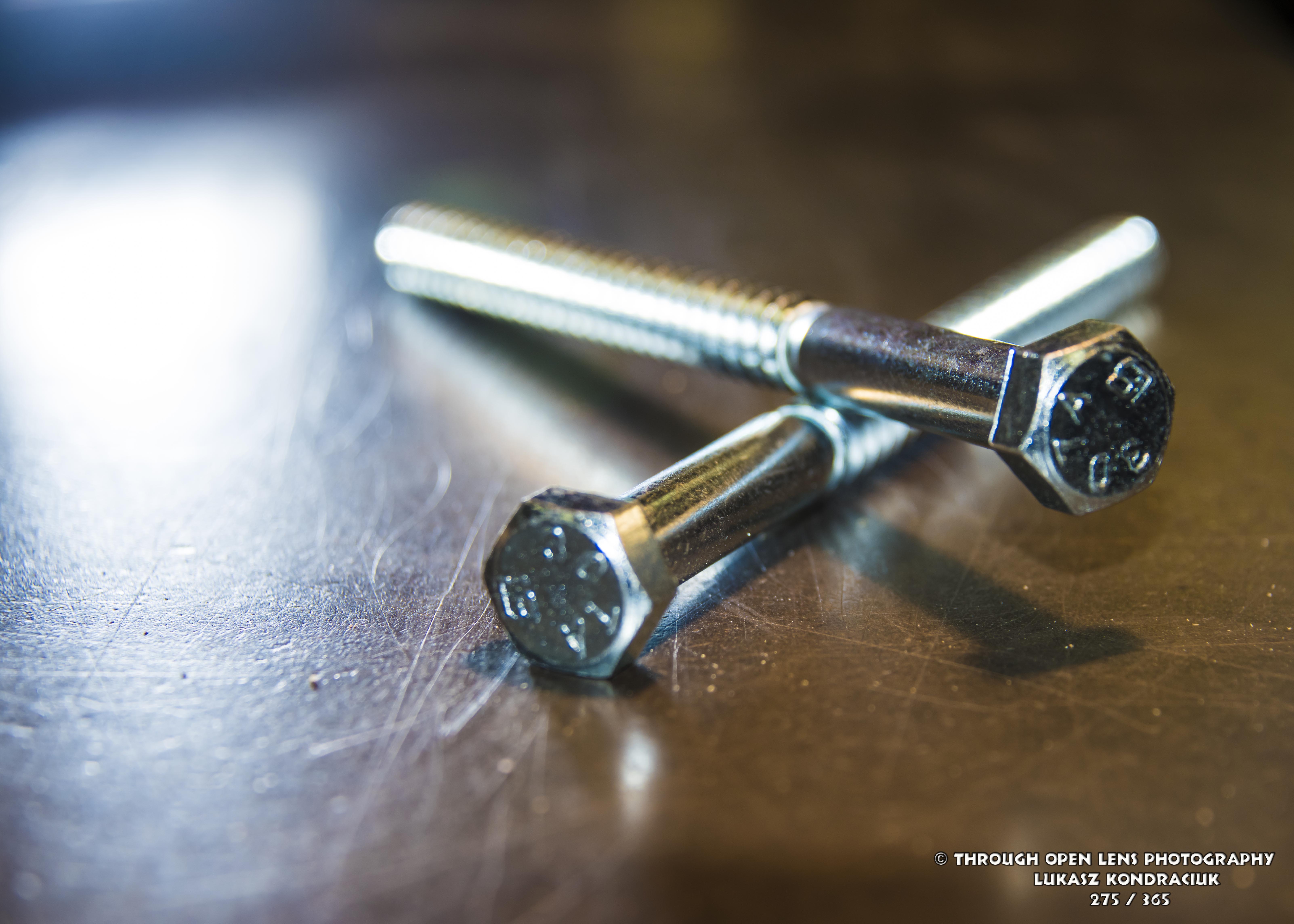
screws

F/ 5.0, 1/60, ISO 200.

Day 276 / 365

What did one screw said to other?

One good turn deserves another.

Interesting Fact: Earlier, the screw had been described by the Greek mathematician Archytas of Tarentum (428–350 BC). By the 1st century BC, wooden screws were commonly used throughout the Mediterranean world in screw presses for pressing olive oil from olives and pressing juice from grapes in winemaking. Metal screws used as fasteners were rare in Europe before the 15th century, if known at all. ( https://en.m.wikipedia.org/wiki/Screw )

Why Is It That When You Have The Best Hair Days, It Manages To Rain???

rain

F/5.3, 1/60, ISO 320.

Day 275 / 365

What did the evaporating raindrop say?

I’m going to pieces.

Interesting Fact: The highest amount of rainfall ever recorded in one year is 25.4 meters (1000 inches) in Cherrapunji, India. ( http://www.sciencekids.co.nz/sciencefacts/weather/rain.html )