I Choose To Shine!

Sunflowers

F/6.0, 1/60, ISO 250.

Sunflowers

Day 236 / 365

Roses are red, violets are blue. sunflowers are yellow, i bet you were expecting something romantic but no this is just gardening facts.

Interesting Fact: The sunflower is native to the America’s and was used extensively by Native American Indians for food, as oil, in bread, medical ointments, dyes and body paints. ( http://www.sciencekids.co.nz/sciencefacts/plants/sunflowers.html )


We Claim This Island! Now What Do We Do?

Great Egrets

F/6.3, 1/1250, ISO 400.

Great Egrets

Day 235 / 365

Why does the bird bring toilet paper to the party?

Because he is a party pooper.

Interesting Fact: The pristinely white Great Egret gets even more dressed up for the breeding season. A patch of skin on its face turns neon green, and long plumes grow from its back. Called aigrettes, those plumes were the bane of egrets in the late nineteenth century, when such adornments were prized for ladies’ hats. ( http://www.allaboutbirds.org/guide/Great_Egret/lifehistory )


You Are The Mint To My Mojito!

Mojito

F/4.8, 1/60, ISO 100.

Mojito

Day 234 / 365

When life hands you lemons, find someone with tequila and salt!

Interesting Fact: Havana is the birthplace of the Mojito, although the exact origin of this classic cocktail is the subject of debate. One story traces the Mojito to a similar 16th century drink known as “El Draque”, after Francis Drake.[4] In 1586, after his successful raid at Cartagena de Indias Drake’s ships sailed towards Havana but there was an epidemic of dysentery and scurvy on board. It was known that the local South American Indians had remedies for various tropical illnesses; so a small boarding party went ashore on Cuba and came back with ingredients for a medicine which was effective. The ingredients were aguardiente de caña (a crude form of rum, translates as fire water from sugar cane) added with local tropical ingredients; lime, sugarcane juice and mint.[8] Drinking lime juice in itself would have been a great help in staving off scurvy and dysentery.[9] Tafia/Rum was used as soon as it became widely available to the British (ca. 1650). Mint, lime and sugar were also helpful in hiding the harsh taste of this spirit. While this drink was not called a Mojito at this time, it was still the original combination of these ingredients. ( https://en.wikipedia.org/wiki/Mojito )

Hey Honey!

Bumblebee flower

F/ 6.3, 1/1000, ISO 800.

Bumblebee

Day 233 / 365

What did the bee say to the other bee when they landed on the same flower?

Buzz off.

Interesting Fact: Bumblebees live in society that consists of up to 400 individuals. They are divided in three groups: queen, worker bees and drones. Worker bees develop from the eggs during the spring. They collect pollen and feed newly born bees. Drones develop from the eggs during the summer. They die immediately after fertilization. ( http://www.softschools.com/facts/animals/bumblebee_facts/582/ )


Orange You Glad To See Me?!

orange you glad

F/3.5, 1/60, ISO 100.

Day 232 / 365

Why did the orange fail his driving test?

He kept peeling out.

Interesting Fact: Because oranges do not spoil easily and are full of vitamin C during the years of world exploration sailors planted orange and other citrus trees along trade routes to prevent scurvy which is a disease that develops from a deficiency of vitamin C. ( http://snip.ly/LNaQ#http://www.sciencekids.co.nz/sciencefacts/food/oranges.html )

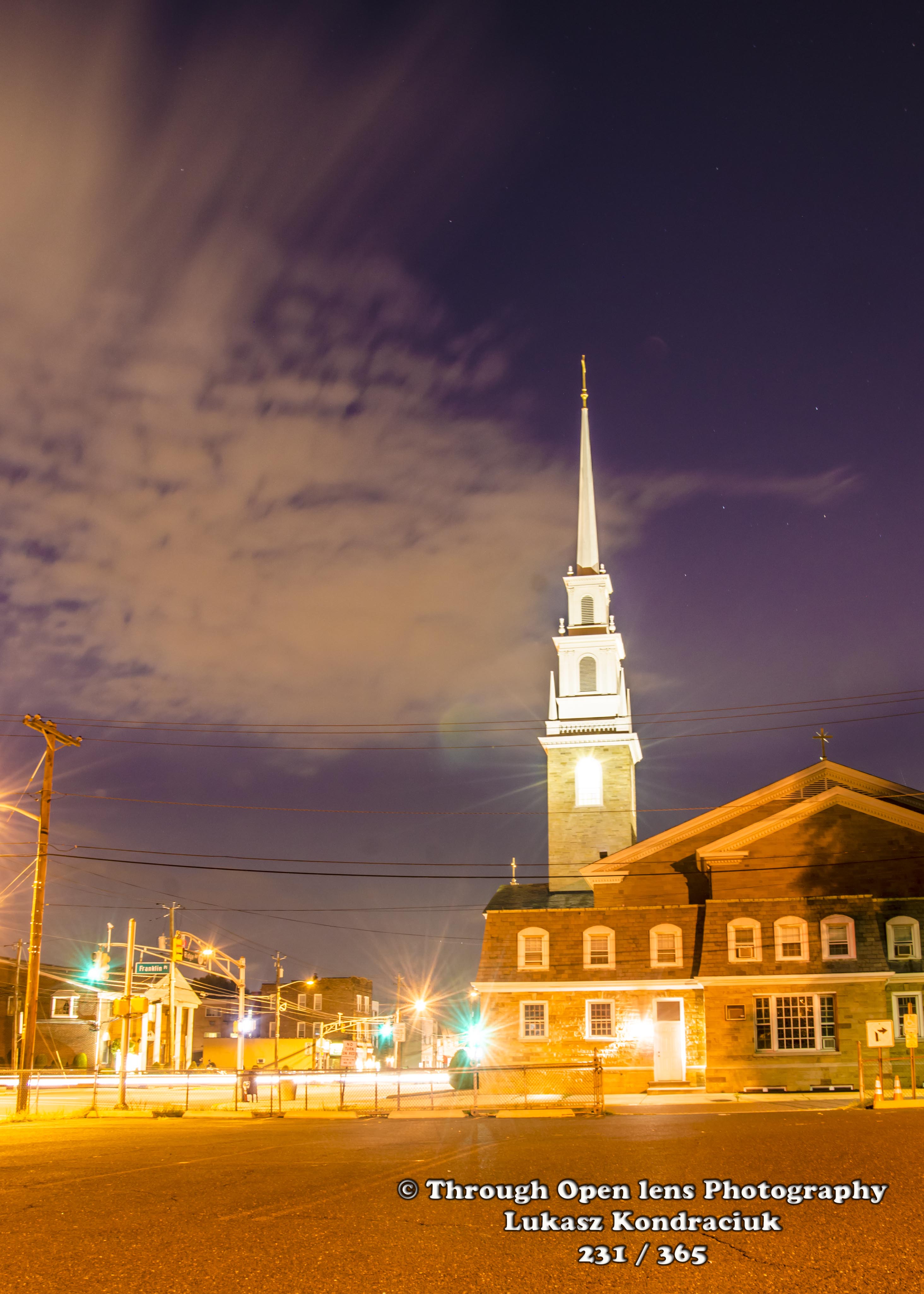
At Night I Can’t Sleep, In The Morning I Can’t Wake Up.

north arlington

F/ 14.0, 30.0, ISO 100.

Day 231 / 365

How can you go without sleep for seven days and not be tired?

Sleep at night.

Interesting Fact: In the early 1900s, a few notable photographers, Alfred Stieglitz and William Fraser, began working at night. The first known female night photographer is Jessie Tarbox Beals. The first photographers known to have produced large bodies of work at night were Brassai and Bill Brandt. In 1932, Brassai published Paris de Nuit, a book of black-and-white photographs of the streets of Paris at night. During World War II, British photographer Brandt took advantage of the black-out conditions to photograph the streets of London by moonlight. ( https://en.wikipedia.org/wiki/Night_photography )

Party On My Log!

Double-crested Cormorants

F/ 6.3, 1/500, ISO 320.

Double-crested Cormorants

Day 230 / 365

Which side of the Cormorant has the most feathers?

The outside.

Interesting Fact: Cormorants often stand in the sun with their wings spread out to dry. They have less preen oil than other birds, so their feathers can get soaked rather than shedding water like a duck’s. Though this seems like a problem for a bird that spends its life in water, wet feathers probably make it easier for cormorants to hunt underwater with agility and speed. ( http://www.allaboutbirds.org/guide/Double-crested_Cormorant/lifehistory#at_food )


I Want To Go Fast!

camshaft

F/5.3, 1/60, ISO 800.

Day 229 / 365

Tom meets up with Bob while he is picking up his car from the mechanic.

Tom asks, “Everything ok with your car now?”

Bob replies, “Yes, thank goodness. I was worried that my mechanic might try to rip me off, so I was relieved when he told me all I needed was $25 worth of blinker fluid.”

Interesting Fact: An early cam was built into Hellenistic water-driven automata from the 3rd century BC.[2] The camshaft was later described in Iraq (Mesopotamia) by Al-Jazari in 1206. He employed it as part of his automata, water-raising machines, and water clocks such as the castle clock.[3] The cam and camshaft later appeared in European mechanisms from at least the 14th century,[4] or possibly earlier. ( https://en.wikipedia.org/wiki/Camshaft )

Flame On!

Zippo

F/5.6, 1/20, ISO 1600.

Day 228 / 365

It’s really difficult to find what you want on eBay. I was searching for cigarette Lighters and found over 15,000 matches.

Interesting Fact: George G. Blaisdell founded Zippo Manufacturing Company in 1932, and produced the first Zippo lighter in early 1933, being inspired by an Austrian cigarette lighter of similar design made by IMCO.[2] It got its name because Blaisdell liked the sound of the word “zipper” and “zippo” sounded more modern.[citation needed] On March 3, 1936, a patent was granted for the Zippo lighter. ( https://en.wikipedia.org/wiki/Zippo )


Like Walking On Water Only Better! 

Paddleboarding

F/6.3, 1/800, ISO 200.

Day 227 / 365

How do paddle boarders say “hello” to each other?

They wave!

Interesting Fact: Historically, Africans and indeed many other river based and coastal cultures, have stood up within their canoes and upon rafts and paddled standing for thousands of years. Conceptually therefore, the idea of standing and paddling using an extended canoe paddle is far from being a new concept. ( https://en.m.wikipedia.org/wiki/Standup_paddleboarding )