Yummy!!!!

Greater Yellowlegs

F/6.3, 1/250, ISO 1600.

Greater Yellowlegs

Day 127 / 365

Where do birds meet for coffee ? 
In a nest-cafe !

Interesting Fact: Although the Greater Yellowlegs is common and widespread, its low densities and tendency to breed in inhospitable, mosquito-ridden muskegs make it one of the least-studied shorebirds on the continent. ( http://identify.whatbird.com/obj/252/_/Greater_Yellowlegs.aspx )
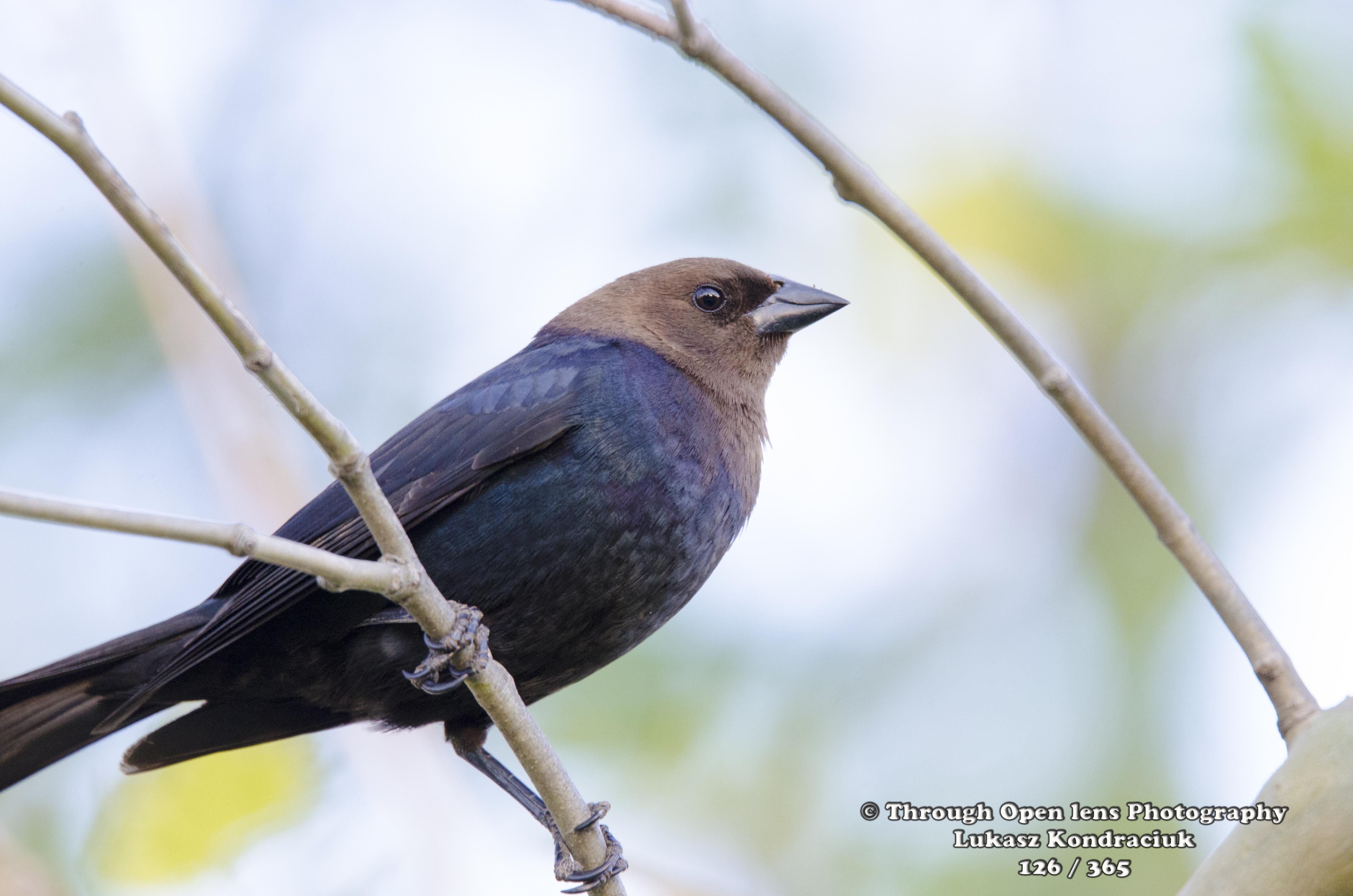
What A Parent!

Brown-headed Cowbird

F/6.3, 1/125, ISO 1600.

Brown-headed Cowbird

Day 126 / 365

That is one bird that doesn’t care about their young ones.

Interesting Fact:  Brown-headed cowbirds are brood parasites. They deposit their eggs in nests belonging to birds of other species. Some of the birds they parasitize remove the eggs from their nests or cover them with new nest material so that they are not incubated. ( http://identify.whatbird.com/obj/107/overview/Brown-headed_Cowbird.aspx )

Happy Cinco De Mayo!

Cinco de Mayo

F/10.0, 1/60, ISO 100.

Day 125 /365

Shots shots shots shots shots Everybody!!!      🙂

Interesting Fact:  Cinco de Mayo (the fifth of May) is celebrated to honor Mexico’s victory over France at the Battle of Puebla during the Franco-Mexican War (1861-1867). Despite having a small band of fighters, the Mexicans were able to defeat the massive French army on May 5, 1862.  People have this misconception that Cinco de Mayo is a celebration of Mexico’s Independence Day, but the fact remains that Mexicans celebrate their day of independence on September 16. ( http://www.msn.com/en-us/lifestyle/smart-living/12-cinco-de-mayo-facts-you-didnt-know/ss-BBj1D9X#image=2 )

April Showers Bring May Flowers, But In The Month Of May I Bring The Flowers Home…

peonies

F/1.8, 1/60, ISO 160.

Day 124 / 365

People used to believe that peonies protected them from demons.  And what protects the demons from peonies?     🙂

Interesting Fact: Peonies are available in every color but blue. ( http://www.birdsandblooms.com/blog/flower-garden-little-known-facts-peonies/ )

Out For A Swim!

Horned Grebe

F/6.3, 1/1000, ISO 400.

Horned Grebe

Day 123 / 365

Perfect day for a swim and dive, but not for me, the water is still too cold.     🙂

Interesting Fact: The Horned Grebe regularly eats some of its own feathers, enough that its stomach usually contains a matted plug of them. This plug may function as a filter or may hold fish bones in the stomach until they can be digested. The parents even feed feathers to their chicks to get the plug started early.  ( http://www.allaboutbirds.org/guide/Horned_Grebe/lifehistory )

Fight Night!

boxing gloves

F/5.0, 1/60, ISO 100.

Day 122 / 365

Big fight tonight Mayweather vs Pacquiao. I wonder who will be the winner?

Interesting Fact: Boxing has been around for centuries; in fact it was one of the sports in the ancient Olympic games of Greece. There is evidence that the sport of boxing was around as early as 688 B.C., although it differed somewhat from the sport we see today. Here are a few interesting facts about boxing and professional boxers that you might not know. ( http://www.thearenamma.com/interesting-facts-boxing/ )

Let it go!

cartoon

F/5.3, 1/15, ISO 1600.

Day 121 / 365

What if you would be able to play with what you draw…

Interesting Fact: John Barnes Linnett patented the first flip book in 1868 as the kineograph. A flip book is a small book with relatively springy pages, each having one in a series of animation images located near its unbound edge. The user bends all of the pages back, normally with the thumb, then by a gradual motion of the hand allows them to spring free one at a time. As with the phenakistoscope, zoetrope and praxinoscope, the illusion of motion is created by the apparent sudden replacement of each image by the next in the series, but unlike those other inventions no view-interrupting shutter or assembly of mirrors is required and no viewing device other than the user’s hand is absolutely necessary. Early film animators cited flip books as their inspiration more often than the earlier devices, which did not reach as wide an audience. ( http://en.wikipedia.org/wiki/History_of_animation )

Upside Down You’re Turning Me!

Black-and-white Warbler

F/6.3, 1/500, ISO 1100.

Black-and-white Warbler

Day 120 / 365

I too used to swinging upside down from the tree when I was young. But I think he has me beat.   🙂

Interesting Fact: Black-and-white Warblers have an extra-long hind claw and heavier legs than other wood-warblers, which help them hold onto and move around on bark. ( http://www.allaboutbirds.org/guide/Black-and-white_Warbler/lifehistory )

Beautiful Flowers, But They Smell Terrible.

tree flowers

F/6.3, 1/200, ISO 125.

Day 119 / 356

Why is the letter A like a flower?
A bee (B) comes after it!

Interesting Fact: The oldest living organism on Earth is believed to be the “Pando” colony of Quaking Aspen (Populus tremuloides) in Utah, also known as the Trembling Giant. The colony of trees covers some 41.7 hectares (103 acres) and is estimated to weigh nearly 6,000,000 kilograms (6,600 tons), making it also the heaviest known organism. Being a clonal colony, the tree “trunks” all share identical genetic makeup. It is estimated that parts of the inter-connected root stock that links the colony together is in excess of 80,000 years old! ( http://landarchs.com/8-amazing-facts-trees-didnt-know/ )

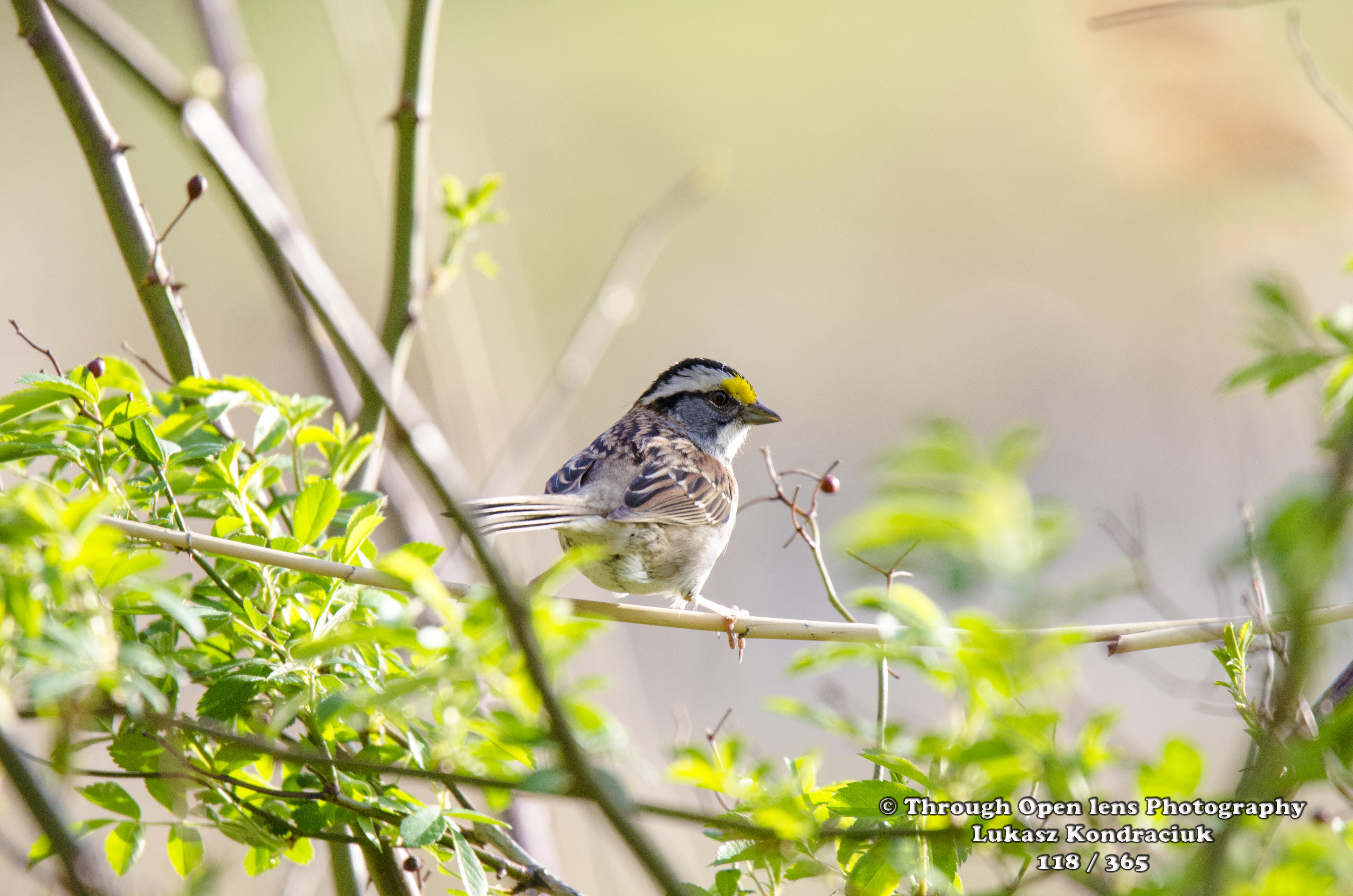
Don’t Sneak Up On Me! I See You!

White-throated Sparrow

F/6.3, 1/640, ISO 800.

White-throated Sparrow

Day 118 / 365

How does a bird with a broken wing manage to land safely?
With its sparrowchute.

Interesting Fact: The White-throated Sparrow comes in two color forms: white-crowned and tan-crowned. The two forms are genetically determined, and they persist because individuals almost always mate with a bird of the opposite morph. Males of both color types prefer females with white stripes, but both kinds of females prefer tan-striped males. White-striped birds are more aggressive than tan-striped ones, and white-striped females may be able to outcompete their tan-striped sisters for tan-striped males. ( http://www.allaboutbirds.org/guide/White-throated_Sparrow/lifehistory )