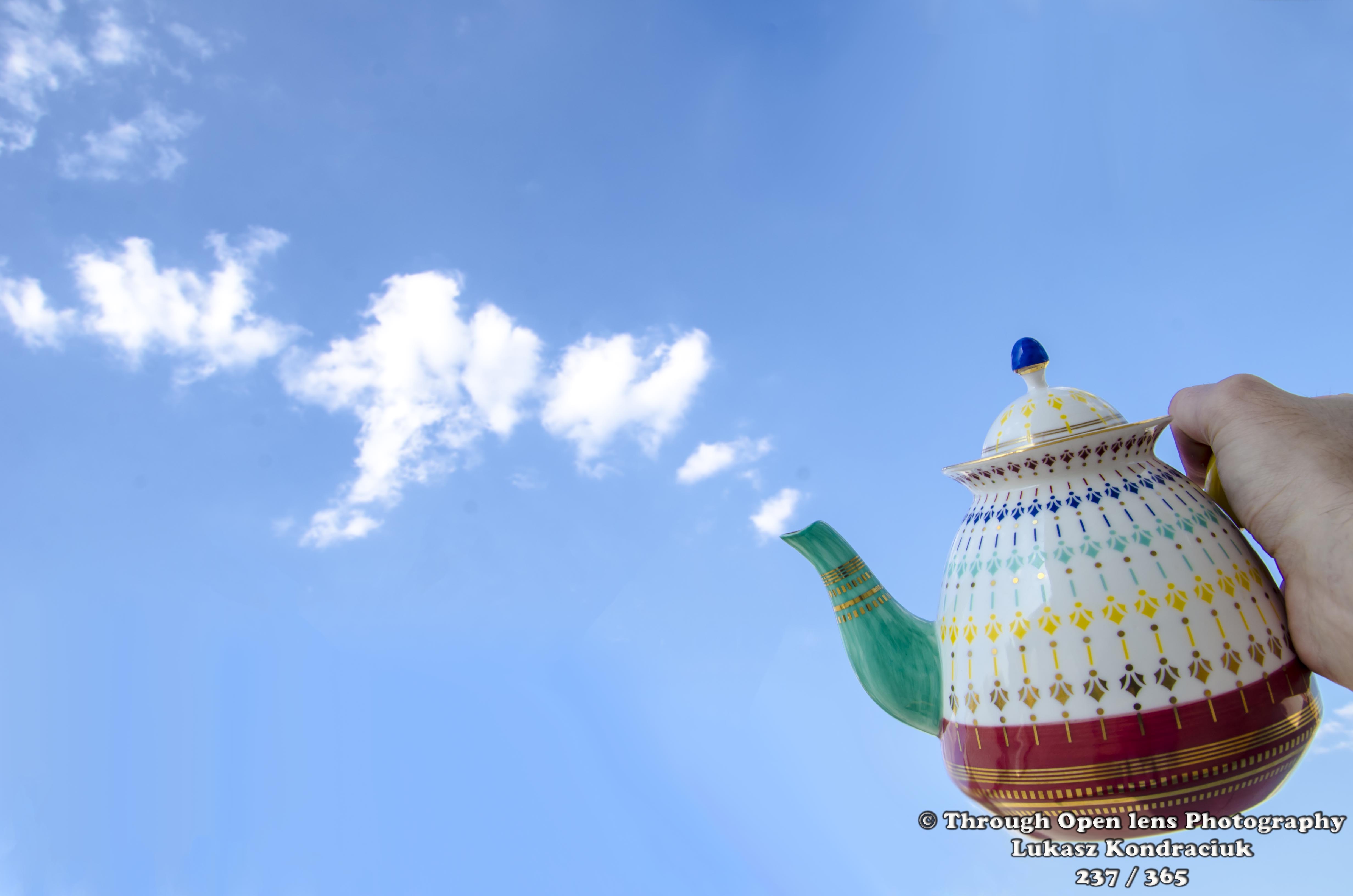
Tea Is Ready!

tea time

F/16.0, 1/50, ISO 100.

Day 237 / 365

What Starts With “T” What Ends With “T” & It Is Full Of “T”?

Teapot.

Interesting Fact: From the end of the 17th century tea was shipped from China to Europe as part of the export of exotic spices and luxury goods. The ships that brought the tea also carried porcelain teapots. The majority of these teapots were painted in blue and white underglaze. Porcelain being completely vitrified will withstand sea water without damage, so the teapots were packed below deck whilst the tea stayed on top in the dry. ( https://en.wikipedia.org/wiki/Teapot )

We Claim This Island! Now What Do We Do?

Great Egrets

F/6.3, 1/1250, ISO 400.

Great Egrets

Day 235 / 365

Why does the bird bring toilet paper to the party?

Because he is a party pooper.

Interesting Fact: The pristinely white Great Egret gets even more dressed up for the breeding season. A patch of skin on its face turns neon green, and long plumes grow from its back. Called aigrettes, those plumes were the bane of egrets in the late nineteenth century, when such adornments were prized for ladies’ hats. ( http://www.allaboutbirds.org/guide/Great_Egret/lifehistory )


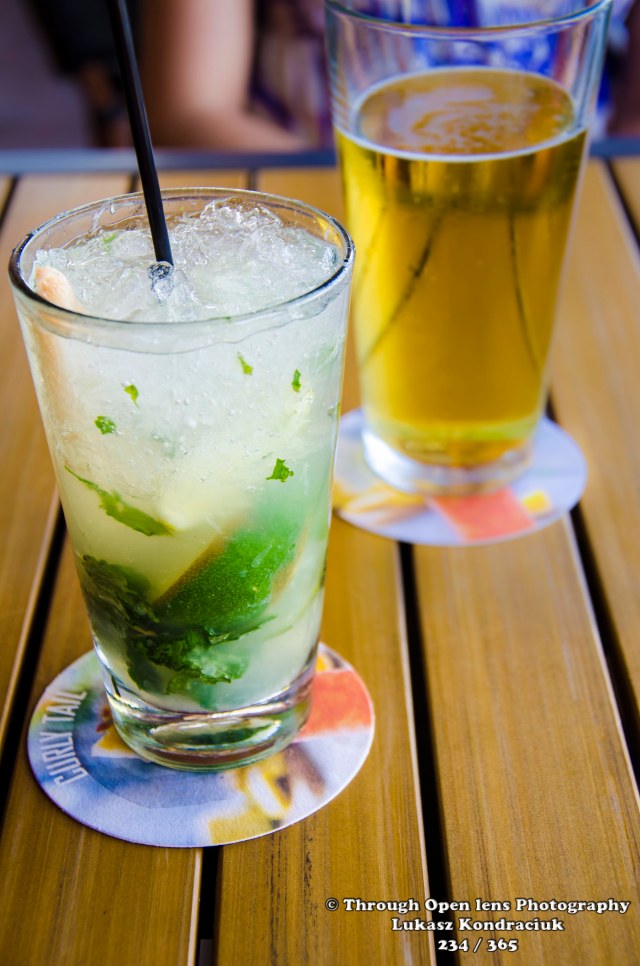
You Are The Mint To My Mojito!

Mojito

F/4.8, 1/60, ISO 100.

Mojito

Day 234 / 365

When life hands you lemons, find someone with tequila and salt!

Interesting Fact: Havana is the birthplace of the Mojito, although the exact origin of this classic cocktail is the subject of debate. One story traces the Mojito to a similar 16th century drink known as “El Draque”, after Francis Drake.[4] In 1586, after his successful raid at Cartagena de Indias Drake’s ships sailed towards Havana but there was an epidemic of dysentery and scurvy on board. It was known that the local South American Indians had remedies for various tropical illnesses; so a small boarding party went ashore on Cuba and came back with ingredients for a medicine which was effective. The ingredients were aguardiente de caña (a crude form of rum, translates as fire water from sugar cane) added with local tropical ingredients; lime, sugarcane juice and mint.[8] Drinking lime juice in itself would have been a great help in staving off scurvy and dysentery.[9] Tafia/Rum was used as soon as it became widely available to the British (ca. 1650). Mint, lime and sugar were also helpful in hiding the harsh taste of this spirit. While this drink was not called a Mojito at this time, it was still the original combination of these ingredients. ( https://en.wikipedia.org/wiki/Mojito )

Hey Honey!

Bumblebee flower

F/ 6.3, 1/1000, ISO 800.

Bumblebee

Day 233 / 365

What did the bee say to the other bee when they landed on the same flower?

Buzz off.

Interesting Fact: Bumblebees live in society that consists of up to 400 individuals. They are divided in three groups: queen, worker bees and drones. Worker bees develop from the eggs during the spring. They collect pollen and feed newly born bees. Drones develop from the eggs during the summer. They die immediately after fertilization. ( http://www.softschools.com/facts/animals/bumblebee_facts/582/ )


At Night I Can’t Sleep, In The Morning I Can’t Wake Up.

north arlington

F/ 14.0, 30.0, ISO 100.

Day 231 / 365

How can you go without sleep for seven days and not be tired?

Sleep at night.

Interesting Fact: In the early 1900s, a few notable photographers, Alfred Stieglitz and William Fraser, began working at night. The first known female night photographer is Jessie Tarbox Beals. The first photographers known to have produced large bodies of work at night were Brassai and Bill Brandt. In 1932, Brassai published Paris de Nuit, a book of black-and-white photographs of the streets of Paris at night. During World War II, British photographer Brandt took advantage of the black-out conditions to photograph the streets of London by moonlight. ( https://en.wikipedia.org/wiki/Night_photography )

Party On My Log!

Double-crested Cormorants

F/ 6.3, 1/500, ISO 320.

Double-crested Cormorants

Day 230 / 365

Which side of the Cormorant has the most feathers?

The outside.

Interesting Fact: Cormorants often stand in the sun with their wings spread out to dry. They have less preen oil than other birds, so their feathers can get soaked rather than shedding water like a duck’s. Though this seems like a problem for a bird that spends its life in water, wet feathers probably make it easier for cormorants to hunt underwater with agility and speed. ( http://www.allaboutbirds.org/guide/Double-crested_Cormorant/lifehistory#at_food )


Like Walking On Water Only Better! 

Paddleboarding

F/6.3, 1/800, ISO 200.

Day 227 / 365

How do paddle boarders say “hello” to each other?

They wave!

Interesting Fact: Historically, Africans and indeed many other river based and coastal cultures, have stood up within their canoes and upon rafts and paddled standing for thousands of years. Conceptually therefore, the idea of standing and paddling using an extended canoe paddle is far from being a new concept. ( https://en.m.wikipedia.org/wiki/Standup_paddleboarding )

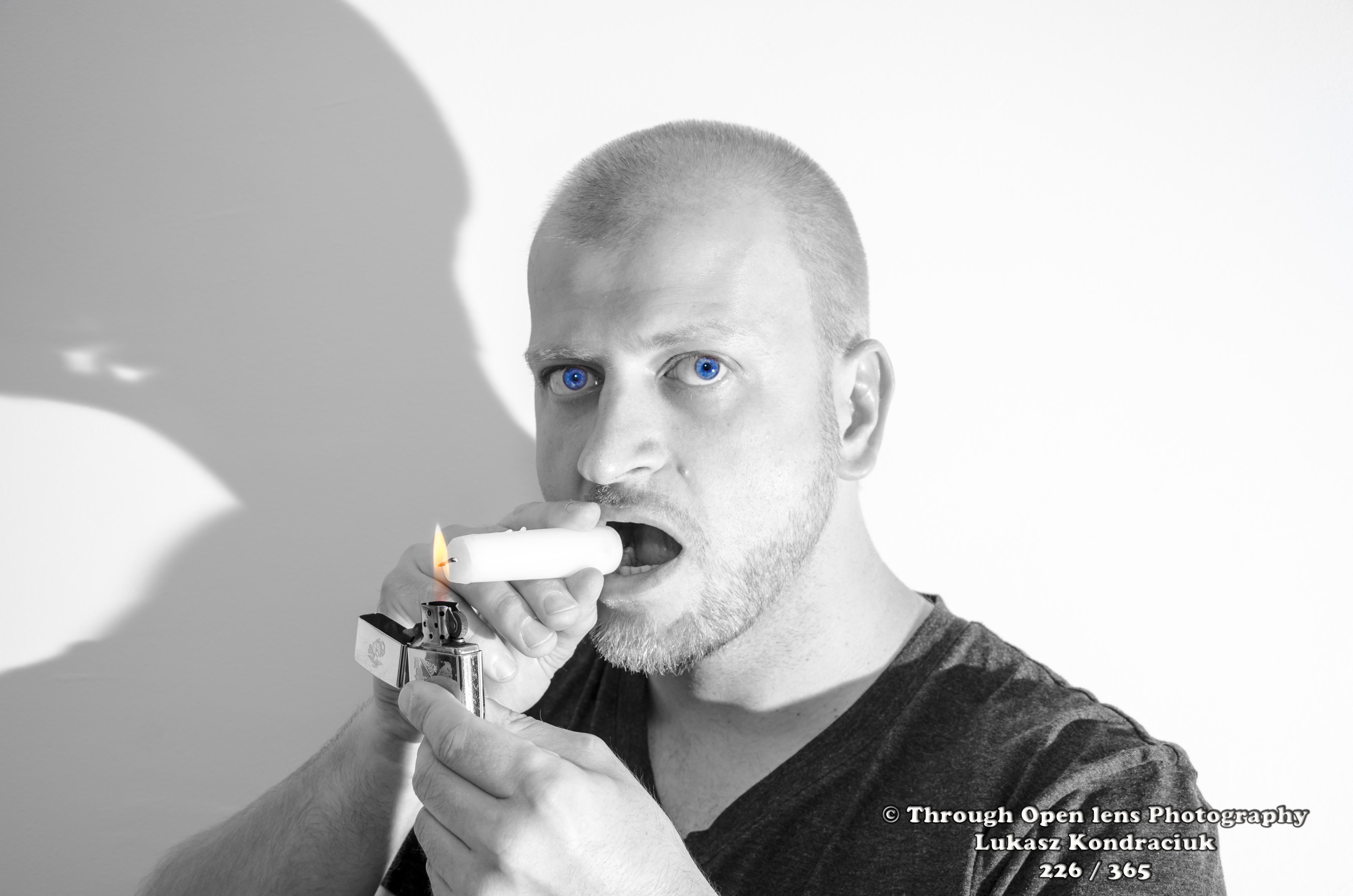
Behind The Blue Eyes

blue eyes

F/7.1, 1/60, ISO 125.

Day 226 / 365

A guy walks past a mental hospital and hears a moaning voice “… 13 … 13 … 13 …”

The man looked over to the hospital and saw a hole in the wall, he looked through the hole and gets poked in the eye. The moaning voice then groaned “… 14 … 14 … 14 …”

Interesting Fact:  Blue eyes are more sensitive to light than darker-colored eyes since they do not have as much melanin. This sensitivity can make blue-eyed people more prone to problems like melanoma of the eyes. For this reason, they should be more vigilant about protecting their eyes against too much sun exposure by wearing sunglasses or making sure their prescription glasses include protection from ultraviolet rays. ( http://factualfacts.com/science-facts/blue-eyes/ )


Yeah We Lift!

cranes

F/9.0, 1/320, ISO 100.

Day 225 / 365

Crane party, they can get down and they can really raise the roof!

Interesting Fact: The crane for lifting heavy loads was invented by the Ancient Greeks in the late 6th century BC.[1] The archaeological record shows that no later than c.515 BC distinctive cuttings for both lifting tongs and lewis irons begin to appear on stone blocks of Greek temples. Since these holes point at the use of a lifting device, and since they are to be found either above the center of gravity of the block, or in pairs equidistant from a point over the center of gravity, they are regarded by archaeologists as the positive evidence required for the existence of the crane. ( https://en.wikipedia.org/wiki/Crane_(machine)#History )

And I Ran I Ran So Far Away

street art

F/4.2, 1/30, ISO 1100.

Day 224 / 365

What did the artist say to the rival?

I Challenge you a doodle!

Interesting Fact:  Artists have challenged art by situating it in non-art contexts. Street artists do not aspire to change the definition of an artwork, but rather to question the existing environment with its own language.[3] The motivations and objectives that drive street artists are as varied as the artists themselves. ‘Street’ artists attempt to have their work communicate with everyday people about socially relevant themes in ways that are informed by esthetic values without being imprisoned by them. There is a strong current of activism and subversion in urban art. Street art can be a powerful platform for reaching the public and a potent form of political expression for the oppressed, or people with little resources to create change.[5] Common variants include adbusting, subvertising and other culture jamming, the abolishment of private property and reclaiming the streets. ( https://en.wikipedia.org/wiki/Street_art )