Island Duck Will Attack!

White-cheeked Pintail

F/5.0, 1/250, ISO 720.

White-cheeked Pintail

Day 130 / 365

What did Detective Duck say to his partner?
“Let’s quack this case!”

Interesting Fact:  White-cheeked Pintail: This species is a native of the Caribbean Islands, South America, and the Galapagos Islands. Within the United States, it is a rare to casual visitor in southern Florida. This bird is found near rivers, lakes, and ponds, as well as along costal marshes and rocky or sandy seashores. The White-cheeked Pintail was first described in 1758 by Carolus Linnaeus, Swedish botanist, physician and zoologist. ( http://identify.whatbird.com/obj/1029/overview/White-cheeked_Pintail.aspx )

Yummy!!!!

Greater Yellowlegs

F/6.3, 1/250, ISO 1600.

Greater Yellowlegs

Day 127 / 365

Where do birds meet for coffee ? 
In a nest-cafe !

Interesting Fact: Although the Greater Yellowlegs is common and widespread, its low densities and tendency to breed in inhospitable, mosquito-ridden muskegs make it one of the least-studied shorebirds on the continent. ( http://identify.whatbird.com/obj/252/_/Greater_Yellowlegs.aspx )

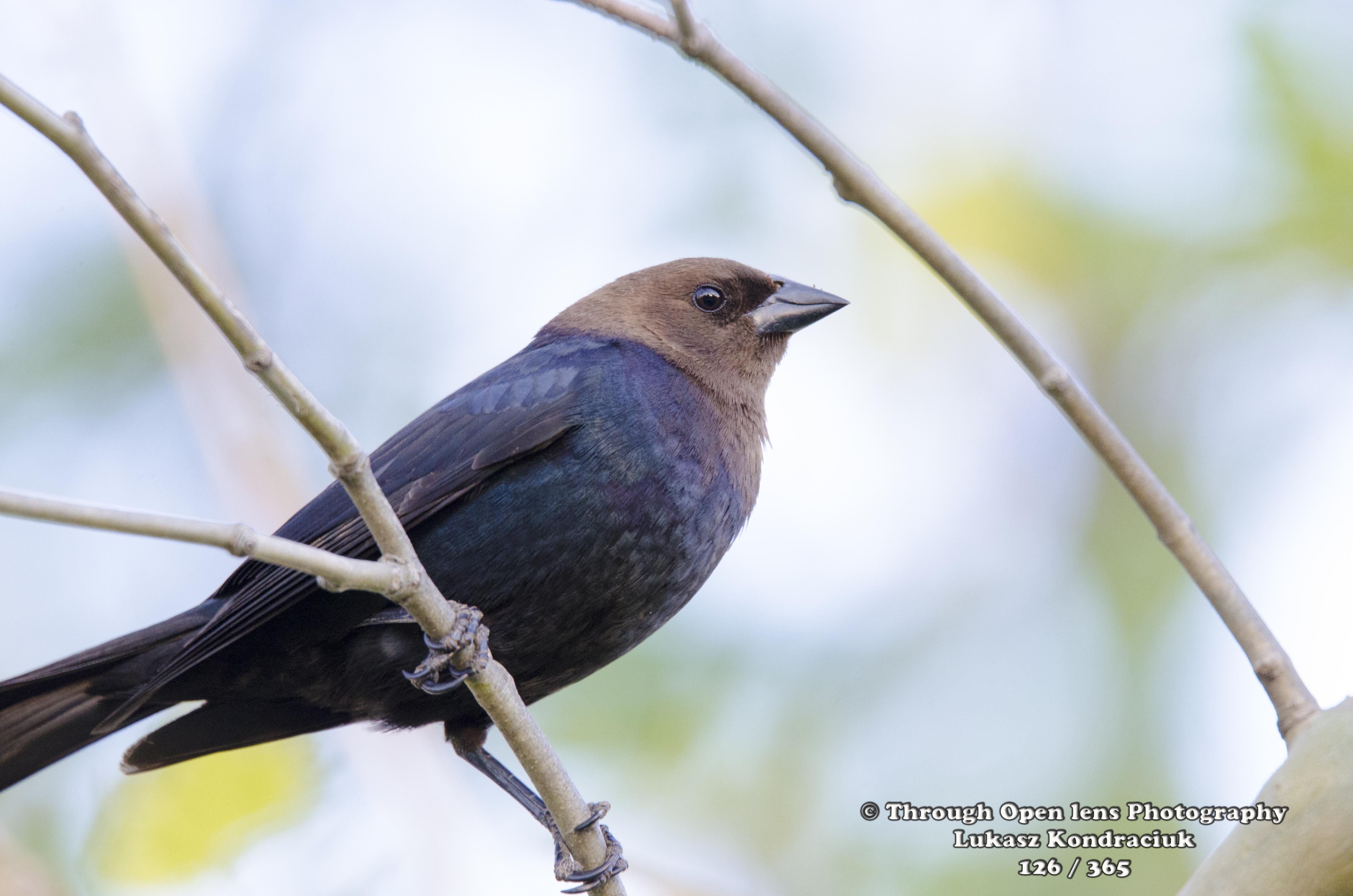
What A Parent!

Brown-headed Cowbird

F/6.3, 1/125, ISO 1600.

Brown-headed Cowbird

Day 126 / 365

That is one bird that doesn’t care about their young ones.

Interesting Fact:  Brown-headed cowbirds are brood parasites. They deposit their eggs in nests belonging to birds of other species. Some of the birds they parasitize remove the eggs from their nests or cover them with new nest material so that they are not incubated. ( http://identify.whatbird.com/obj/107/overview/Brown-headed_Cowbird.aspx )

April Showers Bring May Flowers, But In The Month Of May I Bring The Flowers Home…

peonies

F/1.8, 1/60, ISO 160.

Day 124 / 365

People used to believe that peonies protected them from demons.  And what protects the demons from peonies?     🙂

Interesting Fact: Peonies are available in every color but blue. ( http://www.birdsandblooms.com/blog/flower-garden-little-known-facts-peonies/ )

Out For A Swim!

Horned Grebe

F/6.3, 1/1000, ISO 400.

Horned Grebe

Day 123 / 365

Perfect day for a swim and dive, but not for me, the water is still too cold.     🙂

Interesting Fact: The Horned Grebe regularly eats some of its own feathers, enough that its stomach usually contains a matted plug of them. This plug may function as a filter or may hold fish bones in the stomach until they can be digested. The parents even feed feathers to their chicks to get the plug started early.  ( http://www.allaboutbirds.org/guide/Horned_Grebe/lifehistory )

Upside Down You’re Turning Me!

Black-and-white Warbler

F/6.3, 1/500, ISO 1100.

Black-and-white Warbler

Day 120 / 365

I too used to swinging upside down from the tree when I was young. But I think he has me beat.   🙂

Interesting Fact: Black-and-white Warblers have an extra-long hind claw and heavier legs than other wood-warblers, which help them hold onto and move around on bark. ( http://www.allaboutbirds.org/guide/Black-and-white_Warbler/lifehistory )

Beautiful Flowers, But They Smell Terrible.

tree flowers

F/6.3, 1/200, ISO 125.

Day 119 / 356

Why is the letter A like a flower?
A bee (B) comes after it!

Interesting Fact: The oldest living organism on Earth is believed to be the “Pando” colony of Quaking Aspen (Populus tremuloides) in Utah, also known as the Trembling Giant. The colony of trees covers some 41.7 hectares (103 acres) and is estimated to weigh nearly 6,000,000 kilograms (6,600 tons), making it also the heaviest known organism. Being a clonal colony, the tree “trunks” all share identical genetic makeup. It is estimated that parts of the inter-connected root stock that links the colony together is in excess of 80,000 years old! ( http://landarchs.com/8-amazing-facts-trees-didnt-know/ )

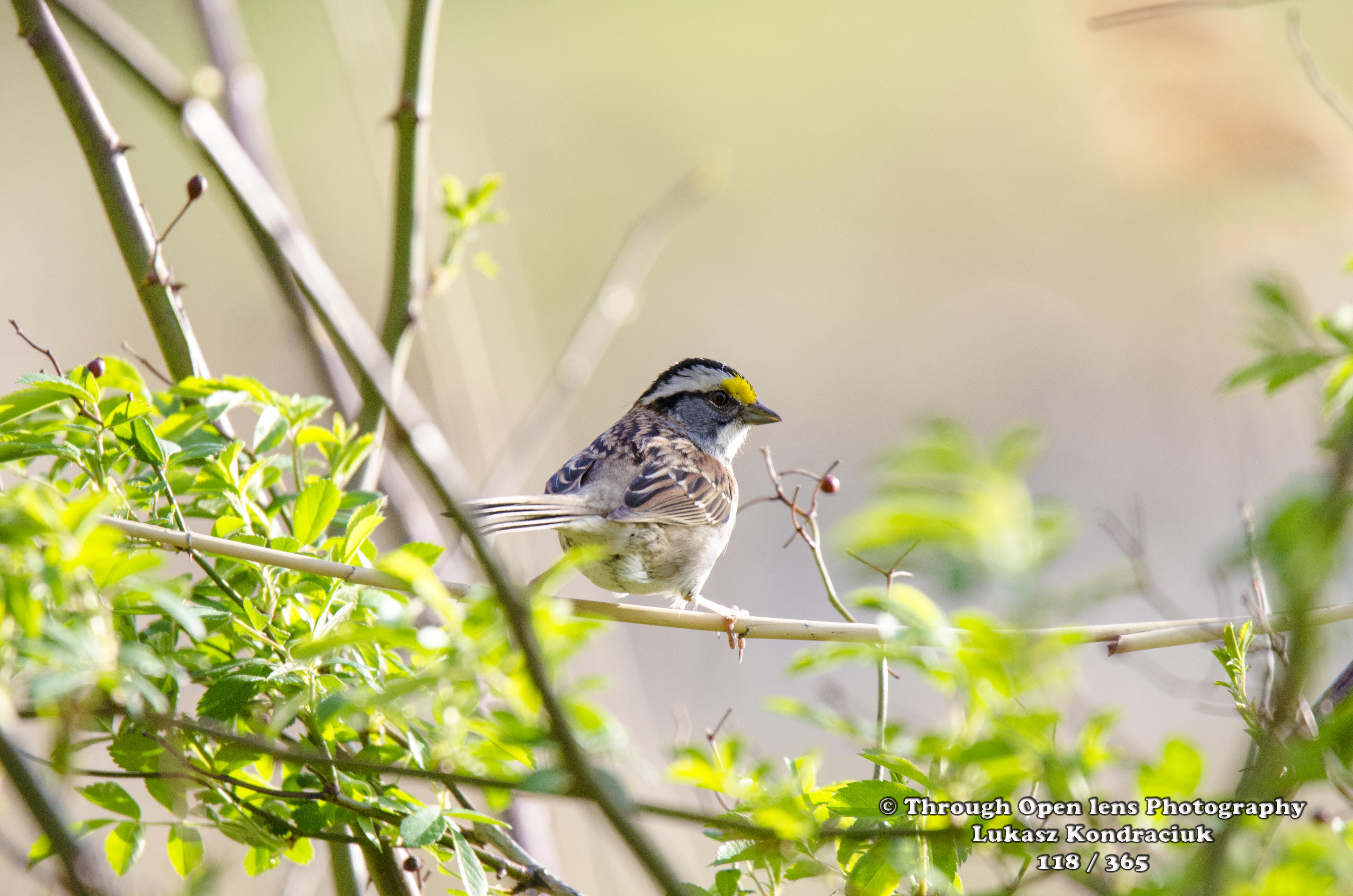
Don’t Sneak Up On Me! I See You!

White-throated Sparrow

F/6.3, 1/640, ISO 800.

White-throated Sparrow

Day 118 / 365

How does a bird with a broken wing manage to land safely?
With its sparrowchute.

Interesting Fact: The White-throated Sparrow comes in two color forms: white-crowned and tan-crowned. The two forms are genetically determined, and they persist because individuals almost always mate with a bird of the opposite morph. Males of both color types prefer females with white stripes, but both kinds of females prefer tan-striped males. White-striped birds are more aggressive than tan-striped ones, and white-striped females may be able to outcompete their tan-striped sisters for tan-striped males. ( http://www.allaboutbirds.org/guide/White-throated_Sparrow/lifehistory )

Angry Bird!

Northern Cardinal

F/6.3, 1/200, ISO 125

Northern Cardinal

Day 117 / 365

You wouldn’t like him when he’s angry. For more info ask the pigs!   🙂

Interesting Fact: Many people are perplexed each spring by the sight of a cardinal attacking its reflection in a window, car mirror, or shiny bumper. Both males and females do this, and most often in spring and early summer when they are obsessed with defending their territory against any intruders. Birds may spend hours fighting these intruders without giving up. A few weeks later, as levels of aggressive hormones subside, these attacks should end (though one female kept up this behavior every day or so for six months without stopping).  ( http://www.allaboutbirds.org/guide/Northern_Cardinal/lifehistory )

Make A Wish! 

Fountain

F/22.0, 30.0, ISO 250.

Day 114 / 365

What did you wish for?

Who cleans all the coins out of fountain?

Interesting Fact:  Ancient civilizations built stone basins to capture and hold precious drinking water. A carved stone basin, dating to around 2000 BC, was discovered in the ruins of the ancient Sumerian city of Lagash in modern Iraq. The ancient Assyrians constructed a series of basins in the gorge of the Comel River, carved in solid rock, connected by small channels, descending to a stream. The lowest basin was decorated with carved reliefs of two lions.[3] The ancient Egyptians had ingenious systems for hoisting water up from the Nile for drinking and irrigation, but without a higher source of water it was not possible to make water flow by gravity, and no Egyptian fountains or pictures of fountains have been found. ( http://en.wikipedia.org/wiki/Fountain )