Island Duck Will Attack!

White-cheeked Pintail

F/5.0, 1/250, ISO 720.

White-cheeked Pintail

Day 130 / 365

What did Detective Duck say to his partner?
“Let’s quack this case!”

Interesting Fact:  White-cheeked Pintail: This species is a native of the Caribbean Islands, South America, and the Galapagos Islands. Within the United States, it is a rare to casual visitor in southern Florida. This bird is found near rivers, lakes, and ponds, as well as along costal marshes and rocky or sandy seashores. The White-cheeked Pintail was first described in 1758 by Carolus Linnaeus, Swedish botanist, physician and zoologist. ( http://identify.whatbird.com/obj/1029/overview/White-cheeked_Pintail.aspx )

Yummy!!!!

Greater Yellowlegs

F/6.3, 1/250, ISO 1600.

Greater Yellowlegs

Day 127 / 365

Where do birds meet for coffee ? 
In a nest-cafe !

Interesting Fact: Although the Greater Yellowlegs is common and widespread, its low densities and tendency to breed in inhospitable, mosquito-ridden muskegs make it one of the least-studied shorebirds on the continent. ( http://identify.whatbird.com/obj/252/_/Greater_Yellowlegs.aspx )

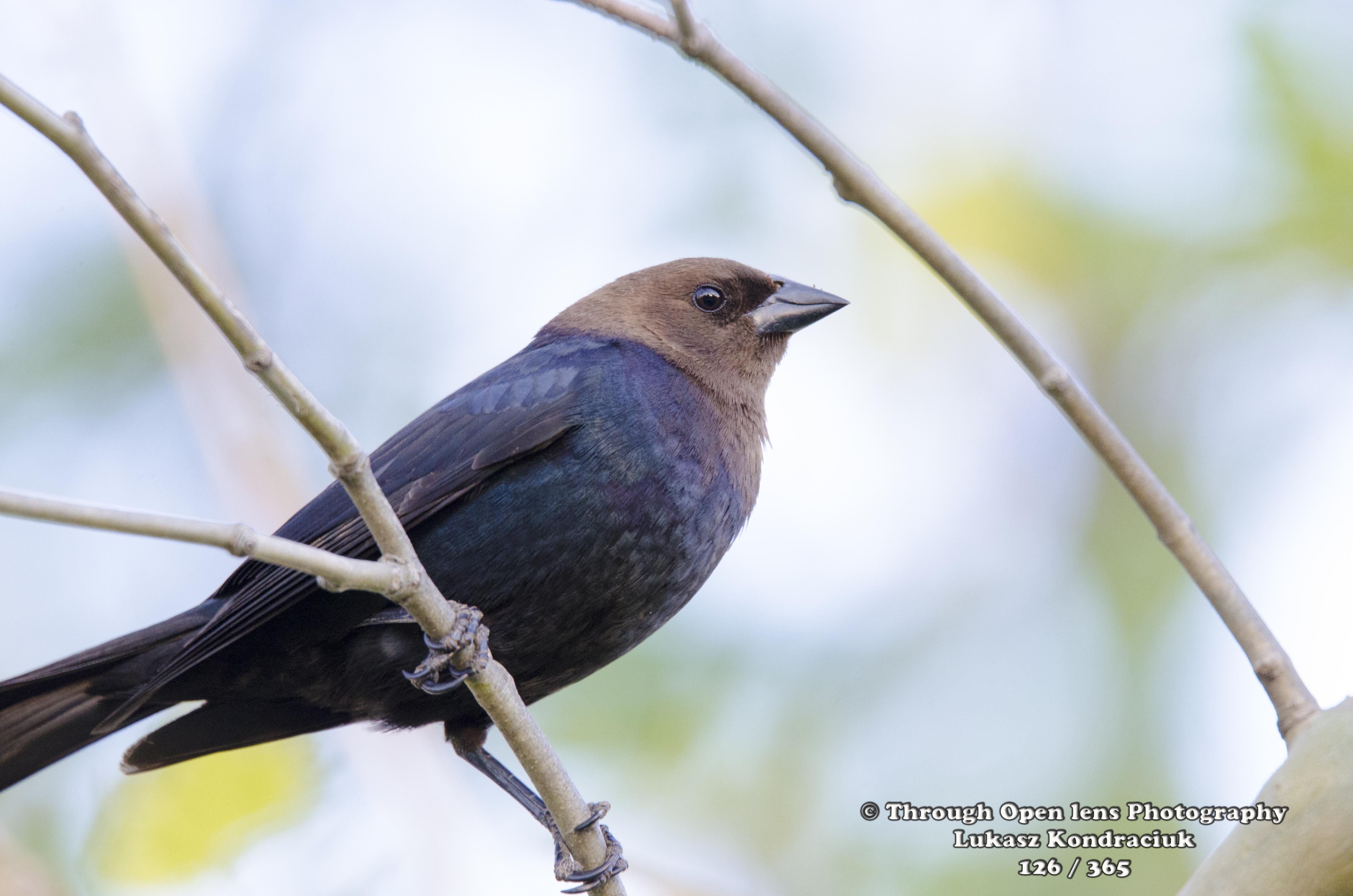
What A Parent!

Brown-headed Cowbird

F/6.3, 1/125, ISO 1600.

Brown-headed Cowbird

Day 126 / 365

That is one bird that doesn’t care about their young ones.

Interesting Fact:  Brown-headed cowbirds are brood parasites. They deposit their eggs in nests belonging to birds of other species. Some of the birds they parasitize remove the eggs from their nests or cover them with new nest material so that they are not incubated. ( http://identify.whatbird.com/obj/107/overview/Brown-headed_Cowbird.aspx )

Out For A Swim!

Horned Grebe

F/6.3, 1/1000, ISO 400.

Horned Grebe

Day 123 / 365

Perfect day for a swim and dive, but not for me, the water is still too cold.     🙂

Interesting Fact: The Horned Grebe regularly eats some of its own feathers, enough that its stomach usually contains a matted plug of them. This plug may function as a filter or may hold fish bones in the stomach until they can be digested. The parents even feed feathers to their chicks to get the plug started early.  ( http://www.allaboutbirds.org/guide/Horned_Grebe/lifehistory )

Upside Down You’re Turning Me!

Black-and-white Warbler

F/6.3, 1/500, ISO 1100.

Black-and-white Warbler

Day 120 / 365

I too used to swinging upside down from the tree when I was young. But I think he has me beat.   🙂

Interesting Fact: Black-and-white Warblers have an extra-long hind claw and heavier legs than other wood-warblers, which help them hold onto and move around on bark. ( http://www.allaboutbirds.org/guide/Black-and-white_Warbler/lifehistory )

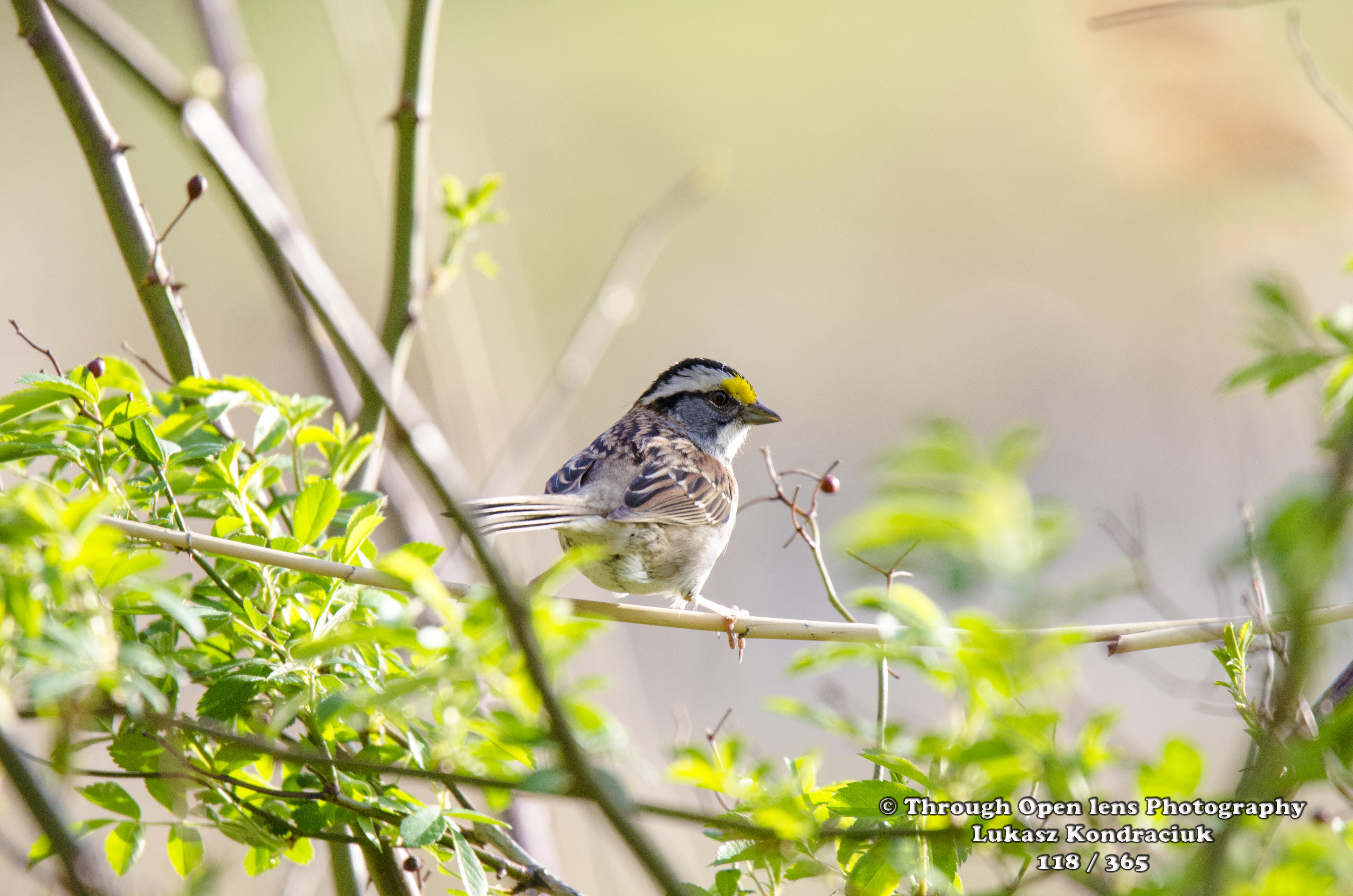
Don’t Sneak Up On Me! I See You!

White-throated Sparrow

F/6.3, 1/640, ISO 800.

White-throated Sparrow

Day 118 / 365

How does a bird with a broken wing manage to land safely?
With its sparrowchute.

Interesting Fact: The White-throated Sparrow comes in two color forms: white-crowned and tan-crowned. The two forms are genetically determined, and they persist because individuals almost always mate with a bird of the opposite morph. Males of both color types prefer females with white stripes, but both kinds of females prefer tan-striped males. White-striped birds are more aggressive than tan-striped ones, and white-striped females may be able to outcompete their tan-striped sisters for tan-striped males. ( http://www.allaboutbirds.org/guide/White-throated_Sparrow/lifehistory )

Angry Bird!

Northern Cardinal

F/6.3, 1/200, ISO 125

Northern Cardinal

Day 117 / 365

You wouldn’t like him when he’s angry. For more info ask the pigs!   🙂

Interesting Fact: Many people are perplexed each spring by the sight of a cardinal attacking its reflection in a window, car mirror, or shiny bumper. Both males and females do this, and most often in spring and early summer when they are obsessed with defending their territory against any intruders. Birds may spend hours fighting these intruders without giving up. A few weeks later, as levels of aggressive hormones subside, these attacks should end (though one female kept up this behavior every day or so for six months without stopping).  ( http://www.allaboutbirds.org/guide/Northern_Cardinal/lifehistory )

Don’t Worry Be Happy!

Yellow Warbler

F/6.3, 1/640, ISO 800.

Yellow Warbler

Day 116 / 365

You’re the yellow bird that I’ve been waiting for!

Interesting Fact: Their open, cuplike nests are easy to find, and cowbirds often lay eggs in them. Yellow Warblers in some areas thwart these parasites by building a new floor over the cowbird eggs and laying a new clutch of their own. In one case, persistent cowbirds returned five times to lay more eggs in one nest, and an even more persistent warbler built six layers of nest floors to cover up the cowbird eggs. ( http://www.audubon.org/field-guide/bird/yellow-warbler )

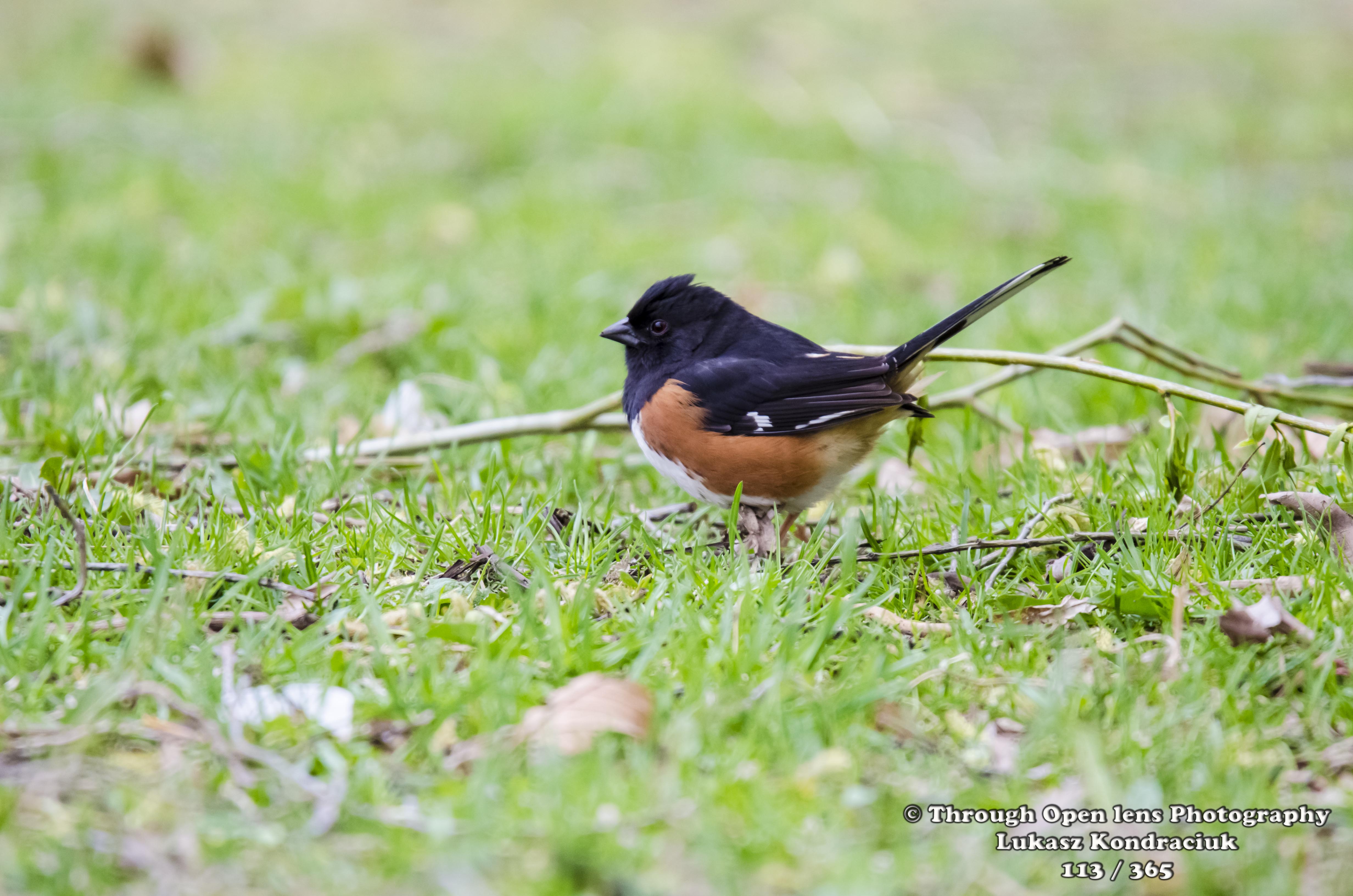
Just Tweeting Around Town!

American Redstart

F/6.3, 1/100, ISO 1600.

Eastern Towhee 
Day 113 / 365

What do you give a sick bird?
Tweetment!

Interesting Fact: Eastern Towhees tend to be pretty solitary, and they use a number of threat displays to tell other towhees they’re not welcome. You may see contentious males lift, spread, or droop one or both wings, fan their tails, or flick their tails to show off the white spots at the corners. Studies have shown that male towhees tend to defend territories many times larger than needed simply to provide food.  ( http://www.allaboutbirds.org/guide/Eastern_Towhee/lifehistory

Happy Earth Day!

Cape May Warbler

F/6.3, 1/80, ISO 1600.

Cape May Warbler

Day 112 /365

Why did the little bird get in trouble at school?
Because he was caught tweeting on a test.

Interesting Fact:  The tongue of the Cape May Warbler is unique among warblers. It is curled and semitubular, and is used to collect nectar during winter. ( http://www.allaboutbirds.org/guide/Cape_May_Warbler/lifehistory )