Guess who? Wha ha hahaha! Wha ha hahaha! Hahahahahahahaha!

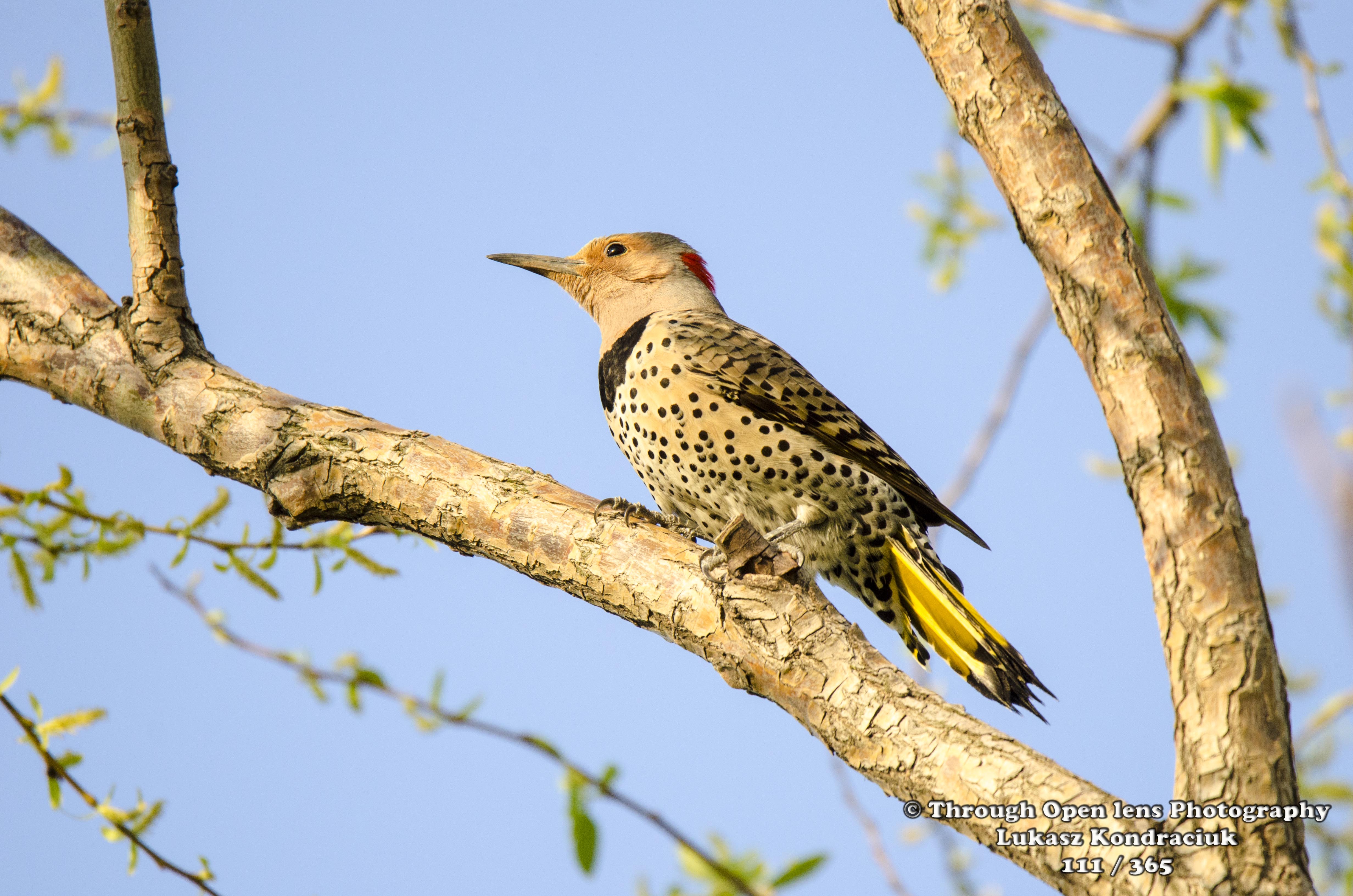
Northern Flicker woodpacker

F/6.3, 1/1000, ISO 800.

Northern Flicker

Day 111 / 365

What do you call a woodpecker that lost his beak?

A Head-Banger.

Interesting Fact: Although it can climb up the trunks of trees and hammer on wood like other woodpeckers, the Northern Flicker prefers to find food on the ground. Ants are its main food, and the flicker digs in the dirt to find them. It uses its long barbed tongue to lap up the ants. ( http://www.allaboutbirds.org/guide/Northern_Flicker/lifehistory )
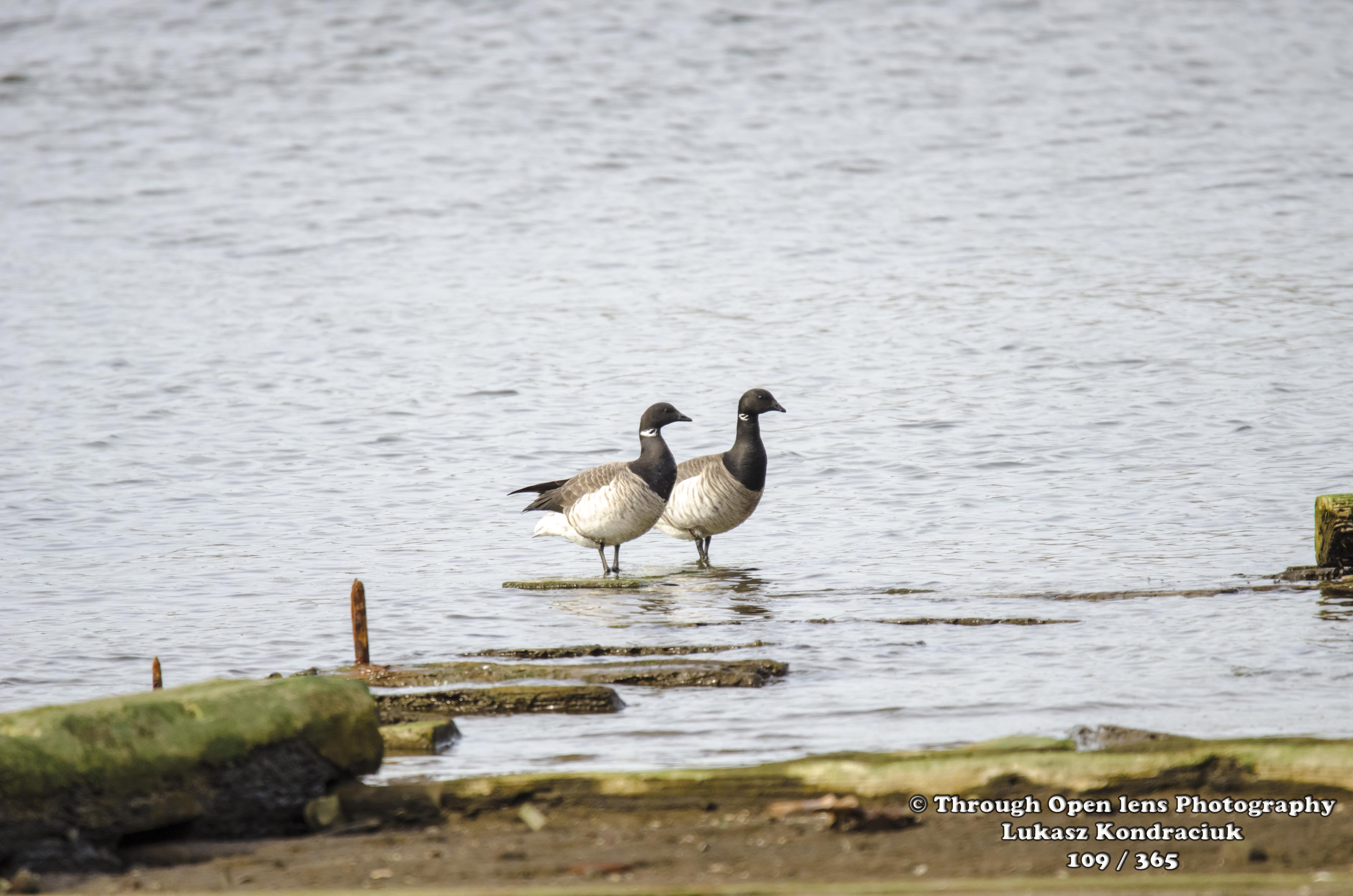
“So, What Are We Looking At ?”

Brant goose

F/6.3, 1/1000, ISO 450.

Brant Goose

Day 109 / 365

What does a farmer call an escaped bird?
A loose goose.

Interesting Fact: Brant goose possess a highly developed salt gland that allows them to drink salt water. ( http://identify.whatbird.com/obj/290/overview/Brant.aspx )

Check Out My Split!

Red-winged blackbird

F/6.3, 1/500, ISO 1250.

Day 106 / 365

“Eat your heart out John Claude Van Dam”

Interesting Fact: Red-winged Blackbirds roost in flocks in all months of the year. In summer small numbers roost in the wetlands where the birds breed. Winter flocks can be congregations of several million birds, including other blackbird species and starlings. Each morning the roosts spread out, traveling as far as 50 miles to feed, then re-forming at night. ( http://www.allaboutbirds.org/guide/Red-winged_Blackbird/lifehistory )

Holy Smokes Batman!

American Robin

F/6.3, 1/320, ISO 400.

American Robin

Day 96 / 365

Where do birds invest their money?
In the stork market!

Interesting Fact: Although robins are considered harbingers of spring, many American Robins spend the whole winter in their breeding range. But because they spend more time roosting in trees and less time in your yard, you’re much less likely to see them. The number of robins present in the northern parts of the range varies each year with the local conditions. ( http://www.allaboutbirds.org/guide/American_Robin/lifehistory )

Search For The Easter Bunny

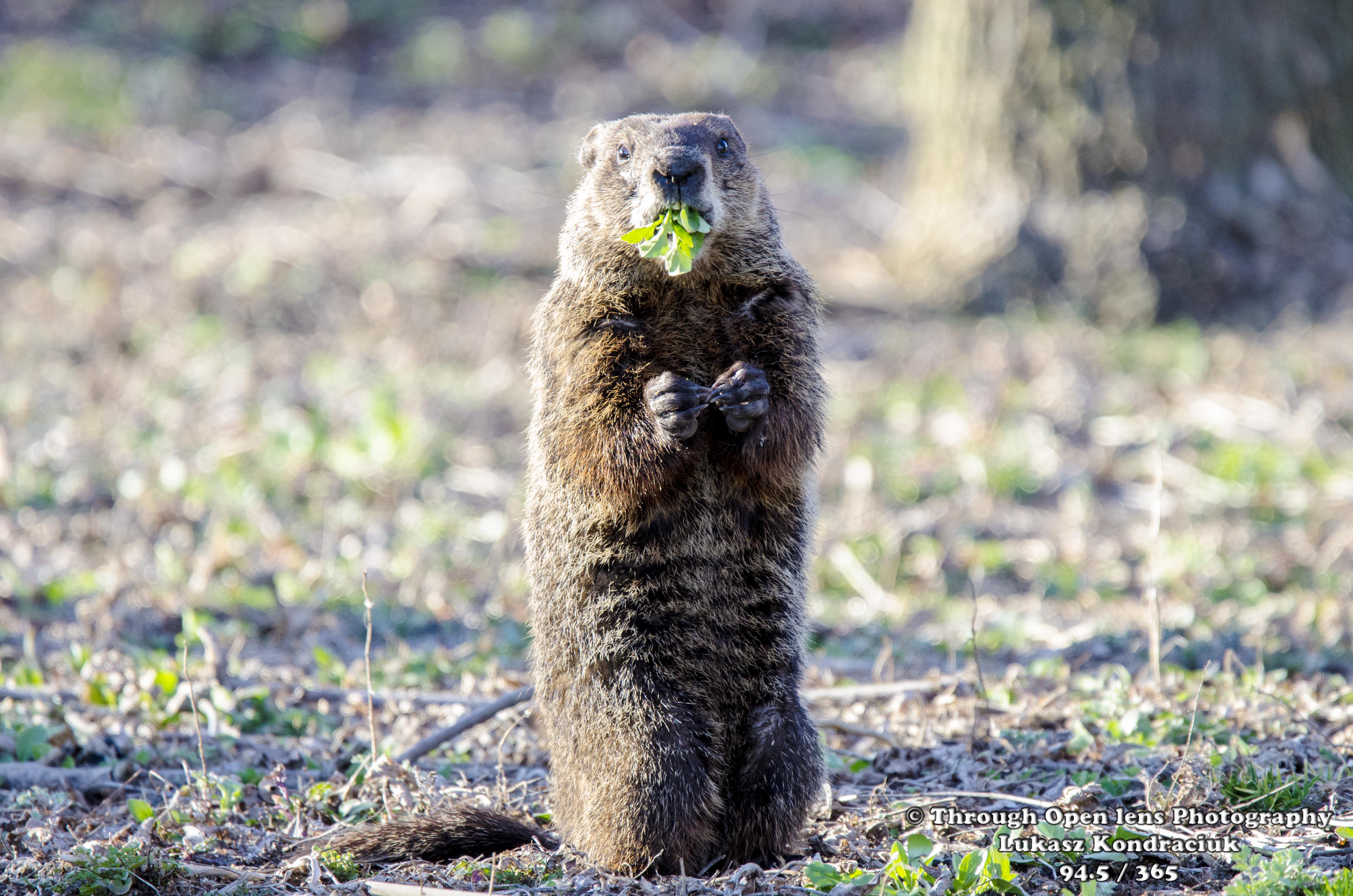
Groundhog

F/6.3, 1/400, ISO 1600.

Groundhog

Day 94 /365

On my search for the Easter Bunny,  I came across Mr. Groundhog who just recently came out of hibernation. While stuffing his face, he pointed me in the right direction.

Interesting Fact: Groundhogs are skilled climbers and swimmers, which helps them to escape less-skilled predators. ( http://www.havahart.com/groundhog-facts )

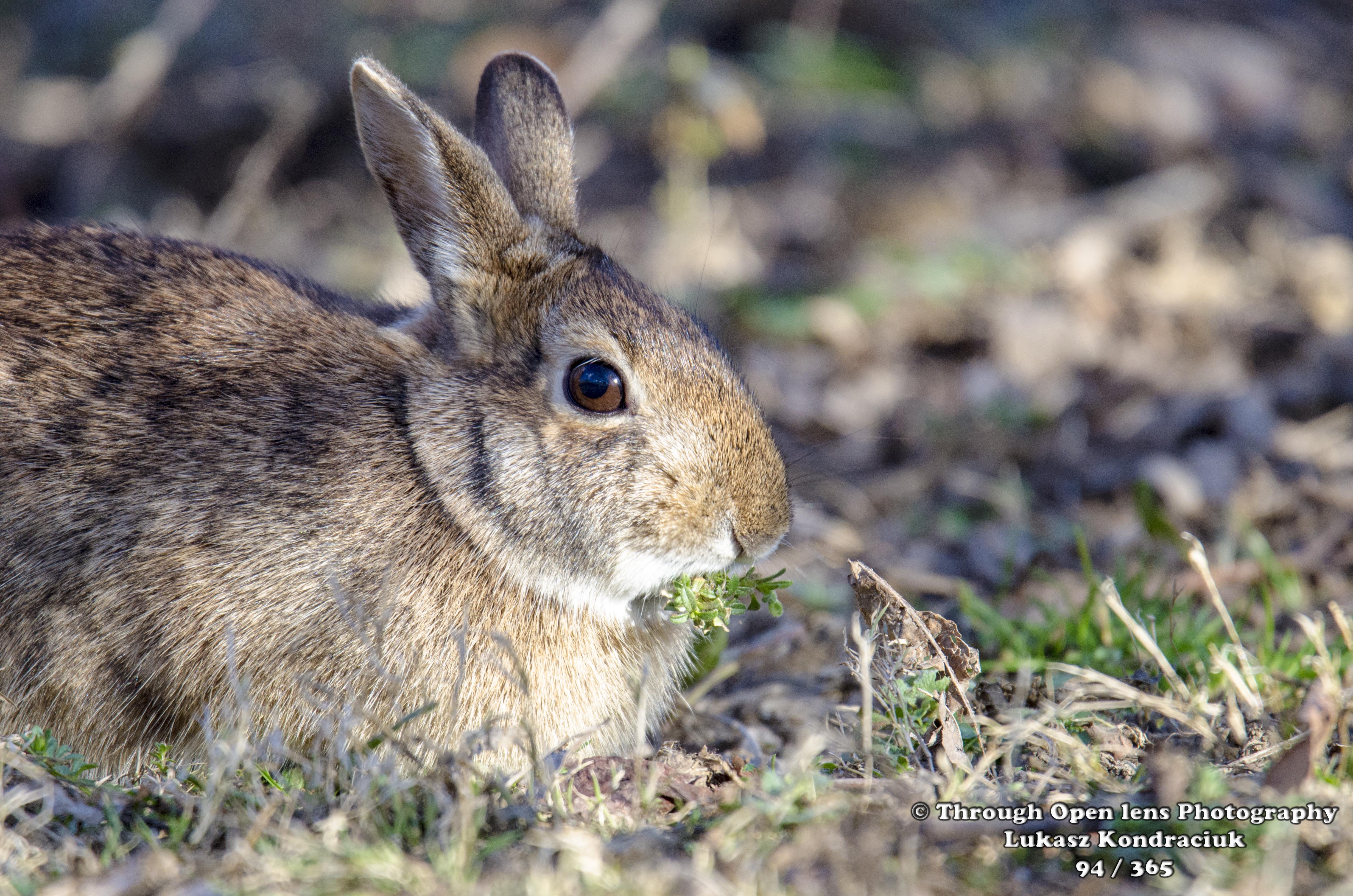
bunny

F/6.3, 1/500, ISO 1000.

Cottontail Rabbit

Finally, I found him.  He was eating to get his strength up for Easter Sunday tomorrow.

Interesting Fact: Cottontail rabbits are almost completely mute animals. They communicate with each other by thumping with their back feet against the ground. ( http://animals.pawnation.com/cottontail-rabbits-1901.html )


Parakeets Guard Post!

Monk Parakeets

F/6.3, 1/125, ISO 1600.

Monk Parakeets

Black and White  Day 5 of 5

Day 93 / 365

” I will watch this side, you take the other side and no one will slip by us “.

Interesting Fact: Its large, communal nests of sticks are easily identifiable and are often built on support poles of electrical lines. ( http://identify.whatbird.com/obj/932/overview/Monk_Parakeet.aspx )

I was challenged by Cynthia at http://cynthiamvoss.wordpress.com/  to take up the Black and White 5-Day Challenge.  Part of the fun is to nominate another blogger, one on each day.

Today, I nominate Susan  of http://suejudd.com/ Susan, if you accept, the goal is to post one B&W photo each day for five days, and to nominate a fellow blogger each day to join in.

There is no pressure to accept this challenge. It’s just for fun!    🙂

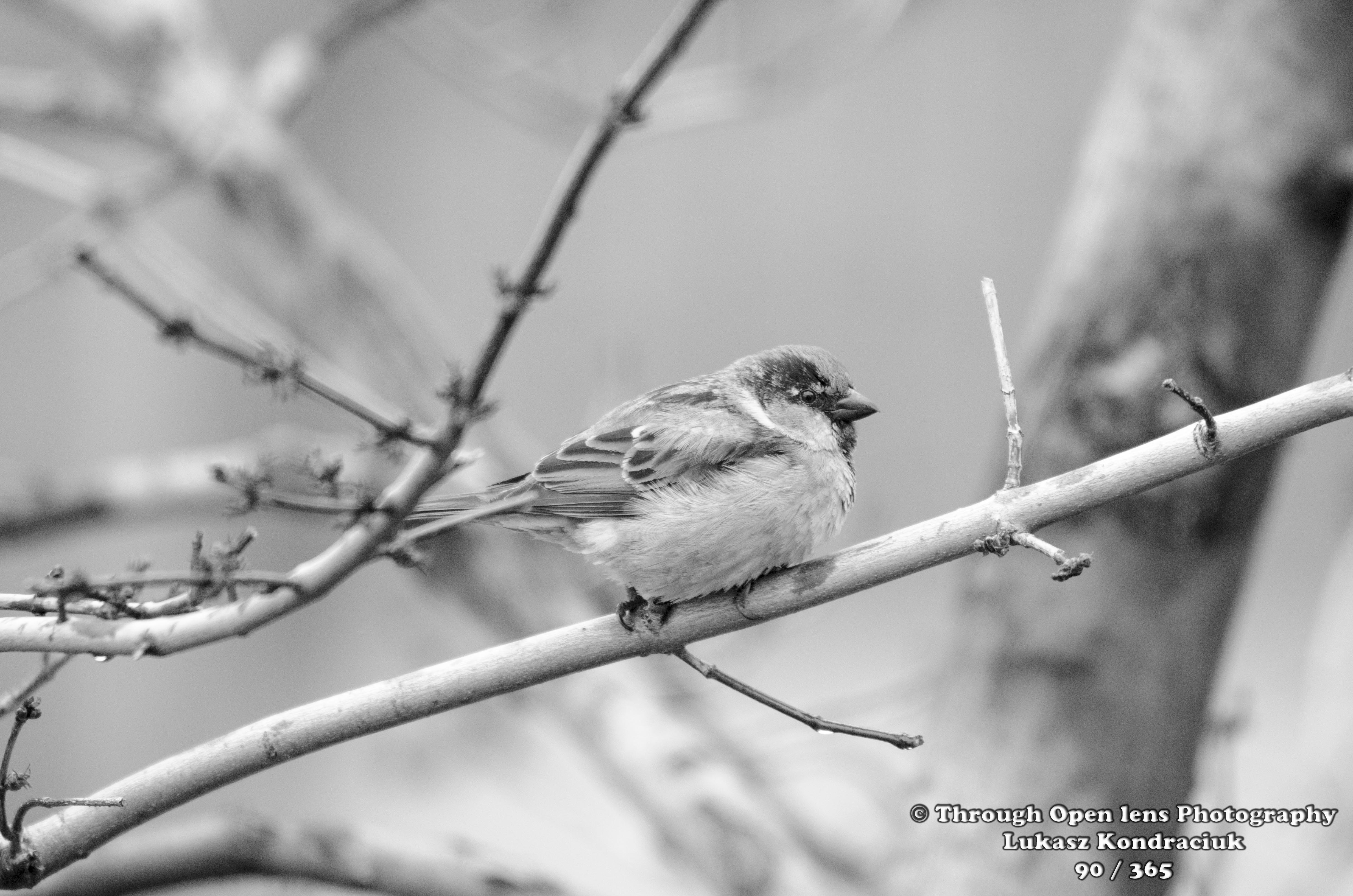
Backyard Bully!

House Sparrow

F/6.3, 1/320, ISO 1600.

House Sparrow

Black and White  Day 2 of 5

Day 90 / 365

This little guy was bullying all the other birds today. So small yet so feisty.

Interesting Fact: The House Sparrow takes frequent dust baths. It throws soil and dust over its body feathers, just as if it were bathing with water. In doing so, a sparrow may make a small depression in the ground, and sometimes defends this spot against other sparrows. ( http://www.allaboutbirds.org/guide/House_Sparrow/lifehistory )

I was challenged by Cynthia at http://cynthiamvoss.wordpress.com/  to take up the Black and White 5-Day Challenge.  Part of the fun is to nominate another blogger, one on each day.

Today, I nominate Maggie of https://magscorner.wordpress.com/ Maggie, if you accept, the goal is to post one B&W photo each day for five days, and to nominate a fellow blogger each day to join in.

There is no pressure to accept this challenge. It’s just for fun!    🙂

Quack, Quack, Another Duck!

Green-winged Teal

F/6.3, 1/40, 1600.

Green-winged teal

Day 83 / 365

Why did the duck fly south for the winter?

Because it was too far to walk.

Interesting Fact:   This is the smallest North American dabbling duck.  ( http://identify.whatbird.com/obj/350/overview/Green-winged_Teal.aspx )

Keep On Shoveling!

Northern Shoveler

F/6.3, 1/1000, ISO 640.

Northern Shoveler

Day 82 /365

His shoveling skills, would come in very handy during all these snow storms we had.

Interesting Fact: They are often referred to as the “Spoonbill” or “Spoony” because of their unique spatulate shaped bill, which has about 110 fine projections (called lamellae) along the edges, for straining food from water.  ( http://identify.whatbird.com/obj/97/overview/Northern_Shoveler.aspx )

Please Don’t Ring My Neck!

Ring-necked Duck

F/6.3, 1/500, ISO 360.

Ring-necked Duck

Day 81 / 365

Why did the duck tell you a joke?
Because he wanted to QUACK you up!

Interesting Fact: Because it never gathers in large flocks it has not been hunted extensively like some of its relatives. A fast flier, it undertakes longer migrations than most other diving ducks. ( http://identify.whatbird.com/obj/95/overview/Ring-necked_Duck.aspx )