Just Keep Swimming, Just Keep Swimming!

canvasback ducks

F/6.3, 1/60, ISO 320.

Day 4 / 365

I wonder where they can be swimming in such a hurry, maybe they are late to be somewhere or maybe they are just afraid of me. 🙂

Interesting Fact: Canvasbacks are diver ducks well equipped with their own form of flippers—large webbed feet that make them smooth and graceful swimmers. They spend much of their time in the water and use their long bills to feed by digging through bottom sediments in search of aquatic plant stems and roots, or submerged insects, crustaceans, and clams. ( http://animals.nationalgeographic.com/animals/birds/canvasback/ )

Goodbye 2014, Welcome 2015!!

cardinal

F/6.3, 1/125, ISO 1000.

I would like to thank everyone for an amazing first year. Starting January 1st, I am doing the 365 project so you guys will be able to enjoy new photos from me each day. I would like to wish everyone a Happy New Year!

Interesting Fact: Cardinals are a picture of sweetness especially when mate feeding. During this time, the male looks for food and feeds the female by putting the food into its mate’s bill as if kissing each other. ( http://www.birdhouses101.com/cardinal-facts.asp )


I Just Came To Say Hello !

Carolina Chickadee

F/5.6, 1/500, ISO 1000.

This Black-capped Chickadee flew by a few times before he sat on a branch nearby.  He started to say few things to me that sounded like “chick-a-dee-dee-dee”, “fee-bee”, “fee-bee-be”. I’m not sure what he was saying but I am guessing it could be something like “Wazzup!” or maybe ” how you doin”. I guess we can only wonder.


Interesting Fact: The song of the Black-capped Chickadee is one of the most complex vocalizations of all animals, acting as a contact call, an alarm call, to identify an individual, or to indicate recognition of a particular flock. ( http://identify.whatbird.com/obj/680/_/Black-capped_Chickadee.aspx )

Be Very Very Quiet, I’m Hunting!

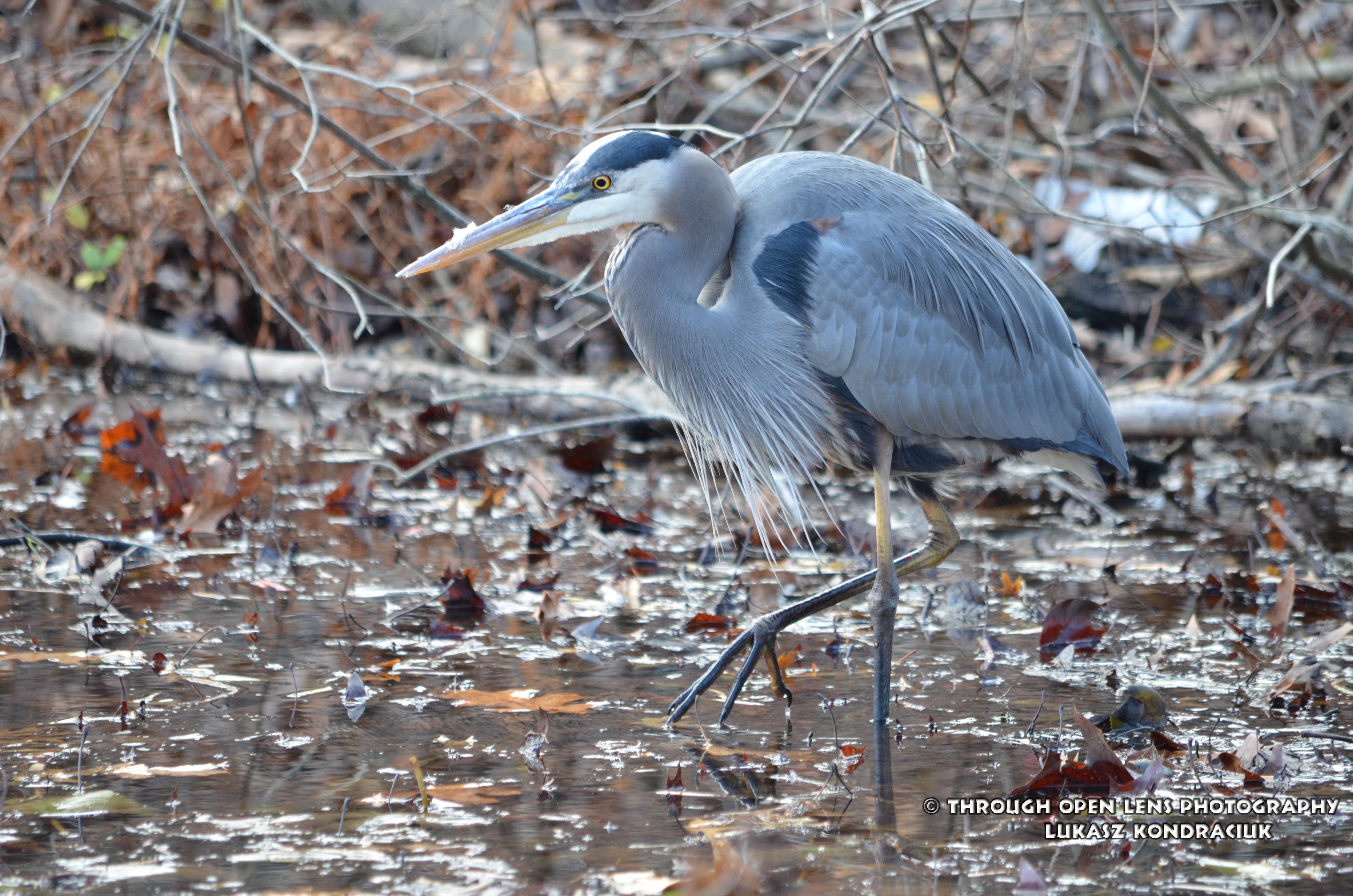
Great Blue Heron

F/5.6, 1/160, ISO 800.

Hey you, photography man, stay still.  I have been waiting for this fish all day and I am not going to let you mess this up for me.


Great Blue Heron1

F/5.6, 1/160, ISO 800.

FINALLY GOT WHAT I WAS WAITING FOR !!!!


Interesting Fact:  Great Blue Herons can hunt day and night thanks to a high percentage of rod-type photoreceptors in their eyes that improve their night vision. (  http://www.allaboutbirds.org/guide/great_blue_heron/lifehistory )


Dominican Brother From Another Mother

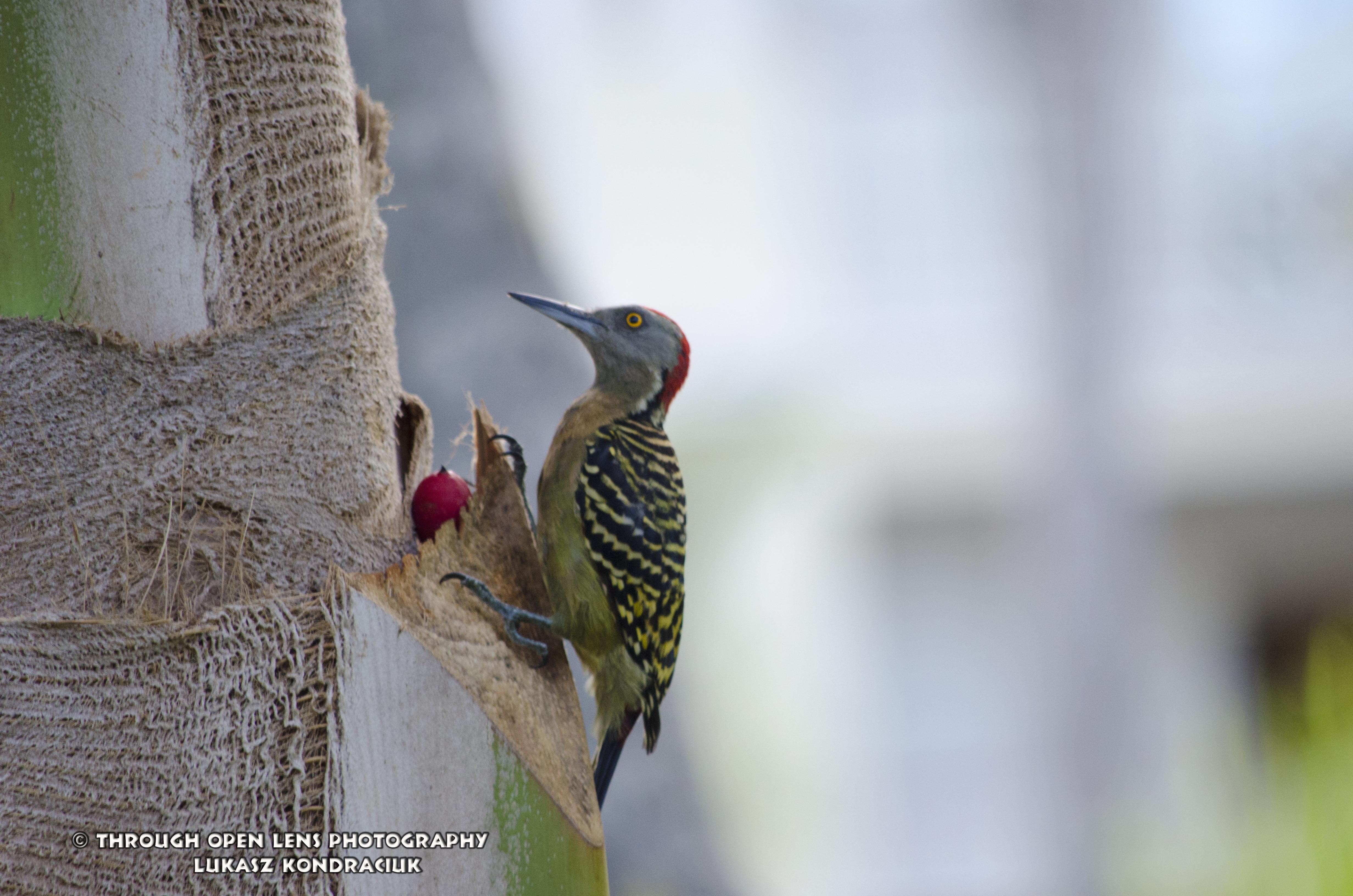
hispaniolan woodpecker

Hispaniolan Woodpecker

f/5.6, 1/125, ISO 900.

Caught this pecker, pecking away, pecking so hard that the palm tree kept swaying. Don’t peck so hard my little friend because you may go limp at the end.

I came across Hispaniolan Woodpecker in Dominican Republic, its very similar to Red-Bellied Woodpecker of my very first post.


Red-bellied Woodpecker

Red-Bellied Woodpecker

F/8.0, 1/1000, ISO 800.


Interesting Fact: Their habitat, which is restricted to Haiti and the Dominican Republic, extends from the coasts, over the deserts to the mountains of the island.  ( http://en.wikipedia.org/wiki/Hispaniolan_woodpecker )

Keep On Knocking But You Can’t Come In.

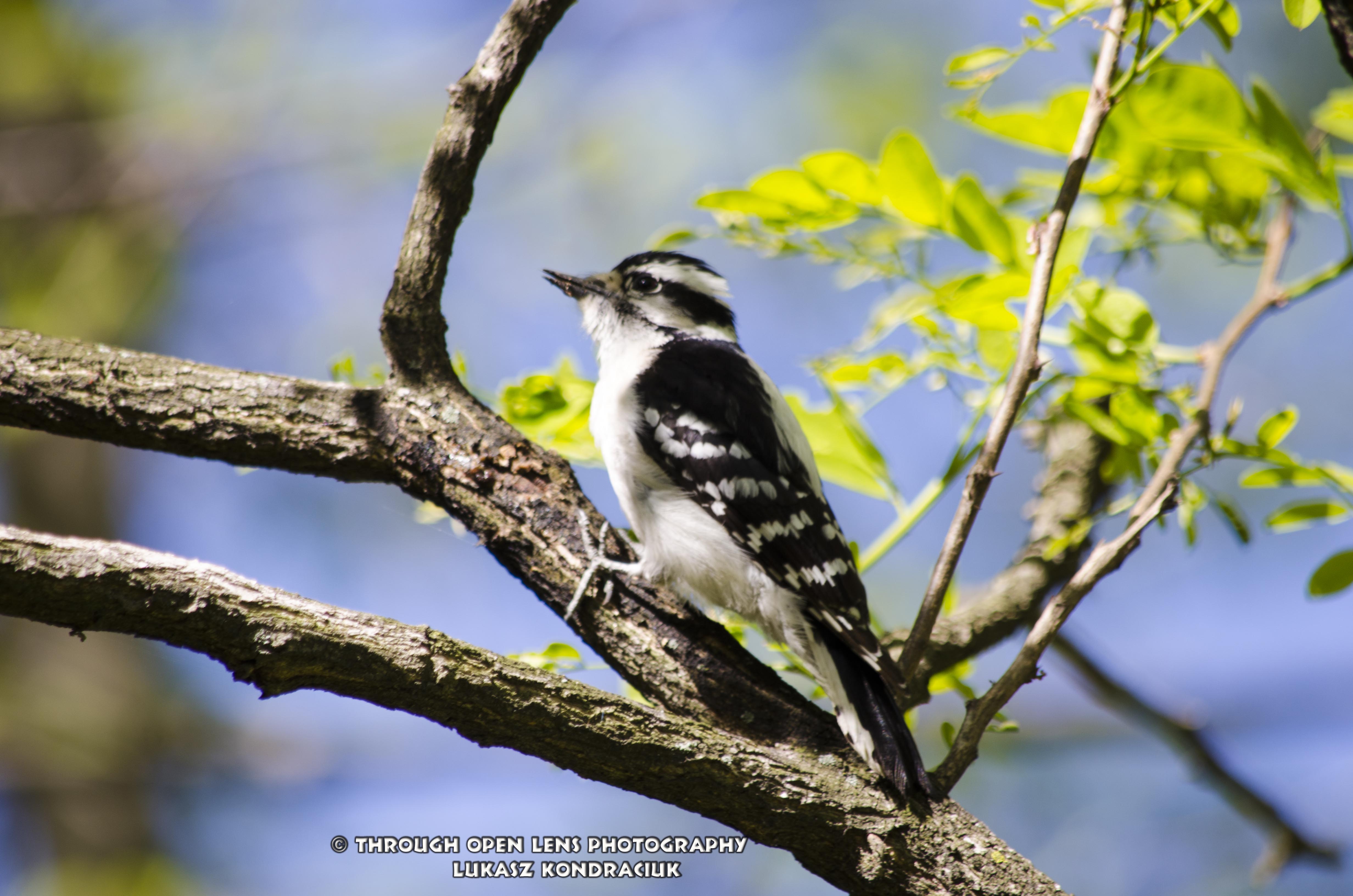
Downy Woodpecker

F/5.6, 1/160, ISO 100

Away on vacation strange knock I hear,

I open the door and what do I see

a Downy Woodpecker up In a tree.

I rush for my camera and run out the door

I snap a few photos and that’s about all.


Interesting Fact: Woodpeckers don’t sing songs, but they drum loudly against pieces of wood or metal to achieve the same effect. People sometimes think this drumming is part of the birds’ feeding habits, but it isn’t. In fact, feeding birds make surprisingly little noise even when they’re digging vigorously into wood. ( http://www.allaboutbirds.org/guide/downy_woodpecker/lifehistory )


Your Kung-Fu Is Good, But You Are No Match For My Great Egret Style!

Great Egret

F/5.6, 1/8000, ISO 1000.

This Great Egret showed off his crazy moves, and hit the road or I should say the sky.  I wanted to learn more by observing this amazing bird, but unfortunately my presence spooked him away and the lesson was over.  The way they walk and hunt, it is actually quite interesting. I would highly recommend next time you see one, to stick around for few minutes, and you maybe see something that you haven’t seen before.

Interesting Fact: Great Egrets fly slowly but powerfully: with just two wingbeats per second their cruising speed is around 25 miles an hour. ( http://www.allaboutbirds.org/guide/great_egret/lifehistory )

They Bring Fast Food To A Whole New Level.


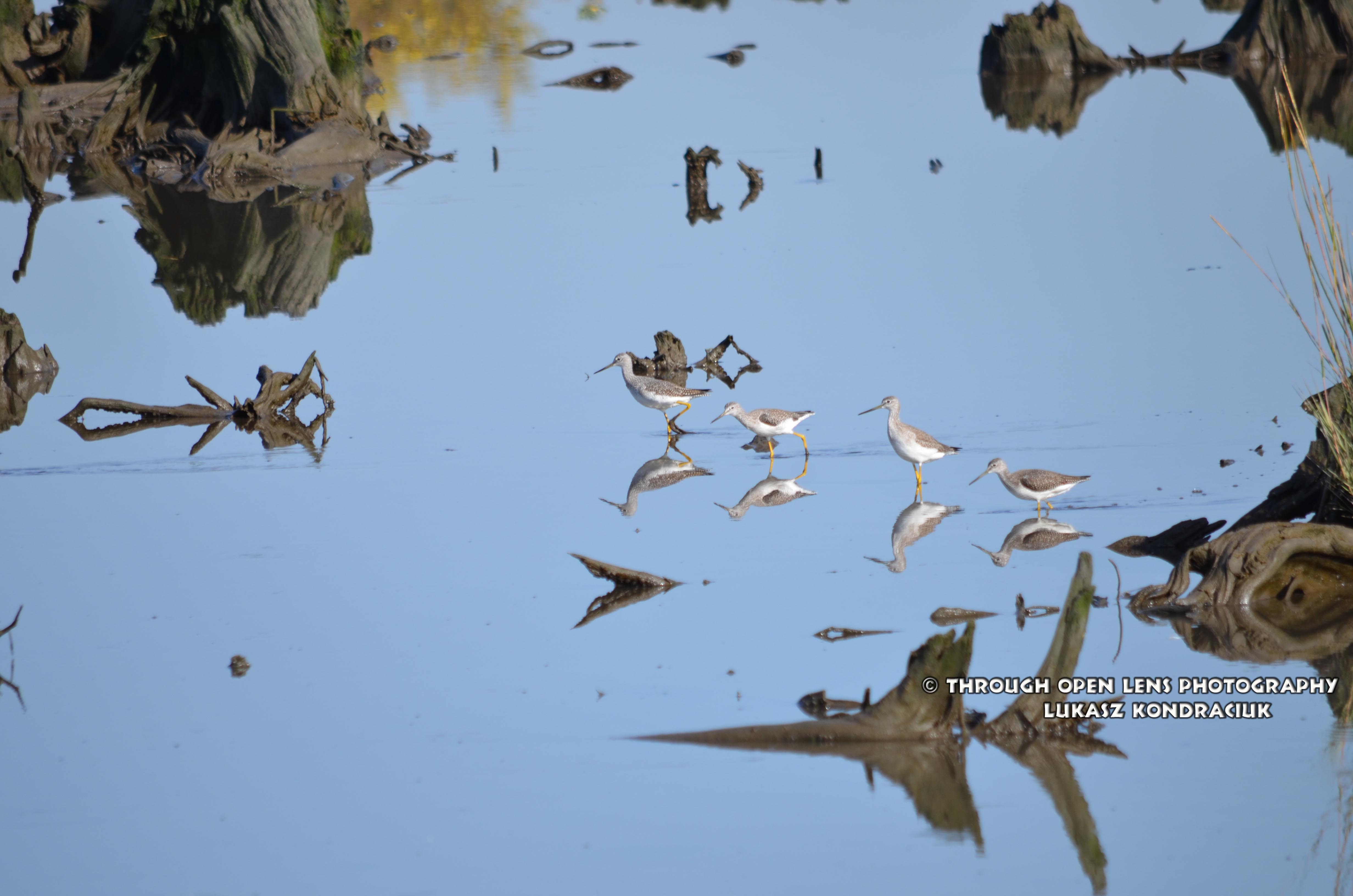
Greater Yellowlegs

F/6.3, 1/640, ISO200.

It is quite entertaining to watch Greater Yellowlegs run after their prey. Those amazing birds made it look so easy, but I recommend no to try this at home, running and eating did not work out well for me. ( Ha Ha )

Interesting Fact:  Greater Yellowlegs mainly eat insects and insect larvae during the breeding season. During winter and migration, small fish, crustaceans, snails, and other aquatic animals round out the diet. (  http://naturemappingfoundation.org/natmap/facts/greater_yellowlegs_712.html  )

Red Tail Goalie

red tailed hawk

F/7.1, 1/800, ISO 200.

With the 2014 FIFA World Cup coming, every one is getting excited, even the Red Tail Hawk came down to take a closer look at a little league soccer game. The hawk liked the soccer game so much, he stayed around to play as a goalie. But since he wasn’t playing fair and the kids were scared of him, the referee gave him a red card and tossed him out of the game.

red tailed hawk1

F/5.6, 1/500, ISO 200.

Interesting Fact: These birds of prey are also known as buzzard hawks and red hawks. By any name, they are keen-eyed and efficient hunters. Red-tails prefer open areas, such as fields or deserts, with high perching places nearby from which they can watch for prey. But these birds are adaptable and also dwell in mountains and tropical rain forests. Hawks have even embraced human habitats. They often perch on telephone poles and take advantage of the open spaces along the roadside to spot and seize mice, ground squirrels, rabbits, reptiles, or other prey. ( http://animals.nationalgeographic.com/animals/birds/red-tailed-hawk/ )

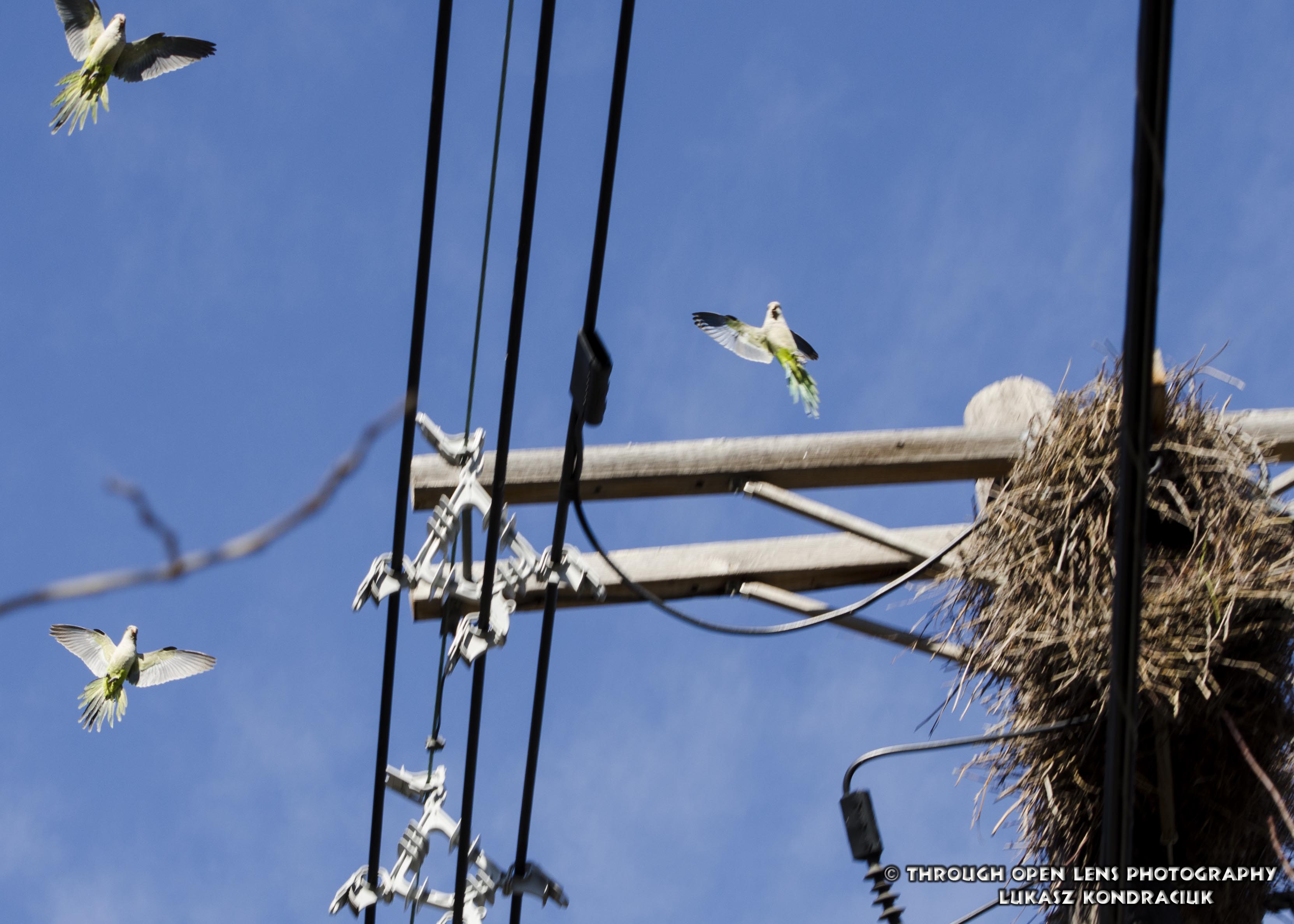
Monk Parakeets in Edgewater, NJ

Monk Parakeets

Monk Parakeets

I wasn’t sure if it was true but its, Edgewater, NJ  is the home of a free-flying colony of Monk Parakeets.

Interesting Fact: These small, green parrots have lived in Edgewater since at least 1980. How the birds came to Edgewater is unknown, though a widely accepted story traces their origin to an escape from a damaged crate at John F. Kennedy Airport in the 1960s.

First Photo: F/5.6, 1/100, ISO 400

Second Photo: F/8.0, 1/250, ISO 250