Happy International Coffee Day!

coffee 1

F/ 5.6, 1/60, ISO 200.

Day 272 / 365

A guy walks into a coffee shop and asks the waitress: “How much is the coffee?”
“Coffee is four dollars the waitress says”.
“How much is a refill?” the man asks.
“Free, “says the waitress.
“Then I’ll take a refill!” the man responds.

Interesting Fact: Coffee is the second most traded commodity on earth. According to the Global Exchange, there are approximately 25 million farmers in over 50 countries involved in producing coffee. The number one commodity? Oil. ( http://www.goodhousekeeping.com/health/diet-nutrition/a30303/facts-about-coffee/ )

May You Always Have A Seashell In Your Pocket And Sand Between Your Toes!

seashells

F/11.0, 1/500, ISO 160.

Day 271 / 365

Why does the mermaid wear seashells?

Because she grew out of her B-shells.

Interesting Fact: The turn of a snail’s shell is called a whorl. In 99 percent of all snail species, that whorl goes in a clockwise direction. ( http://www.ehow.com/facts_5233555_seashell-kids.html )

Super Blood Moon

Blood Moon

F/6.3, 1/250, ISO 500, Photoshop CS6.

Day 270 / 365

How does a man on a moon get his haircut?

Eclipse it.

Interesting Fact: There is a total eclipse of the moon on the night of September 27-28, 2015. It happens to be the closest supermoon of 2015. It’s the Northern Hemisphere’s Harvest Moon, or full moon nearest the September equinox. It’s the Southern Hemisphere’s first full moon of spring. This September full moon is also called a Blood Moon, because it presents the fourth and final eclipse of a lunar tetrad: four straight total eclipses of the moon, spaced at six lunar months (full moons) apart. Phew! ( http://earthsky.org/tonight/total-lunar-eclipse-blood-moon-hunters-moon-september-27-28-2015 )


Brotherly Love

brotherly love

F/5.6, 1/60, ISO 400.

Day 269 / 365

What did the beach say to the wave?…

“Long tide, no sea.”

Interesting Fact: Most beaches are found on the coast, where wave action, currents, tides and seawater rises continuously rework and shape the sediment. As a result, beaches are usually regarded as dynamic, natural phenomenon.  ( http://www.sciencekids.co.nz/sciencefacts/earth/beaches.html )


I Found Fountain Of Youth, But I Wasn’t Thirsty.

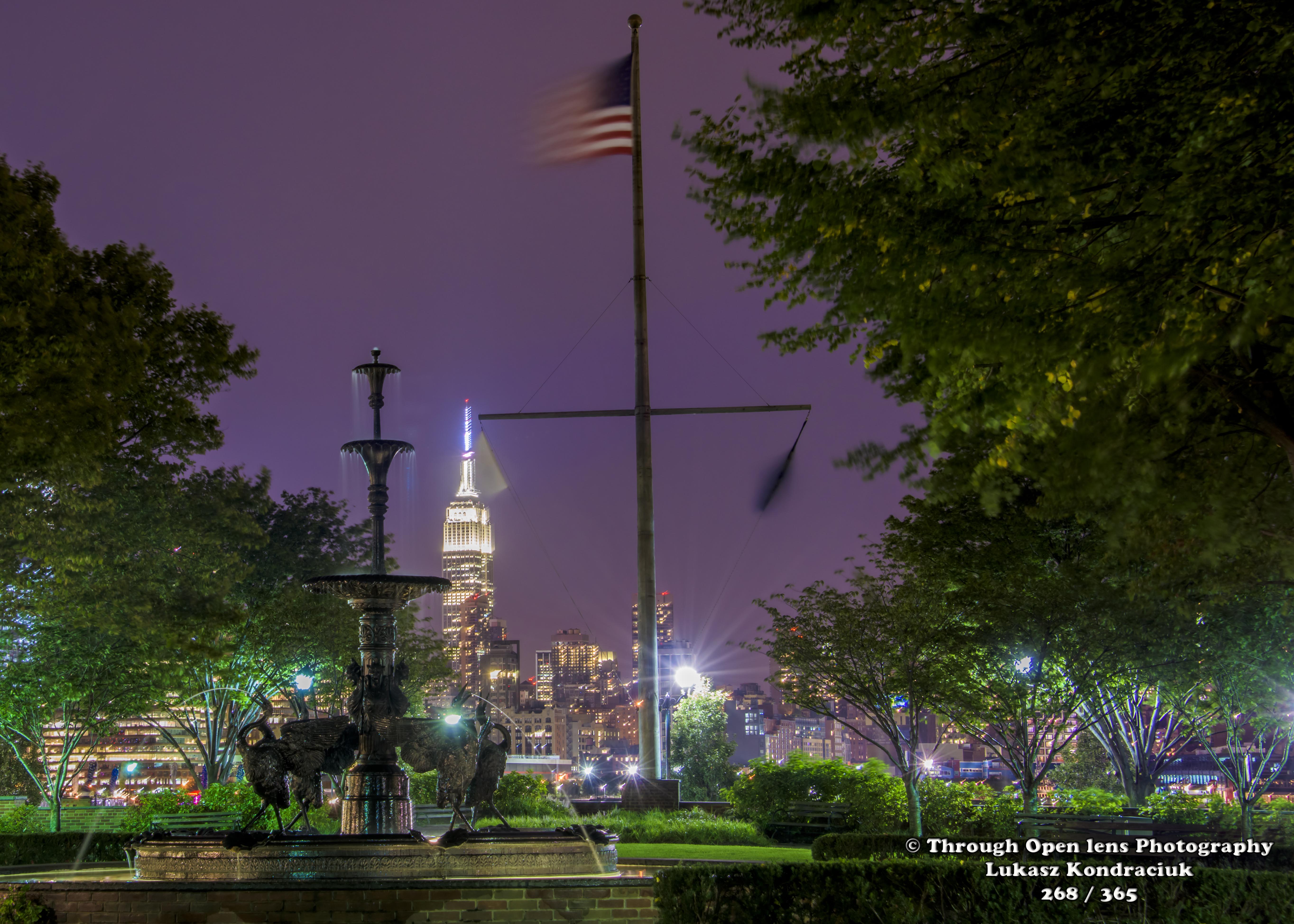
hoboken park

F/10.0, 30.0, ISO 100.

Day 268 / 365

A drunk falls into one of the fountains in Trafalgar Square. Floundering around, he looks up and sees Nelson standing on his column.

“Don’t jump!” he shouts. “This is the shallow end!”

Interesting Fact: The ancient Greeks were apparently the first to use aqueducts and gravity-powered fountains to distribute water. According to ancient historians, fountains existed in Athens, Corinth, and other ancient Greek cities in the 6th century BC as the terminating points of aqueducts which brought water from springs and rivers into the cities. In the 6th century BC the Athenian ruler Peisistratos built the main fountain of Athens, the Enneacrounos, in the Agora, or main square. It had nine large cannons, or spouts, which supplied drinking water to local residents. ( https://en.wikipedia.org/wiki/Fountain )

Enjoy Every Sunset And Look Forward To Every Sunrise!

sunset

F/11.0, 1/320, ISO 100.

Day 267 / 365

Why did the sun go to school?

To get brighter!

Interesting Fact: Sunset or sundown, is the daily disappearance of the Sun below the western horizon as a result of Earth’s rotation. The time of sunset is defined in astronomy as the moment when the trailing edge of the Sun’s disk disappears below the horizon. The ray path of light from the setting Sun is highly distorted near the horizon because of atmospheric refraction, making the sunset appear to occur when the Sun’s disk is already about one diameter below the horizon. Sunset is distinct from dusk, which is the time at which the sky becomes completely dark, which occurs when the Sun is approximately eighteen degrees below the horizon. The period between sunset and dusk is called twilight. ( https://en.wikipedia.org/wiki/Sunset)

Mother Nature Has A Big Canvas

clouds 1

F/4.5, 1/2500, ISO 500.

Day 265 / 365

What do you call a sheep with no legs?

A cloud.

Interesting Fact: Ancient cloud studies were not made in isolation, but were observed in combination with other weather elements and even other natural sciences. In about 340 BC the Greek philosopher Aristotle wrote Meteorologica, a work which represented the sum of knowledge of the time about natural science, including weather and climate. For the first time, precipitation and the clouds from which precipitation fell were called meteors, which originate from the Greek word meteoros, meaning ‘high in the sky’. From that word came the modern term meteorology, the study of clouds and weather. Meteorologica was a work of intuitive rather than scientific study. Nevertheless, it was the first known work that attempted to treat a broad range of meteorological topics. ( https://en.wikipedia.org/wiki/Cloud )

There Are Always Flowers For Those Who Want To See Them

campanula

F/ 5.6, 1/60, ISO 500.

Campanula

Day 264 / 365

Why couldn’t the flower ride its bike?

It lost its petals.

Interesting Fact: Campanula /kæmˈpæn.juːlə/[4] is one of several genera in the family Campanulaceae with the common name bellflower. It takes both its common and its scientific name from its bell-shaped flowerscampanula is Latin for “little bell”. The genus includes over 500 species and several subspecies, distributed across the temperate and subtropical regions of the Northern Hemisphere, with the highest diversity in the Mediterranean region east to the Caucasus.[5] The range also extends into mountains in tropical regions of Asia and Africa. The species include annual, biennial and perennial plants, and vary in habit from dwarf arctic and alpine species under 5 cm high, to large temperate grassland and woodland species growing to 2 metres (6 ft 7 in) tall. ( https://en.wikipedia.org/wiki/Campanula )


Pool Party!

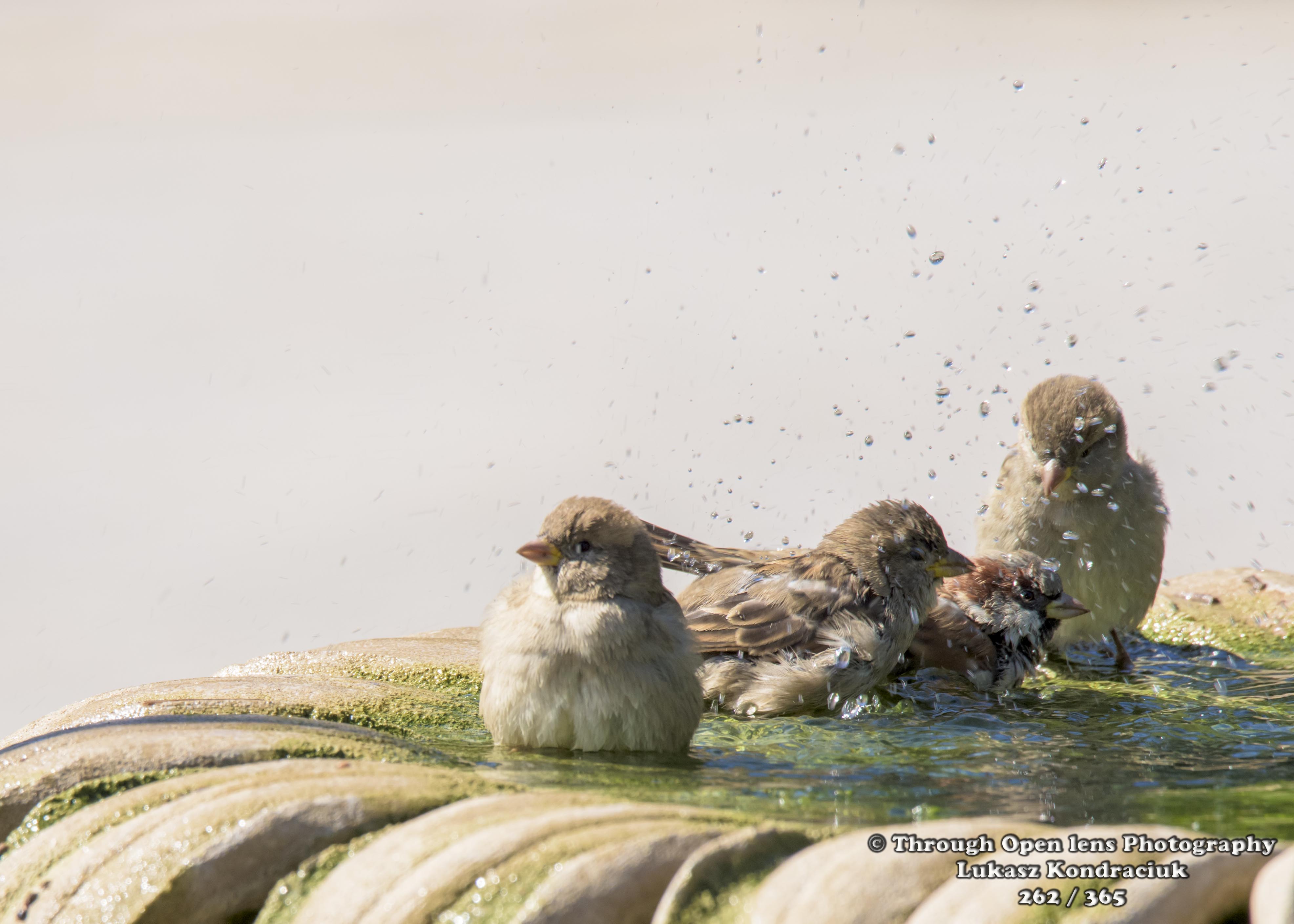
House Sparrows

F/11.0, 1/400, ISO 400.

House Sparrows

Day 263 / 365

Two small time thieves had been sent by the Big Boss to steal a van load of goods from a bathroom suppliers. One stayed in the van as look out and the other went into the storeroom. Fifteen minutes went by, then half an hour, then an hour, and no sign of him. The look out finally grew impatient and went to look for his partner. Inside the store the two came face to face. “Where have you been?” demanded the worried look out “The boss told me to take a bath, but I couldn’t find the soap and a towel.”

Interesting Fact: House Sparrows in flocks have a pecking order much the way chickens in a farmyard do. You can begin to decipher the standings by paying attention to the black throats of the males. Males with larger patches of black tend to be older and dominant over males with less black. By wearing this information on their feathers, sparrows can avoid some fights and thereby save energy. ( http://www.allaboutbirds.org/guide/House_Sparrow/lifehistory )


High Dive Competition

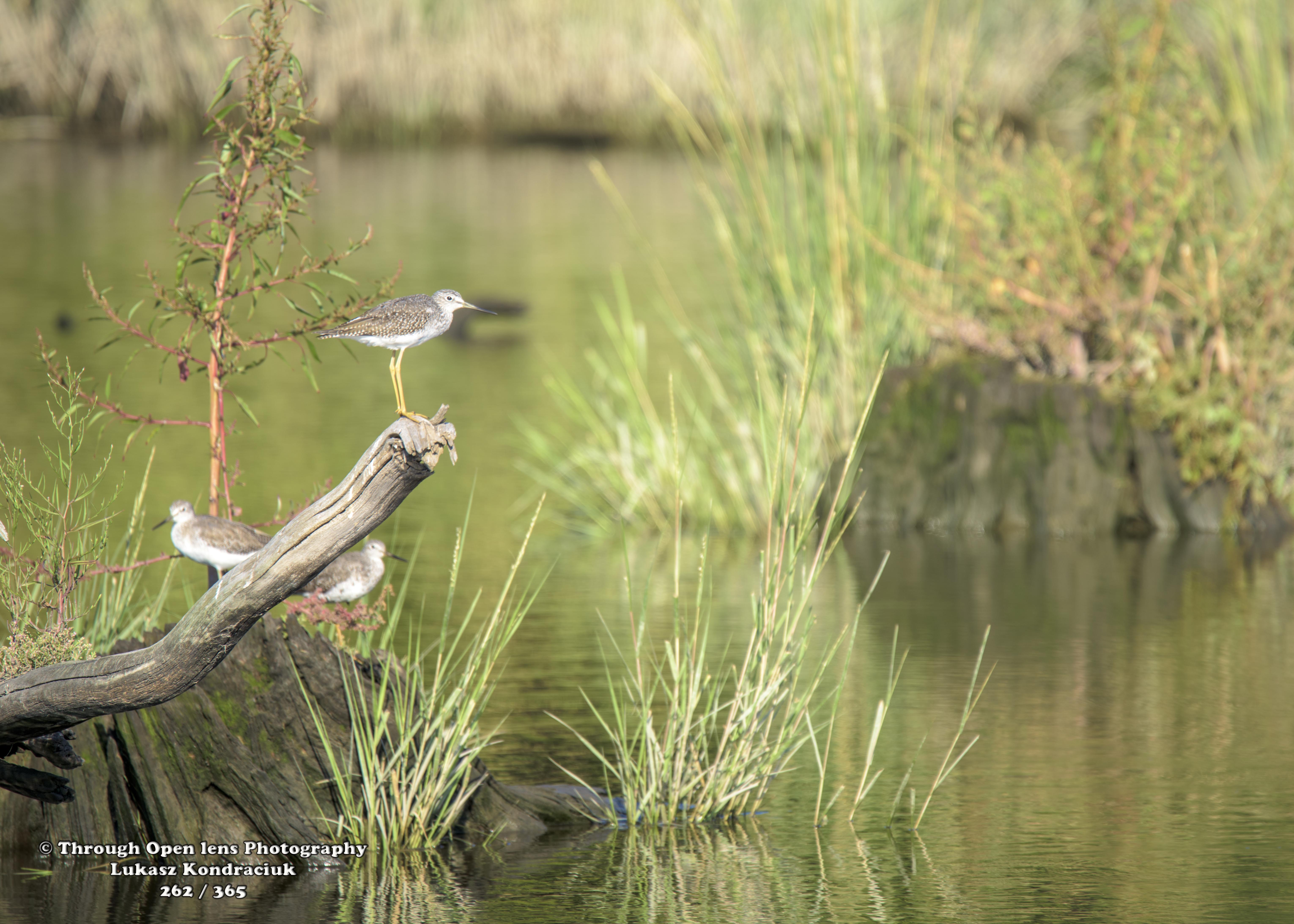
Greater Yellowlegs 3

F/7.1, 1/160, ISO 100.

Greater Yellowlegs

Day 262 / 365

A man met a gorgeous woman and knew immediately that he wanted to marry her. “But, we don’t know anything about each other,” she said.
“That doesn’t matter,” he replied. “We’ll learn about each other as we go along.”
So, she agreed. They married and went to a beautiful resort for their honeymoon.
One morning, as they were laying by the pool, he got up off of his towel, climbed up to the diving board, and did a two and a half tuck gainer. This was followed by three rotations in a jackknife position, where he straightened out and cut the water like a knife. After a few more demonstrations, he came back and lay down on the towel.
“Wow,” she said, “That was incredible!”
“I used to be an Olympic diving champion,” he explained. “See, I told you we’d learn more about each other as we went along.”
With that, she got up, jumped into the pool, and started swimming laps. After about thirty laps, she climbed back out and lay down on her towel, barely out of breath.
“That was amazing!” he exclaimed. “Were you an Olympic endurance swimmer?”
“No,” she replied, “”I was a hooker in Venice and worked both sides of the canal!”

Interesting Fact:  Although the Greater Yellowlegs is common and widespread, its low densities and tendency to breed in inhospitable, mosquito-ridden muskegs make it one of the least-studied shorebirds on the continent. ( http://www.allaboutbirds.org/guide/Greater_Yellowlegs/lifehistory )