Let There Be Lights!

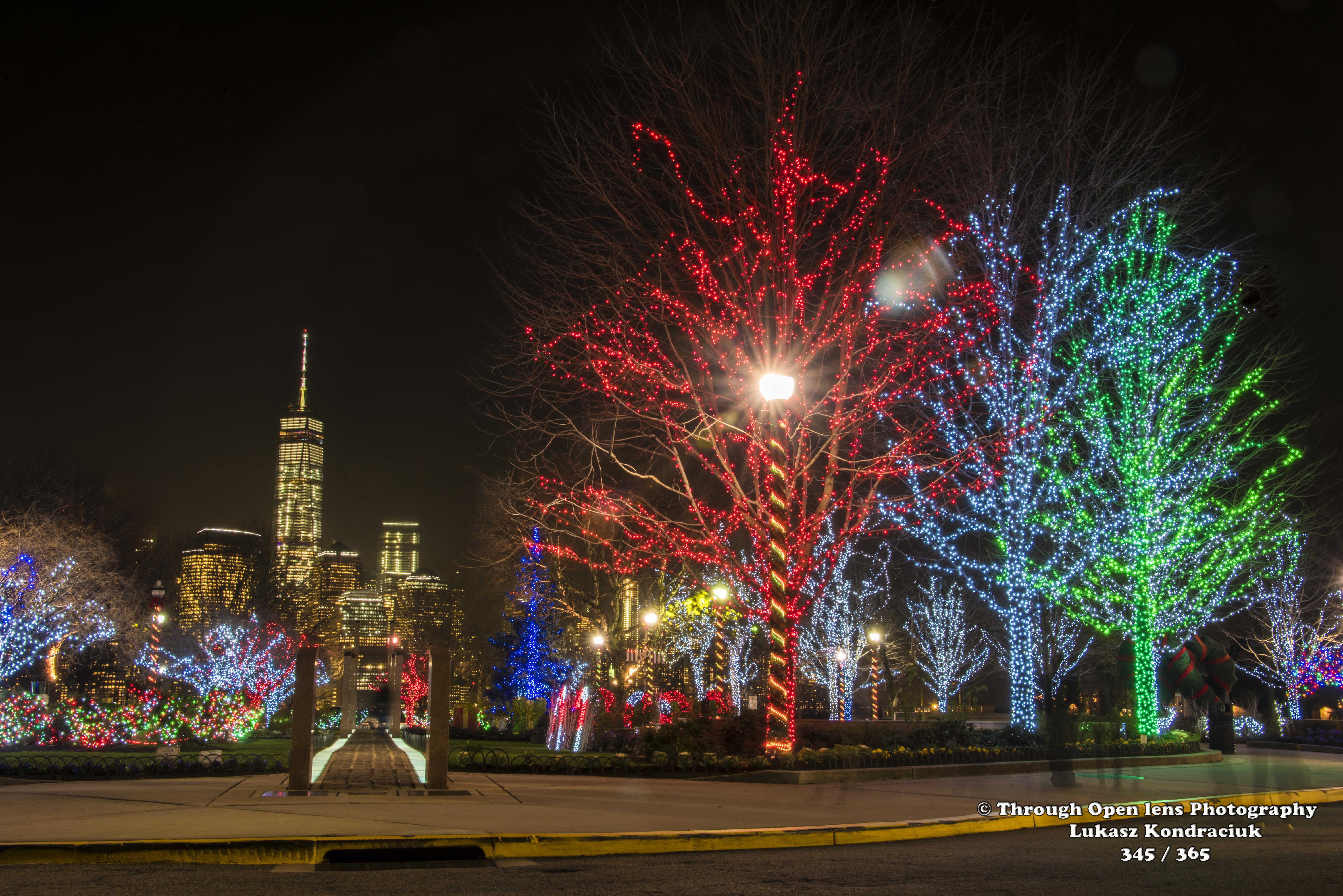
Christmas lights Skyline

F/29.0, 39.0, ISO 64.

Day 345 / 365

Little Mikey had a cussing problem and his father was getting tired of it. He decided to ask his friend what to do. The friend said, “Since Christmas is coming up, you should ask Mikey what he wants Santa to bring him. If he cusses while he tells you his wish list, leave a pile of dog poop in place of the gift or gifts he requests.” Two days before Christmas, Mikey’s father asked him what he wanted for Christmas.
“I want a damn teddy-bear laying right beside me when I wake up. When I go downstairs I want to see a damn train going around the damn tree. And when I go outside I want to see a damn bike leaning against the damn garage.”
Christmas morning, Little Mikey woke up and rolled over into a pile of dog poop. Confused, he walked down stairs and saw another pile under the tree. Scratching his head, he walked outside and saw a huge pile of dog poop by the garage.
When Mikey walked back inside with a curious look on his face, his dad smiled and asked, “What did Santa bring you this year?”
Mikey replied, “I think I got a dog, but I can’t find the son-of-a-bitch!”

Interesting Fact: The illuminated Christmas tree became established in the United Kingdom during Queen Victoria’s reign, and through emigration spread to North America and Australia. In her journal for Christmas Eve 1832, the delighted 13-year-old princess wrote, “After dinner.. we then went into the drawing-room near the dining-room. There were two large round tables on which were placed two trees hung with lights and sugar ornaments. All the presents being placed round the trees”.[7] Until the availability of inexpensive electrical power in the early twentieth century, miniature candles were commonly (and in some cultures still are) used. ( https://en.wikipedia.org/wiki/Christmas_lights#History )

Just Because Something Isn’t Happening For You Right Now, Doesn’t Mean That It Will Never Happen

bikes frames

F/5.6, 1/60, ISO 320.

Day 338 / 365

Do you know what is the hardest part of learning to ride a bike?

The pavement.

Interesting Fact: There are several early but unverified claims for the invention of bicycle-like machines. The earliest comes from a sketch said to be from 1493 and attributed to Gian Giacomo Caprotti, a pupil of Leonardo da Vinci. In 1998 Hans-Erhard Lessing described this as a purposeful fraud.[1][2] However, the authenticity of the bicycle sketch is still vigorously maintained by followers of Prof. Augusto Marinoni, a lexicographer and philologist, who was entrusted by the Commissione Vinciana of Rome with the transcription of da Vinci’s Codex Atlanticus. ( https://en.wikipedia.org/wiki/History_of_the_bicycle )

It’s 5 O’clock Somewhere!!

The Hamilton Inn

F/ 18.0, 38.0, ISO 64.

Day 327 / 365

A man goes into a bar and seats himself on a stool. The bartender looks at him and says, “What’ll it be buddy?”

The man says, “Set me up with seven whiskey shots and make them doubles.” The bartender does this and watches the man slug one down, then the next, then the next, and so on until all seven are gone almost as quickly as they were served. Staring in disbelief, the bartender asks why he’s doing all this drinking.

“You’d drink them this fast too if you had what I have.”

The bartender hastily asks, “What do you have pal?”

The man quickly replies, “I have a dollar.”

Interesting Fact: The inhabitants of Great Britain have been drinking ale since the Bronze Age, but it was with the arrival of the Romans and the establishment of the Roman road network that the first inns called tabernae,[5] in which the traveller could obtain refreshment, began to appear. After the departure of Roman authority and the fall of the Romano-British kingdoms, the Anglo-Saxons established alehouses that grew out of domestic dwellings. The Anglo-Saxon alewife would put a green bush up on a pole to let people know her brew was ready.[6] These alehouses formed meeting houses for the villagers to meet and gossip and arrange mutual help within their communities. Here lie the beginnings of the modern pub. They became so commonplace that in 965 King Edgar decreed that there should be no more than one alehouse per village.  ( https://en.wikipedia.org/wiki/Pub#History )


I Think I’m On The Right Track

Light Rail

F/ 14.0 , 25.0, ISO 200.

Day 320 / 365

What do you call a train that eats toffee?

A chew, chew train.

Interesting Fact: The system began operating its first segment in April 2000, expanded in phases during the next decade, and was completed with the opening of its southern terminus on January 31, 2011. The line generally runs parallel to the Hudson River and Upper New York Bay, while its northern end and its western branch travel through the lower Hudson Palisades. HBLR has twenty-four stations along a total track length of just over 34 miles (55 km) and serves over 54,000 weekday passengers.[1] There are plans for expansion through extensions and additional stations. ( https://en.wikipedia.org/wiki/Hudson%E2%80%93Bergen_Light_Rail#Historical_overview )

Let Me Lift Up Your Smile

crane

F/14.0, 259.0, ISO 64.

Day 217 / 365

There were three workers; one crane operator, one pole climber, one guide.
The guide tied the crane to the end of a pole. The crane operator would then pick the pole up on end. The climber climbed to the top and dropped a tape measure which the guide promptly read and noted the measurement. The crane operator then lowered the pole to the ground and repsitioned to pick up another pole.
This went on several times when the foreman came over and asked why they couldn’t measure the poles while they were laying on the ground?
The worker replied, “we need to know how tall the poles are, not how long”.

source: http://www.jokebuddha.com/Crane#ixzz3rRDzfNPL

Interesting Fact: It is assumed that Roman engineers lifted these extraordinary weights by two measures. First, as suggested by Heron, a lifting tower was set up, whose four masts were arranged in the shape of a quadrangle with parallel sides, not unlike a siege tower, but with the column in the middle of the structure (Mechanica 3.5).[6] Second, a multitude of capstans were placed on the ground around the tower, for, although having a lower leverage ratio than treadwheels, capstans could be set up in higher numbers and run by more men (and, moreover, by draught animals).[7] This use of multiple capstans is also described by Ammianus Marcellinus (17.4.15) in connection with the lifting of the Lateranense obelisk in the Circus Maximus (ca. 357 AD). The maximum lifting capability of a single capstan can be established by the number of lewis iron holes bored into the monolith. In case of the Baalbek architrave blocks, which weigh between 55 and 60 tons, eight extant holes suggest an allowance of 7.5 ton per lewis iron, that is per capstan.[8] Lifting such heavy weights in a concerted action required a great amount of coordination between the work groups applying the force to the capstans. ( https://en.wikipedia.org/wiki/Crane_(machine)#History )

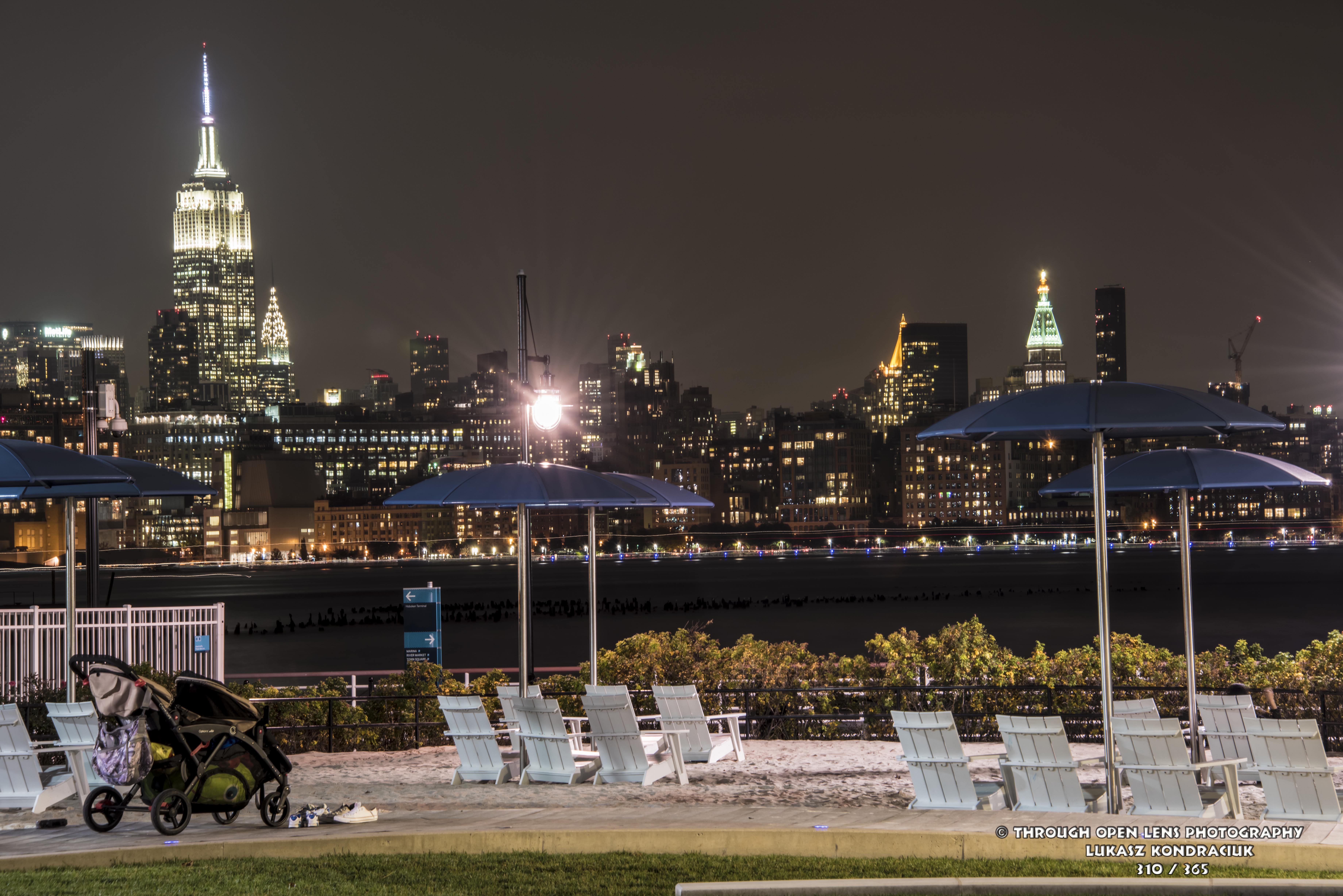
New York, Concrete Jungle Where Dreams Are Made Of There’s Nothin’ You Can’t Do Now You’re In New York

Empire State Building

F/16.0, 57.0, ISO 64.

Day 310 / 365

Two men are sitting drinking at a bar at the top of the Empire State
Building when the first man turns to the other and says, “You know,
last week I discovered that if you jump from the top of this building,
by the time you fall to the 10th floor, the winds around the building
are so intense that they carry you around the building and back into
the window.”

The bartender just shakes his head in disapproval while wiping the
bar.

The second guy says, “What are you a nut? There is no way that could
happen.” “No, it’s true,” said the first man, let me prove it to you.”
He gets up from the bar, jumps over the balcony, and plummets to the
street below. When he passes the 10th floor, the high wind whips him
around the building and back into the 10th floor window and he takes
the elevator back up to the bar. He met the second man, who looked
quite astonished. “You know, I saw that with my own eyes, but that
must have been a one time fluke.”

“No, I’ll prove it again,” says the first man as he jumps. Again just
as he is hurling toward the street, the 10th floor wind gently carries
him around the building and into the window.

Once upstairs he urges his fellow drinker to try it. “Well, what the
hey,” the second guy says, “it works, I’ll try it!” He jumps over the
balcony plunges downward, passes the 11th, 10th, 9th, 8th floors
…and hits the sidewalk with a ‘splat.’ Back upstairs the Bartender
turns to the other drinker, saying “You know, Superman, sometimes you
can be a real jerk.”

Interesting Fact: On July 28, 1945, a B-25 bomber that was lost in fog slammed into Empire State Building north wall of the 78th and 79th floors. Fourteen people were killed (it was a Saturday, so many offices were empty). Elevator operator Betty Lou Oliver survived a plunge of 75 stories inside an elevator, the Guinness World Record for the longest survived elevator fall recorded. There was no important structural damage to the building, which opened for business on the following Monday. ( https://www.walksofnewyork.com/blog/empire-state-building-facts )

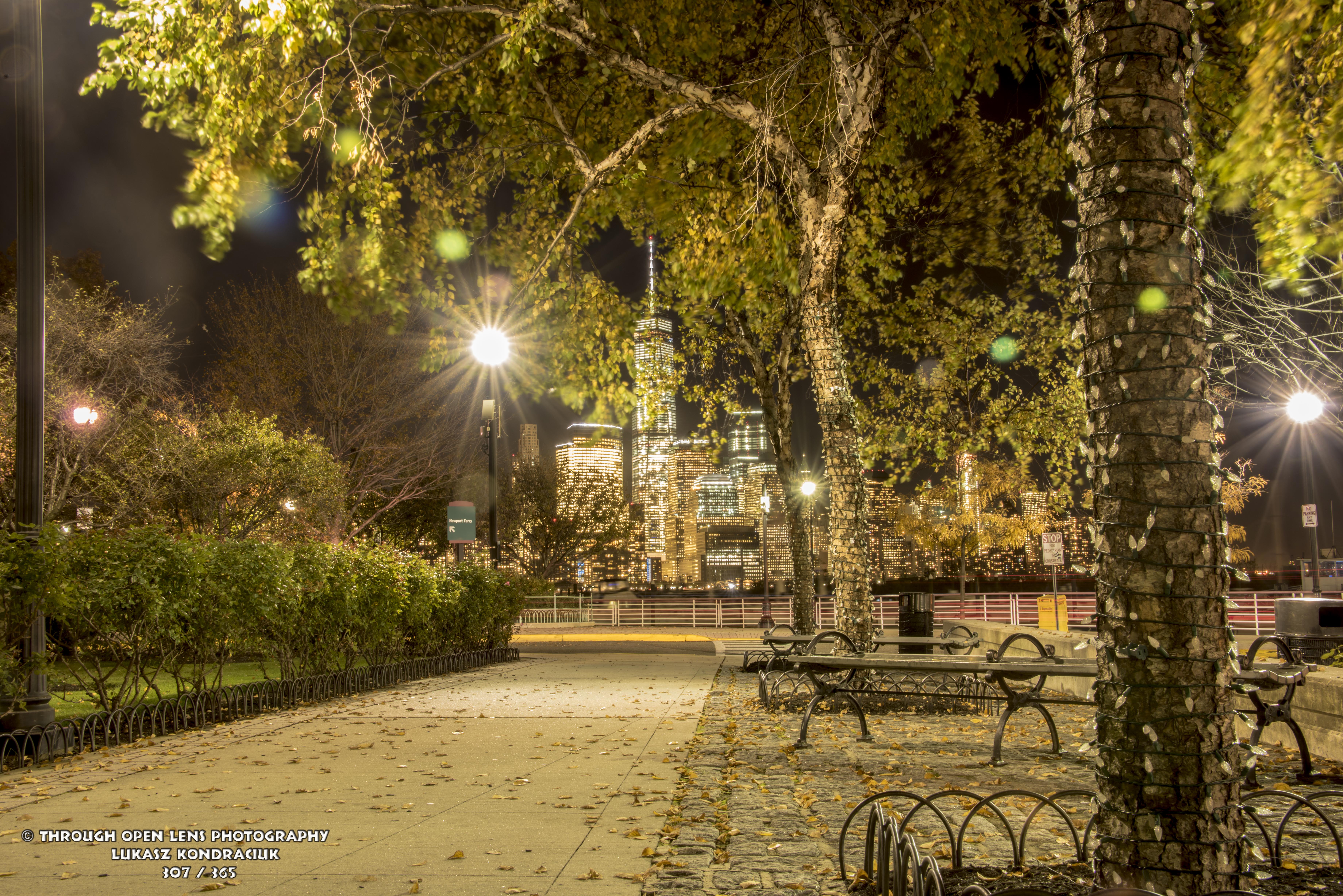
Dear Autumn, I Am Not Ready For What Comes Next

autumn night

F/ 25.0, 393.0, ISO 64.

Day 307 / 365

A couple goes to an art gallery. They find a picture of a naked women with only her privates covered with leaves.
The wife doesn’t like it and moves on but the husband keeps looking.
The wife asks: “What are you waiting for?”
The husband replies: “Autumn.”

Interesting Fact: As winter approaches, leaves make a coating for themselves which blocks their water source; in the absence of water, the leaves no longer produce chlorophyll (chlorophyll is what makes leaves green). ( http://www.metoffice.gov.uk/learning/learn-about-the-weather/how-weather-works/autumn-facts )

Fly Me To The Moon

moon 2

F/6.3, 1/2500, ISO 500, Photoshop CS6.

Day 266 / 365

When is the moon not hungry?

When it is full!

Interesting Fact: When a month has two full moons, the second full moon is called a blue moon. Another definition of a blue moon is the third full moon in any season (quarter of year) containing 4 total full moons. ( http://www.moonconnection.com/moon_facts.phtml )

Mother Nature Has A Big Canvas

clouds 1

F/4.5, 1/2500, ISO 500.

Day 265 / 365

What do you call a sheep with no legs?

A cloud.

Interesting Fact: Ancient cloud studies were not made in isolation, but were observed in combination with other weather elements and even other natural sciences. In about 340 BC the Greek philosopher Aristotle wrote Meteorologica, a work which represented the sum of knowledge of the time about natural science, including weather and climate. For the first time, precipitation and the clouds from which precipitation fell were called meteors, which originate from the Greek word meteoros, meaning ‘high in the sky’. From that word came the modern term meteorology, the study of clouds and weather. Meteorologica was a work of intuitive rather than scientific study. Nevertheless, it was the first known work that attempted to treat a broad range of meteorological topics. ( https://en.wikipedia.org/wiki/Cloud )

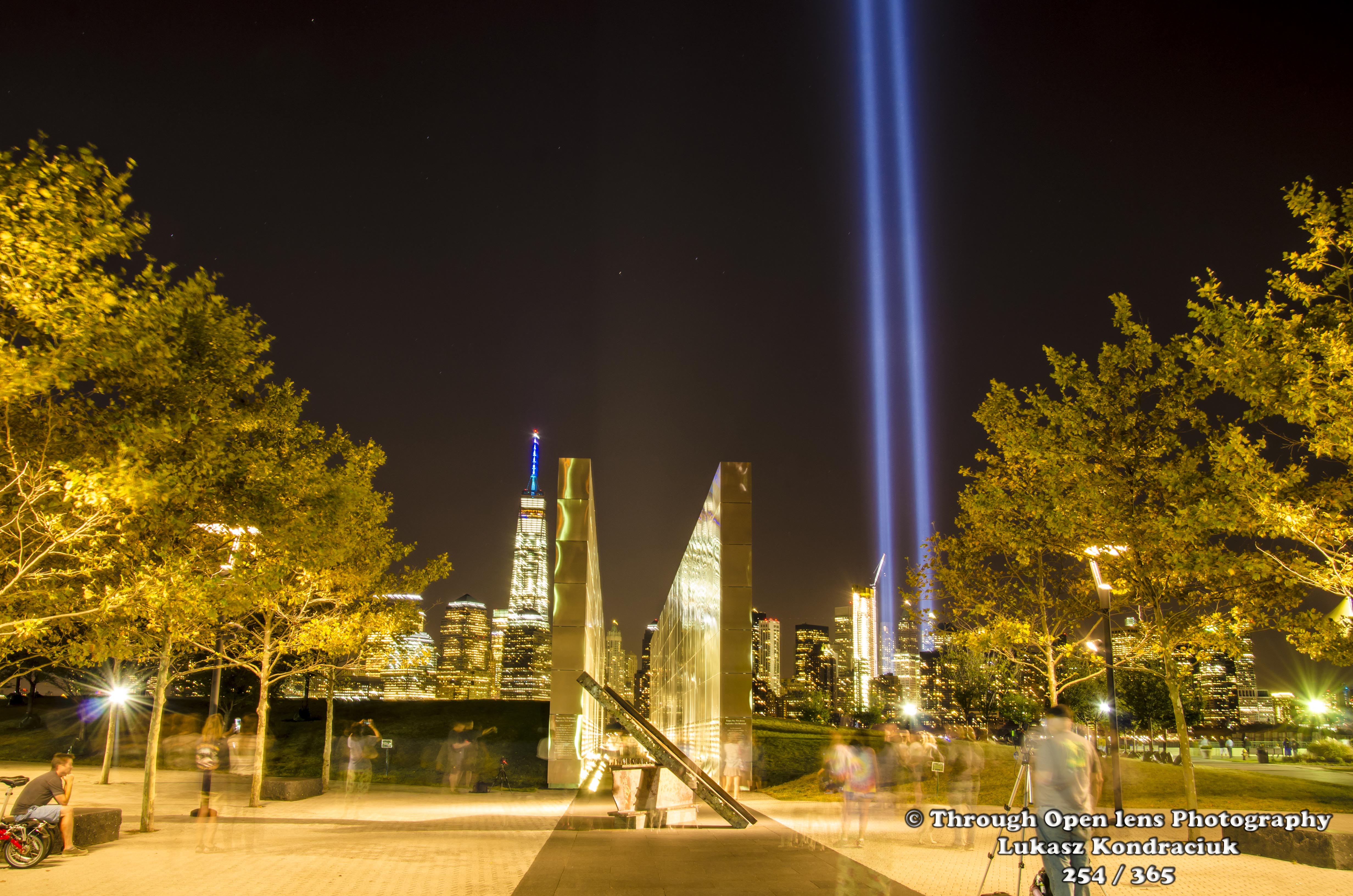
We Remember!

September 11

F/14.0, 30.0, ISO 100.

Day 254 / 365

God Bless all who lost their Lives. We Will Never Forget 9/11.

Interesting Fact:  September 11 is now remembered as Patriot Day in the US in memory of those killed. ( http://www.express.co.uk/life-style/top10facts/509590/Top-10-facts-about-9-11 )