I’m Blue Da Ba Dee Da Ba Die…

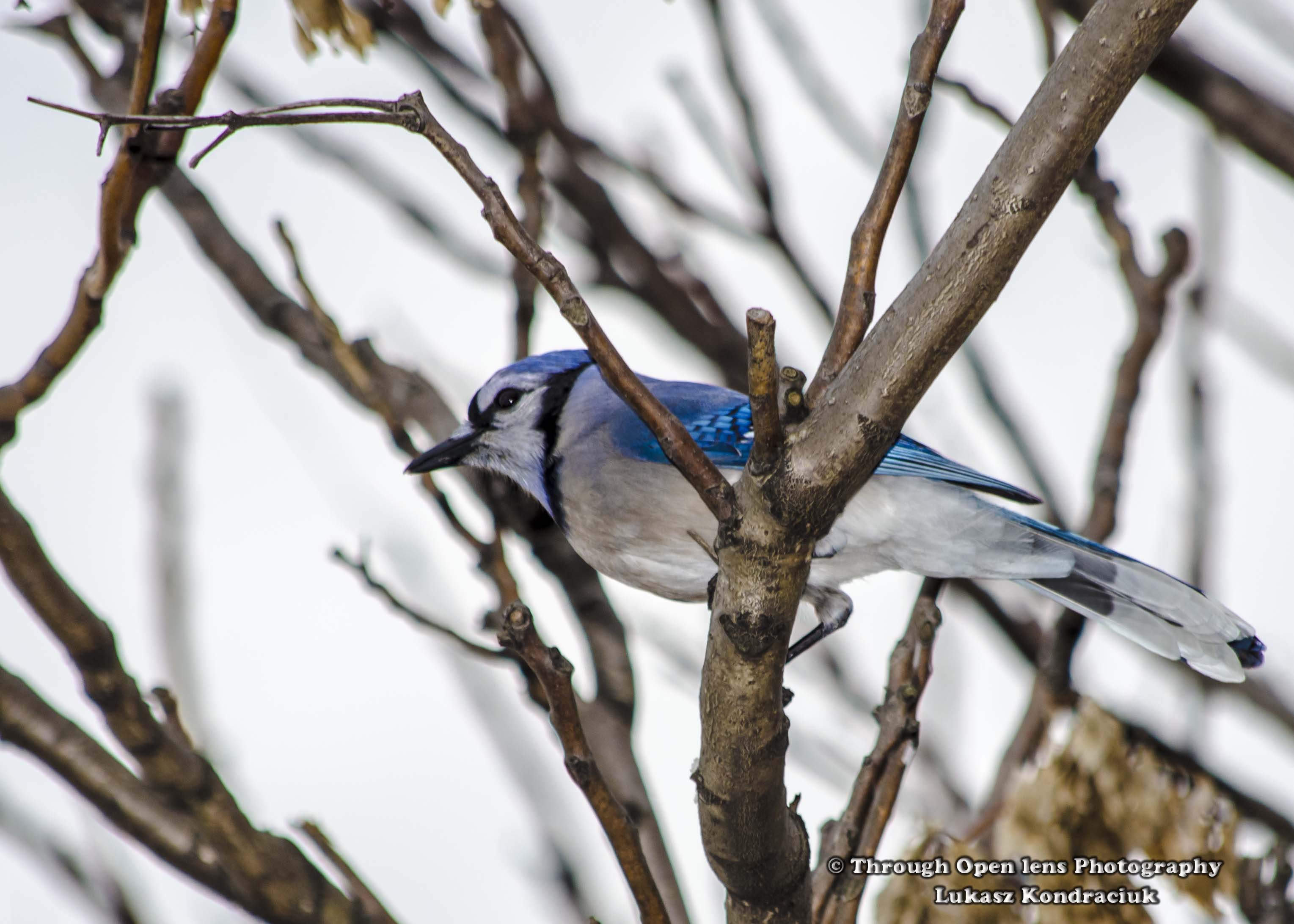
Blue Jay 1

F/6.3, 1/125, ISO 800.

Blue Jay

How do blue jays stay fit?

Wormups.

Interesting Fact: Thousands of Blue Jays migrate in flocks along the Great Lakes and Atlantic coasts, but much about their migration remains a mystery. Some are present throughout winter in all parts of their range. Young jays may be more likely to migrate than adults, but many adults also migrate. Some individual jays migrate south one year, stay north the next winter, and then migrate south again the next year. No one has worked out why they migrate when they do. ( https://www.allaboutbirds.org/guide/Blue_Jay/lifehistory )

I Like To Watch What I Eat

Cooper’s Hawk 1

F/9.0. 1/320, ISO 320.

Cooper’s Hawk

On which side does a hawk have the most feathers?

On the outside.

Interesting Fact: Life is tricky for male Cooper’s Hawks. As in most hawks, males are significantly smaller than their mates. The danger is that female Cooper’s Hawks specialize in eating medium-sized birds. Males tend to be submissive to females and to listen out for reassuring call notes the females make when they’re willing to be approached. Males build the nest, then provide nearly all the food to females and young over the next 90 days before the young fledge. ( https://www.allaboutbirds.org/guide/Coopers_Hawk/lifehistory )

I Have A Very Particular Set Of Skills To Find You

Merlin

F/11.0, 1/500, ISO 250.

Merlin

Two birds in a tree looking down on a man washing his car.
“If he doesn’t hurry up and finish,” says one bird to the
other, “I’ll poop myself.”

Interesting Fact: Merlins don’t build their own nests. Instead, they take over the old nests of other raptors or crows. They also use magpie nests, sometimes laying eggs right on top of the nest’s dome rather than inside the cavity. ( https://www.allaboutbirds.org/guide/Merlin/lifehistory )

Hum With Me

Rufous Hummingbird

F/ 5.6, 1/125, ISO 100.

Rufous Hummingbird

California Week

Why do hummingbirds hum?

Because they forgot the words!

Interesting Fact: The Rufous Hummingbird makes one of the longest migratory journeys of any bird in the world, as measured by body size. At just over 3 inches long, its roughly 3,900-mile movement (one-way) from Alaska to Mexico is equivalent to 78,470,000 body lengths. In comparison, the 13-inch-long Arctic Tern’s one-way flight of about 11,185 mi is only 51,430,000 body lengths. (AAB) ( https://www.allaboutbirds.org/guide/Rufous_Hummingbird/lifehistory )


The Mask Of Waxwing!

Cedar Waxwing

F/11.0, 1/500, ISO 400.

Cedar Waxwing

Why didn’t the chicken skeleton cross the road?

Because he didn’t have enough guts

Interesting Fact: The Cedar Waxwing is one of the few North American birds that specializes in eating fruit. It can survive on fruit alone for several months. Brown-headed Cowbirds that are raised in Cedar Waxwing nests typically don’t survive, in part because the cowbird chicks can’t develop on such a high-fruit diet. ( https://www.allaboutbirds.org/guide/Cedar_Waxwing/lifehistory )


Feeling A Little Blue Today

Blue Jay

F/7.1, 1/200, ISO 100.

Blue Jay

What bird is always sad?

The blue jay!

Interesting Fact:  The Blue Jay frequently mimics the calls of hawks, especially the Red-shouldered Hawk. These calls may provide information to other jays that a hawk is around, or may be used to deceive other species into believing a hawk is present. (  https://www.allaboutbirds.org/guide/Blue_Jay/lifehistory )

Where’s The Beef?!

Black Vulture

F/5.6, 1/125, ISO 800.

Black Vulture

Two vultures were in the desert eating a dead clown. The first vulture asks the second vulture: “Does this taste funny to you?”

Interesting Fact: Turkey Vultures have an excellent sense of smell, but Black Vultures aren’t nearly as accomplished sniffers. To find food they soar high in the sky and keep an eye on the lower-soaring Turkey Vultures. When a Turkey Vulture’s nose detects the delicious aroma of decaying flesh and descends on a carcass, the Black Vulture follows close behind. ( https://www.allaboutbirds.org/guide/Black_Vulture/lifehistory )

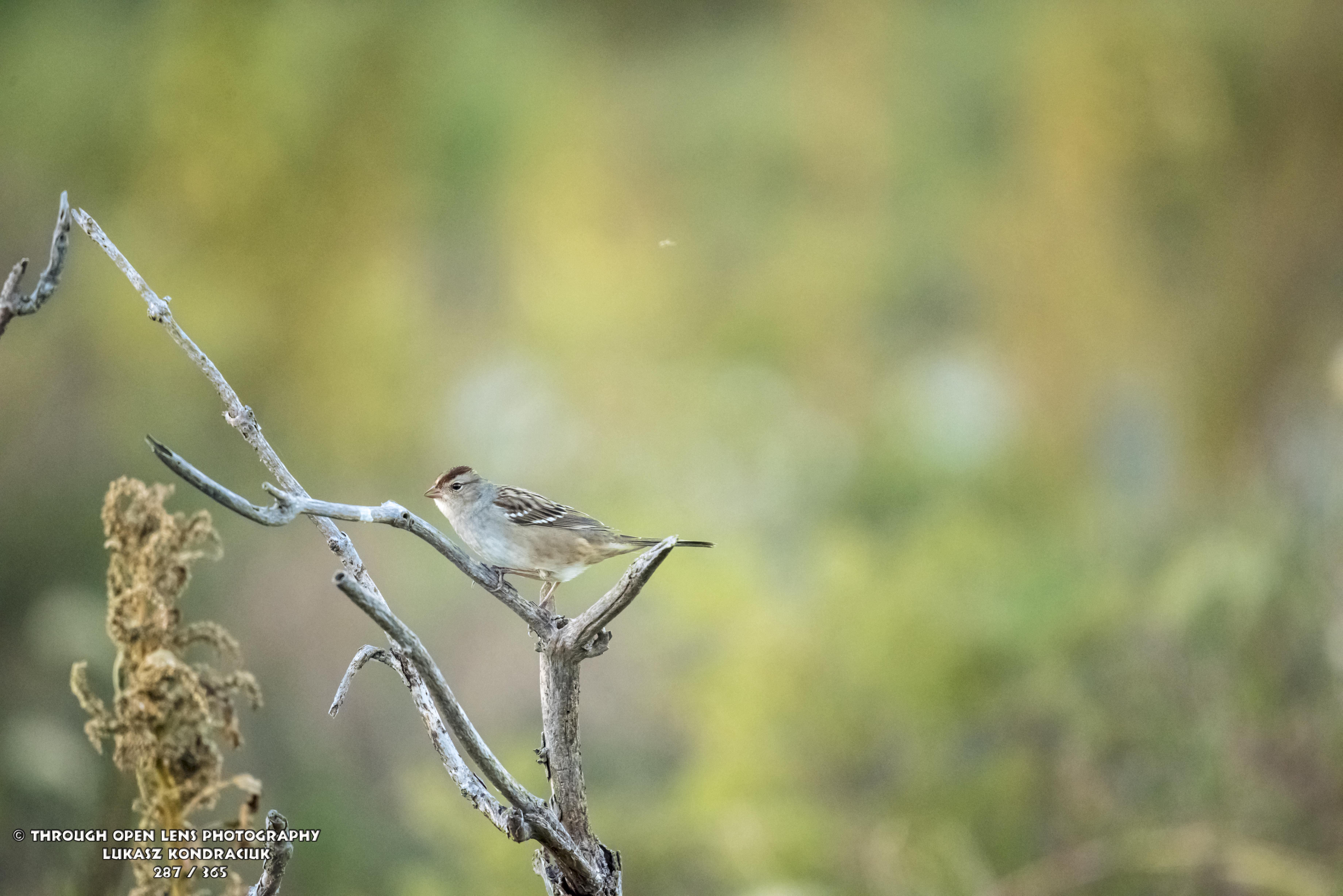
“I Am Training To Be A Spy”

American Tree Sparrow

F/6.3, 1/640, ISO 5600.

American Tree Sparrow

Day 287 / 365

Older couple were walking through the park when a sparrow flew overhead. The bird poop landed right on old man’s head.
Seeing the mess, old woman said, “I wish we had some toilet tissue.”
The Old man replied, “What good would it do. He’s probably a half a mile away by now.”

Interesting Fact: American Tree Sparrows need to take in about 30 percent of their body weight in food and a similar percentage in water each day. A full day’s fasting is usually a death sentence. Their body temperature drops and they lose nearly a fifth of their weight in that short time.  ( http://www.allaboutbirds.org/guide/American_Tree_Sparrow/lifehistory )

I Choose To Be Happy Today!

European Starling 2

F/6.3, 1/500, ISO 200.

European Starling

Day 220 / 365

What kind of birds do you usually find locked up?

Jail-birds!

Interesting Fact: A female European Starling may try to lay an egg in the nest of another female. A female that tries this parasitic tactic often is one that could not get a mate early in the breeding season. The best females find mates and start laying early. The longer it takes to get started, the lower the probability of a nest’s success. Those parasitic females may be trying to enhance their own breeding efforts during the time that they cannot breed on their own. ( http://www.allaboutbirds.org/guide/European_Starling/lifehistory )