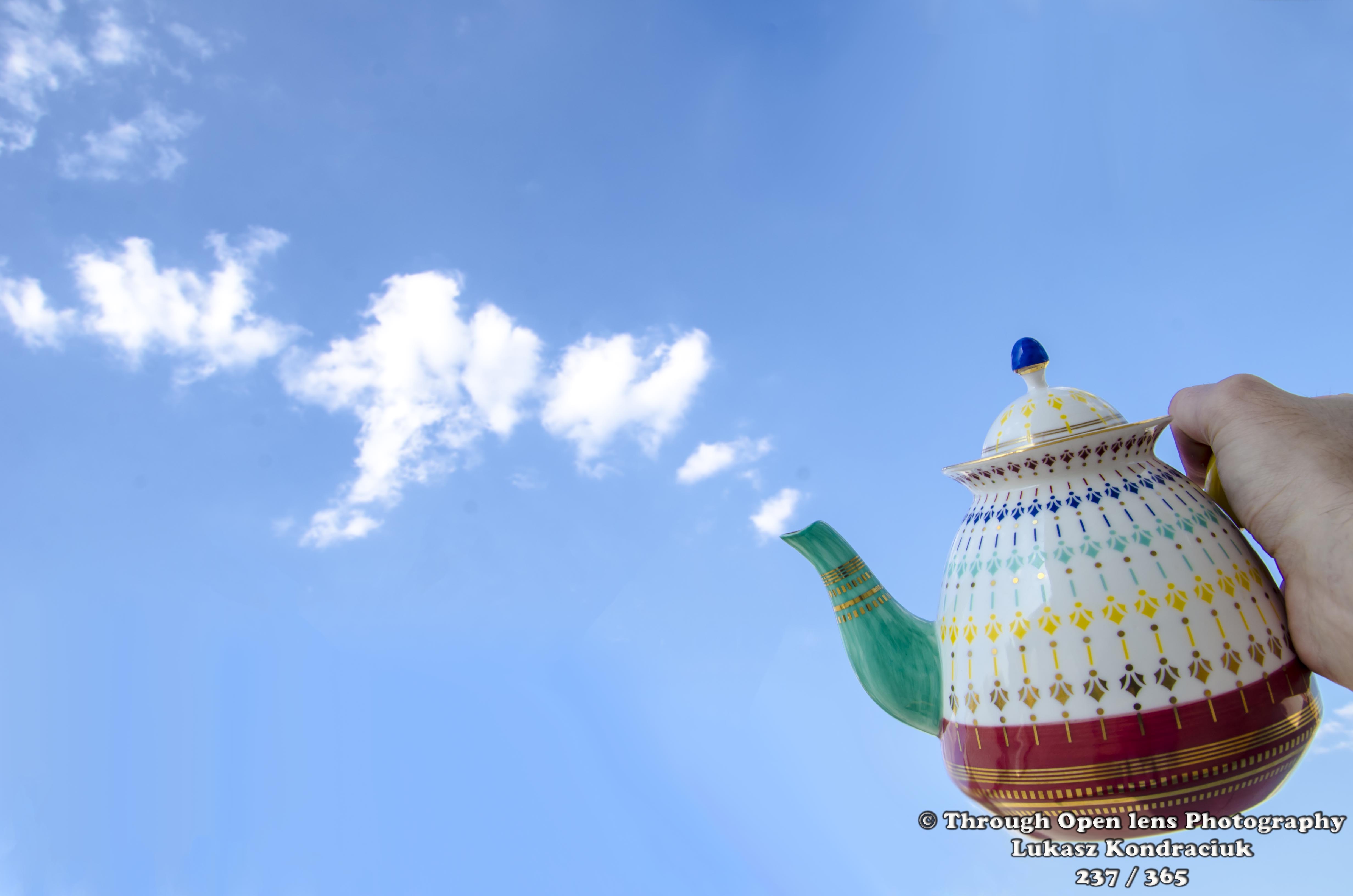
Tea Is Ready!

tea time

F/16.0, 1/50, ISO 100.

Day 237 / 365

What Starts With “T” What Ends With “T” & It Is Full Of “T”?

Teapot.

Interesting Fact: From the end of the 17th century tea was shipped from China to Europe as part of the export of exotic spices and luxury goods. The ships that brought the tea also carried porcelain teapots. The majority of these teapots were painted in blue and white underglaze. Porcelain being completely vitrified will withstand sea water without damage, so the teapots were packed below deck whilst the tea stayed on top in the dry. ( https://en.wikipedia.org/wiki/Teapot )

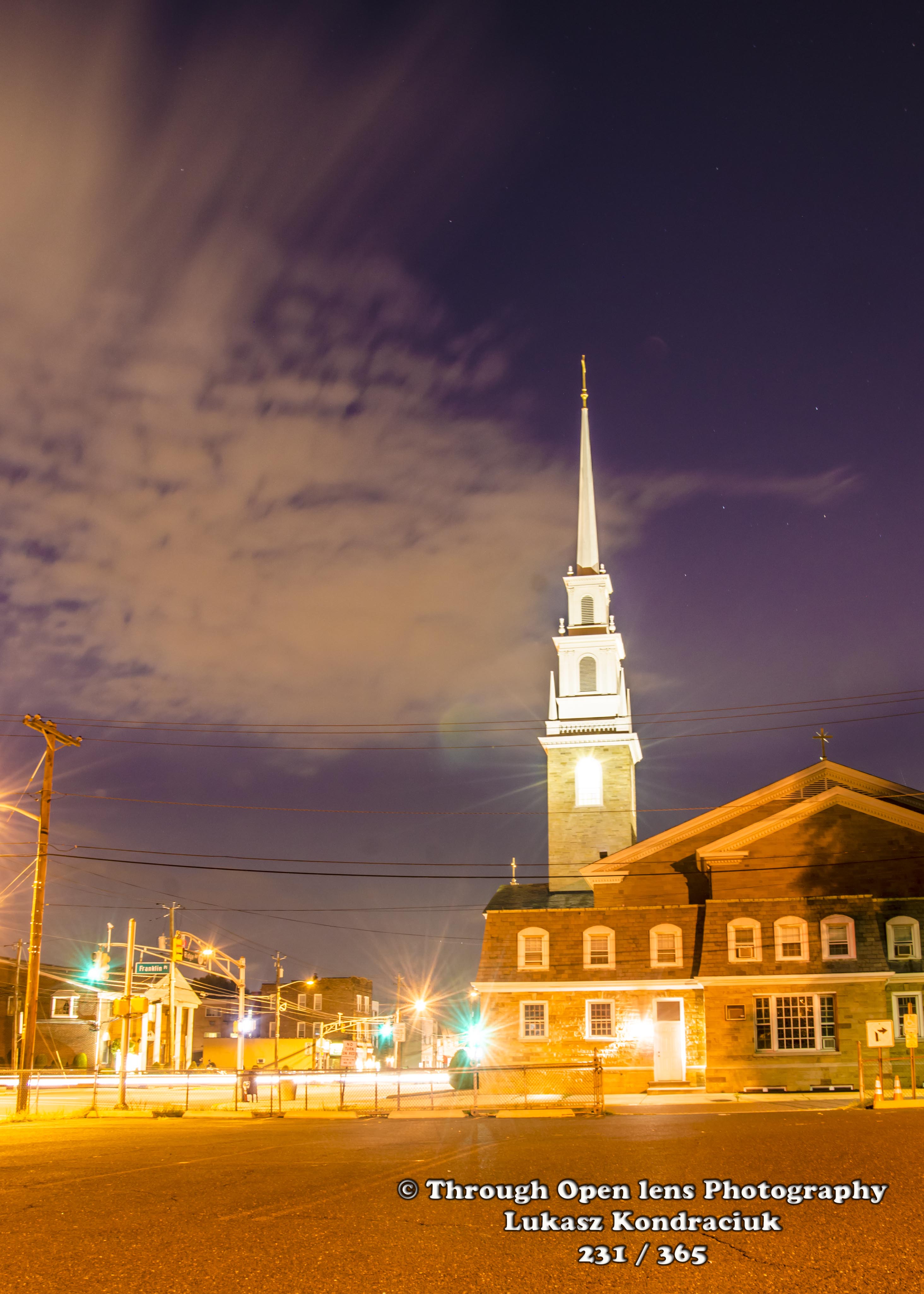
At Night I Can’t Sleep, In The Morning I Can’t Wake Up.

north arlington

F/ 14.0, 30.0, ISO 100.

Day 231 / 365

How can you go without sleep for seven days and not be tired?

Sleep at night.

Interesting Fact: In the early 1900s, a few notable photographers, Alfred Stieglitz and William Fraser, began working at night. The first known female night photographer is Jessie Tarbox Beals. The first photographers known to have produced large bodies of work at night were Brassai and Bill Brandt. In 1932, Brassai published Paris de Nuit, a book of black-and-white photographs of the streets of Paris at night. During World War II, British photographer Brandt took advantage of the black-out conditions to photograph the streets of London by moonlight. ( https://en.wikipedia.org/wiki/Night_photography )

There Is Always Hope For A Better Day !

Clouds

F/ 7.1, 1/800, ISO 200.

Day 217 / 365

Where do clouds go to the bathroom?

Anywhere they want

Interesting Fact: Clouds are formed when water on Earth evaporates into the sky and condenses high up in the cooler air. Learn more about the water cycle. ( http://www.sciencekids.co.nz/sciencefacts/weather/clouds.html )

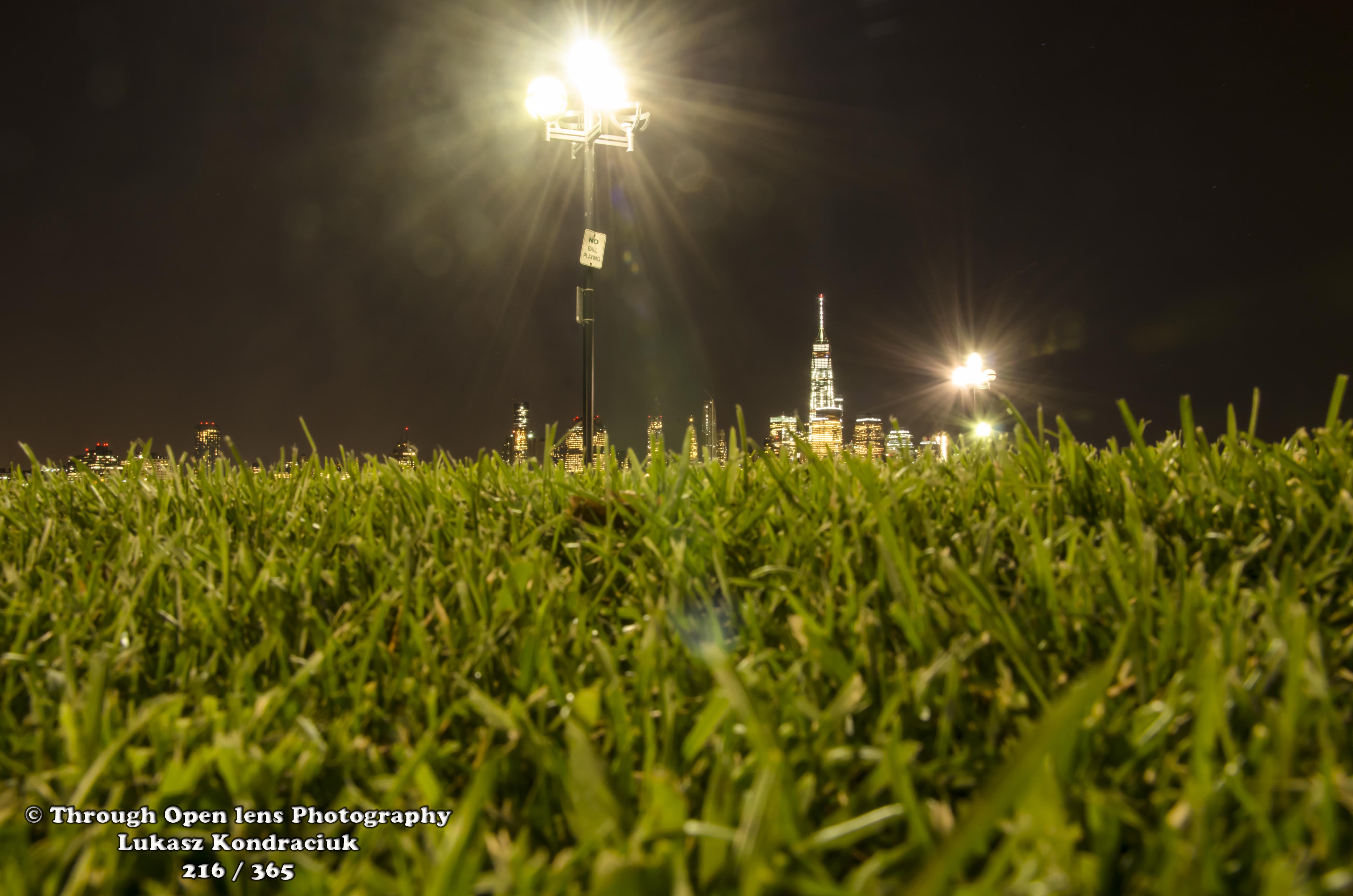
Grass Is Always Greener On The Other Side!

grass nyc

F/22.0, 30.0, ISO 100.

Day 216 / 365

What do you call a cow who works for a gardener?

A lawn moo-er.

Interesting Fact:  There are over 6000 different species of grass in the world; some examples are rice, wheat, corn, oats and sugarcane. Grass is the familiar name given to the family of plants known as the graminae. The sizes vary from short lawn grasses, to as tall as 40m, which is 120 feet. ( http://www.thefactsite.com/2010/08/facts-about-grass.html )

He’s On My Tail! It’s Time For Some Maneuvers!

attack from above 1

F/ 7.1, 1/800, ISO 200.

Day 214 / 365

Where do clouds go to the bathroom?

Anywhere they want

Interesting Fact: Mobbing in animals is an antipredator behavior which occurs when individuals of a certain species mob a predator by cooperatively attacking or harassing it, usually to protect their offspring. A simple definition of mobbing is an assemblage of individuals around a potentially dangerous predator.[1] This is most frequently seen in avian species, though it is also known to occur in many other animals such as the meerkat. While mobbing has evolved independently in many species, it only tends to be present in those whose young are frequently preyed upon. This behavior may complement cryptic adaptations in the offspring themselves, such as camouflage and hiding. Mobbing calls may be used to summon nearby individuals to cooperate in the attack. ( https://en.wikipedia.org/wiki/Mobbing_(animal_behavior) )


The Best Revenge Is Massive Success

pier a hoboken

F/9.0, 30.0, ISO 100.

Day 205 / 365

How can you go without sleep for seven days and not be tired?
Sleep at night.

Interesting Fact:  The name “Hoboken” was decided upon by Colonel John Stevens when he purchased land, on a part of which the city still sits. The Lenape (later called Delaware Indian) tribe referred to the area as the “land of the tobacco pipe”, most likely to refer to the soapstone collected there to carve tobacco pipes, and used a phrase that became “Hopoghan Hackingh”.[24] Like Weehawken, its neighbor to the north, Communipaw and Harsimus to the south, Hoboken had many variations in the folks-tongue. Hoebuck, old Dutch for high bluff and likely referring to Castle Point, was used during the colonial era and later spelled as Hobuck,[25] Hobock,[26] Hobuk[27] and Hoboocken.[28]  ( https://en.wikipedia.org/wiki/Hoboken,_New_Jersey )

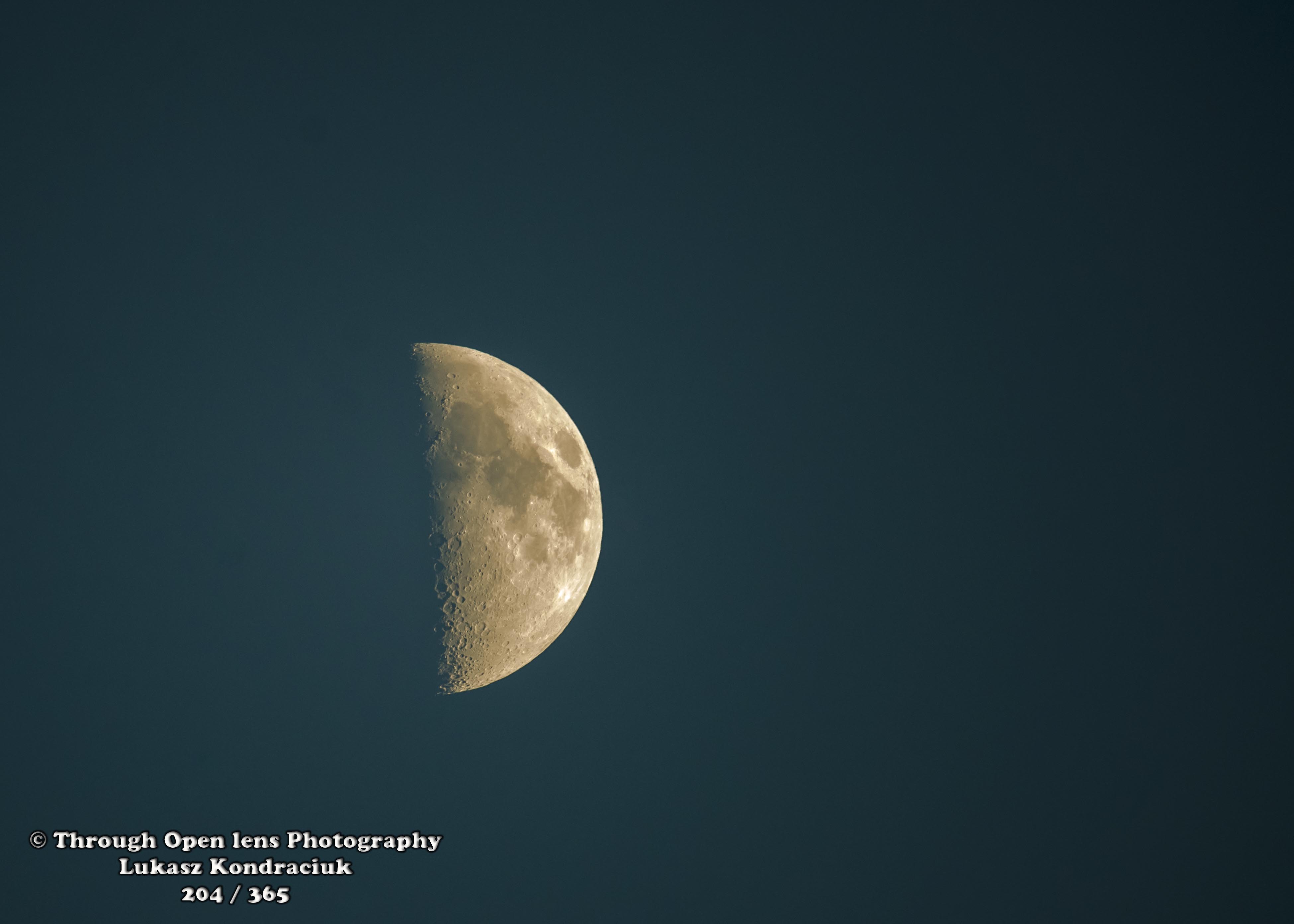
The Dark Side Of The Moon!

moon half

F/6.3, 1/250, ISO 800.

Day 204 / 365

Ted and Fred were walking home from the pub.  Ted says to Fred, “What a beautiful evening, look at the moon.”              Fred stops and looks at Ted, “You are wrong, that’s not the moon, that’s the sun.” Both started arguing for a while when they come upon a real drunk walking in the other direction, so they stopped him.                                                                                        “Sir, could you please help settle our argument?                                                                                                                                            Tell us what that thing is up in the sky that’s shining. Is it the moon or the sun?’  The drunk looked at the sky and then looked at them, and said,

“Sorry, I don’t live around here.”

Interesting Fact: The moon rotates at 10 miles per hour compared to the earth’s rotation of 1000 miles per hour. ( http://www.moonconnection.com/moon_facts.phtml )

Feeling A Little Blue!

Blue Grosbeak

F/6.3, 1/1250, ISO 400.

Blue Grosbeak

Day 197 / 365

A mother bird, a daddy bird and their baby bird were getting ready to migrate. The mother bird said, ” My instincts tell me to go north. ” The daddy bird said, ” My instincts tell me to go south. ” The baby bird said, ” My end stinks too, but it doesn’t tell me where to go! ”

Interesting Fact: Many Blue Grosbeaks migrate directly southward from their breeding areas to their wintering grounds. Western birds head over land and eastern birds cross the Gulf of Mexico. Migrating grosbeaks pass through the Caribbean Islands including Puerto Rico, the Bahamas, the Turks and Caicos Islands, the Antilles, the Swan Islands, the Cayman Islands, and the Virgin Islands. ( http://www.allaboutbirds.org/guide/Blue_Grosbeak/lifehistory )

I Look Down On People

European Starling 1

F/ 6.3, 1/125, ISO 200.

European Starling

Day 171 / 365

“That car looks clean, it is time to piss off the owner.”


A pirate strolls into his favorite bar and the bartender says, “Whoa, dude, what happened to you?”
The pirate says, “What do you mean?”
The bartender says, “Well, for starters, you never used to have a peg leg.”
“Oh, that,” replies the pirate. ” Well, you see, we had a sea battle and a cannon ball blew off my leg. But the ship’s surgeon fixed me up with this peg leg and I’m as good as new.”
“Well, what about the hook?” asks the barkeep.
“We had another sea battle and some guy lopped off my hand,” the pirate explains, “but the ship’s surgeon fixed me up with this hook and now I’m as good as new!”
“What about the eye patch?” asks the bartender.
“One day I was on the top mast keeping watch,” says the pirate, “when an bird flew over and pooped in my eye.”
The bartender is incredulous. “You mean to tell me that bird poop will put out your eye?”
“Well,” the pirate explained, “this happened shortly after I got the hook.”

( http://www.verifine.org/Humor/pirate.html )

Interesting Fact: Starlings are great vocal mimics: individuals can learn the calls of up to 20 different species. Birds whose songs starlings often copy include the Eastern Wood-Pewee, Killdeer, meadowlarks, Northern Bobwhite, Wood Thrush, Red-tailed Hawk, American Robin, Northern Flicker, and many others. ( http://www.allaboutbirds.org/guide/European_Starling/lifehistory )

Some Days You Just Have To Get Creative

factory

F/5.6, 1/500, ISO 280, Photoshop CS6.

Day 167 / 365

Two factory workers are talking.
The woman says, “I can make the boss give me the day off.”
The man replies, “And how would you do that?”
The woman says, “Just wait and see.” She then hangs upside-down from the ceiling.
The boss comes in and says, “What are you doing?”
The woman replies, “I’m a light bulb.”
The boss then says, “You’ve been working so much that you’ve gone crazy. I think you need to take the day off.”
The man starts to follow her and the boss says, “Where are you going?”
The man says, “I’m going home, too. I can’t work in the dark.”

Interesting Fact: One of the earliest factories was John Lombe‘s water-powered silk mill at Derby, operational by 1721. By 1746, an integrated brass mill was working at Warmley near Bristol. Raw material went in at one end, was smelted into brass and was turned into pans, pins, wire, and other goods. Housing was provided for workers on site. Josiah Wedgwood in Staffordshire and Matthew Boulton at his Soho Manufactory were other prominent early industrialists, who employed the factory system. ( https://en.wikipedia.org/wiki/Factory#History )