I Choose To Be Happy Today!

European Starling 2

F/6.3, 1/500, ISO 200.

European Starling

Day 220 / 365

What kind of birds do you usually find locked up?

Jail-birds!

Interesting Fact: A female European Starling may try to lay an egg in the nest of another female. A female that tries this parasitic tactic often is one that could not get a mate early in the breeding season. The best females find mates and start laying early. The longer it takes to get started, the lower the probability of a nest’s success. Those parasitic females may be trying to enhance their own breeding efforts during the time that they cannot breed on their own. ( http://www.allaboutbirds.org/guide/European_Starling/lifehistory )


Watch Out, Here I Come!!!

Eastern Kingbirds

F/ 6.0, 1/500, ISO 800.

Eastern Kingbirds

Day 218 / 365

Why does the bird bring toilet paper to the party?

Because he is a party pooper.

Interesting Fact:  Kingbirds are “passerines,” a taxonomic group commonly referred to as perching birds or songbirds. But kingbirds and other flycatchers are in a different subgroup from true songbirds, and they don’t have nearly as complex voices. Rather than learning their calls they probably perform them innately. The young begin to give adult calls at about two weeks of age. ( http://www.allaboutbirds.org/guide/Eastern_Kingbird/lifehistory )


I Can See You From Here!!!

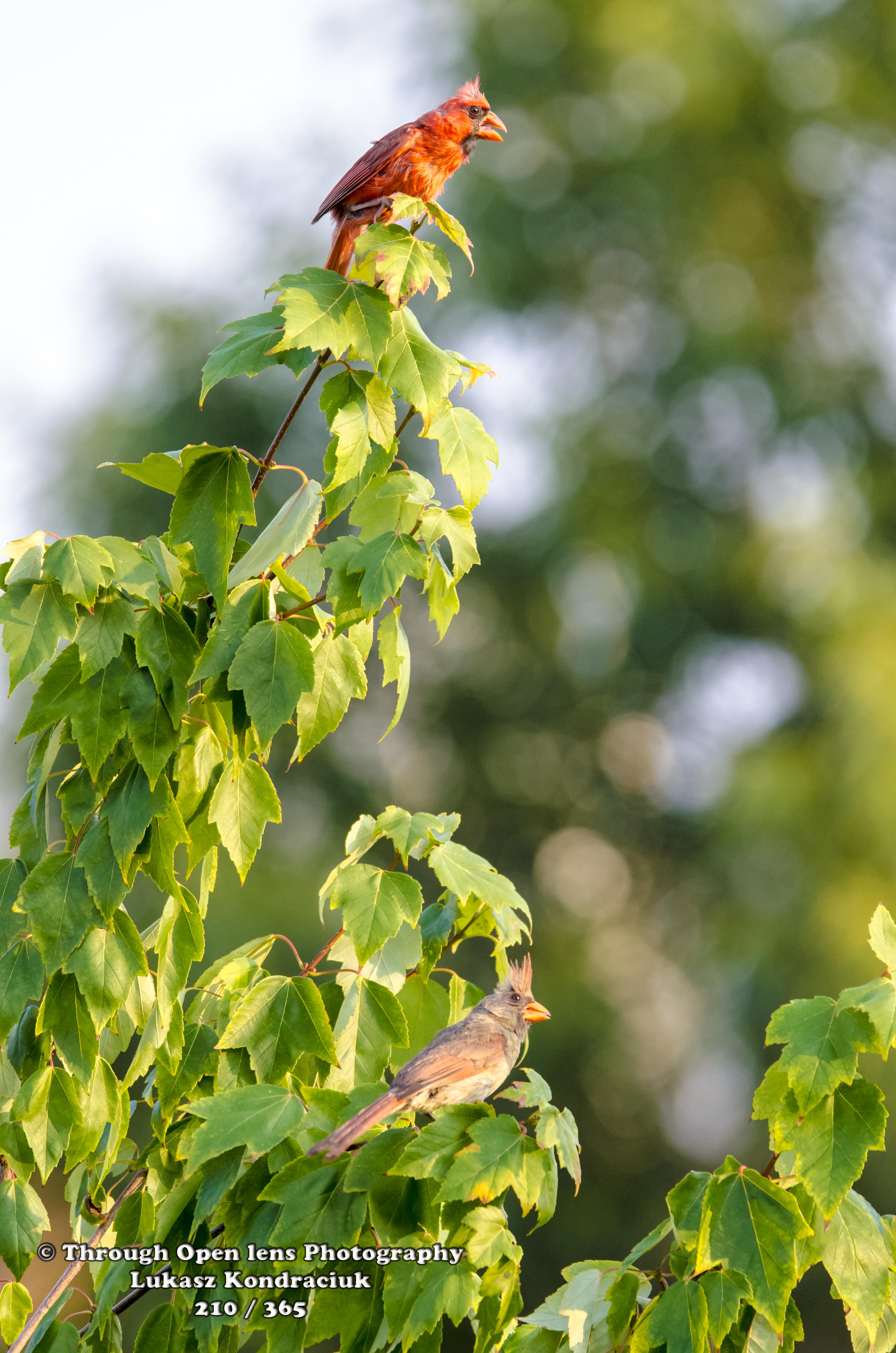
Northern Cardinal 2

F/6.0, 1/500, ISO 1400.

Northern Cardinal

Day 210 / 365

The early bird gets the worm, but of course the early worm gets eaten. So it’s kind of a mixed message.

Interesting Fact: Only a few female North American songbirds sing, but the female Northern Cardinal does, and often while sitting on the nest. This may give the male information about when to bring food to the nest. A mated pair shares song phrases, but the female may sing a longer and slightly more complex song than the male. ( http://www.allaboutbirds.org/guide/Northern_Cardinal/lifehistory )


“Hey I Was Yellow First, Now The Minions Get The Fame”!

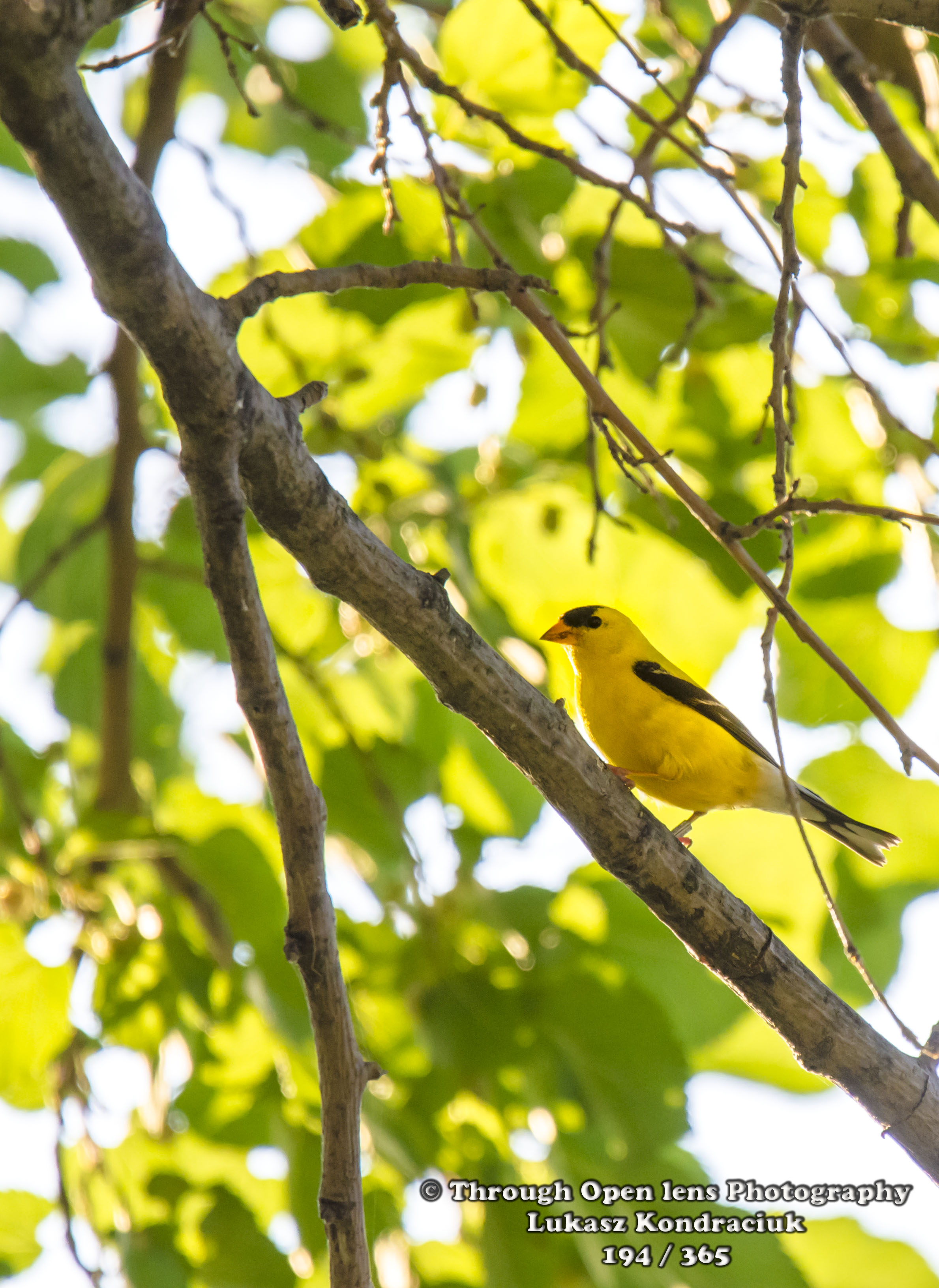
American Goldfinch

F/6.3, 1/500, ISO 400.

The American Goldfinch

Day 194 / 365

What do you give a sick bird?
Tweetment.

Interesting Fact: They are one of the latest nesting birds, starting in late June or early July, when most other songbirds are finishing with breeding. Their late timing may be related to the availability of suitable nesting materials and seeds for feeding young. ( http://identify.whatbird.com/obj/91/overview/American_Goldfinch.aspx )

“Just Don’t Call Me Tweety Bird”!

Baltimore Oriole  Female

F/6.3, 1/1000, ISO 500.

Baltimore Oriole ( Female )

Day 192 / 365

When should you buy a bird?

When it’s going cheep!

Interesting Fact: Baltimore Orioles sometimes use their slender beaks to feed in an unusual way, called “gaping”: they stab the closed bill into soft fruits, then open their mouths to cut a juicy swath from which they drink with their brushy-tipped tongues.  ( http://www.allaboutbirds.org/guide/Baltimore_Oriole/lifehistory )

I Look Down On People

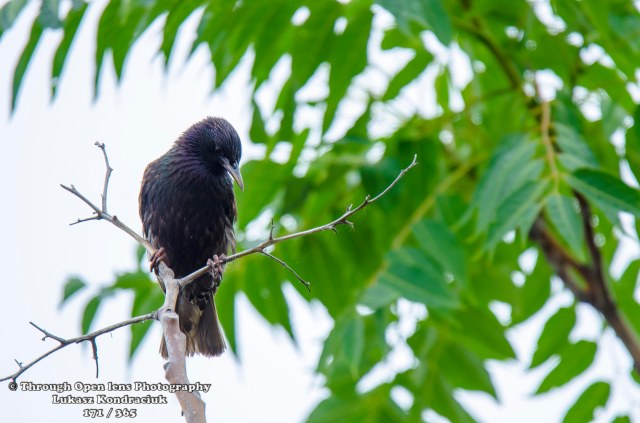
European Starling 1

F/ 6.3, 1/125, ISO 200.

European Starling

Day 171 / 365

“That car looks clean, it is time to piss off the owner.”


A pirate strolls into his favorite bar and the bartender says, “Whoa, dude, what happened to you?”
The pirate says, “What do you mean?”
The bartender says, “Well, for starters, you never used to have a peg leg.”
“Oh, that,” replies the pirate. ” Well, you see, we had a sea battle and a cannon ball blew off my leg. But the ship’s surgeon fixed me up with this peg leg and I’m as good as new.”
“Well, what about the hook?” asks the barkeep.
“We had another sea battle and some guy lopped off my hand,” the pirate explains, “but the ship’s surgeon fixed me up with this hook and now I’m as good as new!”
“What about the eye patch?” asks the bartender.
“One day I was on the top mast keeping watch,” says the pirate, “when an bird flew over and pooped in my eye.”
The bartender is incredulous. “You mean to tell me that bird poop will put out your eye?”
“Well,” the pirate explained, “this happened shortly after I got the hook.”

( http://www.verifine.org/Humor/pirate.html )

Interesting Fact: Starlings are great vocal mimics: individuals can learn the calls of up to 20 different species. Birds whose songs starlings often copy include the Eastern Wood-Pewee, Killdeer, meadowlarks, Northern Bobwhite, Wood Thrush, Red-tailed Hawk, American Robin, Northern Flicker, and many others. ( http://www.allaboutbirds.org/guide/European_Starling/lifehistory )

Mock Me If You Can!

Northern Mockingbird

F/6.3, 1/125, ISO 1600.

Northern Mockingbird

Day 169 / 365

What do you call a very rude bird?
A mockingbird!

Interesting Fact:  The often observed behavior of birds flashing their white wing patches is still unexplained. Theories include it being used to startle prey or intimidate predators. ( http://identify.whatbird.com/obj/158/overview/Northern_Mockingbird.aspx )


I Ain’t Afraid Of Nobody

Eastern Kingbird

F/6.3, 1/320, ISO 1600

Eastern Kingbird

Day 161 / 365

I see you, if you come any closer I will show you why they call me kingbird.

Interesting Fact: The scientific name Tyrannus means “tyrant, despot, or king,” referring to the aggression kingbirds exhibit with each other and with other species. When defending their nests they will attack much larger predators like hawks, crows, and squirrels. They have been known to knock unsuspecting Blue Jays out of trees. ( http://www.allaboutbirds.org/guide/Eastern_Kingbird/lifehistory )

My Name Is Zorro!

Cedar Waxwing

F/6.3, 1/250, ISO 1600.

Cedar Waxwing

Day 160 / 365

“I hear trouble over there it’s time to fly”.

Interesting Fact: Because they eat so much fruit, Cedar Waxwings occasionally become intoxicated or even die when they run across overripe berries that have started to ferment and produce alcohol. The name “waxwing” comes from the waxy red secretions found on the tips of the secondaries of some birds. The exact function of these tips is not known, but they may help attract mates. ( http://www.allaboutbirds.org/guide/Cedar_Waxwing/lifehistory )

Who’s That Meowing In The Tree?

Gray Catbird

F/6.3, 1/1000, ISO 560.

Gray Catbird

Day 158 / 365

I thought there was a kitty cat stuck in the tree, but that bird definitely tricked me.     🙂

Interesting Fact: Their calls include the catlike meow call that gives them their name. Gray Catbirds are able to recognize their own eggs making them less susceptible to brood parasites such as the Brown-headed Cowbird.( http://identify.whatbird.com/obj/557/overview/Gray_Catbird.aspx )