Hey! Where did the water go?

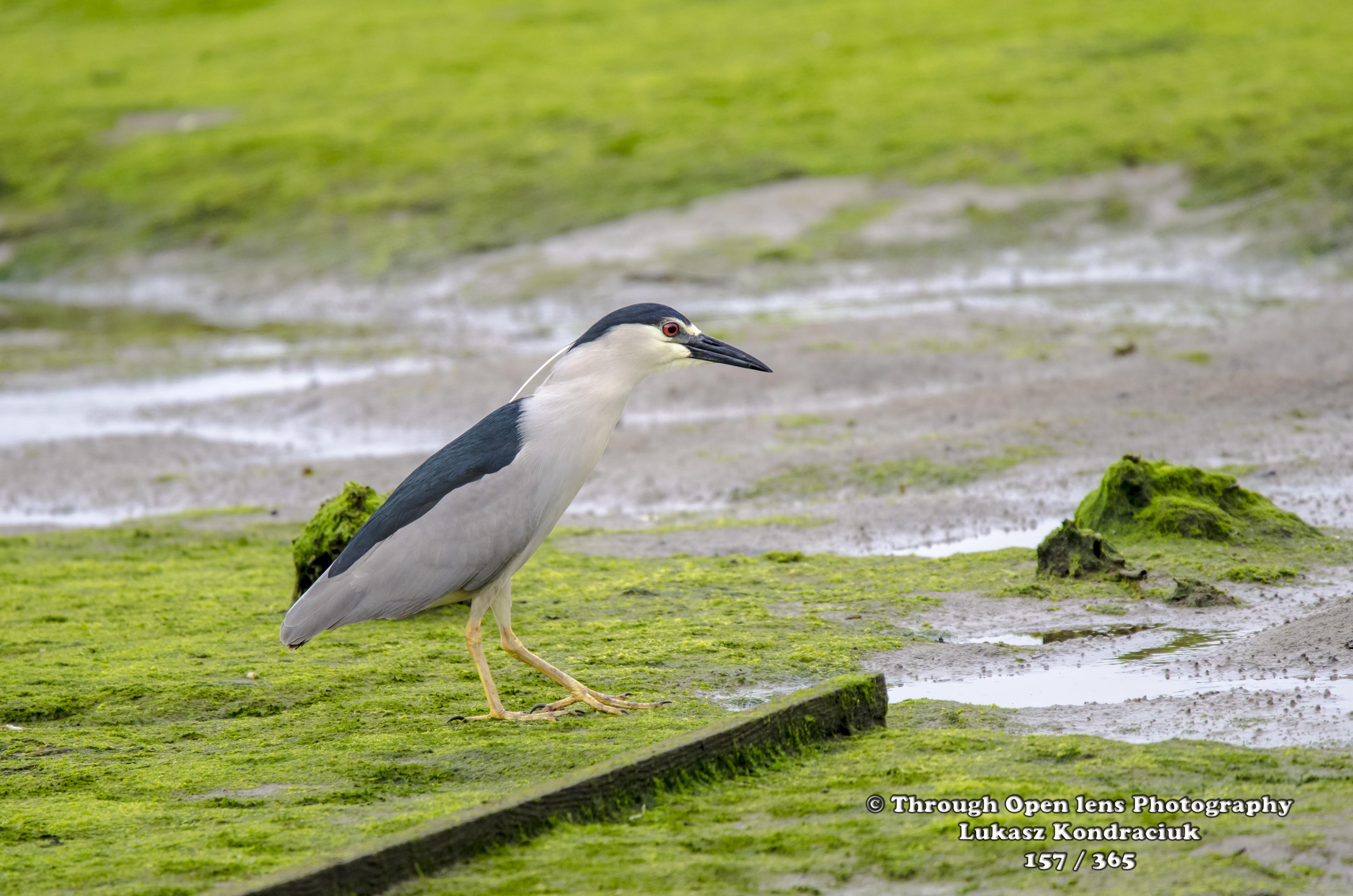
Black-crowned Night-Heron

F/6.3, 1/800, ISO 800.

Black-crowned Night-Heron

Day 157 / 365

Why did the heron cross the road?
To prove he wasn’t chicken.

Interesting Fact: The Black-crowned Night-Heron is a patient hunter. It will often stand still and just wait for a frog or other small animals to pass by. They may also hunt by vibrating their bills in the water to lure prey into investigating the disturbance.  ( http://identify.whatbird.com/obj/24/overview/Black-crowned_Night-Heron.aspx )
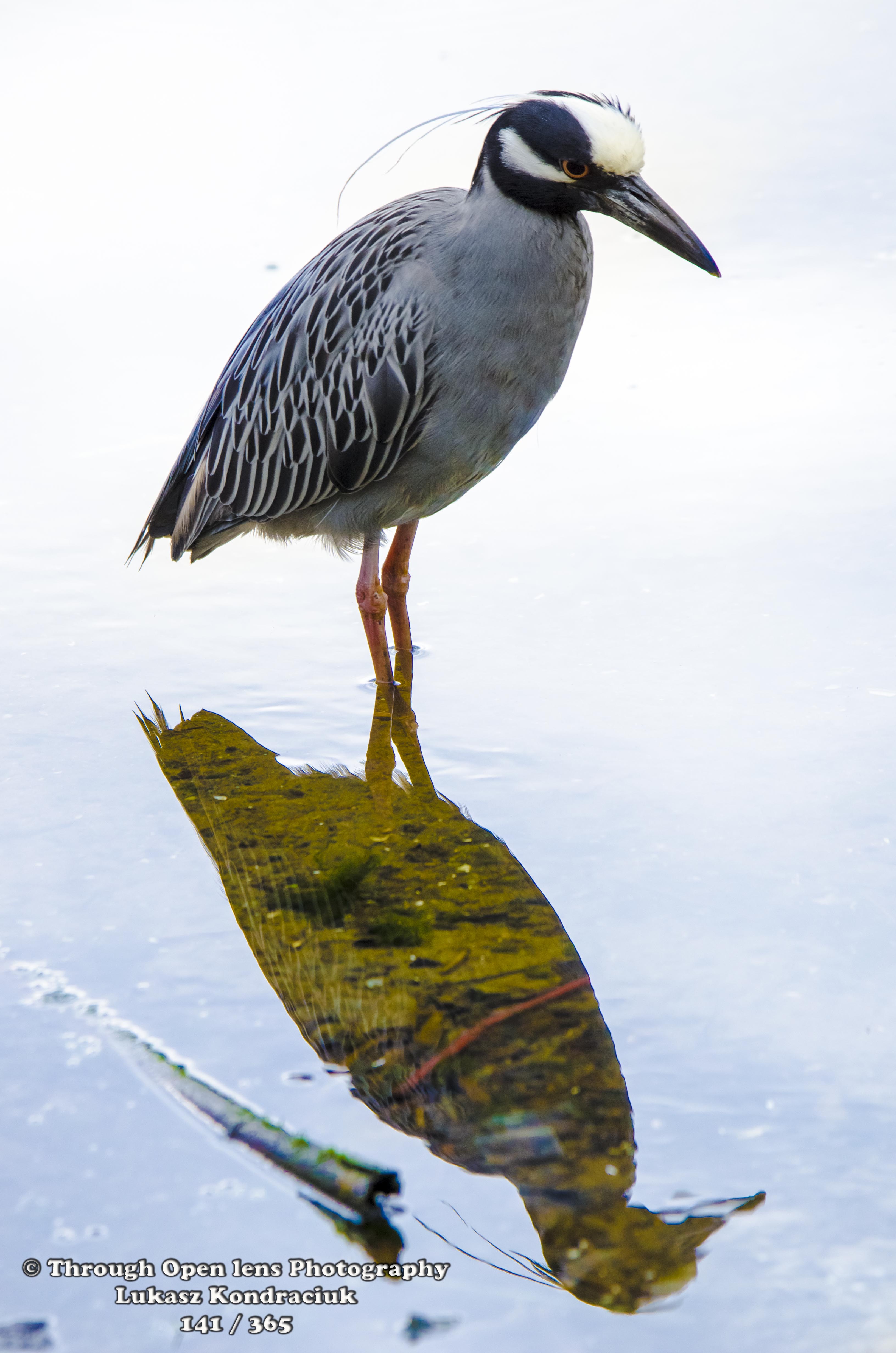
Damn I Look Good!

Yellow-crowned Night Heron

F/6.0, 1/1000, ISO 450.

Yellow-crowned Night Heron

Day 141 / 365

What do you call a heron at the North Pole?
Lost!

Interesting Fact:  Occasionally it will prey on small turtles; its stomach secretes an acid capable of dissolving the shells. ( http://identify.whatbird.com/obj/53/_/Yellow-crowned_Night-Heron.aspx )

Life’s A Beach!

Beach

F/8.0, 1/250, ISO 100.

Day 135 / 356

I don’t want to leave I want to stay here forever.      😦

Interesting Fact: The longest beach in the world is arguably Praia do Cassino (Casino Beach) in the city of Rio Grande, Brazil. It is approximately 212 km (132mi) long. ( http://www.sciencekids.co.nz/sciencefacts/earth/beaches.html )

Swamp Chicken!

Common Gallinule

F/ 6.3, 1/1000, ISO 640.

Common Gallinule

Day 133 / 365

“Red means STOP, don’t come any closer I have babies…”

Common Gallinule Chick

F/6.3, 1/1000, ISO 800.

Common Gallinule Chick

Day 133.5 / 365

Cute little chick and screaming for it mom.

Interesting Fact: Despite lacking either webbed or lobed feet, the Common Gallinule is an excellent swimmer. ( http://identify.whatbird.com/obj/464/overview/Common_Gallinule.aspx )

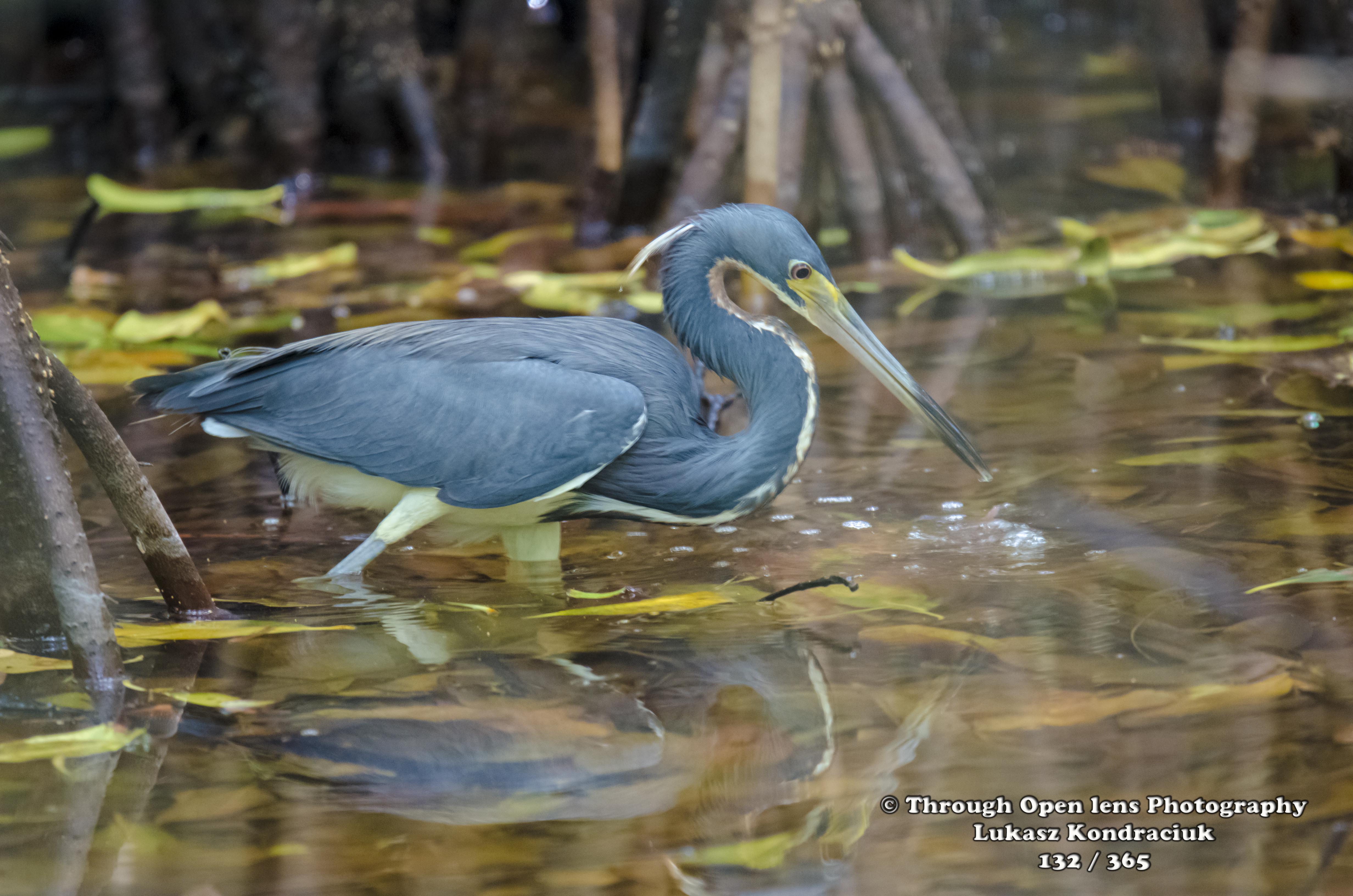
Swamp Fishing!

Tricolored Heron

F/6.3, 1/30, ISO 1600.

Tricolored Heron

Day 132 / 365

I paid the price of too many mosquito bites to get this shot.  But it was worth it.    🙂

Interesting Fact:

The tricolored heron (Egretta tricolor), formerly known in North America as the Louisiana heron, is a small heron. It is a resident breeder from the Gulf states of the USA and northern Mexico south through Central America and the Caribbean to central Brazil and Peru. There is some post-breeding dispersal to well north of the nesting range. Tricolored heron’s breeding habitat is sub-tropical swamps. It nests in colonies, often with other herons, usually on platforms of sticks in trees or shrubs. In each clutch, 3–7 eggs are typically laid. ( http://en.wikipedia.org/wiki/Tricolored_heron )

Pink Is In!

American Flamingo

F/ 5.0. 1/500, ISO 900.

American Flamingo

Day 131 /365

American Flamingo1

Why does a flamingo stand on one leg?
Because if he lifted that leg off the ground he would fall down!

Interesting Fact: In ancient Rome, flamingo tongues were regarded as a delicacy. As recently as 30 years ago, flamingos and their eggs were eaten by people in parts of southern Europe and the Caribbean. ( http://identify.whatbird.com/obj/940/overview/American_Flamingo.aspx )

Island Duck Will Attack!

White-cheeked Pintail

F/5.0, 1/250, ISO 720.

White-cheeked Pintail

Day 130 / 365

What did Detective Duck say to his partner?
“Let’s quack this case!”

Interesting Fact:  White-cheeked Pintail: This species is a native of the Caribbean Islands, South America, and the Galapagos Islands. Within the United States, it is a rare to casual visitor in southern Florida. This bird is found near rivers, lakes, and ponds, as well as along costal marshes and rocky or sandy seashores. The White-cheeked Pintail was first described in 1758 by Carolus Linnaeus, Swedish botanist, physician and zoologist. ( http://identify.whatbird.com/obj/1029/overview/White-cheeked_Pintail.aspx )

Yummy!!!!

Greater Yellowlegs

F/6.3, 1/250, ISO 1600.

Greater Yellowlegs

Day 127 / 365

Where do birds meet for coffee ? 
In a nest-cafe !

Interesting Fact: Although the Greater Yellowlegs is common and widespread, its low densities and tendency to breed in inhospitable, mosquito-ridden muskegs make it one of the least-studied shorebirds on the continent. ( http://identify.whatbird.com/obj/252/_/Greater_Yellowlegs.aspx )

Out For A Swim!

Horned Grebe

F/6.3, 1/1000, ISO 400.

Horned Grebe

Day 123 / 365

Perfect day for a swim and dive, but not for me, the water is still too cold.     🙂

Interesting Fact: The Horned Grebe regularly eats some of its own feathers, enough that its stomach usually contains a matted plug of them. This plug may function as a filter or may hold fish bones in the stomach until they can be digested. The parents even feed feathers to their chicks to get the plug started early.  ( http://www.allaboutbirds.org/guide/Horned_Grebe/lifehistory )

Make A Wish! 

Fountain

F/22.0, 30.0, ISO 250.

Day 114 / 365

What did you wish for?

Who cleans all the coins out of fountain?

Interesting Fact:  Ancient civilizations built stone basins to capture and hold precious drinking water. A carved stone basin, dating to around 2000 BC, was discovered in the ruins of the ancient Sumerian city of Lagash in modern Iraq. The ancient Assyrians constructed a series of basins in the gorge of the Comel River, carved in solid rock, connected by small channels, descending to a stream. The lowest basin was decorated with carved reliefs of two lions.[3] The ancient Egyptians had ingenious systems for hoisting water up from the Nile for drinking and irrigation, but without a higher source of water it was not possible to make water flow by gravity, and no Egyptian fountains or pictures of fountains have been found. ( http://en.wikipedia.org/wiki/Fountain )