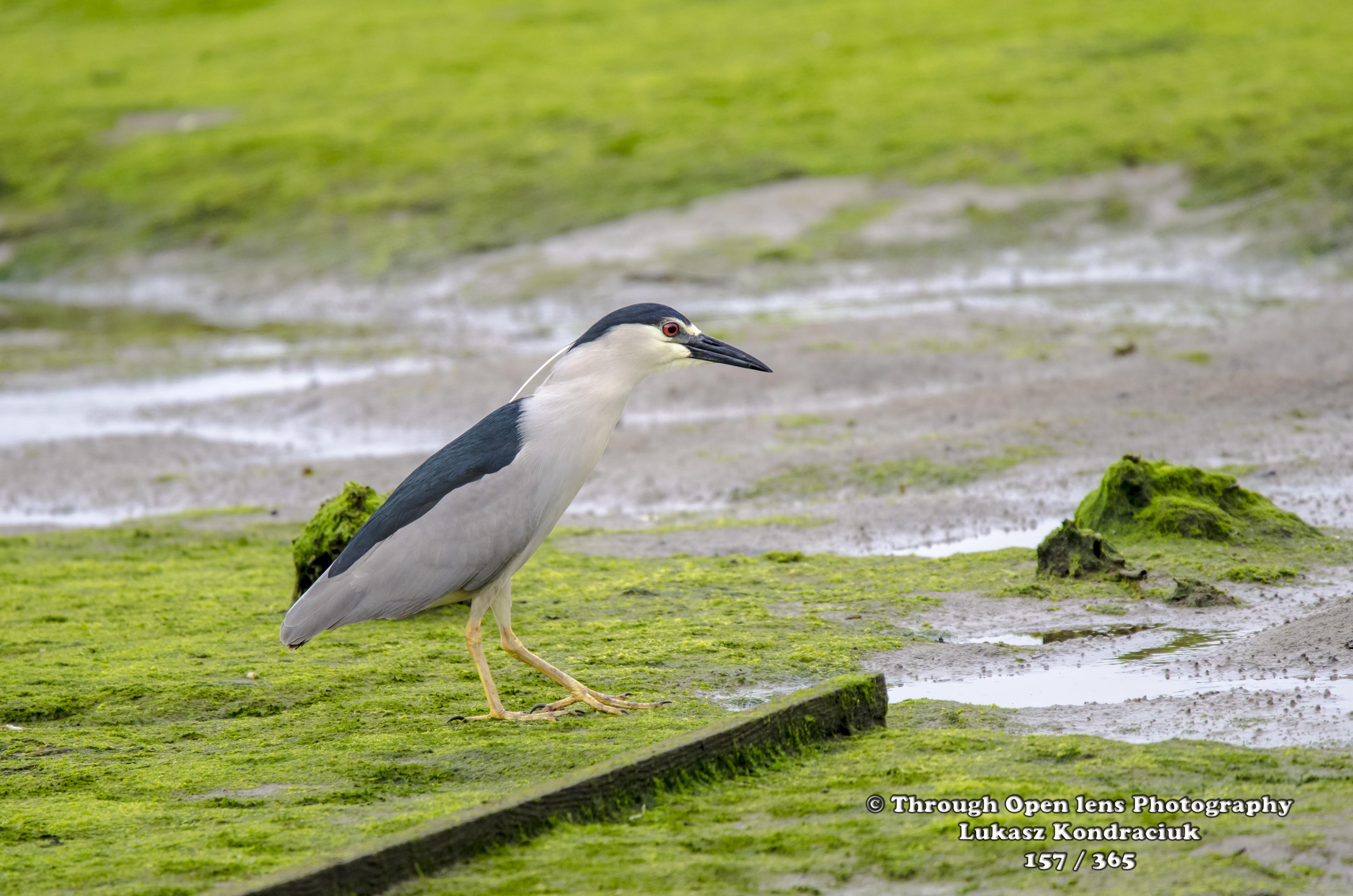
Hey! Where did the water go?

Black-crowned Night-Heron

F/6.3, 1/800, ISO 800.

Black-crowned Night-Heron

Day 157 / 365

Why did the heron cross the road?
To prove he wasn’t chicken.

Interesting Fact: The Black-crowned Night-Heron is a patient hunter. It will often stand still and just wait for a frog or other small animals to pass by. They may also hunt by vibrating their bills in the water to lure prey into investigating the disturbance.  ( http://identify.whatbird.com/obj/24/overview/Black-crowned_Night-Heron.aspx )

New Yoga Pose?

Killdeer

F/6.3, 1/1000, ISO 720.

Killdeer

Day 156 / 365

At first I thought she was doing yoga, and I was going to join in. Then I notice she might have a broken wing, but all of it was just an act. Very convincing broken-wing act, I would give her an Oscar for outstanding performance.

Interesting Fact: Killdeer exhibit a clever “broken wing display” in which they appear to be struggling with a broken wing while leading the predator away from their babies. ( http://identify.whatbird.com/obj/101/overview/Killdeer.aspx )


Come Fly With Me, Let’s Fly, Let’s Fly Away

Great Egret 1

F/6.3, 1/500, ISO 1400.

Great Egret

Day 155 / 365

What kind of bird can carry the most weight?
The crane

Interesting Fact: Though it mainly hunts while wading, the Great Egret occasionally swims to capture prey or hovers (somewhat laboriously) over the water and dips for fish. ( http://www.allaboutbirds.org/guide/Great_Egret/lifehistory )

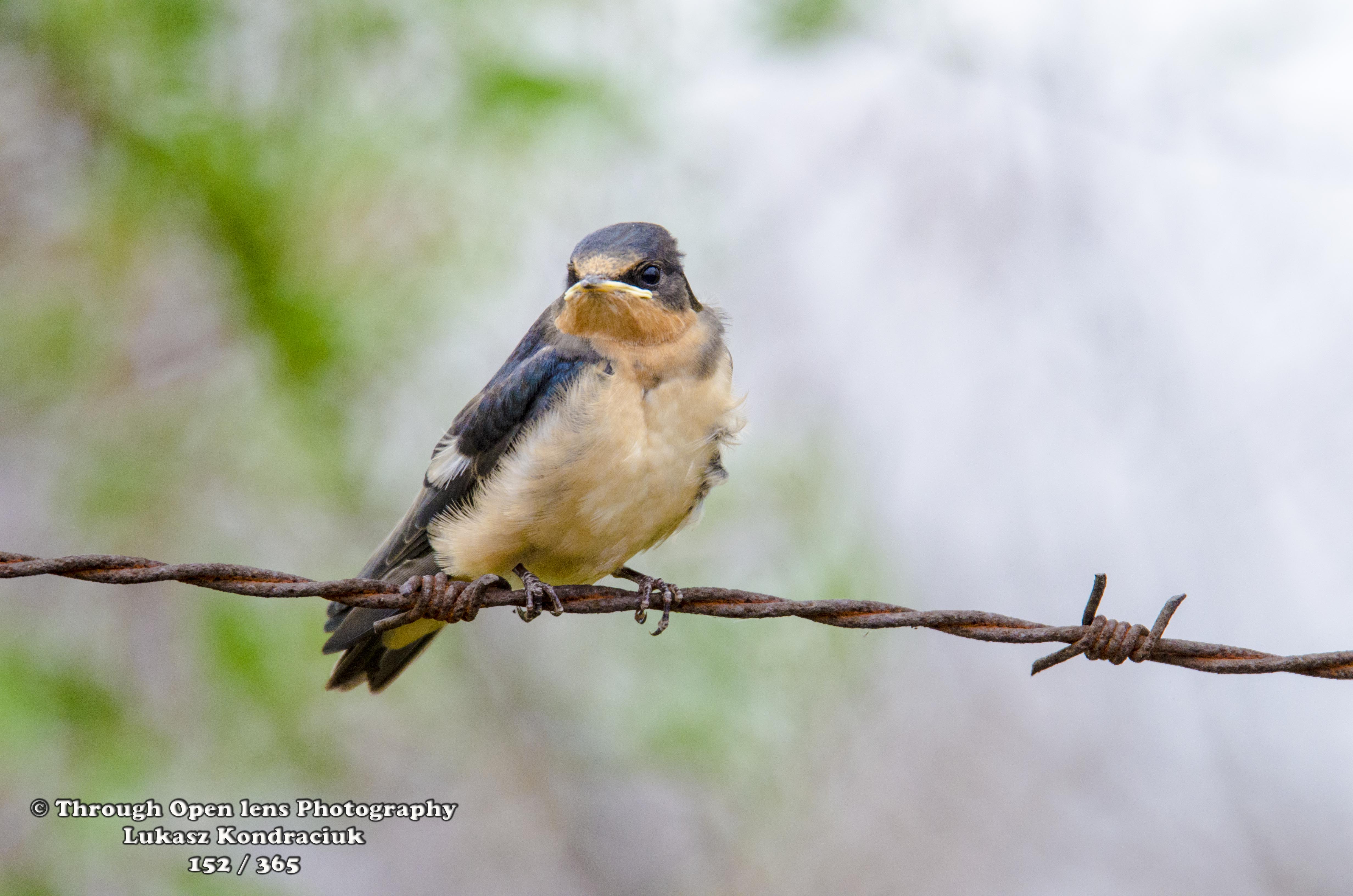
What Do Swallows Swallow?

Barn Swallow

F/6.3, 1/250, ISO 1600.

Barn Swallow

Day 152 / 365

What bird is helpful at dinner?
A swallow!

Interesting Fact: An unmated male Barn Swallow may kill the nestlings of a nesting pair. His actions often succeed in breaking up the pair and afford him the opportunity to mate with the female. ( http://www.allaboutbirds.org/guide/Barn_Swallow/lifehistory )


Do I Look Like A T-Rex? Grrrrr !!!

gosling

F/6.3, 1/125, ISO 1600.

Day 150 / 365

What do geese do in a traffic?

They honk!

Interesting Fact: Canadian geese can travel more than 1000 kilometers in a day while migrating. The circumference of the world is 40008 km. This means that they could fly around the world in approximately 40 days! ( http://bioweb.uwlax.edu/bio203/s2009/beckwith_kayl/Interestingfacts.htm )

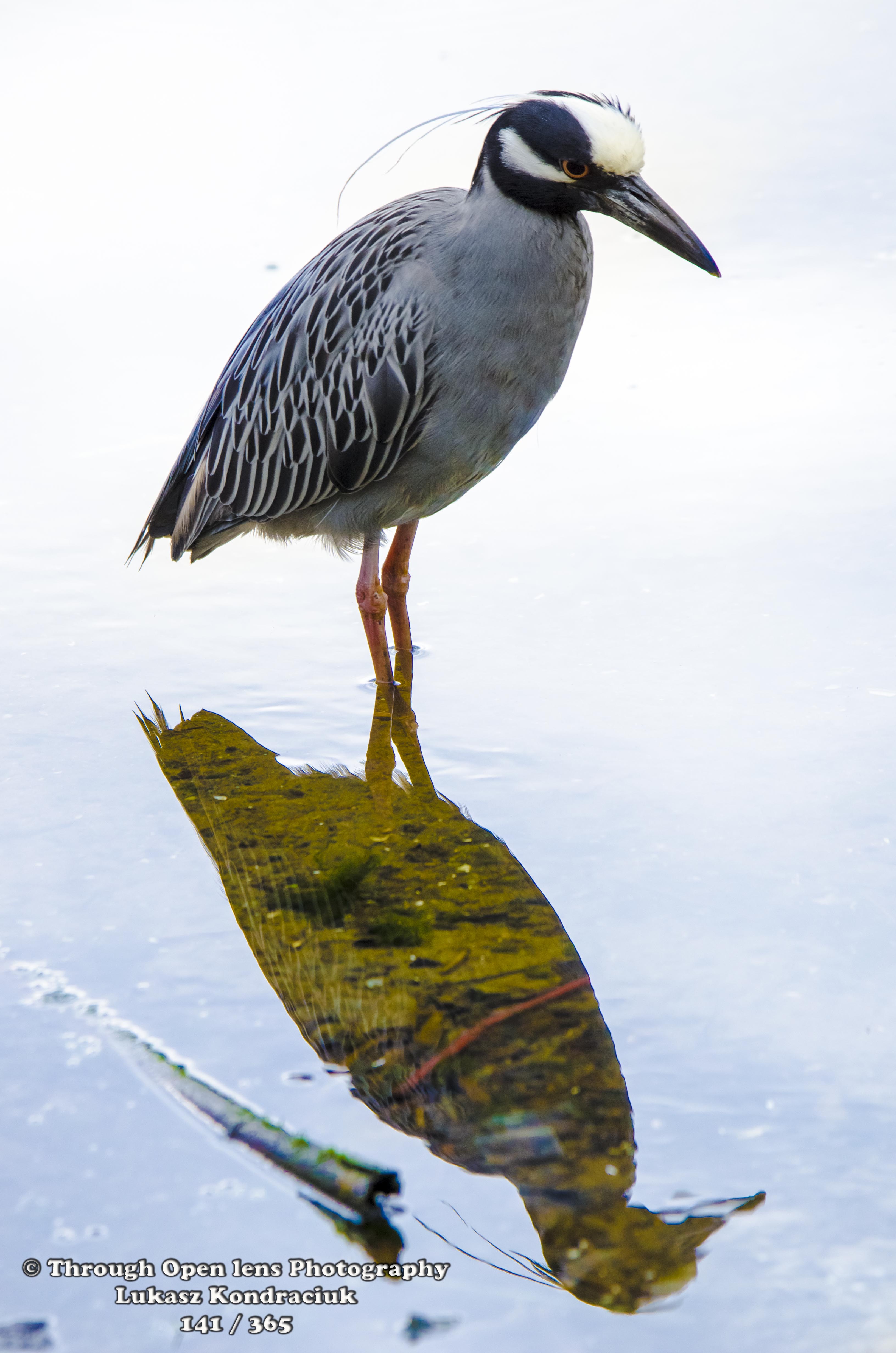
Damn I Look Good!

Yellow-crowned Night Heron

F/6.0, 1/1000, ISO 450.

Yellow-crowned Night Heron

Day 141 / 365

What do you call a heron at the North Pole?
Lost!

Interesting Fact:  Occasionally it will prey on small turtles; its stomach secretes an acid capable of dissolving the shells. ( http://identify.whatbird.com/obj/53/_/Yellow-crowned_Night-Heron.aspx )

“Make Sure You Get My Good Side.”

Bananaquit

F/6.3, 1/50, ISO 1600.

Bananaquit

Day 134 /365

Why do birds fly south for the winter?
Because it’s too far to walk!

Interesting Fact: It uses its sharp beak to pierce a flower from the side, taking the nectar without actually pollinating the plant. They cannot hover like a hummingbird, and must always perch while feeding. ( http://identify.whatbird.com/obj/1014/overview/Bananaquit.aspx )

Swamp Chicken!

Common Gallinule

F/ 6.3, 1/1000, ISO 640.

Common Gallinule

Day 133 / 365

“Red means STOP, don’t come any closer I have babies…”

Common Gallinule Chick

F/6.3, 1/1000, ISO 800.

Common Gallinule Chick

Day 133.5 / 365

Cute little chick and screaming for it mom.

Interesting Fact: Despite lacking either webbed or lobed feet, the Common Gallinule is an excellent swimmer. ( http://identify.whatbird.com/obj/464/overview/Common_Gallinule.aspx )

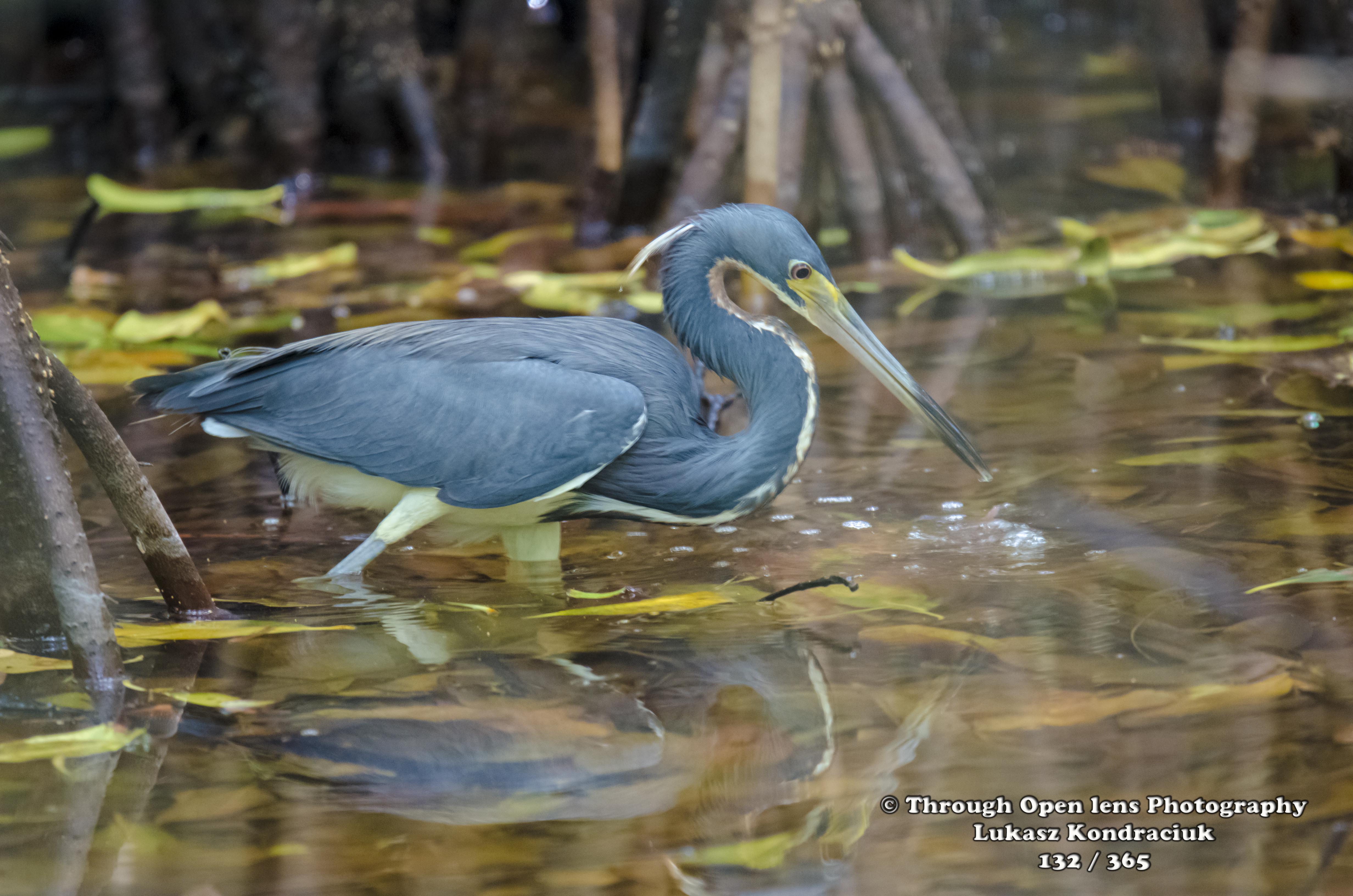
Swamp Fishing!

Tricolored Heron

F/6.3, 1/30, ISO 1600.

Tricolored Heron

Day 132 / 365

I paid the price of too many mosquito bites to get this shot.  But it was worth it.    🙂

Interesting Fact:

The tricolored heron (Egretta tricolor), formerly known in North America as the Louisiana heron, is a small heron. It is a resident breeder from the Gulf states of the USA and northern Mexico south through Central America and the Caribbean to central Brazil and Peru. There is some post-breeding dispersal to well north of the nesting range. Tricolored heron’s breeding habitat is sub-tropical swamps. It nests in colonies, often with other herons, usually on platforms of sticks in trees or shrubs. In each clutch, 3–7 eggs are typically laid. ( http://en.wikipedia.org/wiki/Tricolored_heron )

Pink Is In!

American Flamingo

F/ 5.0. 1/500, ISO 900.

American Flamingo

Day 131 /365

American Flamingo1

Why does a flamingo stand on one leg?
Because if he lifted that leg off the ground he would fall down!

Interesting Fact: In ancient Rome, flamingo tongues were regarded as a delicacy. As recently as 30 years ago, flamingos and their eggs were eaten by people in parts of southern Europe and the Caribbean. ( http://identify.whatbird.com/obj/940/overview/American_Flamingo.aspx )