Damn I Look Good!

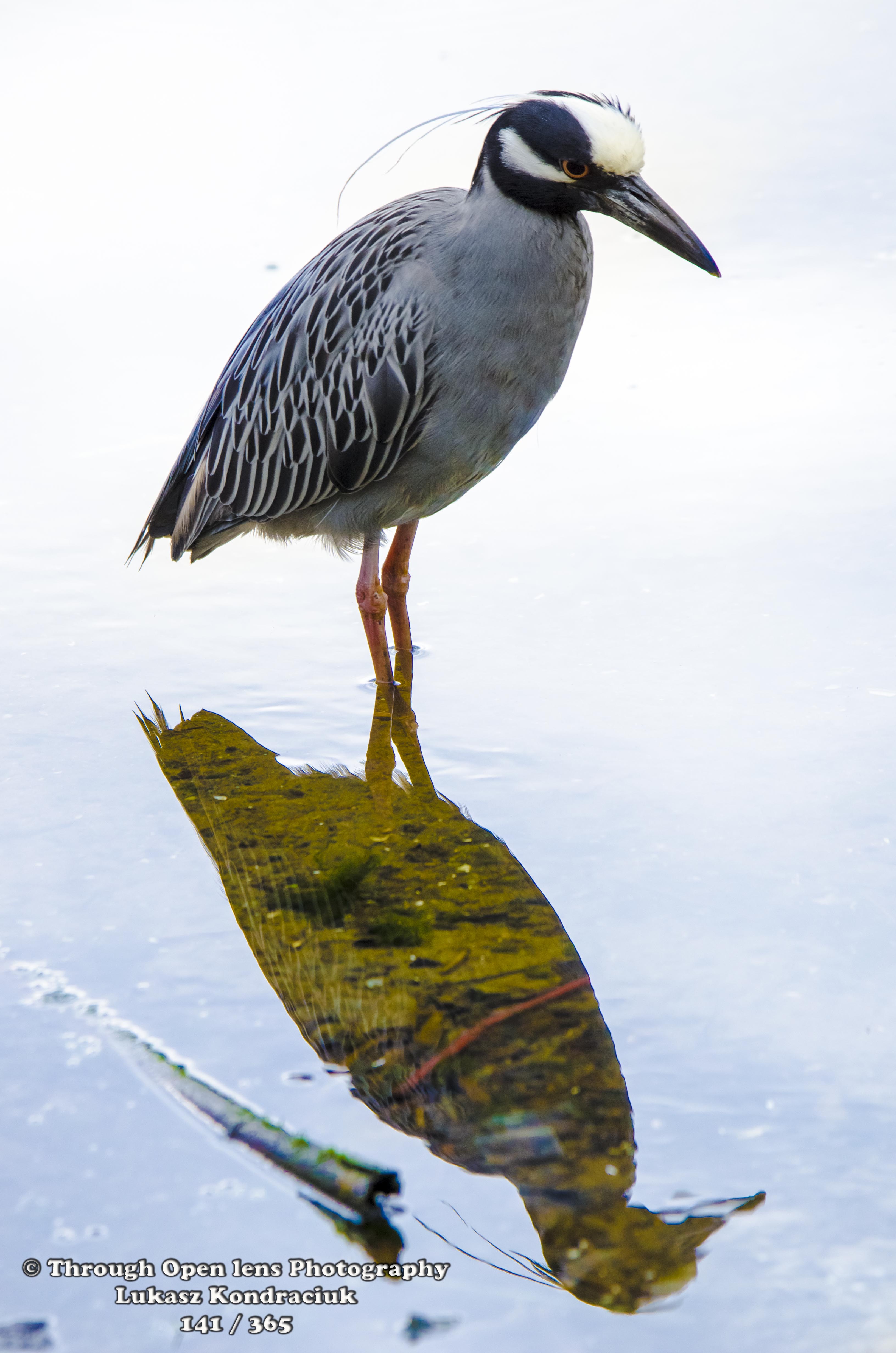
Yellow-crowned Night Heron

F/6.0, 1/1000, ISO 450.

Yellow-crowned Night Heron

Day 141 / 365

What do you call a heron at the North Pole?
Lost!

Interesting Fact:  Occasionally it will prey on small turtles; its stomach secretes an acid capable of dissolving the shells. ( http://identify.whatbird.com/obj/53/_/Yellow-crowned_Night-Heron.aspx )

“Make Sure You Get My Good Side.”

Bananaquit

F/6.3, 1/50, ISO 1600.

Bananaquit

Day 134 /365

Why do birds fly south for the winter?
Because it’s too far to walk!

Interesting Fact: It uses its sharp beak to pierce a flower from the side, taking the nectar without actually pollinating the plant. They cannot hover like a hummingbird, and must always perch while feeding. ( http://identify.whatbird.com/obj/1014/overview/Bananaquit.aspx )

Swamp Chicken!

Common Gallinule

F/ 6.3, 1/1000, ISO 640.

Common Gallinule

Day 133 / 365

“Red means STOP, don’t come any closer I have babies…”

Common Gallinule Chick

F/6.3, 1/1000, ISO 800.

Common Gallinule Chick

Day 133.5 / 365

Cute little chick and screaming for it mom.

Interesting Fact: Despite lacking either webbed or lobed feet, the Common Gallinule is an excellent swimmer. ( http://identify.whatbird.com/obj/464/overview/Common_Gallinule.aspx )

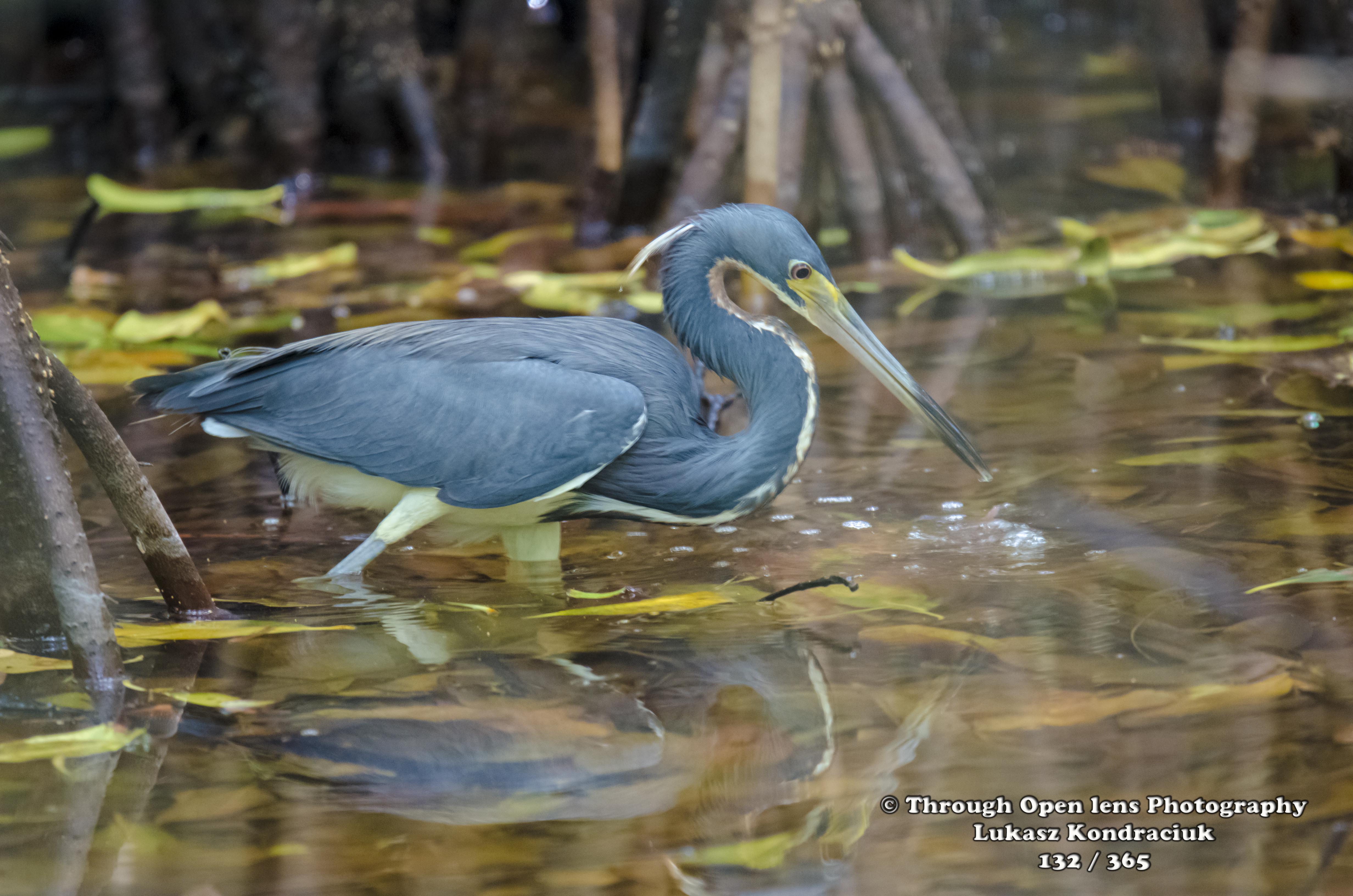
Swamp Fishing!

Tricolored Heron

F/6.3, 1/30, ISO 1600.

Tricolored Heron

Day 132 / 365

I paid the price of too many mosquito bites to get this shot.  But it was worth it.    🙂

Interesting Fact:

The tricolored heron (Egretta tricolor), formerly known in North America as the Louisiana heron, is a small heron. It is a resident breeder from the Gulf states of the USA and northern Mexico south through Central America and the Caribbean to central Brazil and Peru. There is some post-breeding dispersal to well north of the nesting range. Tricolored heron’s breeding habitat is sub-tropical swamps. It nests in colonies, often with other herons, usually on platforms of sticks in trees or shrubs. In each clutch, 3–7 eggs are typically laid. ( http://en.wikipedia.org/wiki/Tricolored_heron )

Pink Is In!

American Flamingo

F/ 5.0. 1/500, ISO 900.

American Flamingo

Day 131 /365

American Flamingo1

Why does a flamingo stand on one leg?
Because if he lifted that leg off the ground he would fall down!

Interesting Fact: In ancient Rome, flamingo tongues were regarded as a delicacy. As recently as 30 years ago, flamingos and their eggs were eaten by people in parts of southern Europe and the Caribbean. ( http://identify.whatbird.com/obj/940/overview/American_Flamingo.aspx )

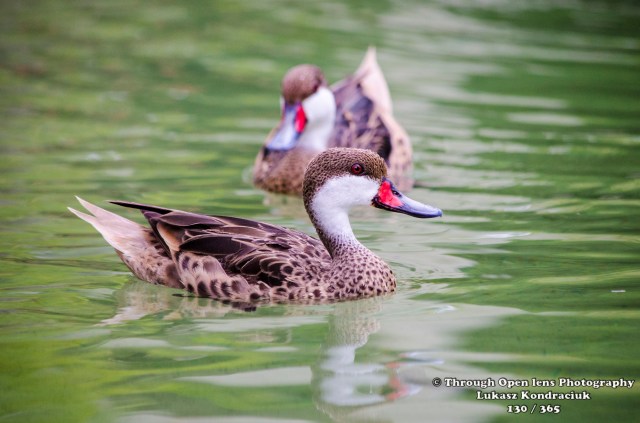
Island Duck Will Attack!

White-cheeked Pintail

F/5.0, 1/250, ISO 720.

White-cheeked Pintail

Day 130 / 365

What did Detective Duck say to his partner?
“Let’s quack this case!”

Interesting Fact:  White-cheeked Pintail: This species is a native of the Caribbean Islands, South America, and the Galapagos Islands. Within the United States, it is a rare to casual visitor in southern Florida. This bird is found near rivers, lakes, and ponds, as well as along costal marshes and rocky or sandy seashores. The White-cheeked Pintail was first described in 1758 by Carolus Linnaeus, Swedish botanist, physician and zoologist. ( http://identify.whatbird.com/obj/1029/overview/White-cheeked_Pintail.aspx )

Yummy!!!!

Greater Yellowlegs

F/6.3, 1/250, ISO 1600.

Greater Yellowlegs

Day 127 / 365

Where do birds meet for coffee ? 
In a nest-cafe !

Interesting Fact: Although the Greater Yellowlegs is common and widespread, its low densities and tendency to breed in inhospitable, mosquito-ridden muskegs make it one of the least-studied shorebirds on the continent. ( http://identify.whatbird.com/obj/252/_/Greater_Yellowlegs.aspx )

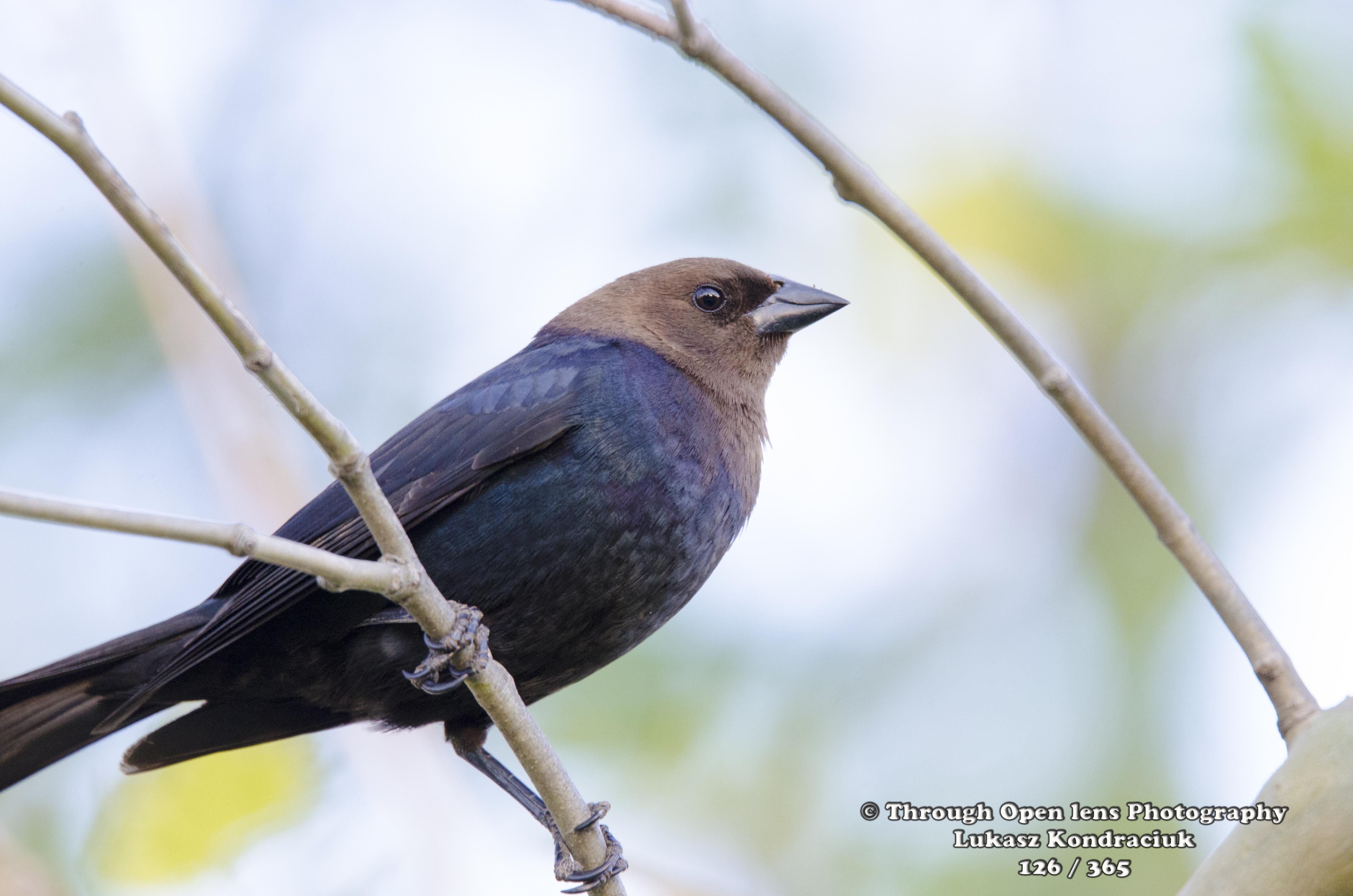
What A Parent!

Brown-headed Cowbird

F/6.3, 1/125, ISO 1600.

Brown-headed Cowbird

Day 126 / 365

That is one bird that doesn’t care about their young ones.

Interesting Fact:  Brown-headed cowbirds are brood parasites. They deposit their eggs in nests belonging to birds of other species. Some of the birds they parasitize remove the eggs from their nests or cover them with new nest material so that they are not incubated. ( http://identify.whatbird.com/obj/107/overview/Brown-headed_Cowbird.aspx )

Out For A Swim!

Horned Grebe

F/6.3, 1/1000, ISO 400.

Horned Grebe

Day 123 / 365

Perfect day for a swim and dive, but not for me, the water is still too cold.     🙂

Interesting Fact: The Horned Grebe regularly eats some of its own feathers, enough that its stomach usually contains a matted plug of them. This plug may function as a filter or may hold fish bones in the stomach until they can be digested. The parents even feed feathers to their chicks to get the plug started early.  ( http://www.allaboutbirds.org/guide/Horned_Grebe/lifehistory )

Upside Down You’re Turning Me!

Black-and-white Warbler

F/6.3, 1/500, ISO 1100.

Black-and-white Warbler

Day 120 / 365

I too used to swinging upside down from the tree when I was young. But I think he has me beat.   🙂

Interesting Fact: Black-and-white Warblers have an extra-long hind claw and heavier legs than other wood-warblers, which help them hold onto and move around on bark. ( http://www.allaboutbirds.org/guide/Black-and-white_Warbler/lifehistory )