“Are You My Dinner? “

Red-tailed Hawks

F/6.3, 1/125, ISO 200.

Red-tailed Hawk

Day 242 / 365

Did you know my fiancé does a great bird impression.

She watches me like a hawk.

Interesting Fact: In flight, this hawk travels at speeds from 20 to 40 mph (64 km/h); however, when diving to catch prey, their speed may exceed 120 mph (190 km/h). ( http://beautyofbirds.com/redtailedhawks.html )

We Claim This Island! Now What Do We Do?

Great Egrets

F/6.3, 1/1250, ISO 400.

Great Egrets

Day 235 / 365

Why does the bird bring toilet paper to the party?

Because he is a party pooper.

Interesting Fact: The pristinely white Great Egret gets even more dressed up for the breeding season. A patch of skin on its face turns neon green, and long plumes grow from its back. Called aigrettes, those plumes were the bane of egrets in the late nineteenth century, when such adornments were prized for ladies’ hats. ( http://www.allaboutbirds.org/guide/Great_Egret/lifehistory )


That Is What It Sounds Like When Doves Cry

Mourning Dove

F/6.3, 1/160, ISO 1600.

Mourning Dove

Day 215 / 365

What art style is loved by doves?


The Coo-bist Period.

Interesting Fact: During the breeding season, you might see three Mourning Doves flying in tight formation, one after another. This is a form of social display. Typically the bird in the lead is the male of a mated pair. The second bird is an unmated male chasing his rival from the area where he hopes to nest. The third is the female of the mated pair, which seems to go along for the ride. ( http://www.allaboutbirds.org/guide/Mourning_Dove/lifehistory )


Buzzing Around!

Bumblebee

F/6.3, 1/800, ISO 800.

Bumblebee

Day 212 / 365

Who is the bees favorite singer?

Sting!

Interesting Fact: Bumblebees produce buzzing sound as a result of vibration of muscles used for flying. These muscles increase temperature of the body and facilitate gathering of pollen. ( http://www.softschools.com/facts/animals/bumblebee_facts/582/ )


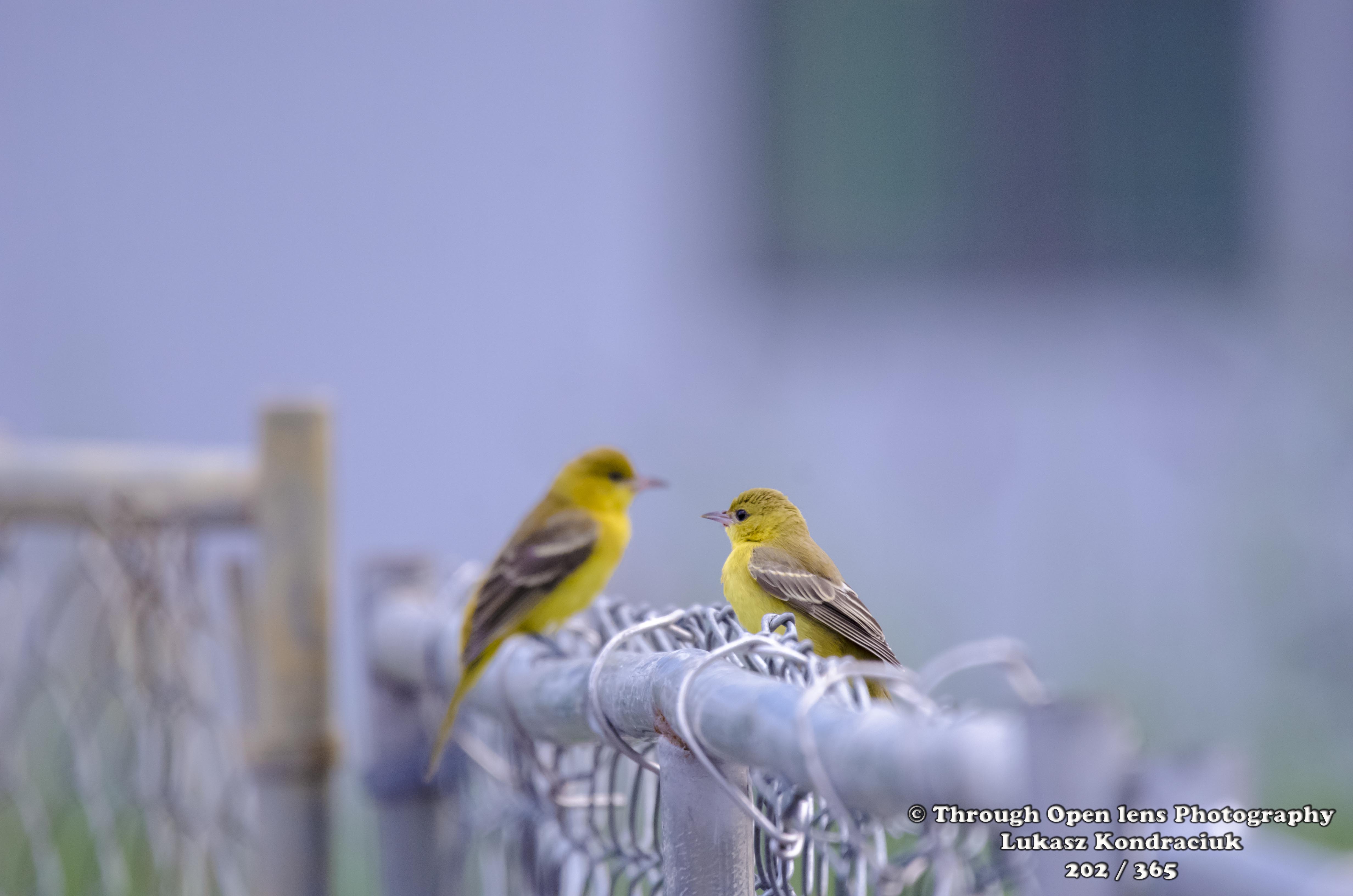
Love Your Neighbor As Yourself But Don’t Take Down The Fence!

yellow warbler 1

F/6.3, 1/125, ISO 1400.

Yellow Warblers

Day 202 / 365

A man walked into the office of a talent agent on the 72nd floor of a skyscraper. “I’ve got a great act,” he tells the agent. “Just watch this.” The man opens the window, perches on the ledge and starts flapping his arms. Then he pushes off and flys around outside the window executing intricate aerobatic maneuvers. Having finished his demonstration, the man flaps in to a perfect landing on the window sill and steps back into the agent’s office. “What do you think of that?” he asked the agent. The talent agent yawned. That’s it? Bird imitations?”

Interesting Fact: Long distance migrant. Yellow Warblers breed across central and northern North America and spend winters in Central America and northern South America. They migrate earlier than most other warblers in both spring and fall. Like many other migrating songbirds, Yellow Warblers from eastern North America fly across the Gulf of Mexico in a single nonstop journey; some Yellow Warblers in fall take an overland route around the Gulf. ( http://www.allaboutbirds.org/guide/Yellow_Warbler/lifehistory )

Kissing Burns 6.4 Calories A Minute Wanna Work Out!

Barn Swallow 1

F/6.3, 1/640, ISO 800.

 Barn Swallow

Day 198 / 365

If the bird of wisdom is an owl, and the bird of peace is the dove, what is the bird of TRUE love?

Interesting Fact: Barn Swallow parents sometimes get help from other birds to feed their young. These “helpers at the nest” are usually older siblings from previous clutches, but unrelated juveniles may help as well.  ( http://www.allaboutbirds.org/guide/Barn_Swallow/lifehistory )

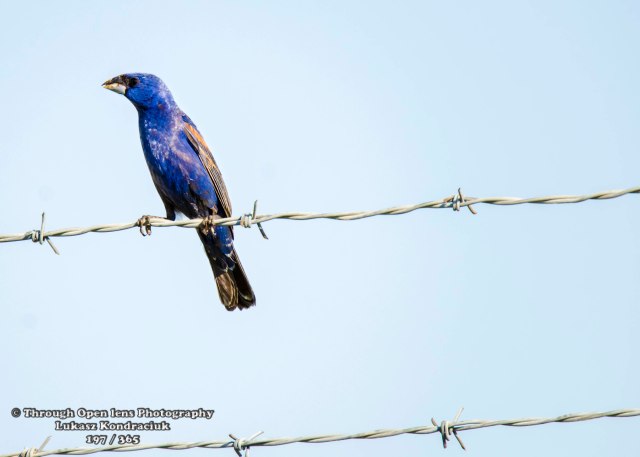
Feeling A Little Blue!

Blue Grosbeak

F/6.3, 1/1250, ISO 400.

Blue Grosbeak

Day 197 / 365

A mother bird, a daddy bird and their baby bird were getting ready to migrate. The mother bird said, ” My instincts tell me to go north. ” The daddy bird said, ” My instincts tell me to go south. ” The baby bird said, ” My end stinks too, but it doesn’t tell me where to go! ”

Interesting Fact: Many Blue Grosbeaks migrate directly southward from their breeding areas to their wintering grounds. Western birds head over land and eastern birds cross the Gulf of Mexico. Migrating grosbeaks pass through the Caribbean Islands including Puerto Rico, the Bahamas, the Turks and Caicos Islands, the Antilles, the Swan Islands, the Cayman Islands, and the Virgin Islands. ( http://www.allaboutbirds.org/guide/Blue_Grosbeak/lifehistory )

” Figaro! Figaro! Figaro! Figaro! Figaro! “!

Marsh Wren

F/6.3, 1/500, ISO 1000.

Marsh Wren

Day 195 / 365

Why did the bird get a ticket?

It broke the law of gravity!

Interesting Fact: The Marsh Wren is a secretive bird; even when singing the territorial male remains well hidden, briefly climbing a cattail for a look at an intruder. ( http://identify.whatbird.com/obj/137/_/Marsh_Wren.aspx )

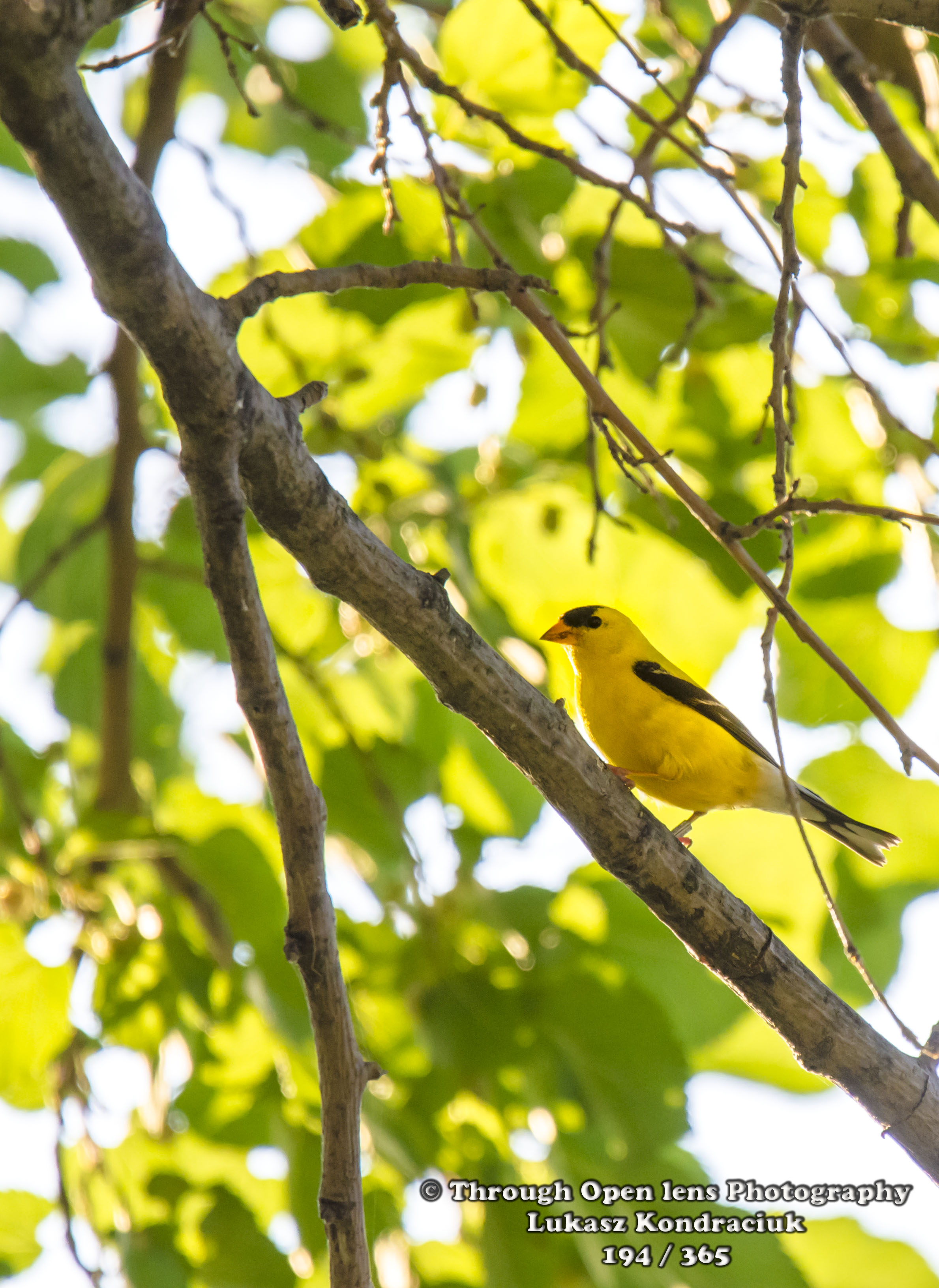
“Hey I Was Yellow First, Now The Minions Get The Fame”!

American Goldfinch

F/6.3, 1/500, ISO 400.

The American Goldfinch

Day 194 / 365

What do you give a sick bird?
Tweetment.

Interesting Fact: They are one of the latest nesting birds, starting in late June or early July, when most other songbirds are finishing with breeding. Their late timing may be related to the availability of suitable nesting materials and seeds for feeding young. ( http://identify.whatbird.com/obj/91/overview/American_Goldfinch.aspx )

“Just Don’t Call Me Tweety Bird”!

Baltimore Oriole  Female

F/6.3, 1/1000, ISO 500.

Baltimore Oriole ( Female )

Day 192 / 365

When should you buy a bird?

When it’s going cheep!

Interesting Fact: Baltimore Orioles sometimes use their slender beaks to feed in an unusual way, called “gaping”: they stab the closed bill into soft fruits, then open their mouths to cut a juicy swath from which they drink with their brushy-tipped tongues.  ( http://www.allaboutbirds.org/guide/Baltimore_Oriole/lifehistory )