Brotherly Love

brotherly love

F/5.6, 1/60, ISO 400.

Day 269 / 365

What did the beach say to the wave?…

“Long tide, no sea.”

Interesting Fact: Most beaches are found on the coast, where wave action, currents, tides and seawater rises continuously rework and shape the sediment. As a result, beaches are usually regarded as dynamic, natural phenomenon.  ( http://www.sciencekids.co.nz/sciencefacts/earth/beaches.html )


Bad Hair Day!

Red-tailed Hawks1

F/ 6.3, 1/1000, ISO 500.

Red-tailed Hawk

Day 243 / 365

How do witches keep their hair in place while flying?
With scare spray.

Interesting Fact: Red-tailed Hawks have a very keen eyesight that is 8 times as powerful as a human’s, allowing them to see prey as small as a mouse from 100 feet (~30 meters) away. ( http://beautyofbirds.com/redtailedhawks.html )

I’m Cute And Cuddly. But I Will Steal Your Stuff When You Are Not Looking!

Chinchilla

F/5.6, 1/60, ISO 800.

Chinchilla

Day 239 / 365

A man went to visit a friend and was amazed to find him playing chess with his Chinchilla. He watched the game in astonishment for a while. “I can hardly believe my eyes!” he exclaimed. “That’s the smartest chinchilla I’ve ever seen.”

“Nah, he’s not so smart,” the friend replied. “I’ve beaten him three games out of five.”

Interesting Fact: Chinchillas see with their whiskers. Even though they have big eyes, the eyes are under developed, making the Chinchilla not see well with it. They have long whiskers which can grow half the length of their body to help them ‘see’ or rather feel things around them. ( http://chinchilla.co/chinchilla-facts/ )

Orange You Glad To See Me?!

orange you glad

F/3.5, 1/60, ISO 100.

Day 232 / 365

Why did the orange fail his driving test?

He kept peeling out.

Interesting Fact: Because oranges do not spoil easily and are full of vitamin C during the years of world exploration sailors planted orange and other citrus trees along trade routes to prevent scurvy which is a disease that develops from a deficiency of vitamin C. ( http://snip.ly/LNaQ#http://www.sciencekids.co.nz/sciencefacts/food/oranges.html )

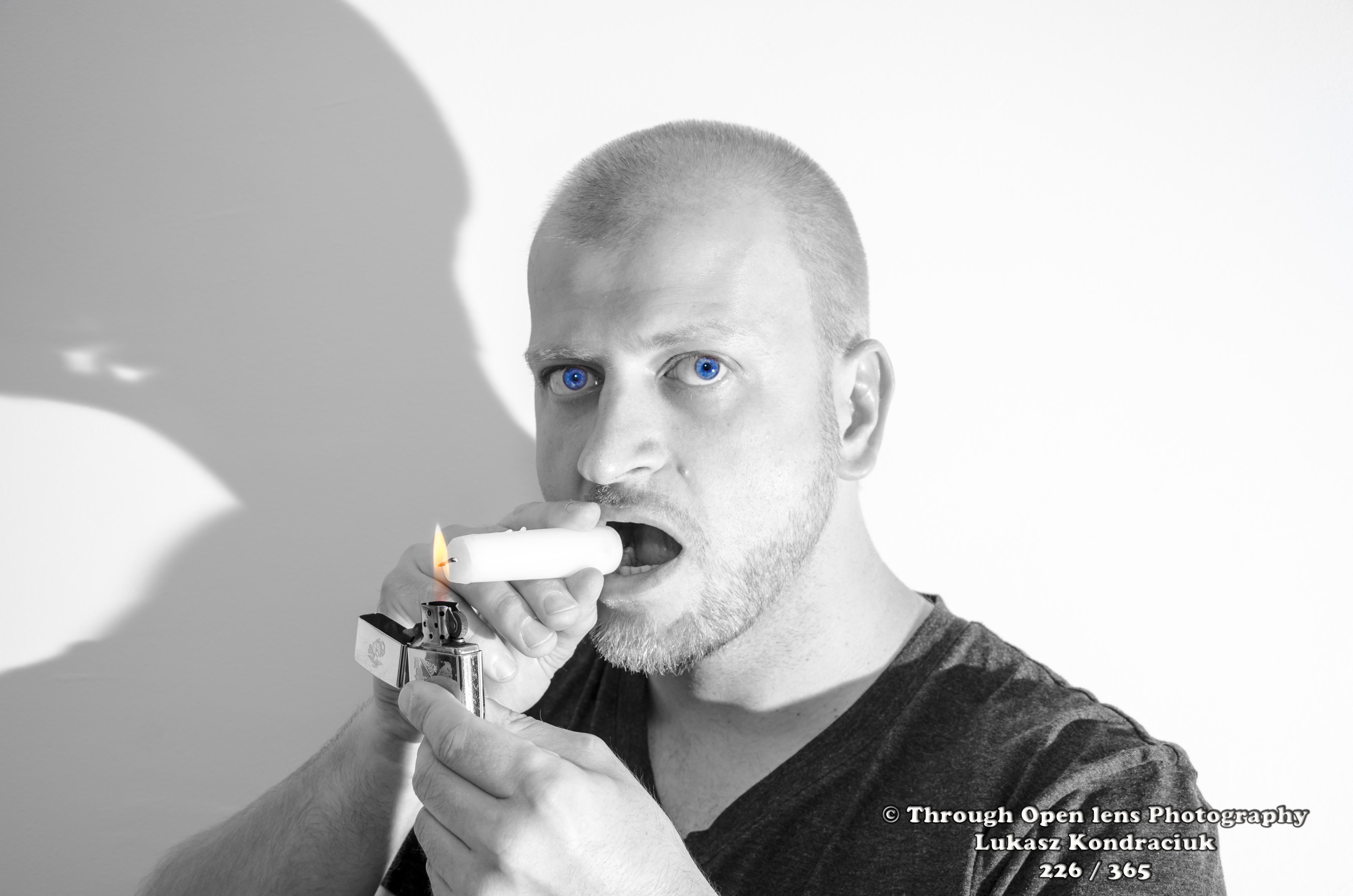
Behind The Blue Eyes

blue eyes

F/7.1, 1/60, ISO 125.

Day 226 / 365

A guy walks past a mental hospital and hears a moaning voice “… 13 … 13 … 13 …”

The man looked over to the hospital and saw a hole in the wall, he looked through the hole and gets poked in the eye. The moaning voice then groaned “… 14 … 14 … 14 …”

Interesting Fact:  Blue eyes are more sensitive to light than darker-colored eyes since they do not have as much melanin. This sensitivity can make blue-eyed people more prone to problems like melanoma of the eyes. For this reason, they should be more vigilant about protecting their eyes against too much sun exposure by wearing sunglasses or making sure their prescription glasses include protection from ultraviolet rays. ( http://factualfacts.com/science-facts/blue-eyes/ )


Got Milk?

gabriela

F/5.6, 1/60, ISO 800.

Day 213 / 365

Why don’t cows have any money?
Because farmers milk them dry

Interesting Fact: Babies typically need 210 mg. of calcium a day to develop healthy bones and teeth. ( http://www.milkunleashed.com/whats-happening/milk-facts.html )

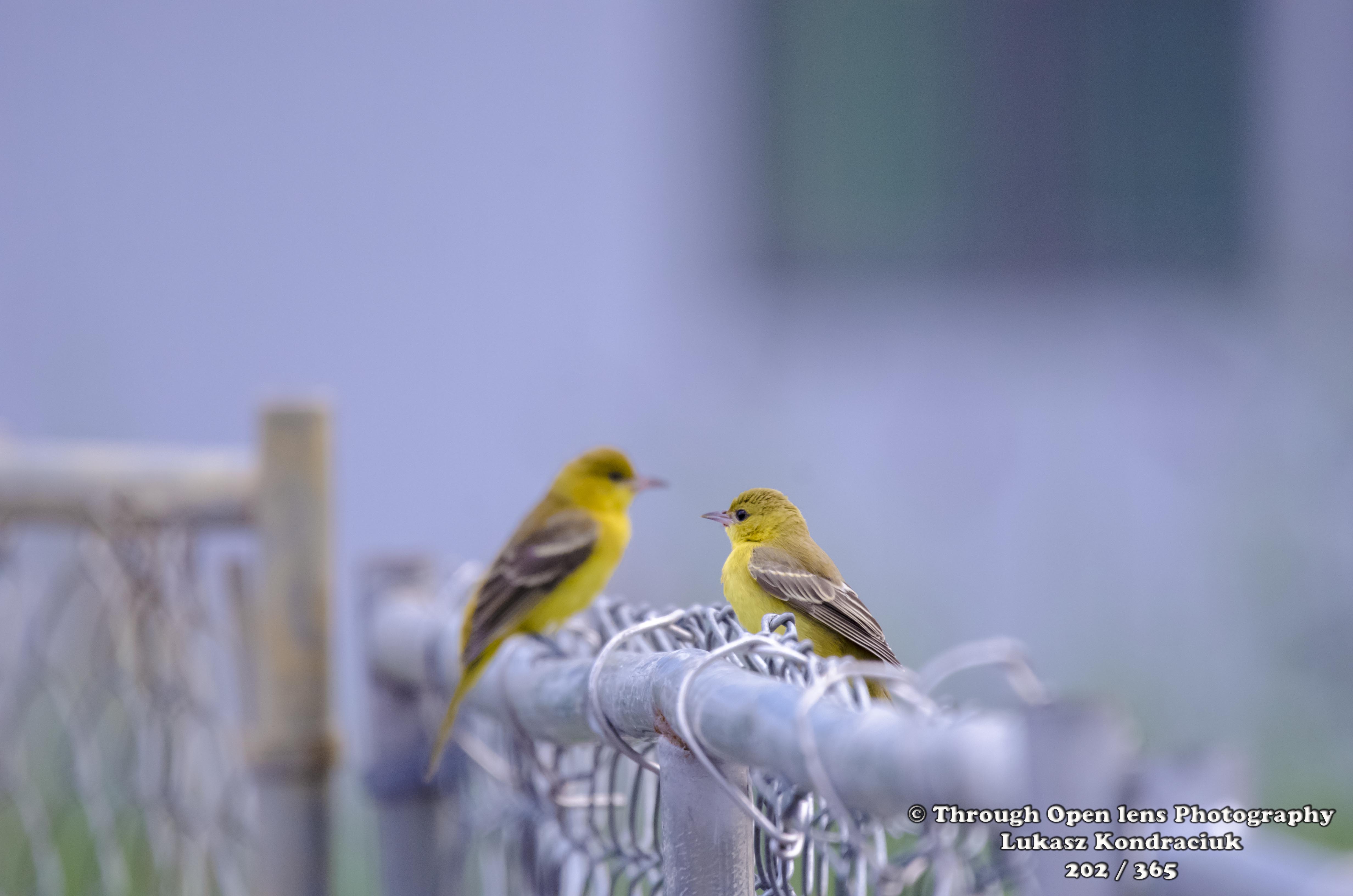
Love Your Neighbor As Yourself But Don’t Take Down The Fence!

yellow warbler 1

F/6.3, 1/125, ISO 1400.

Yellow Warblers

Day 202 / 365

A man walked into the office of a talent agent on the 72nd floor of a skyscraper. “I’ve got a great act,” he tells the agent. “Just watch this.” The man opens the window, perches on the ledge and starts flapping his arms. Then he pushes off and flys around outside the window executing intricate aerobatic maneuvers. Having finished his demonstration, the man flaps in to a perfect landing on the window sill and steps back into the agent’s office. “What do you think of that?” he asked the agent. The talent agent yawned. That’s it? Bird imitations?”

Interesting Fact: Long distance migrant. Yellow Warblers breed across central and northern North America and spend winters in Central America and northern South America. They migrate earlier than most other warblers in both spring and fall. Like many other migrating songbirds, Yellow Warblers from eastern North America fly across the Gulf of Mexico in a single nonstop journey; some Yellow Warblers in fall take an overland route around the Gulf. ( http://www.allaboutbirds.org/guide/Yellow_Warbler/lifehistory )

Photography Can Blow Your Mind

photography blow your mind

F/4.0, 1/60, ISO 560, Photoshop CS6.

Day 200 / 365

A photographer took a self portrait in a park.
Due to lighting conditions he used the built in flash on the camera.
He quickly got arrested for flashing and exposing himself in the park.

Interesting Fact: The first ever color photograph was shot in 1861 by a Scott physicist by the name of James Clark Maxwell. He used yellow, blue and red filters separately to photograph a tartan ribbon and then combined the three images to create the final color photograph. [National Geographic] ( http://factslegend.org/30-interesting-photography-facts/2/ )

I Have A Way To Brighten Up Your Day!

Lampshade

F/4.5, 1/60, ISO 100.

Day 176 / 365

What did the lampshade say to the other lampshade?
Nothing they sat in silence

Interesting Fact: Lampshades were first used on public lanterns, in Europe’s Italy and Paris, in the late 1700s, to focus light downwards. ( http://tenrandomfacts.com/lampshade/ )

Finally Got it!

idea

F/ 5.6, 1/320, ISO 640, Photoshop CS6.

Day 175 / 365

A man rides in on Friday, stays two nights three days and then leaves on Friday.

How is that possible?

His horse was named Friday.


Interesting Fact: In 1850 an English physicist named Joseph Wilson Swan created a “light bulb” by enclosing carbonized paper filaments in an evacuated glass bulb. And by 1860 he had a working prototype, but the lack of a good vacuum and an adequate supply of electricity resulted in a bulb whose lifetime was much too short to be considered an effective prodcer of light. However, in the 1870’s better vacuum pumps became available and Swan continued experiments on light bulbs. In 1878, Swan developed a longer lasting light bulb using a treated cotton thread that also removed the problem of early bulb blackening. ( http://www.bulbs.com/learning/history.aspx )