Hope They Have All The Permits

Red-Necked Grebes

F/5.6, 1/320, ISO 100.

Red-Necked Grebe

The homeowner was delighted with the way the painter had done all the work on his house.

“You did a great job.” he said and handed the man a check.

“Also, in order to thank-you, here’s an extra $80 to take the missus out to dinner and a movie.”

Later that night, the doorbell rang and it was the painter.

Thinking the painter had forgotten something the man asked, “What’s the matter, did you forget something?”

“Nope.” replied the painter. “I’m just here to take your missus out to dinner and a movie like you asked.”

Interesting Fact: Like other grebes, the Red-necked Grebe ingests large quantities of its own feathers. Feathers remain in the bird’s stomach. The function of feathers in the stomach is unknown. One hypothesis suggests that the feathers help protect the lower digestive tract from bones and other hard, indigestible material. ( https://www.allaboutbirds.org/guide/Red-necked_Grebe/lifehistory )


Lifeguard Is On Duty!

Canada Goose And Goslings

F/5.6, 1/500, ISO 200.

Canada Goose And Goslings 

Why won’t they allow elephants in public swimming pools?

Because they might let down their trunks.

Interesting Fact: Individual Canada Geese from most populations make annual northward migrations after breeding. Nonbreeding geese, or those that lost nests early in the breeding season, may move anywhere from several kilometers to more than 1500 km northward. There they take advantage of vegetation in an earlier state of growth to fuel their molt. Even members of “resident” populations, which do not migrate southward in winter, will move north in late summer to molt.  ( https://www.allaboutbirds.org/guide/Canada_Goose/lifehistory )

A Little Birdie Told Me…

Chipping Sparrow

F/7.1, 1/200, ISO 500.

Chipping Sparrow 

Bacon and eggs walk into a bar and order a beer, the bartender says sorry, we don’t serve breakfast.

Interesting Fact: Chipping Sparrows typically build their nests low in a shrub or tree, but every once in a while they get creative. People have found their nests among hanging strands of chili peppers, on an old-fashioned mower inside a tool shed, and on a hanging basket filled with moss. ( https://www.allaboutbirds.org/guide/Chipping_Sparrow/lifehistory )

Hey What’s Going On Down There, Keep It Down!

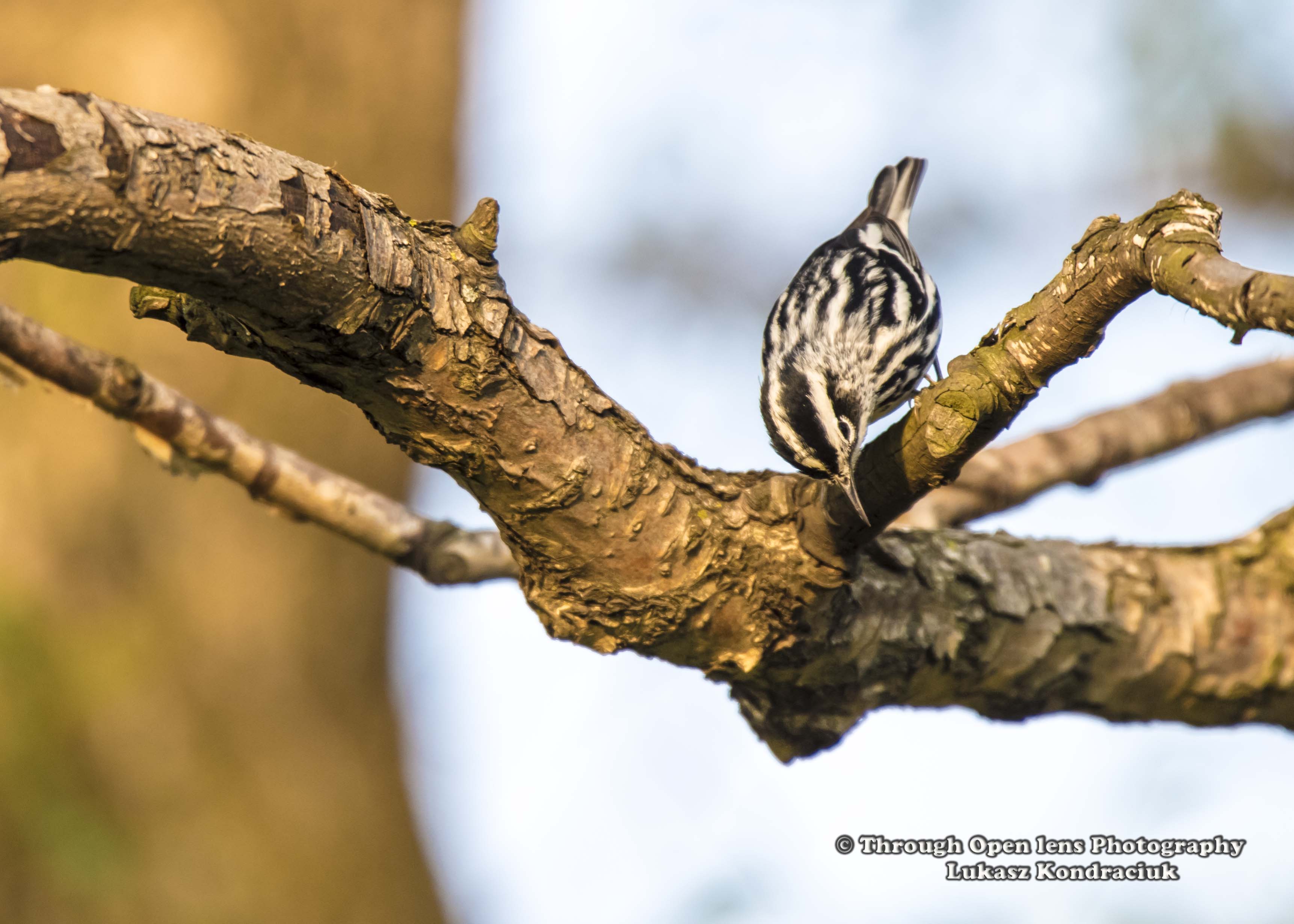
Black and white Warbler

F/7.1, 1/200, ISO 320.

Black-and-white Warbler

A couple of hunters are out in the woods when one of them falls to the ground. He doesn’t seem to be breathing, his eyes are rolled back in his head. The other guy whips out his cell phone and calls the emergency services. He gasps to the operator: “My friend is dead! What can I do?”

The operator, in a calm soothing voice says: “Just take it easy. I can help. First, let’s make sure he’s dead.” There is a silence, then a shot is heard.

The guy’s voice comes back on the line. He says: “OK, now what?

Interesting Fact: As warblers go, Black-and-white Warblers are combative: they’ll attack and fight with other species that enter their territory, including Black-capped Chickadees, Red-breasted Nuthatches, and American Redstarts. This aggressive behavior extends to the wintering grounds, where they defend territories and when feeding in mixed flocks will drive other Black-and-white Warblers away. ( https://www.allaboutbirds.org/guide/Black-and-white_Warbler/lifehistory )


I Am Not Yelling! This Is How I Talk!

Brown-headed Cowbird ( Female )

F/9.0, 1/320, ISO 320.

Brown-headed Cowbird ( Female )

A man inserted an ‘ad’ in the classifieds: “Wife wanted.” Next day he received a hundred letters.

They all said the same thing: “You can have mine.”

Interesting Fact: Social relationships are difficult to figure out in birds that do not build nests, but male and female Brown-headed Cowbirds are not monogamous. Genetic analyses show that males and females have several different mates within a single season. ( https://www.allaboutbirds.org/guide/Brown-headed_Cowbird/lifehistory )

Is This What They Mean By Catching The Wave?

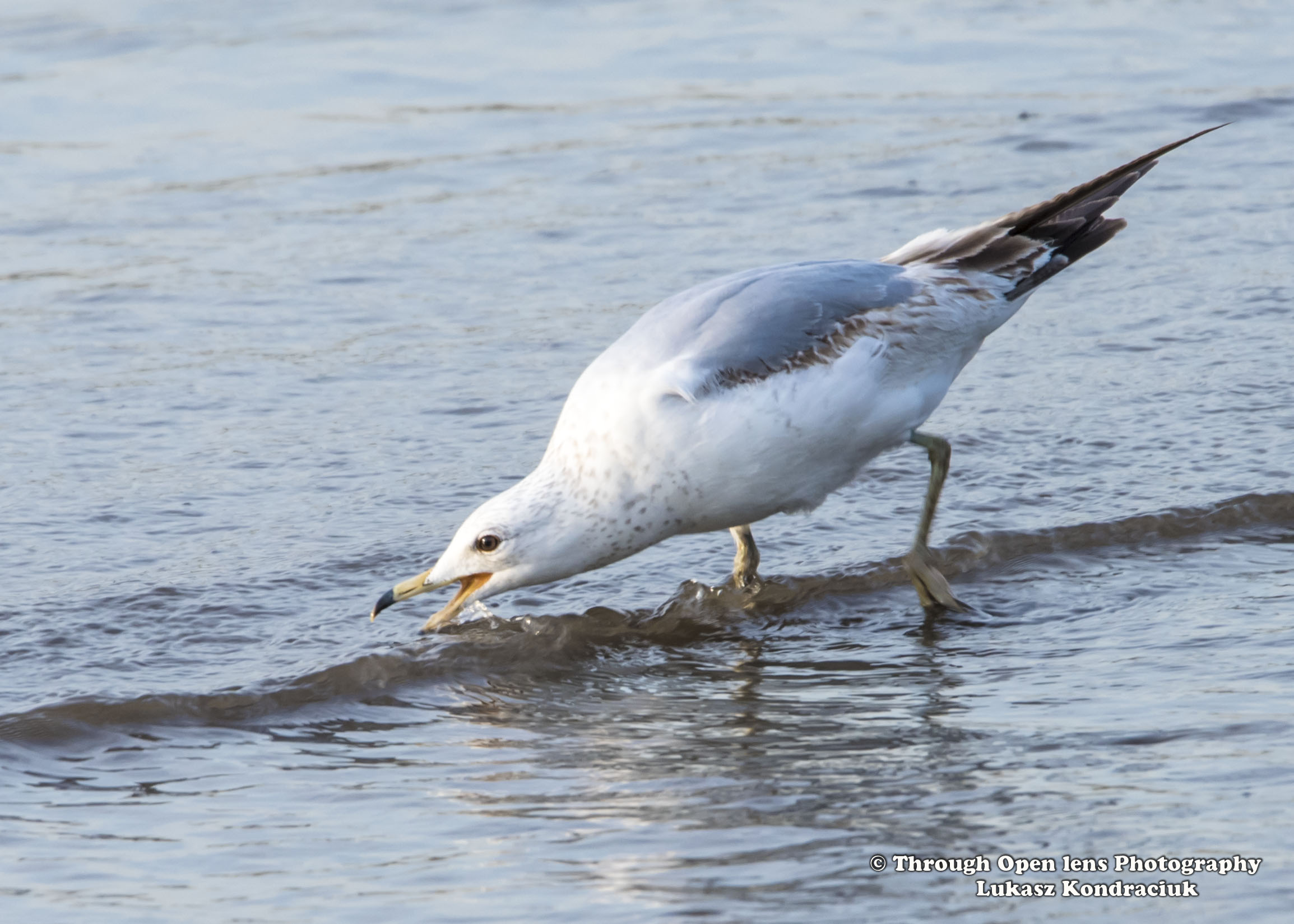
Ring-billed Gull 1

F/ 8.0, 1/250, ISO 320.

Ring-billed Gull

What do you call a man with seagull on his head?

Cliff

Interesting Fact: Migrating Ring-billed Gulls apparently use a built-in compass to navigate. When tested at only two days of age, chicks showed a preference for magnetic bearings that would take them in the appropriate direction for their fall migration. The gulls also rely on landmarks and high-altitude winds to provide directional cues. ( https://www.allaboutbirds.org/guide/Ring-billed_Gull/lifehistory )

So They Say Orange Is The New Black, What If I’m Both?!

Eastern Towhee

F/6.3, 1/40, ISO 400.

Eastern Towhee

What did the bird say after his cage fell apart?

“Cheap, cheap!”

Interesting Fact: Eastern Towhees are common victims of the parasitic Brown-headed Cowbird. Female cowbirds lay eggs in towhee nests, then leave the birds to raise their cowbird young. In some areas cowbirds lay eggs in more than half of all towhee nests. Towhees, unlike some other birds, show no ability to recognize or remove the imposter’s eggs. Female cowbirds typically take out a towhee egg when laying their own, making the swap still harder to notice. ( https://www.allaboutbirds.org/guide/Eastern_Towhee/lifehistory )


Just Got My Hair Did!

This Post Is Dedicated To Amber Hope It Will Bring A Smile To Your Face!

Red-breasted Merganser Female

F/9.0, 1/320, ISO 200.

Red-breasted Merganser ( Female )

Three guys, stranded on a desert island, find a magic lantern containing a genie, who grants them each one wish. The first guy wishes he was off the island and back home. The second guy wishes the same. The third guy says “I’m lonely. I wish my friends were back here.”

Interesting Fact: Red-breasted Merganser: Breeds in Alaska and across northern Canada to Newfoundland and south to the Great Lakes. Spends winters chiefly along the coasts from Alaska south to northern Mexico, from Maritime Provinces south to Florida, and along the Gulf Coast. Preferred habitat for breeding includes wooded lakes and tundra ponds; found mainly on saltwater during winter. ( http://identify.whatbird.com/obj/115/overview/Red-breasted_Merganser.aspx )

The Goose Is Loose!

Brant 1

F/22.0, 1/30, ISO 125.

Brant

What did the goose say when the pillowmaker knocked at his door?
“I’ll be down in a minute.”

Interesting Fact: They have the shortest tail of any goose. ( http://identify.whatbird.com/obj/290/_/Brant.aspx )

You Can’t See Me I’m Camouflage!

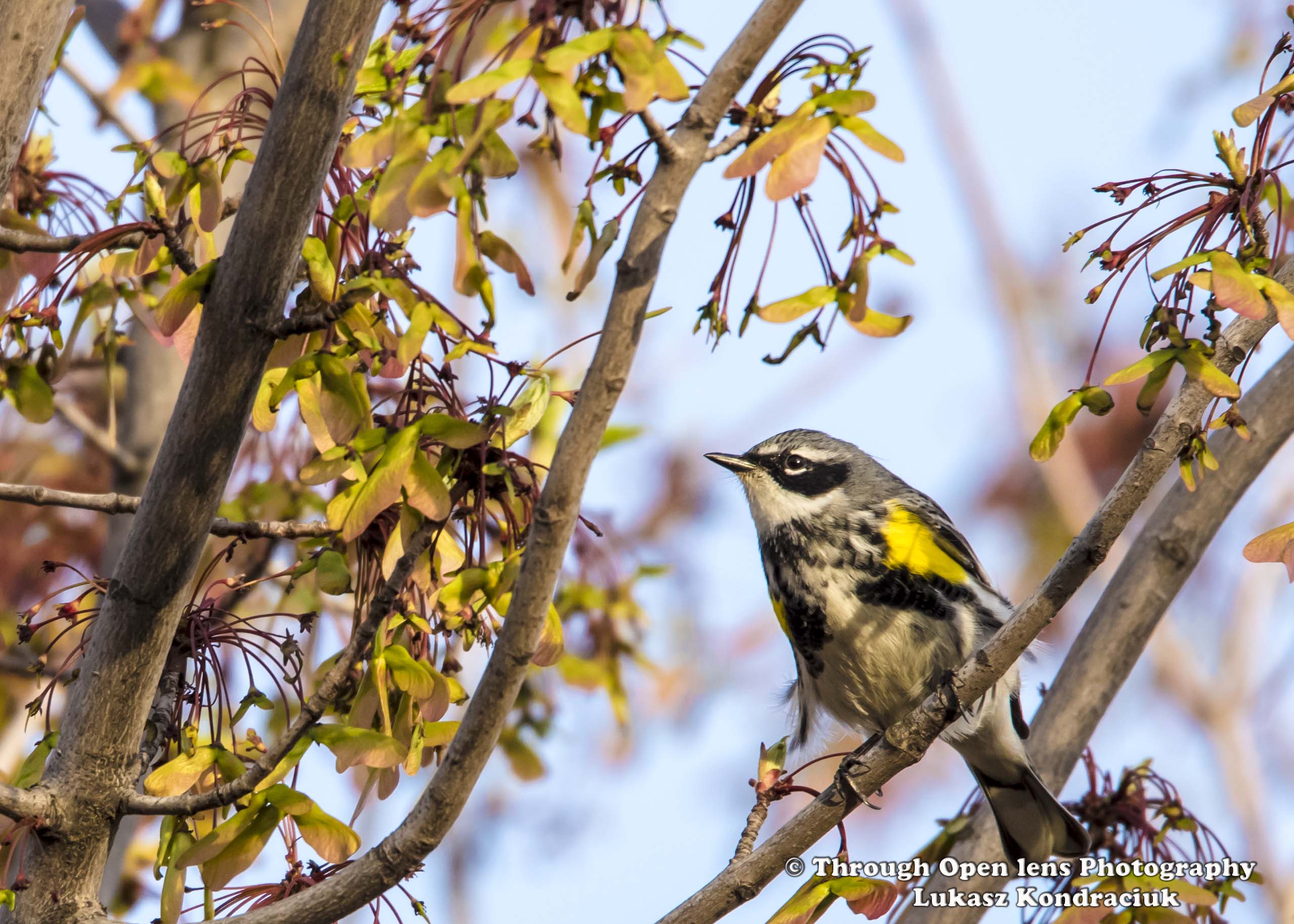
Yellow-Rumped Warbler

F/9.0, 1/320, ISO 400.

Yellow-Rumped Warbler

A magician was working on a cruise ship in the Caribbean.
The audience would be different each week, so the magician
allowed himself to do the same tricks over and over again.
There was only one problem:  The captain’s parrot saw the
shows each week and began to understand how the magician did
every trick.  Once he understood he started shouting in the
middle of the show:
“Look, it’s not the same hat”
“Look, he is hiding the flowers under the table”
“Hey, why are all the cards the Ace of Spades ?”
The magician was furious but couldn’t do anything, it was,
after all, the captain’s parrot.
One day the ship had an accident and sank.  The magician
found himself on a piece of wood in the middle of the ocean
with the parrot, of course.  They stared at each other with
hate, but did not utter a word.
This went on for a day and another and another.
After a week the parrot said:  “OK, I give up.  Where’s
the boat?”

Interesting Fact: The Yellow-rumped Warbler is the only warbler able to digest the waxes found in bayberries and wax myrtles. Its ability to use these fruits allows it to winter farther north than other warblers, sometimes as far north as Newfoundland.  ( https://www.allaboutbirds.org/guide/Yellow-rumped_Warbler/lifehistory )