Damn I Look Good!

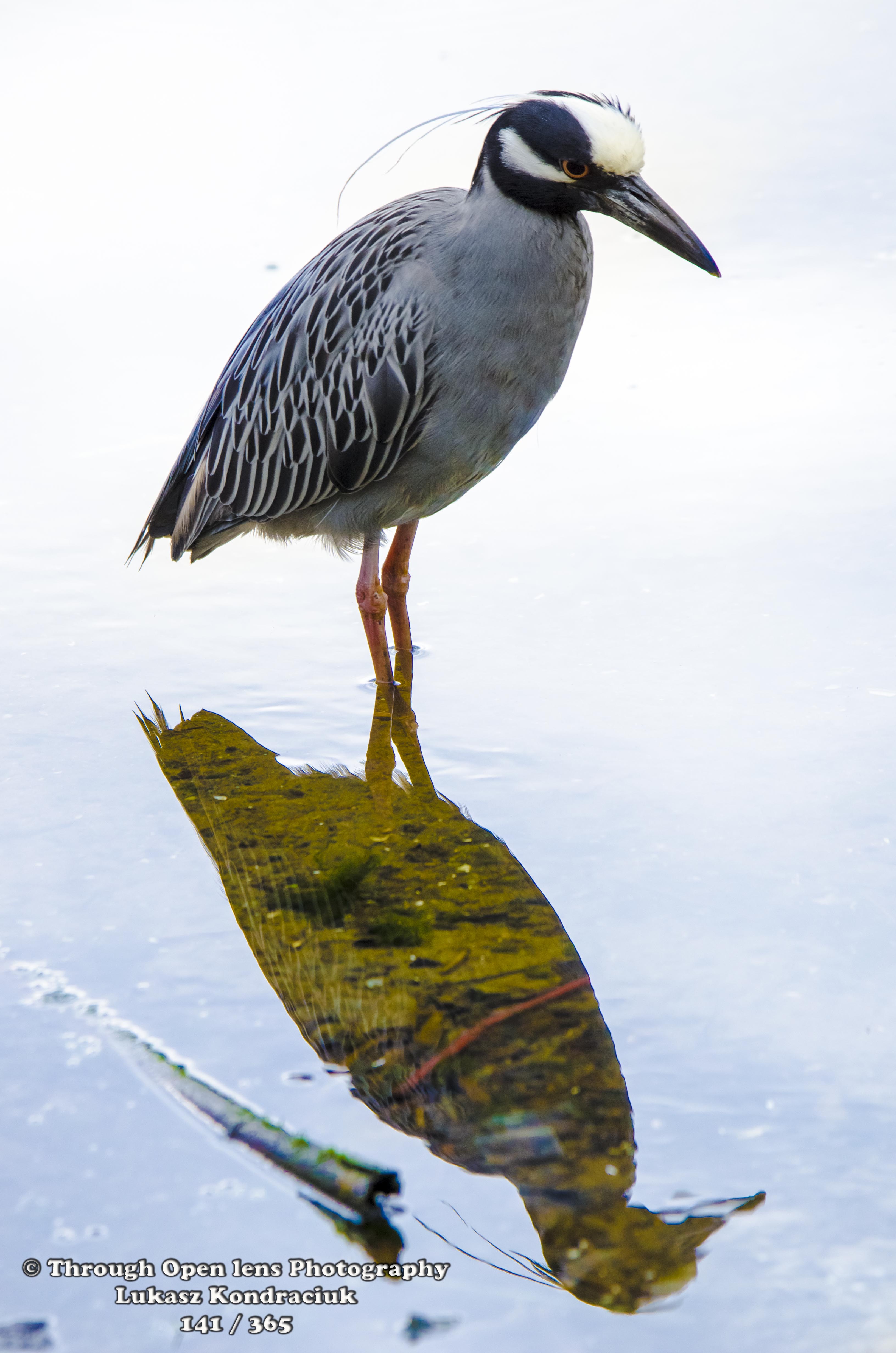
Yellow-crowned Night Heron

F/6.0, 1/1000, ISO 450.

Yellow-crowned Night Heron

Day 141 / 365

What do you call a heron at the North Pole?
Lost!

Interesting Fact:  Occasionally it will prey on small turtles; its stomach secretes an acid capable of dissolving the shells. ( http://identify.whatbird.com/obj/53/_/Yellow-crowned_Night-Heron.aspx )

You Put Them On The Brightness Is Gone!

sunglasses

F/7.1, 1/60, ISO 250, Photoshop CS6.

Day 138 / 365

Sunglasses allowing you to stare at people without getting caught. It’s like Facebook in real life.    🙂

Interesting Fact: It is said that the Roman emperor Nero liked to watch gladiator fights with emeralds. These, however, appear to have worked rather like mirrors.[5] Sunglasses made from flat panes of smoky quartz, which offered no corrective powers but did protect the eyes from glare were used in China in the 12th century or possibly earlier. Ancient documents describe the use of such crystal sunglasses by judges in ancient Chinese courts to conceal their facial expressions while questioning witnesses. ( http://en.wikipedia.org/wiki/Sunglasses )

“Make Sure You Get My Good Side.”

Bananaquit

F/6.3, 1/50, ISO 1600.

Bananaquit

Day 134 /365

Why do birds fly south for the winter?
Because it’s too far to walk!

Interesting Fact: It uses its sharp beak to pierce a flower from the side, taking the nectar without actually pollinating the plant. They cannot hover like a hummingbird, and must always perch while feeding. ( http://identify.whatbird.com/obj/1014/overview/Bananaquit.aspx )

Yummy!!!!

Greater Yellowlegs

F/6.3, 1/250, ISO 1600.

Greater Yellowlegs

Day 127 / 365

Where do birds meet for coffee ? 
In a nest-cafe !

Interesting Fact: Although the Greater Yellowlegs is common and widespread, its low densities and tendency to breed in inhospitable, mosquito-ridden muskegs make it one of the least-studied shorebirds on the continent. ( http://identify.whatbird.com/obj/252/_/Greater_Yellowlegs.aspx )

Beautiful Flowers, But They Smell Terrible.

tree flowers

F/6.3, 1/200, ISO 125.

Day 119 / 356

Why is the letter A like a flower?
A bee (B) comes after it!

Interesting Fact: The oldest living organism on Earth is believed to be the “Pando” colony of Quaking Aspen (Populus tremuloides) in Utah, also known as the Trembling Giant. The colony of trees covers some 41.7 hectares (103 acres) and is estimated to weigh nearly 6,000,000 kilograms (6,600 tons), making it also the heaviest known organism. Being a clonal colony, the tree “trunks” all share identical genetic makeup. It is estimated that parts of the inter-connected root stock that links the colony together is in excess of 80,000 years old! ( http://landarchs.com/8-amazing-facts-trees-didnt-know/ )

WAKE UP!!!

wake up

F/16.0, 1/60, ISO 250.

Day 115 / 365

Wouldn’t you like to payback your alarm clock?

Interesting Fact: Some people think that an alarm clock was first made in Germany. That alarm clock was made in the 1400’s. It was a clock that hung on the wall. The clock was made of iron with a bronze bell. It was very heavy. Other people think that the alarm clock was invented in Turkey. In 1559, a scientist named Taqi Al-Din invented a special clock.  ( http://www.facts4me.com/disp_subject.php?s_id=995 )

Happy Earth Day!

Cape May Warbler

F/6.3, 1/80, ISO 1600.

Cape May Warbler

Day 112 /365

Why did the little bird get in trouble at school?
Because he was caught tweeting on a test.

Interesting Fact:  The tongue of the Cape May Warbler is unique among warblers. It is curled and semitubular, and is used to collect nectar during winter. ( http://www.allaboutbirds.org/guide/Cape_May_Warbler/lifehistory )

Guess who? Wha ha hahaha! Wha ha hahaha! Hahahahahahahaha!

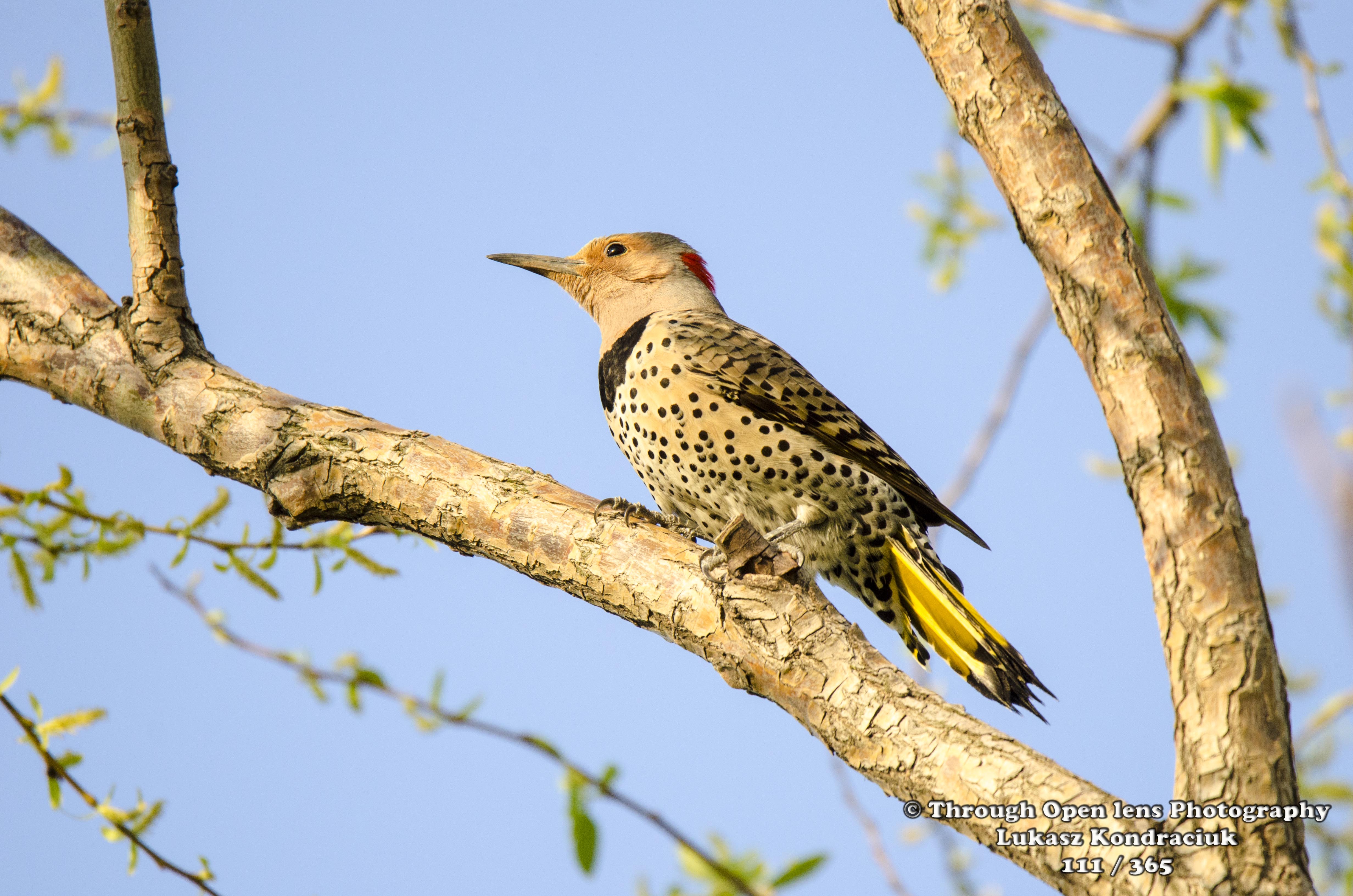
Northern Flicker woodpacker

F/6.3, 1/1000, ISO 800.

Northern Flicker

Day 111 / 365

What do you call a woodpecker that lost his beak?

A Head-Banger.

Interesting Fact: Although it can climb up the trunks of trees and hammer on wood like other woodpeckers, the Northern Flicker prefers to find food on the ground. Ants are its main food, and the flicker digs in the dirt to find them. It uses its long barbed tongue to lap up the ants. ( http://www.allaboutbirds.org/guide/Northern_Flicker/lifehistory )

Hungry Bag

lunch bag

F/3.8, 1/25, ISO250.

Day 110 / 365

What if your lunch bag ate your snacks?

Interesting Fact: The first paper bag machine was patented by Francis Wolle in 1852. Margaret E. Knight (1838-1914) was an employee in a paper bag factory when she invented a new machine part to make square bottoms for paper bags. Knight can be considered the mother of the grocery bag; she founded the Eastern Paper Bag Company in 1870. On 20 February 1872, Luther Crowell also patented a machine that manufactured paper bags. ( http://en.wikipedia.org/wiki/Paper_bag#History )

“So, What Are We Looking At ?”

Brant goose

F/6.3, 1/1000, ISO 450.

Brant Goose

Day 109 / 365

What does a farmer call an escaped bird?
A loose goose.

Interesting Fact: Brant goose possess a highly developed salt gland that allows them to drink salt water. ( http://identify.whatbird.com/obj/290/overview/Brant.aspx )