I Am Not Yelling! This Is How I Talk!

Brown-headed Cowbird ( Female )

F/9.0, 1/320, ISO 320.

Brown-headed Cowbird ( Female )

A man inserted an ‘ad’ in the classifieds: “Wife wanted.” Next day he received a hundred letters.

They all said the same thing: “You can have mine.”

Interesting Fact: Social relationships are difficult to figure out in birds that do not build nests, but male and female Brown-headed Cowbirds are not monogamous. Genetic analyses show that males and females have several different mates within a single season. ( https://www.allaboutbirds.org/guide/Brown-headed_Cowbird/lifehistory )

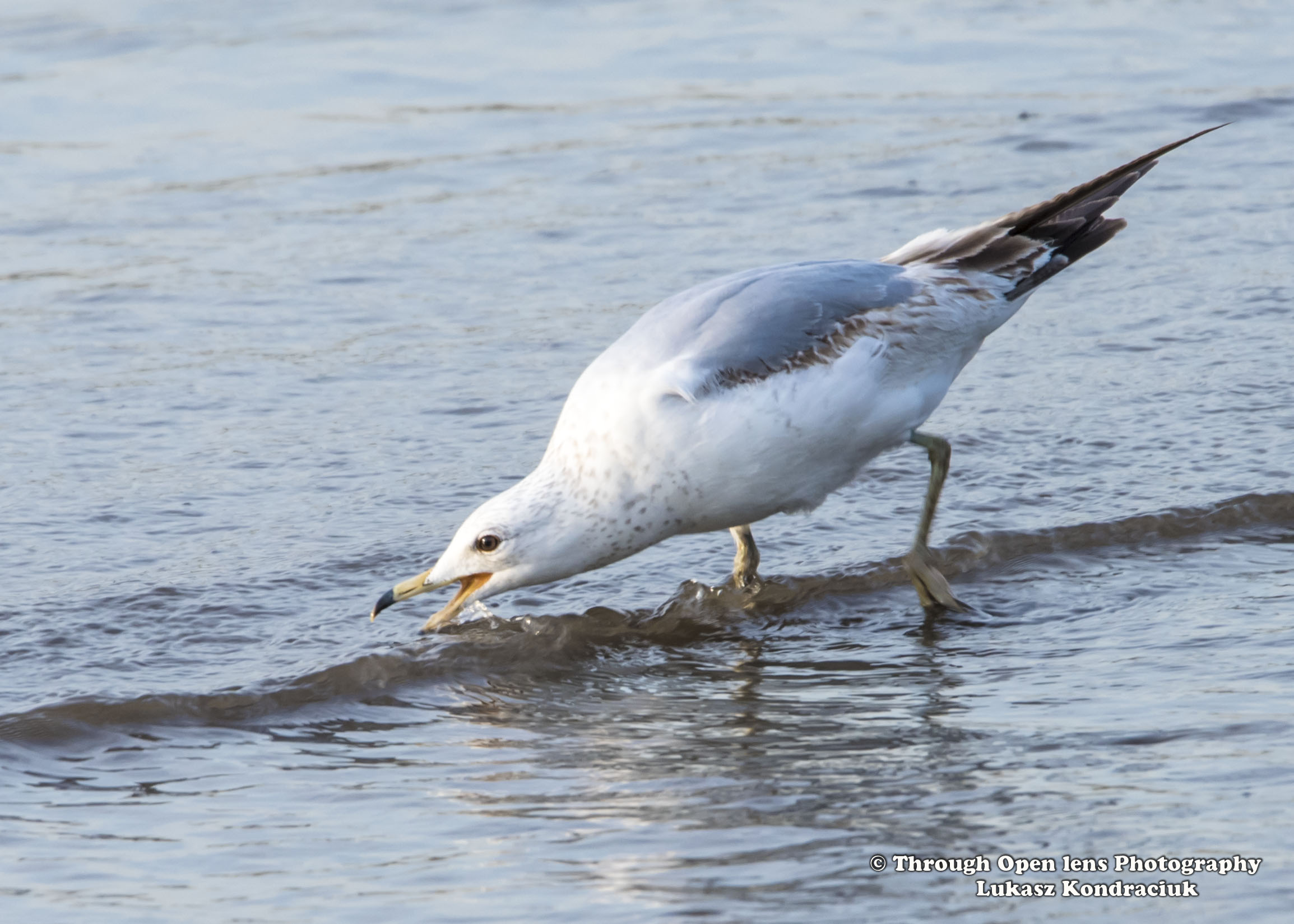
Is This What They Mean By Catching The Wave?

Ring-billed Gull 1

F/ 8.0, 1/250, ISO 320.

Ring-billed Gull

What do you call a man with seagull on his head?

Cliff

Interesting Fact: Migrating Ring-billed Gulls apparently use a built-in compass to navigate. When tested at only two days of age, chicks showed a preference for magnetic bearings that would take them in the appropriate direction for their fall migration. The gulls also rely on landmarks and high-altitude winds to provide directional cues. ( https://www.allaboutbirds.org/guide/Ring-billed_Gull/lifehistory )

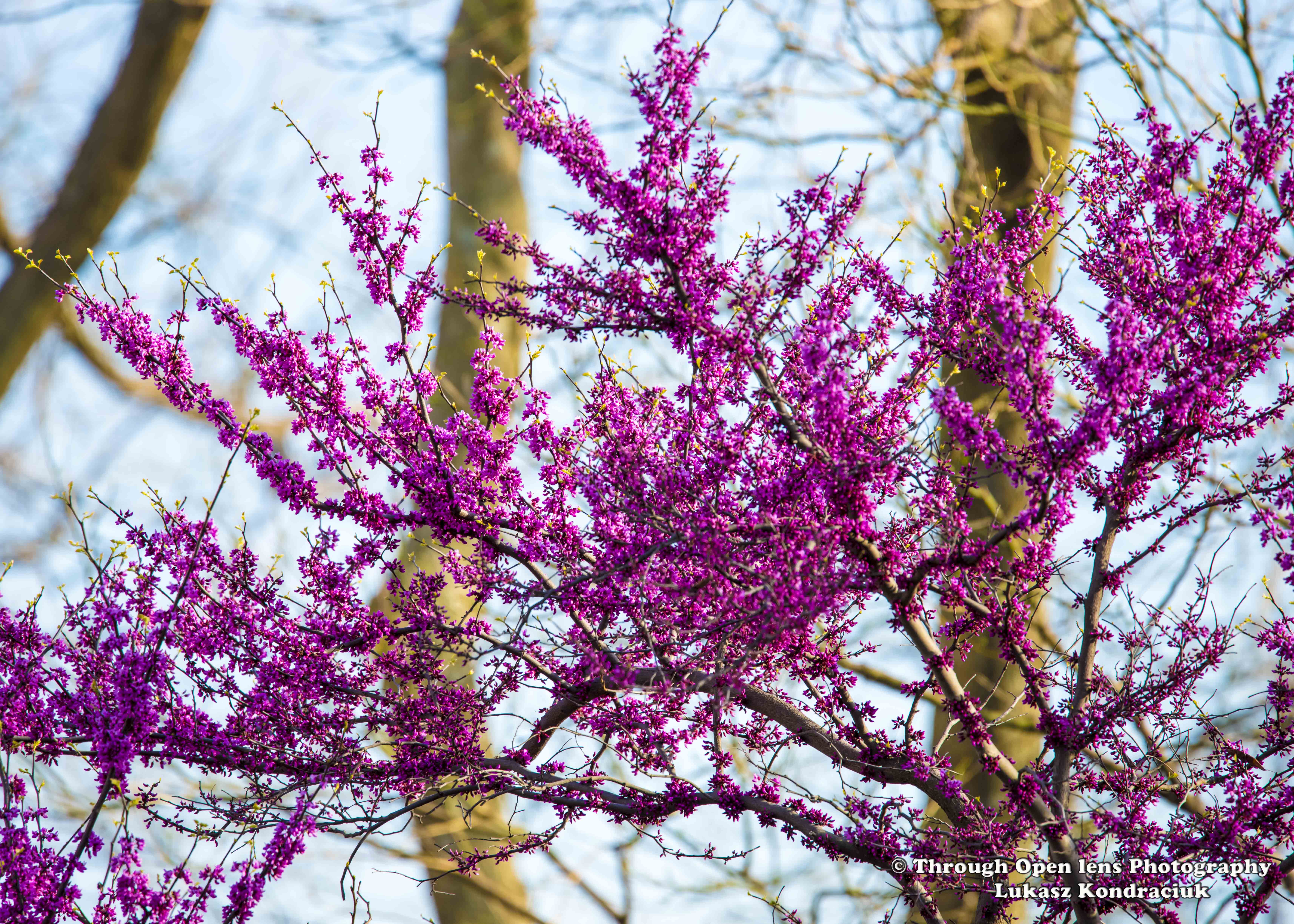
Spring Is In The Air Everywhere I Look Around

Spring Flowers

F/8.0, 1/250, ISO 250.

What did the tree wear to the pool party?

Swimming trunks!

Interesting Fact: In spring, the Earth‘s axis is tilted toward the sun, increasing the number of daylight hours and bringing warmer weather that causes plants to bring forth new growth.  ( http://www.22facts.com/spring/ )

So They Say Orange Is The New Black, What If I’m Both?!

Eastern Towhee

F/6.3, 1/40, ISO 400.

Eastern Towhee

What did the bird say after his cage fell apart?

“Cheap, cheap!”

Interesting Fact: Eastern Towhees are common victims of the parasitic Brown-headed Cowbird. Female cowbirds lay eggs in towhee nests, then leave the birds to raise their cowbird young. In some areas cowbirds lay eggs in more than half of all towhee nests. Towhees, unlike some other birds, show no ability to recognize or remove the imposter’s eggs. Female cowbirds typically take out a towhee egg when laying their own, making the swap still harder to notice. ( https://www.allaboutbirds.org/guide/Eastern_Towhee/lifehistory )


Just Got My Hair Did!

This Post Is Dedicated To Amber Hope It Will Bring A Smile To Your Face!

Red-breasted Merganser Female

F/9.0, 1/320, ISO 200.

Red-breasted Merganser ( Female )

Three guys, stranded on a desert island, find a magic lantern containing a genie, who grants them each one wish. The first guy wishes he was off the island and back home. The second guy wishes the same. The third guy says “I’m lonely. I wish my friends were back here.”

Interesting Fact: Red-breasted Merganser: Breeds in Alaska and across northern Canada to Newfoundland and south to the Great Lakes. Spends winters chiefly along the coasts from Alaska south to northern Mexico, from Maritime Provinces south to Florida, and along the Gulf Coast. Preferred habitat for breeding includes wooded lakes and tundra ponds; found mainly on saltwater during winter. ( http://identify.whatbird.com/obj/115/overview/Red-breasted_Merganser.aspx )

The Goose Is Loose!

Brant 1

F/22.0, 1/30, ISO 125.

Brant

What did the goose say when the pillowmaker knocked at his door?
“I’ll be down in a minute.”

Interesting Fact: They have the shortest tail of any goose. ( http://identify.whatbird.com/obj/290/_/Brant.aspx )

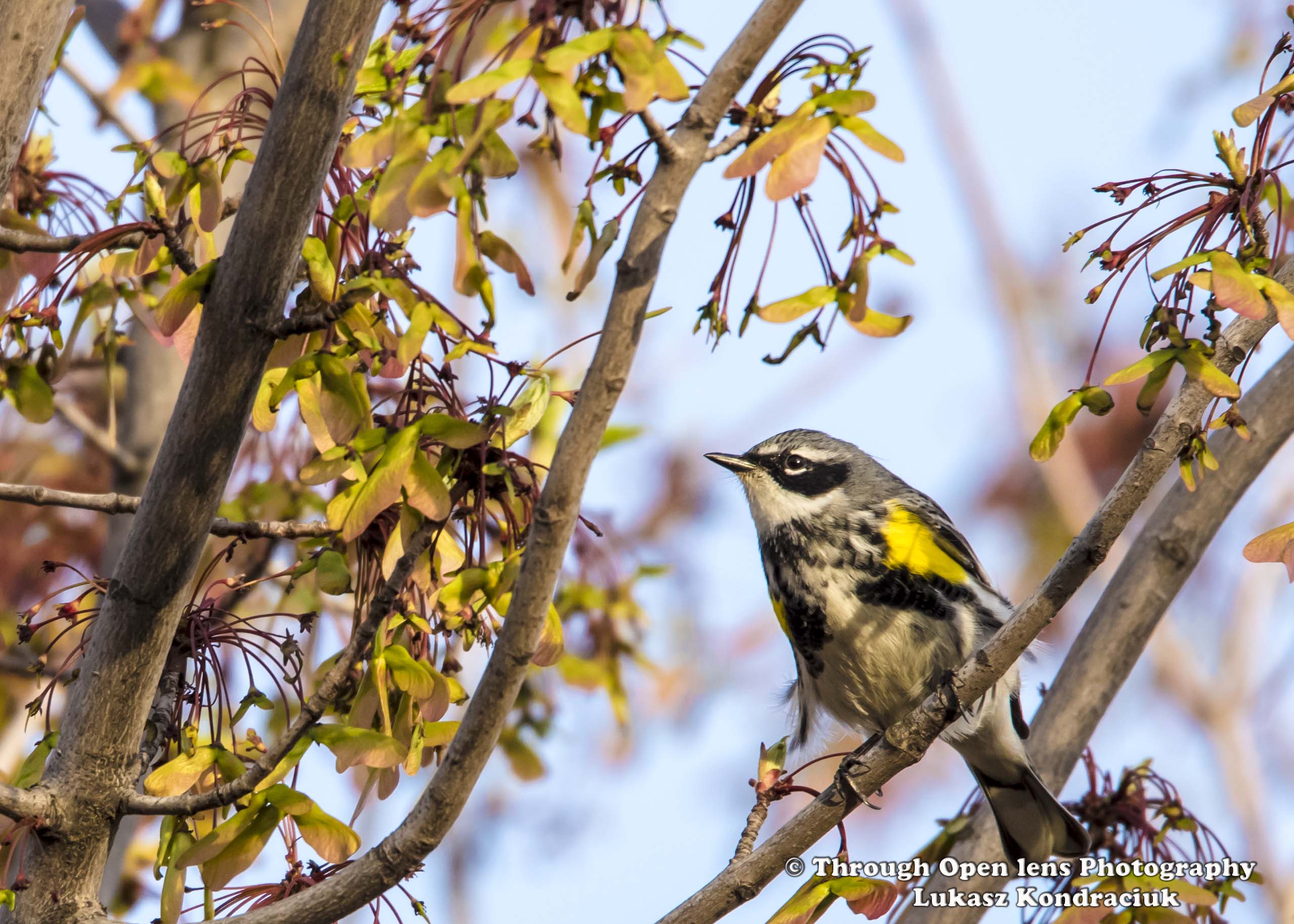
You Can’t See Me I’m Camouflage!

Yellow-Rumped Warbler

F/9.0, 1/320, ISO 400.

Yellow-Rumped Warbler

A magician was working on a cruise ship in the Caribbean.
The audience would be different each week, so the magician
allowed himself to do the same tricks over and over again.
There was only one problem:  The captain’s parrot saw the
shows each week and began to understand how the magician did
every trick.  Once he understood he started shouting in the
middle of the show:
“Look, it’s not the same hat”
“Look, he is hiding the flowers under the table”
“Hey, why are all the cards the Ace of Spades ?”
The magician was furious but couldn’t do anything, it was,
after all, the captain’s parrot.
One day the ship had an accident and sank.  The magician
found himself on a piece of wood in the middle of the ocean
with the parrot, of course.  They stared at each other with
hate, but did not utter a word.
This went on for a day and another and another.
After a week the parrot said:  “OK, I give up.  Where’s
the boat?”

Interesting Fact: The Yellow-rumped Warbler is the only warbler able to digest the waxes found in bayberries and wax myrtles. Its ability to use these fruits allows it to winter farther north than other warblers, sometimes as far north as Newfoundland.  ( https://www.allaboutbirds.org/guide/Yellow-rumped_Warbler/lifehistory )

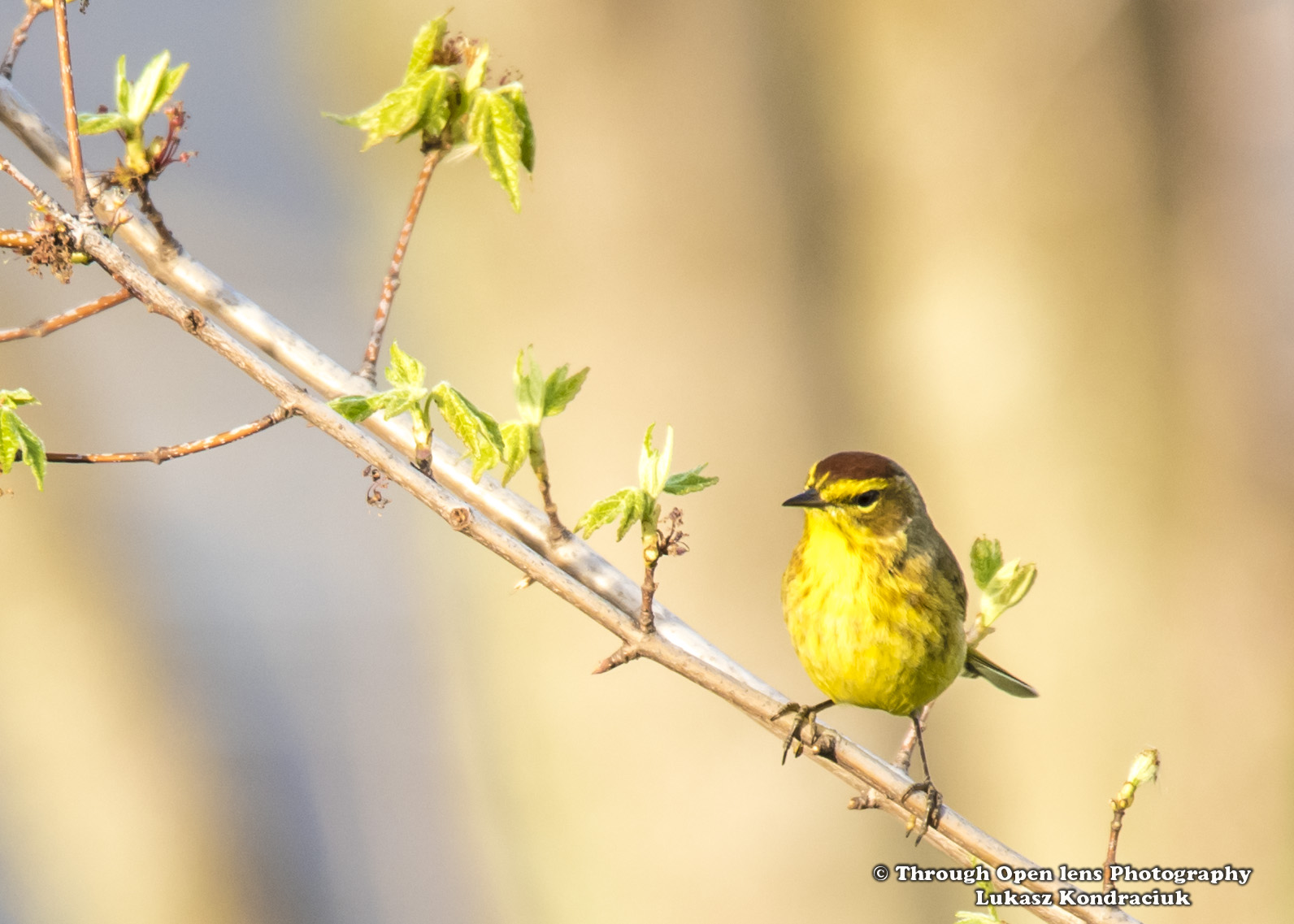
Yellow Means Slow Down And Watch Me

Palm Warbler

F/8.0, 1/200, ISO 320.

Palm Warbler

A male and a female pigeon made a date to meet on a ledge outside
the 14th floor of the Chrysler Building.  The male was there on time,
but the female arrived an hour late.
“Where were you?” he cried.  “I was worried sick.”
“It was such a nice day,” she explained, “I decided to walk.”

Interesting Fact: The Palm Warbler is found in two different forms. Birds that breed in the western part of the range are duller, and have whitish bellies. Those breeding in the eastern part of the range are entirely yellow underneath. ( https://www.allaboutbirds.org/guide/Palm_Warbler/lifehistory )

Slow Down This Is A Neighborhood Not A Racetrack!

Snail

F/5.6, 1/60, ISO 800.

Snail

What do you do when two snails have a fight?

Leave them to slug it out!

Interesting Fact: Most snails have thousands of microscopic tooth-like structures located on a ribbon-like tongue called a radula. The radula works like a file, ripping food into small pieces. Many snails are herbivorous, eating plants or rasping algae from surfaces with their radulae, though a few land species and many marine species are omnivores or predatory carnivores.  ( https://en.wikipedia.org/wiki/Snail#Overview )


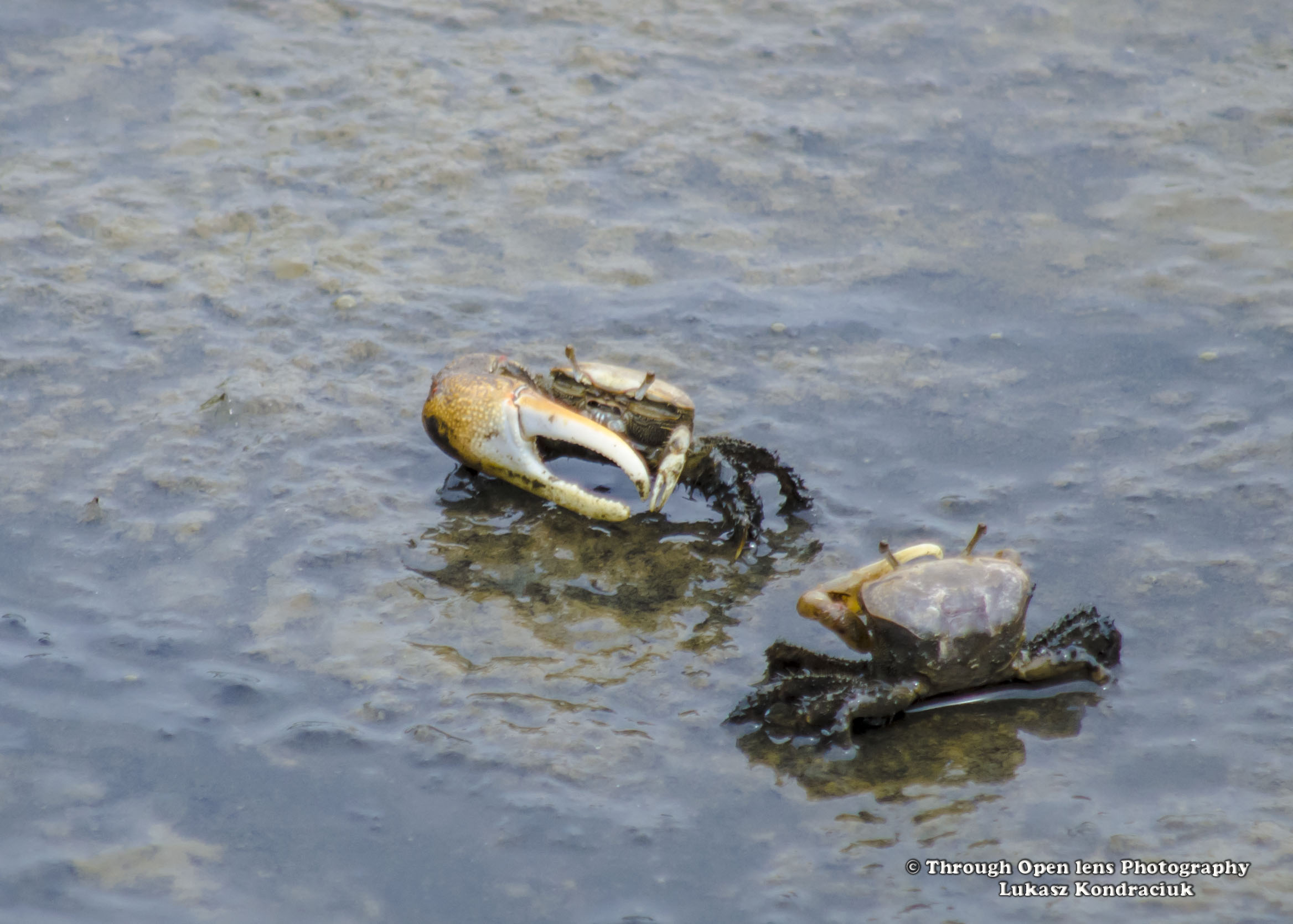
Welcome To The Thunderdome!

Fiddler crabs

F/5.6, 1/500, ISO 220.

Fiddler crabs

A lonely female crab was walking down the beach one evening when she noticed a male crab coming toward her—but he was walking straight and not sideways!
Impressed by his talent, she decided to marry him immediately.
The next morning she noticed him walking sideways like any ordinary crab! She asked, “What happened? Yesterday you were able to walk straight!”
He answered “What?! I can’t get that drunk every day!”.

Interesting Fact: Male versus male competition also occurs as fighting with the major claws.[9] If a male loses his larger claw, the smaller one will begin to grow larger and the lost claw will regenerate into a new (small) claw. For at least some species of fiddler crabs, however, the small claw remains small, while the larger claw regenerates over a period of several molts, being about half its former size after the first molt. The female fiddler carries her eggs in a mass on the underside of her body. She remains in her burrow during a two week gestation period, after which she ventures out to release her eggs into the receding tide. The larvae remain planktonic for a further two weeks.  ( https://en.wikipedia.org/wiki/Fiddler_crab#Life_cycle )