Pink Is In!

American Flamingo

F/ 5.0. 1/500, ISO 900.

American Flamingo

Day 131 /365

American Flamingo1

Why does a flamingo stand on one leg?
Because if he lifted that leg off the ground he would fall down!

Interesting Fact: In ancient Rome, flamingo tongues were regarded as a delicacy. As recently as 30 years ago, flamingos and their eggs were eaten by people in parts of southern Europe and the Caribbean. ( http://identify.whatbird.com/obj/940/overview/American_Flamingo.aspx )

Island Duck Will Attack!

White-cheeked Pintail

F/5.0, 1/250, ISO 720.

White-cheeked Pintail

Day 130 / 365

What did Detective Duck say to his partner?
“Let’s quack this case!”

Interesting Fact:  White-cheeked Pintail: This species is a native of the Caribbean Islands, South America, and the Galapagos Islands. Within the United States, it is a rare to casual visitor in southern Florida. This bird is found near rivers, lakes, and ponds, as well as along costal marshes and rocky or sandy seashores. The White-cheeked Pintail was first described in 1758 by Carolus Linnaeus, Swedish botanist, physician and zoologist. ( http://identify.whatbird.com/obj/1029/overview/White-cheeked_Pintail.aspx )

Happy Earth Day!

Cape May Warbler

F/6.3, 1/80, ISO 1600.

Cape May Warbler

Day 112 /365

Why did the little bird get in trouble at school?
Because he was caught tweeting on a test.

Interesting Fact:  The tongue of the Cape May Warbler is unique among warblers. It is curled and semitubular, and is used to collect nectar during winter. ( http://www.allaboutbirds.org/guide/Cape_May_Warbler/lifehistory )

“So, What Are We Looking At ?”

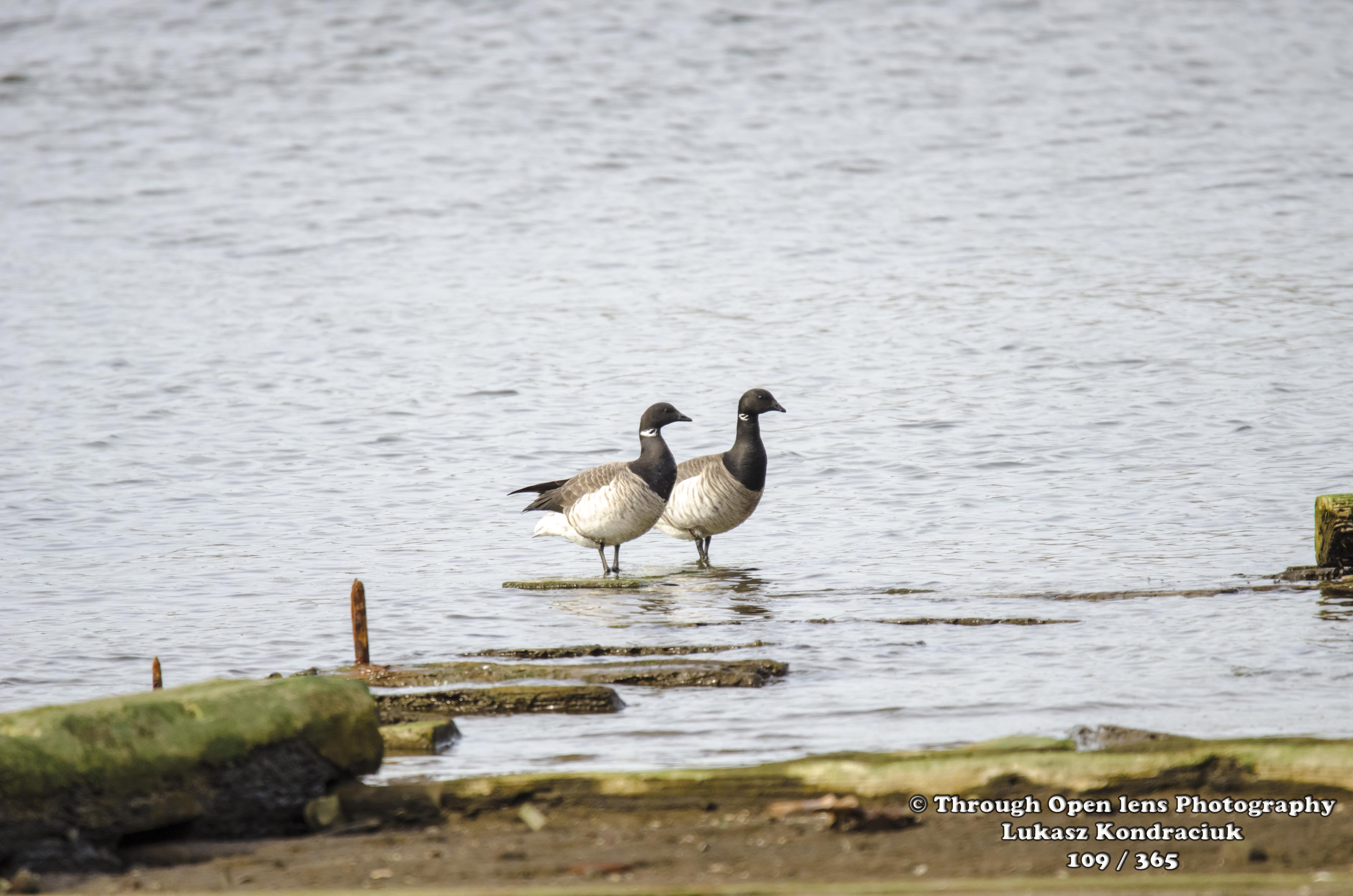
Brant goose

F/6.3, 1/1000, ISO 450.

Brant Goose

Day 109 / 365

What does a farmer call an escaped bird?
A loose goose.

Interesting Fact: Brant goose possess a highly developed salt gland that allows them to drink salt water. ( http://identify.whatbird.com/obj/290/overview/Brant.aspx )

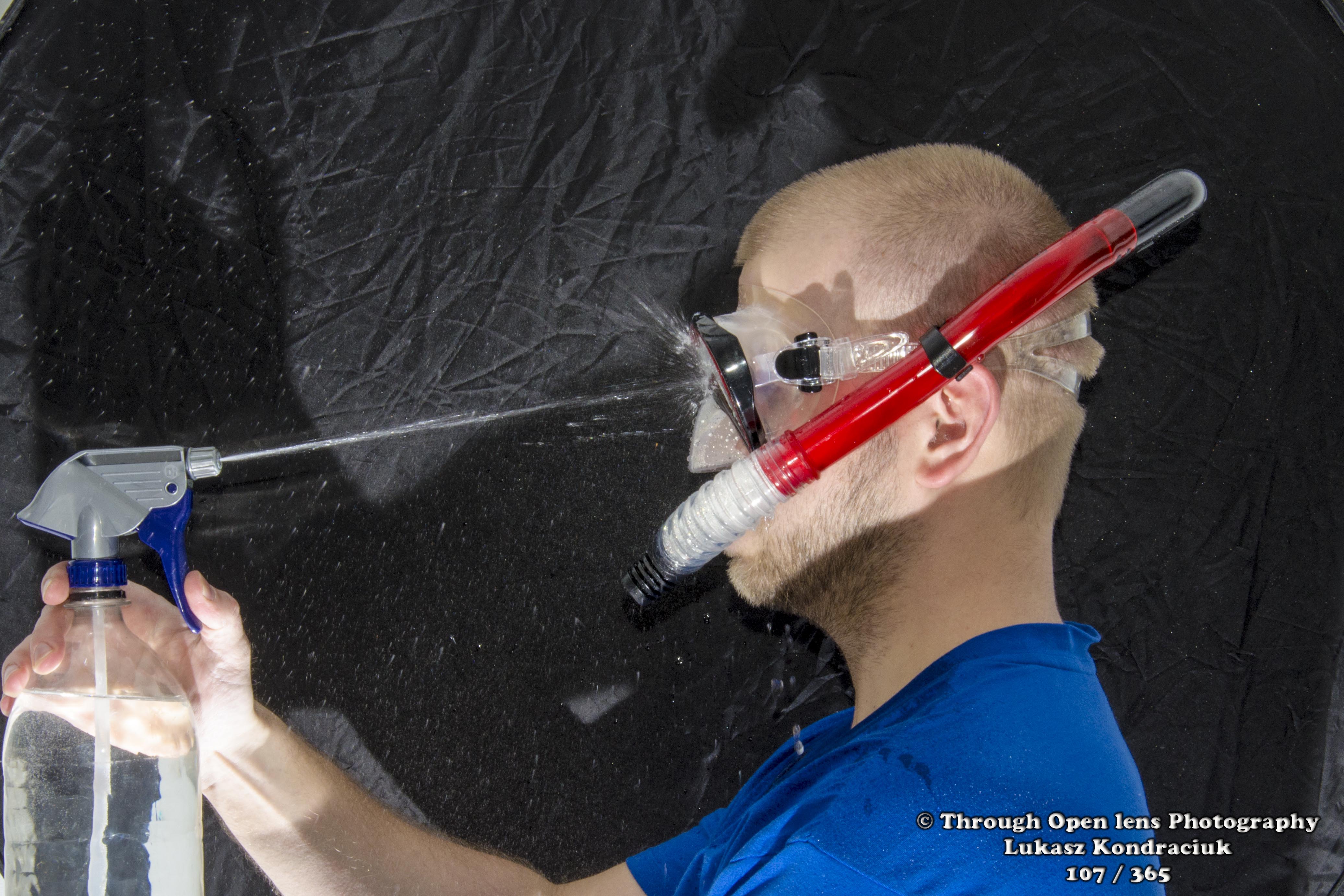
It Time To Get Ready For Vacation!

Dive mask

F/29.0, 1/60, ISO 250.

Day 107 / 365

This is how the Pros get ready.  Haha      🙂

Interesting Fact: Be thankful for silicone mask skirts. In the early days, when masks had rubber skirts, divers sometimes surfaced with their faces tinged with a ring of black.  ( http://www.sportdiver.com/article/news/seven-things-you-didnt-know-about-dive-masks-fins-and-snorkels-should )

End of line!

tron adidas

F/8.0, 1/60, ISO 100.

Day 104 / 365

A world inside the computer where man has never been. Never before now.

Interesting Fact: The Adicolor concept was launched by Adidas in 1983 where trainers (sneakers) were sold with the tools that they could be customised by the purchaser. The “adicolor” sneaker was an all-white training shoe was specifically created for the adicolor concept. Presented in a wooden box, the adicolor low-top shoe comes with an all-white track jacket, a set of six colored acrylic paints, paintbrushes, and a wooden palette. The white leather can also be coated with sealant before or after painting. In 2005 Adidas re-launched Adicolor as a replica of the original. Trainers include characters on them such as “Trimmy” “Betty Boop” “Mr Happy” “Tron” “Miss Piggy”, “Kermit the Frog” and Muhammad Ali. (  http://en.wikipedia.org/wiki/Adicolor )

They See Me Rollin’ They Hatin’

Honda S2000

F/7.1, 1/200, ISO 100.

Honda S2000

Day 102 / 365

“Life is too short to drive boring cars”.

Interesting Fact: The S2000 was introduced in 1999 for the 2000 model year and was given the chassis designation of AP1. It featured a front mid-engine, rear-wheel-drive layout with power being delivered by a 1,997 cc (122 cu in) inline 4-cylinder DOHCVTEC engine. The engine (codenamed F20C) produced outputs of 177–184 kW (237–247 hp), and 208–218 N·m (153–161 lbf·ft) depending on the target market.[5] The engine was mated to a six-speed manual transmission and Torsen limited slip differential. The S2000 achieved what Honda claimed as “the world’s top level, high performance 4-cylinder naturally aspirated engine” ( http://en.wikipedia.org/wiki/Honda_S2000 )

Photography Face Off!

face off

F/5.6, 1/60, ISO 100.

Day 101 / 365

We Shoot on three. One, Two, Three……

Interesting Fact: The longest photographic negative measures 39.54 m (129 ft 8.69 in) in length and was created by Esteban Pastorino Diaz (Spain) using a custom-built panoramic slit camera on 13 June 2010. The negative is a panorama of major streets in Buenos Aries, Argentina, captured by the slit camera while mounted on the roof of a moving car.  ( http://www.guinnessworldrecords.com/world-records/longest-photographic-negative/ )


Holy Smokes Batman!

American Robin

F/6.3, 1/320, ISO 400.

American Robin

Day 96 / 365

Where do birds invest their money?
In the stork market!

Interesting Fact: Although robins are considered harbingers of spring, many American Robins spend the whole winter in their breeding range. But because they spend more time roosting in trees and less time in your yard, you’re much less likely to see them. The number of robins present in the northern parts of the range varies each year with the local conditions. ( http://www.allaboutbirds.org/guide/American_Robin/lifehistory )

Search For The Easter Bunny

Groundhog

F/6.3, 1/400, ISO 1600.

Groundhog

Day 94 /365

On my search for the Easter Bunny,  I came across Mr. Groundhog who just recently came out of hibernation. While stuffing his face, he pointed me in the right direction.

Interesting Fact: Groundhogs are skilled climbers and swimmers, which helps them to escape less-skilled predators. ( http://www.havahart.com/groundhog-facts )

bunny

F/6.3, 1/500, ISO 1000.

Cottontail Rabbit

Finally, I found him.  He was eating to get his strength up for Easter Sunday tomorrow.

Interesting Fact: Cottontail rabbits are almost completely mute animals. They communicate with each other by thumping with their back feet against the ground. ( http://animals.pawnation.com/cottontail-rabbits-1901.html )