See The World Through My Eyes

eye lenses

F/16.0, 1/60, ISO 100.

Day 153 / 365

These are the lenses the doctor prescribed to me.  Now, let me show you the world!   🙂

Interesting Fact: The invention of the camera in the early 19th century has led to a large array of lens designs intended for photography. The problems of photographic lens design, creating a lens for a task that would cover a large flat image plane, were well known even before the invention of photography[1] due to the development of lenses to work with the focal plane of the camera obscura, a device for projecting images used as a novelty and an artist’s drawing aid that had been around for hundreds of years. Since the invention of photography many types of lenses have been tried. The succession of designs was never uniform since an older design that performed a task the photographer needed (such as working better portrait versus landscape, working at the wavelength of light the film collected, etc.) would still be used in unison with newer designs. Even today the job the lens needs to do, the laws of physics, the limits of engineering, as well as the practical considerations of size, weight and cost, means there are many designs available. ( http://en.wikipedia.org/wiki/History_of_photographic_lens_design )
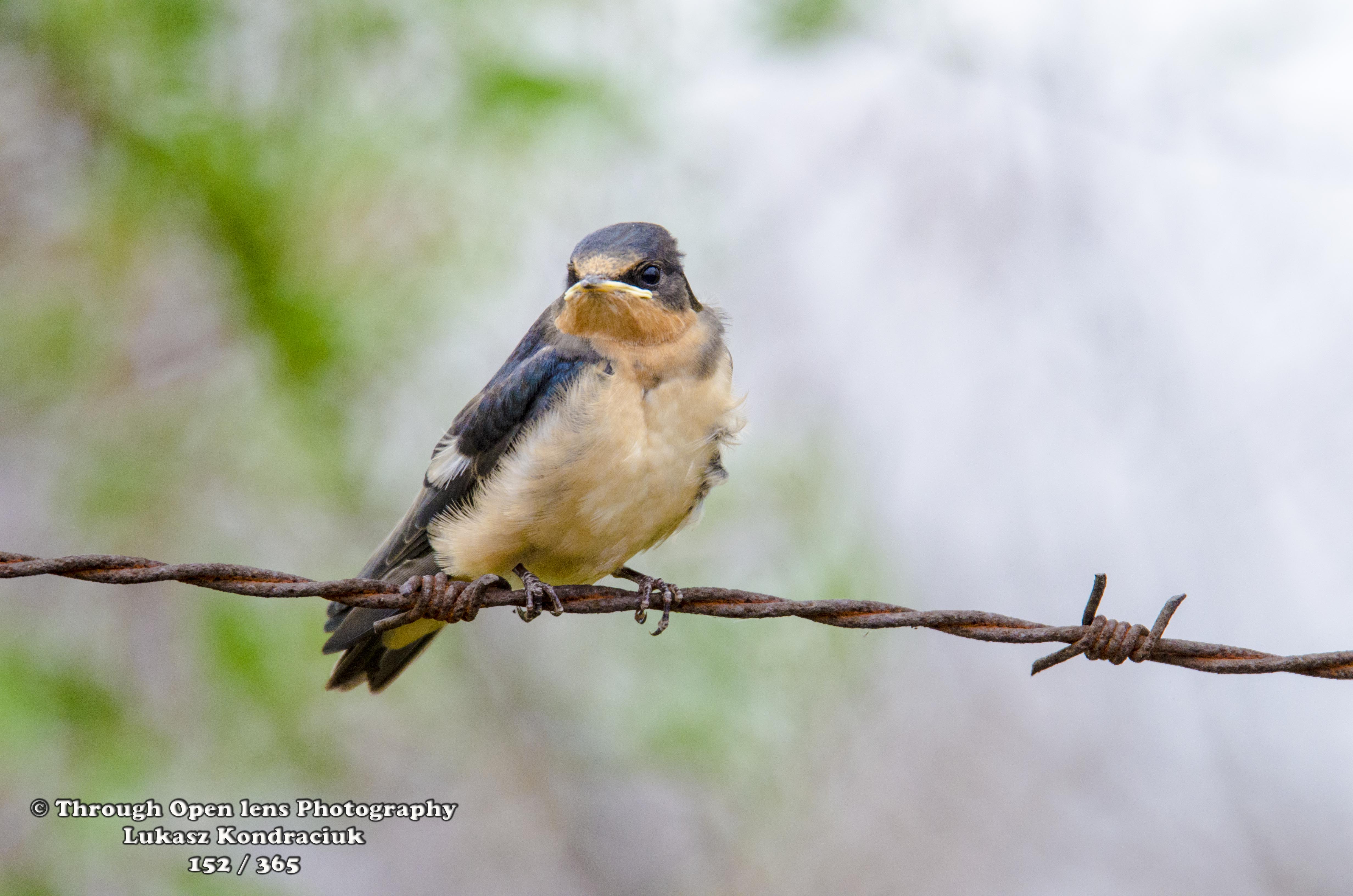
What Do Swallows Swallow?

Barn Swallow

F/6.3, 1/250, ISO 1600.

Barn Swallow

Day 152 / 365

What bird is helpful at dinner?
A swallow!

Interesting Fact: An unmated male Barn Swallow may kill the nestlings of a nesting pair. His actions often succeed in breaking up the pair and afford him the opportunity to mate with the female. ( http://www.allaboutbirds.org/guide/Barn_Swallow/lifehistory )


Do You Feel The Rain Or Do You Just Get Wet!

motorcycle in rain

F/6.3, 1/5, ISO 100.

Day 151 / 365

What goes up when the rain comes down?
An Umbrella.

Interesting Fact: Raindrops fall at a speed of 7 to 18 mph. In wind, they might fall much faster. ( http://easyscienceforkids.com/all-about-rain/ )

Do I Look Like A T-Rex? Grrrrr !!!

gosling

F/6.3, 1/125, ISO 1600.

Day 150 / 365

What do geese do in a traffic?

They honk!

Interesting Fact: Canadian geese can travel more than 1000 kilometers in a day while migrating. The circumference of the world is 40008 km. This means that they could fly around the world in approximately 40 days! ( http://bioweb.uwlax.edu/bio203/s2009/beckwith_kayl/Interestingfacts.htm )

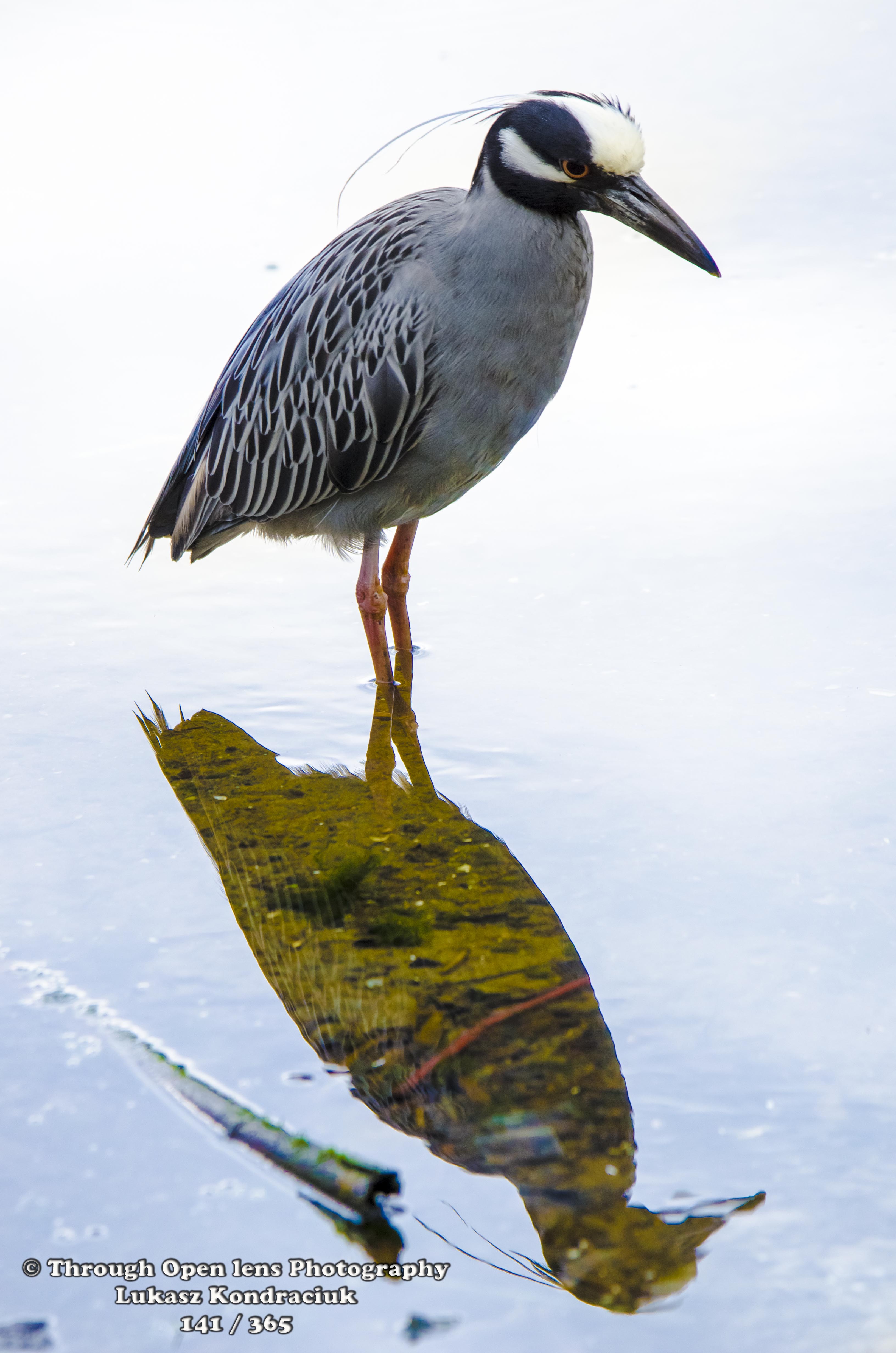
Damn I Look Good!

Yellow-crowned Night Heron

F/6.0, 1/1000, ISO 450.

Yellow-crowned Night Heron

Day 141 / 365

What do you call a heron at the North Pole?
Lost!

Interesting Fact:  Occasionally it will prey on small turtles; its stomach secretes an acid capable of dissolving the shells. ( http://identify.whatbird.com/obj/53/_/Yellow-crowned_Night-Heron.aspx )

Life’s A Beach!

Beach

F/8.0, 1/250, ISO 100.

Day 135 / 356

I don’t want to leave I want to stay here forever.      😦

Interesting Fact: The longest beach in the world is arguably Praia do Cassino (Casino Beach) in the city of Rio Grande, Brazil. It is approximately 212 km (132mi) long. ( http://www.sciencekids.co.nz/sciencefacts/earth/beaches.html )

“Make Sure You Get My Good Side.”

Bananaquit

F/6.3, 1/50, ISO 1600.

Bananaquit

Day 134 /365

Why do birds fly south for the winter?
Because it’s too far to walk!

Interesting Fact: It uses its sharp beak to pierce a flower from the side, taking the nectar without actually pollinating the plant. They cannot hover like a hummingbird, and must always perch while feeding. ( http://identify.whatbird.com/obj/1014/overview/Bananaquit.aspx )

Swamp Chicken!

Common Gallinule

F/ 6.3, 1/1000, ISO 640.

Common Gallinule

Day 133 / 365

“Red means STOP, don’t come any closer I have babies…”

Common Gallinule Chick

F/6.3, 1/1000, ISO 800.

Common Gallinule Chick

Day 133.5 / 365

Cute little chick and screaming for it mom.

Interesting Fact: Despite lacking either webbed or lobed feet, the Common Gallinule is an excellent swimmer. ( http://identify.whatbird.com/obj/464/overview/Common_Gallinule.aspx )

Swamp Fishing!

Tricolored Heron

F/6.3, 1/30, ISO 1600.

Tricolored Heron

Day 132 / 365

I paid the price of too many mosquito bites to get this shot.  But it was worth it.    🙂

Interesting Fact:

The tricolored heron (Egretta tricolor), formerly known in North America as the Louisiana heron, is a small heron. It is a resident breeder from the Gulf states of the USA and northern Mexico south through Central America and the Caribbean to central Brazil and Peru. There is some post-breeding dispersal to well north of the nesting range. Tricolored heron’s breeding habitat is sub-tropical swamps. It nests in colonies, often with other herons, usually on platforms of sticks in trees or shrubs. In each clutch, 3–7 eggs are typically laid. ( http://en.wikipedia.org/wiki/Tricolored_heron )

Pink Is In!

American Flamingo

F/ 5.0. 1/500, ISO 900.

American Flamingo

Day 131 /365

American Flamingo1

Why does a flamingo stand on one leg?
Because if he lifted that leg off the ground he would fall down!

Interesting Fact: In ancient Rome, flamingo tongues were regarded as a delicacy. As recently as 30 years ago, flamingos and their eggs were eaten by people in parts of southern Europe and the Caribbean. ( http://identify.whatbird.com/obj/940/overview/American_Flamingo.aspx )