I Like To Watch What I Eat

Cooper’s Hawk 1

F/9.0. 1/320, ISO 320.

Cooper’s Hawk

On which side does a hawk have the most feathers?

On the outside.

Interesting Fact: Life is tricky for male Cooper’s Hawks. As in most hawks, males are significantly smaller than their mates. The danger is that female Cooper’s Hawks specialize in eating medium-sized birds. Males tend to be submissive to females and to listen out for reassuring call notes the females make when they’re willing to be approached. Males build the nest, then provide nearly all the food to females and young over the next 90 days before the young fledge. ( https://www.allaboutbirds.org/guide/Coopers_Hawk/lifehistory )

Stay Fly!

Bald Eagle ( Juvenile )

F/11.0,1/500, ISO 320.

Bald Eagle ( Juvenile )

How does a eagle greet the its prey in the water ?

“Pleased to eat you.”

Interesting Fact: Rather than do their own fishing, Bald Eagles often go after other creatures’ catches. A Bald Eagle will harass a hunting Osprey until the smaller raptor drops its prey in midair, where the eagle swoops it up. A Bald Eagle may even snatch a fish directly out of an Osprey’s talons. Fishing mammals (even people sometimes) can also lose prey to Bald Eagle piracy. See an example here. ( https://www.allaboutbirds.org/guide/Bald_Eagle/lifehistory )

I Have A Very Particular Set Of Skills To Find You

Merlin

F/11.0, 1/500, ISO 250.

Merlin

Two birds in a tree looking down on a man washing his car.
“If he doesn’t hurry up and finish,” says one bird to the
other, “I’ll poop myself.”

Interesting Fact: Merlins don’t build their own nests. Instead, they take over the old nests of other raptors or crows. They also use magpie nests, sometimes laying eggs right on top of the nest’s dome rather than inside the cavity. ( https://www.allaboutbirds.org/guide/Merlin/lifehistory )

This Way To The Airport, We Flying South!

Wild Turkeys

F/6.3, 1/125, ISO 320.

Wild Turkeys  

A lady was picking through the frozen turkeys at the grocery store, but couldn’t find one big enough for her family. She asked the stock boy, ‘Do these turkeys get any bigger?’

The stock boy answered, ‘No ma’am, they’re dead.’

Interesting Fact: When they need to, Turkeys can swim by tucking their wings in close, spreading their tails, and kicking. ( https://www.allaboutbirds.org/guide/Wild_Turkey/lifehistory )

The Mighty Duck!

Hooded Merganser

F/6.3, 1/200, ISO 1600.

Hooded Merganser

What did the duck carry his schoolbooks in?

His Quackpack!

Interesting Fact: Hooded Merganser ducklings leave their nest cavity within 24 hours of hatching. First, their mother checks the area around the nest and calls to the nestlings from ground level. From inside the nest, the little fluffballs scramble up to the entrance hole and then flutter to the ground, which may be 50 feet or more below them. In some cases they have to walk half a mile or more with their mother to the nearest body of water. ( https://www.allaboutbirds.org/guide/Hooded_Merganser/lifehistory )


I Fly So High, I Can Reach The Sky!

Rough Legged Hawk

F/ 8.0, 1/320, ISO 100.

Rough Legged Hawk ( Dark  )

Is chicken soup good for your health?

Not if you’re the chicken!

Interesting Fact: Nonbreeding adults eat about a quarter-pound of food daily, or a tenth of their body mass—that’s about 5 small mammals. Nestlings start feeding themselves (swallowing lemmings whole) at about 16 days old. It’s estimated that a brood of 2 nestlings requires 26 pounds of food during the 40 days between hatching to fledging. ( https://www.allaboutbirds.org/guide/Rough-legged_Hawk/lifehistory )


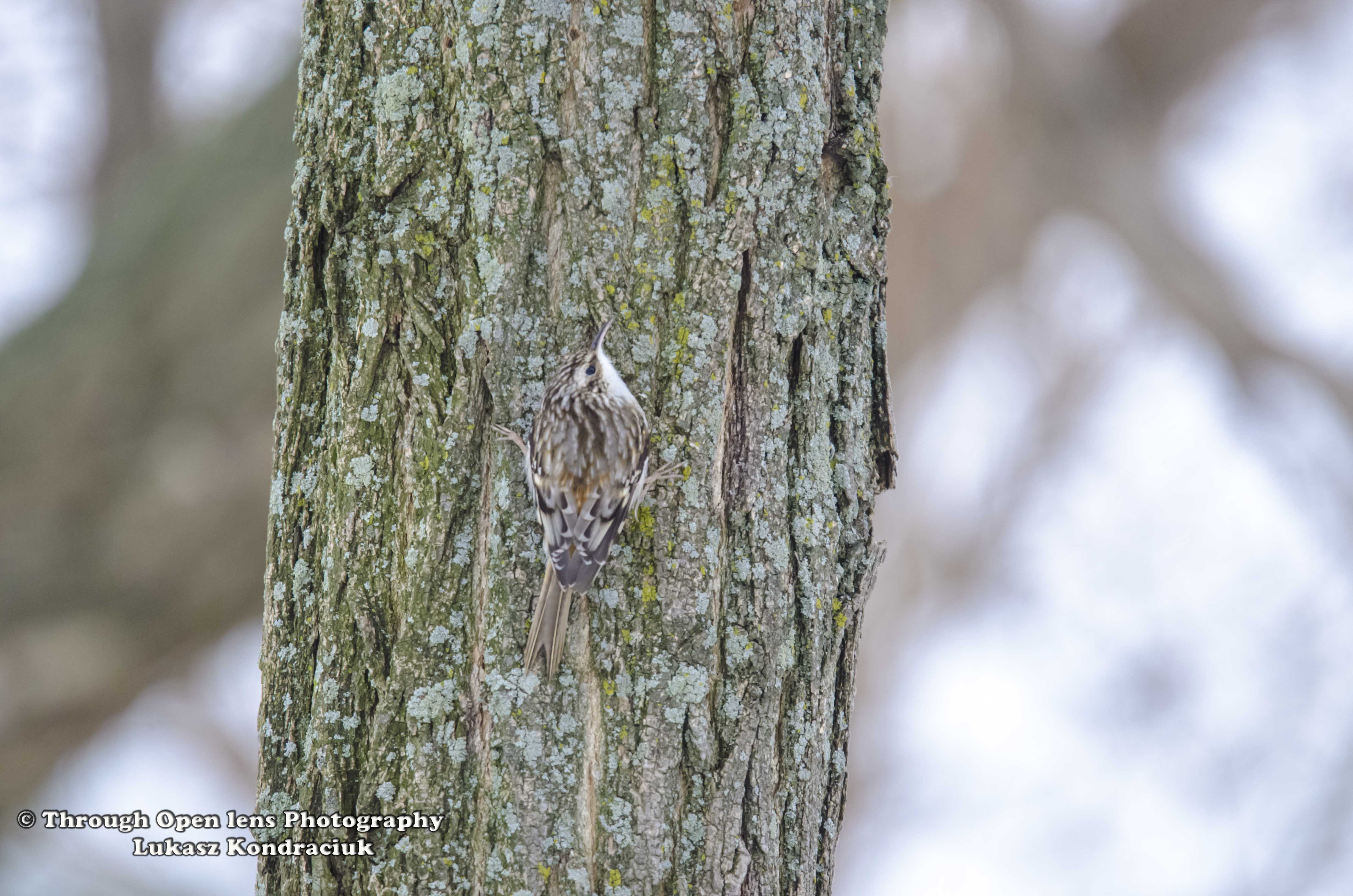
Spot Me If You Can!

Brown Creeper

F/6.3, 1/200, ISO 1600.

Brown Creeper

What do you call a bunch of chickens playing hide-and-seek?

Fowl play!

Interesting Fact: Brown Creepers burn an estimated 4–10 calories (technically, kilocalories) per day, a tiny fraction of a human’s daily intake of about 2,000 kilocalories. By eating a single spider, a creeper gains enough energy to climb nearly 200 feet vertically. ( https://www.allaboutbirds.org/guide/Brown_Creeper/lifehistory )

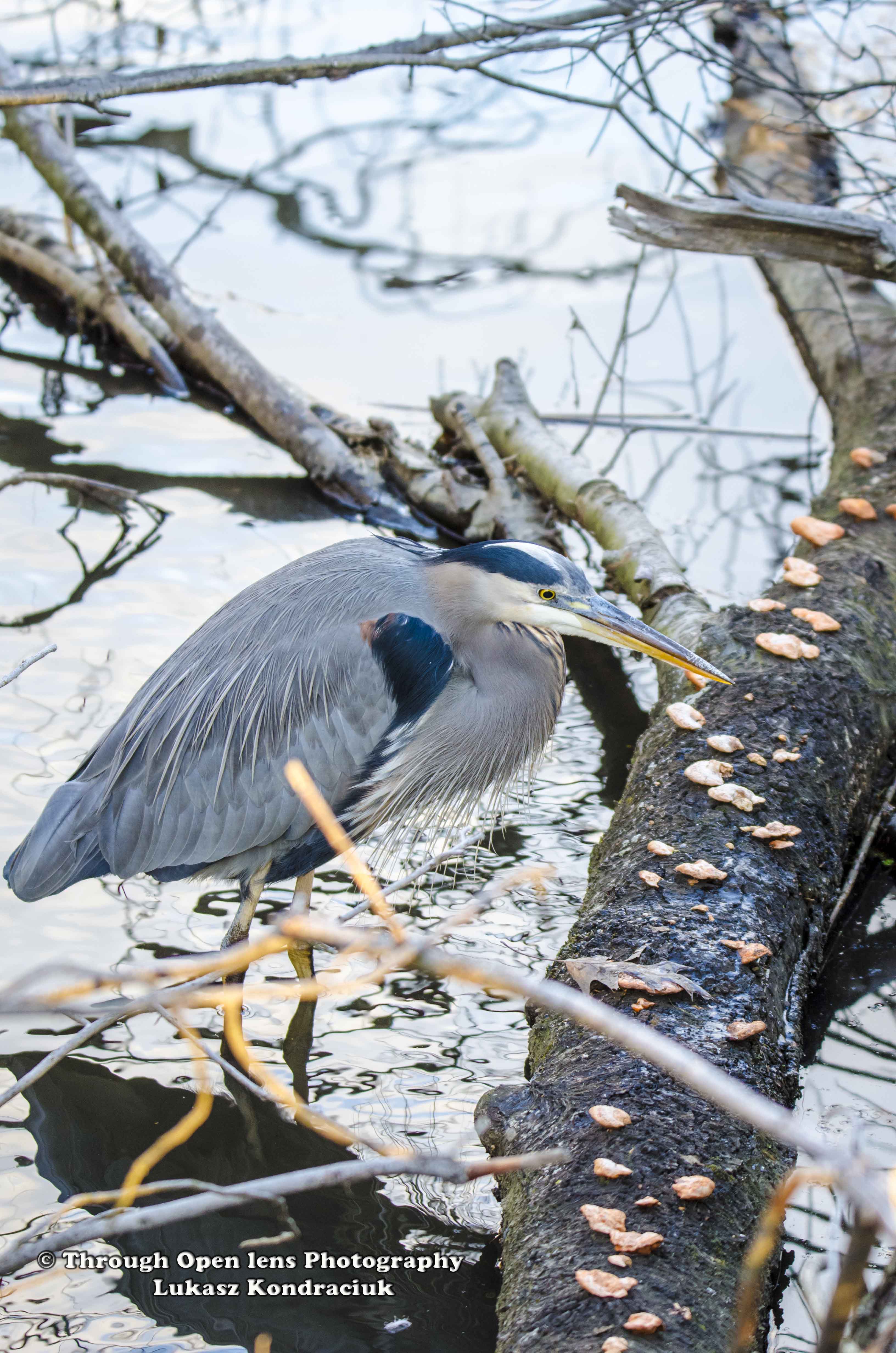
I Will Wait For You!

Great Blue Heron 1

F/ 5.0, 1/125, ISO 800.

Great Blue Heron

Why did the chicken cross the road half way?

He wanted to lay it on the line!

Interesting Fact:  Despite their impressive size, Great Blue Herons weigh only 5 to 6 pounds thanks in part to their hollow bones—a feature all birds share. ( https://www.allaboutbirds.org/guide/Great_Blue_Heron/lifehistory )

LA LA LA LA!!!

White throated Sparrow

F/ 9.0, 1/320, ISO 320.

White-throated Sparrow

What do you call a rooster who wakes you up at the same time every morning ?

An alarm cluck !

Interesting Fact: White-throated Sparrows typically nest on or near the ground. Occasional nests are built up to 15 feet off the ground in conifers. Usually, these nests are second attempts after a pair has had a ground nest robbed by a predator. ( https://www.allaboutbirds.org/guide/White-throated_Sparrow/lifehistory )

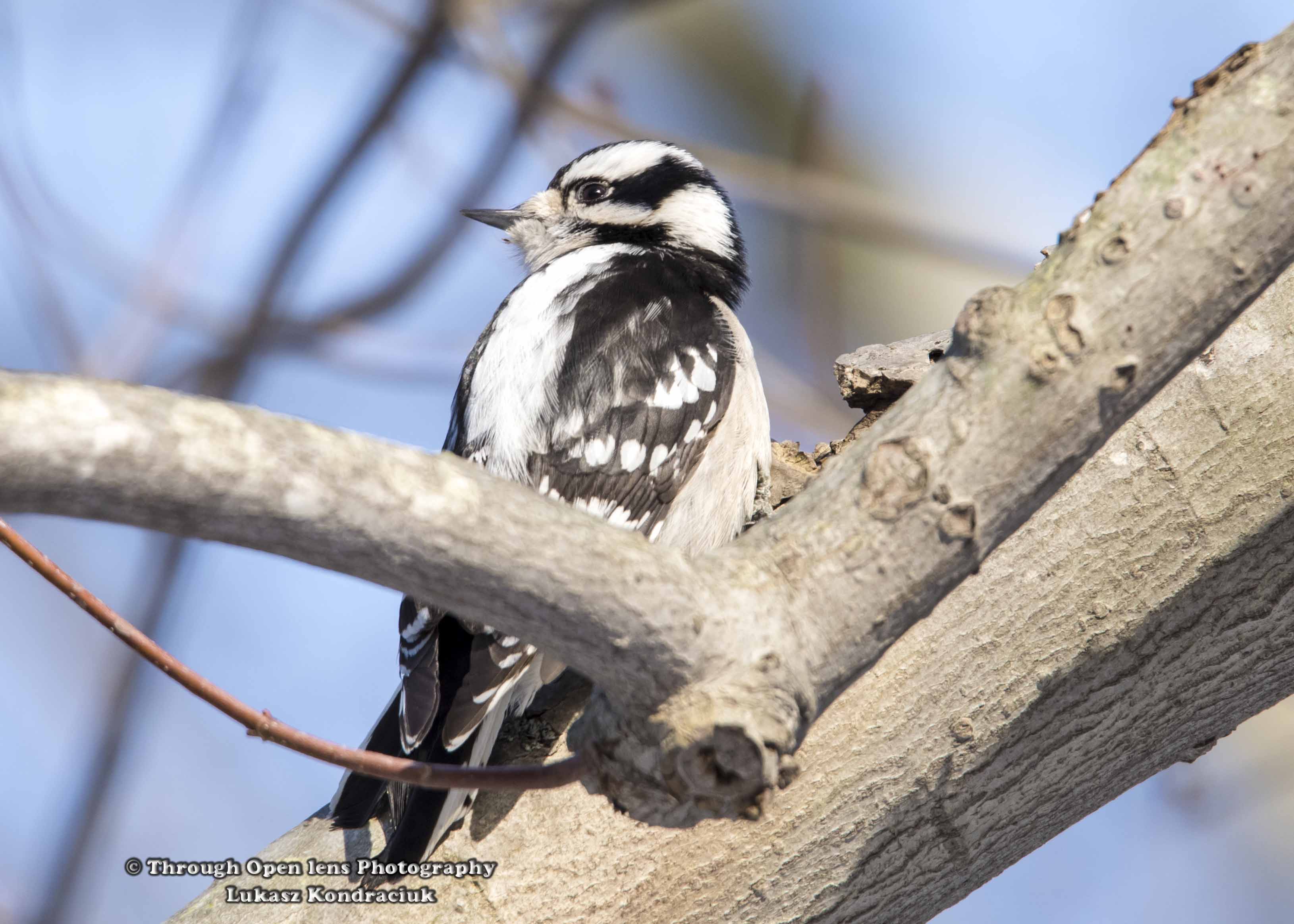
Knock Knock!

Downy Woodpecker

F/ 9.0, 1/320, ISO 320

Downy Woodpecker

What do you get if you cross a woodpecker with a carrier pigeon ?

A bird who knocks before delivering its message !

Interesting Fact: The Downy Woodpecker eats foods that larger woodpeckers cannot reach, such as insects living on or in the stems of weeds. You may see them hammering at goldenrod galls to extract the fly larvae inside. ( https://www.allaboutbirds.org/guide/Downy_Woodpecker/lifehistory )