Come Visit My Branch

Magnolia Warbler

F/5.6, 1/400, ISO 100.

Magnolia Warbler

Two birds in a tree looking down on a man washing his car.

“If he doesn’t hurry up and finish,” says one bird to the 15other, “I’ll shit myself.”

Interesting Fact: Though it has very specific habitat preferences in the breeding season, the Magnolia Warbler occupies a very broad range of habitats in winter:  from sea level to 1,500 meters elevation, and most landscape types, except cleared fields. ( https://www.allaboutbirds.org/guide/Magnolia_Warbler/lifehistory )

Go Green!

Yellow-Rumped Warbler

F/6.3, 1/80, ISO 1000.

Yellow-Rumped Warbler

Day 288 / 365

I was in a park earlier and I saw a “keep off the grass” sign.

I couldn’t help but think… how did it get there?

Interesting Fact: Yellow-rumped Warblers are perhaps the most versatile foragers of all warblers. They’re the warbler you’re most likely to see fluttering out from a tree to catch a flying insect, and they’re also quick to switch over to eating berries in fall. Other places Yellow-rumped Warblers have been spotted foraging include picking at insects on washed-up seaweed at the beach, skimming insects from the surface of rivers and the ocean, picking them out of spiderwebs, and grabbing them off piles of manure.  ( http://www.allaboutbirds.org/guide/Yellow-rumped_Warbler/lifehistory )

Wiggle It Just A Little Bit

Palm Warbler

F/6.3, 1/80, ISO 500.

Palm Warbler

Day 281 / 365

A little boy comes in to a pet store.

Little boy : I’d like to buy some bird seed.
Clerk: How many birds do you have?
Little boy : None! I want to grow some!


Interesting Fact: The Palm Warbler can be most easily recognized by the tail-wagging habit that shows off its yellow undertail. ( http://identify.whatbird.com/obj/335/overview/Palm_Warbler.aspx )

This Fence Can’t Hold Me! I’m Breaking Out!

Yellow-breasted Chat

F/6.3, 1/640, ISO 800.

Yellow-breasted Chat

Day 247 / 365

Why did the Yellow-breasted Chat scale the chain-link fence?

To see what was on the other side.

Interesting Fact: Unlike most warblers, this species has been known to mimic the calls of other birds, and it’s the largest North American warbler.  ( http://identify.whatbird.com/obj/342/overview/Yellow-breasted_Chat.aspx )

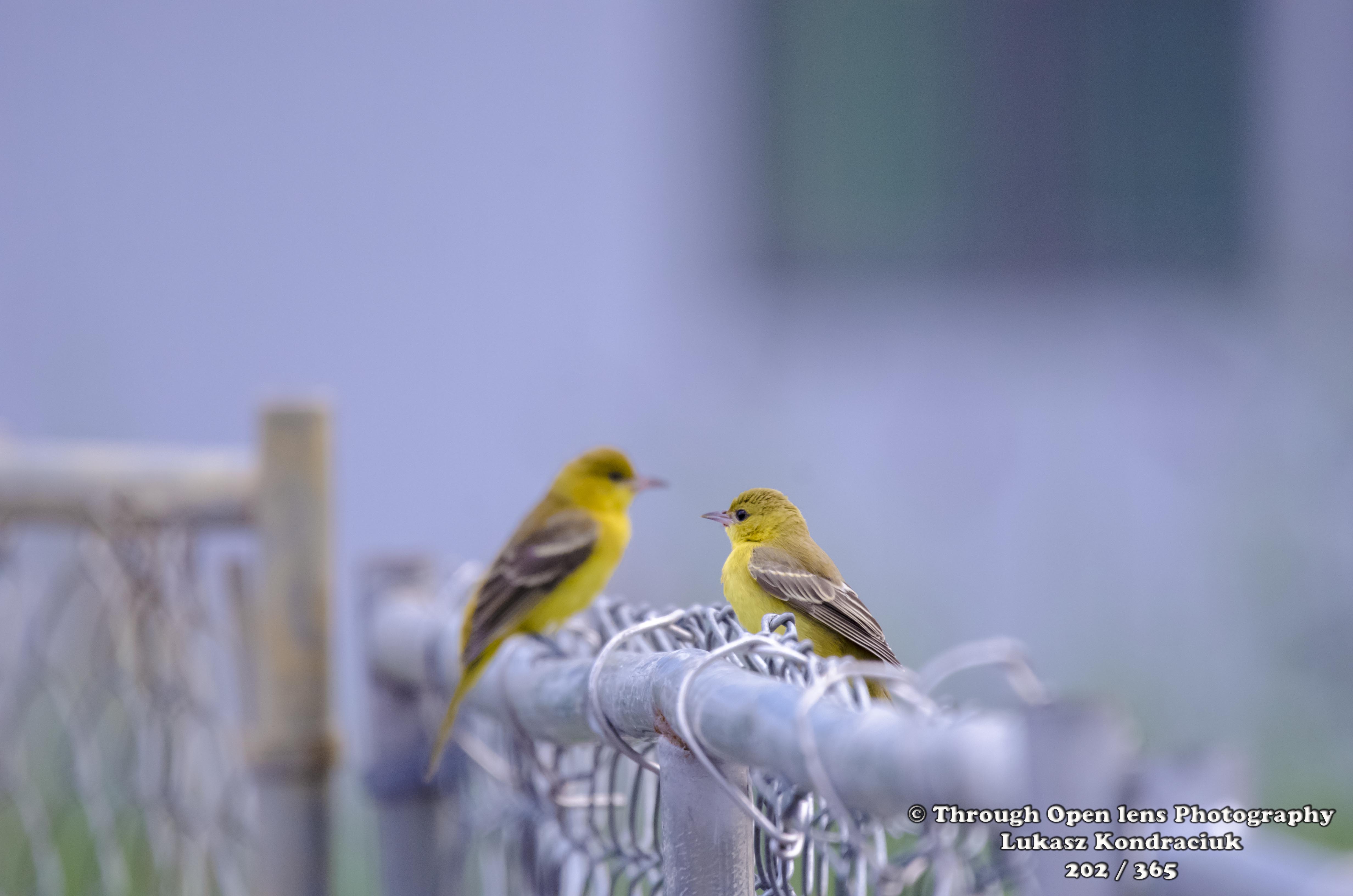
Love Your Neighbor As Yourself But Don’t Take Down The Fence!

yellow warbler 1

F/6.3, 1/125, ISO 1400.

Yellow Warblers

Day 202 / 365

A man walked into the office of a talent agent on the 72nd floor of a skyscraper. “I’ve got a great act,” he tells the agent. “Just watch this.” The man opens the window, perches on the ledge and starts flapping his arms. Then he pushes off and flys around outside the window executing intricate aerobatic maneuvers. Having finished his demonstration, the man flaps in to a perfect landing on the window sill and steps back into the agent’s office. “What do you think of that?” he asked the agent. The talent agent yawned. That’s it? Bird imitations?”

Interesting Fact: Long distance migrant. Yellow Warblers breed across central and northern North America and spend winters in Central America and northern South America. They migrate earlier than most other warblers in both spring and fall. Like many other migrating songbirds, Yellow Warblers from eastern North America fly across the Gulf of Mexico in a single nonstop journey; some Yellow Warblers in fall take an overland route around the Gulf. ( http://www.allaboutbirds.org/guide/Yellow_Warbler/lifehistory )

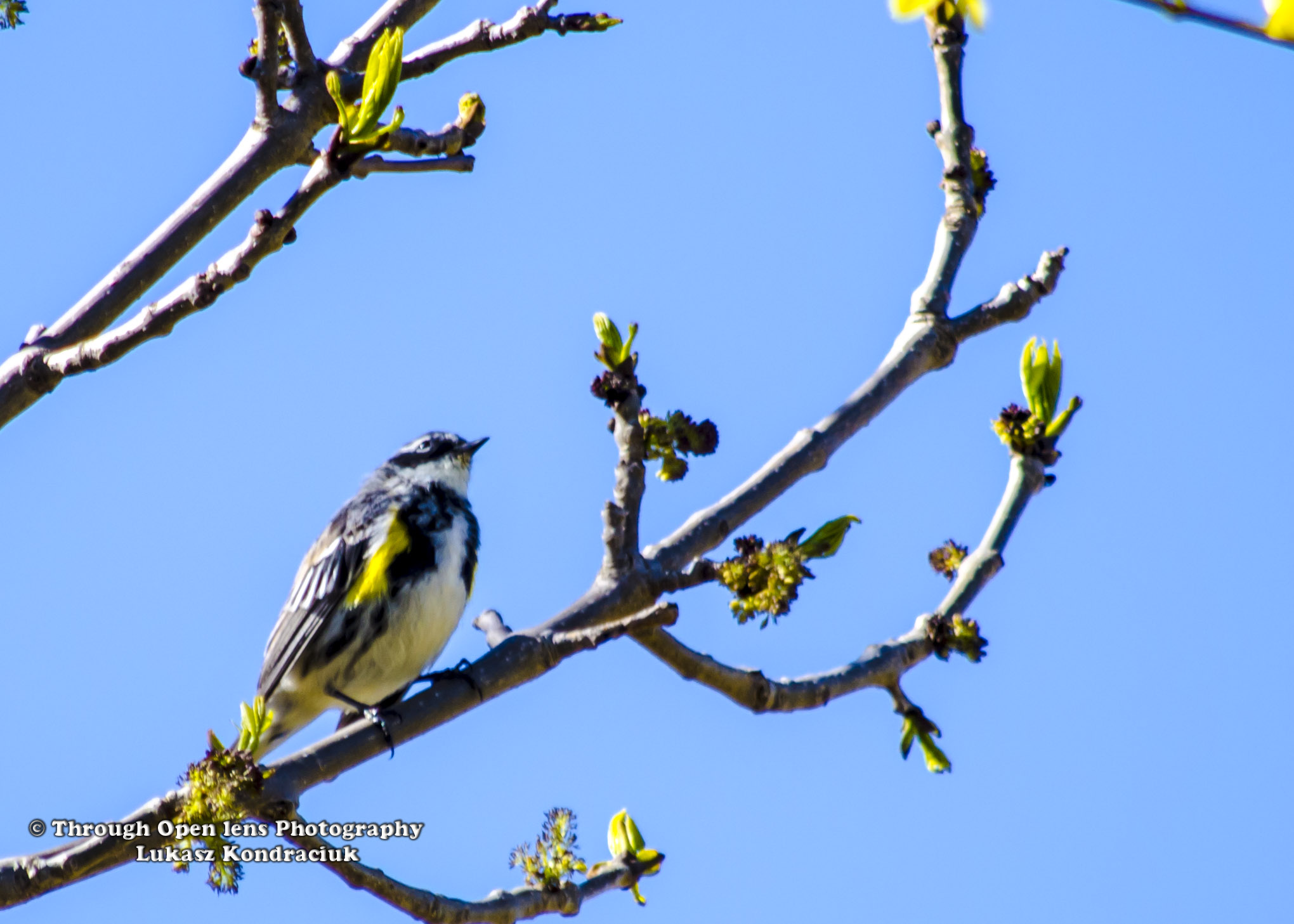
Upside Down You’re Turning Me!

Black-and-white Warbler

F/6.3, 1/500, ISO 1100.

Black-and-white Warbler

Day 120 / 365

I too used to swinging upside down from the tree when I was young. But I think he has me beat.   🙂

Interesting Fact: Black-and-white Warblers have an extra-long hind claw and heavier legs than other wood-warblers, which help them hold onto and move around on bark. ( http://www.allaboutbirds.org/guide/Black-and-white_Warbler/lifehistory )

Don’t Worry Be Happy!

Yellow Warbler

F/6.3, 1/640, ISO 800.

Yellow Warbler

Day 116 / 365

You’re the yellow bird that I’ve been waiting for!

Interesting Fact: Their open, cuplike nests are easy to find, and cowbirds often lay eggs in them. Yellow Warblers in some areas thwart these parasites by building a new floor over the cowbird eggs and laying a new clutch of their own. In one case, persistent cowbirds returned five times to lay more eggs in one nest, and an even more persistent warbler built six layers of nest floors to cover up the cowbird eggs. ( http://www.audubon.org/field-guide/bird/yellow-warbler )

Happy Earth Day!

Cape May Warbler

F/6.3, 1/80, ISO 1600.

Cape May Warbler

Day 112 /365

Why did the little bird get in trouble at school?
Because he was caught tweeting on a test.

Interesting Fact:  The tongue of the Cape May Warbler is unique among warblers. It is curled and semitubular, and is used to collect nectar during winter. ( http://www.allaboutbirds.org/guide/Cape_May_Warbler/lifehistory )