Feeling A Little Blue!

Blue Grosbeak

F/6.3, 1/1250, ISO 400.

Blue Grosbeak

Day 197 / 365

A mother bird, a daddy bird and their baby bird were getting ready to migrate. The mother bird said, ” My instincts tell me to go north. ” The daddy bird said, ” My instincts tell me to go south. ” The baby bird said, ” My end stinks too, but it doesn’t tell me where to go! ”

Interesting Fact: Many Blue Grosbeaks migrate directly southward from their breeding areas to their wintering grounds. Western birds head over land and eastern birds cross the Gulf of Mexico. Migrating grosbeaks pass through the Caribbean Islands including Puerto Rico, the Bahamas, the Turks and Caicos Islands, the Antilles, the Swan Islands, the Cayman Islands, and the Virgin Islands. ( http://www.allaboutbirds.org/guide/Blue_Grosbeak/lifehistory )

” Figaro! Figaro! Figaro! Figaro! Figaro! “!

Marsh Wren

F/6.3, 1/500, ISO 1000.

Marsh Wren

Day 195 / 365

Why did the bird get a ticket?

It broke the law of gravity!

Interesting Fact: The Marsh Wren is a secretive bird; even when singing the territorial male remains well hidden, briefly climbing a cattail for a look at an intruder. ( http://identify.whatbird.com/obj/137/_/Marsh_Wren.aspx )

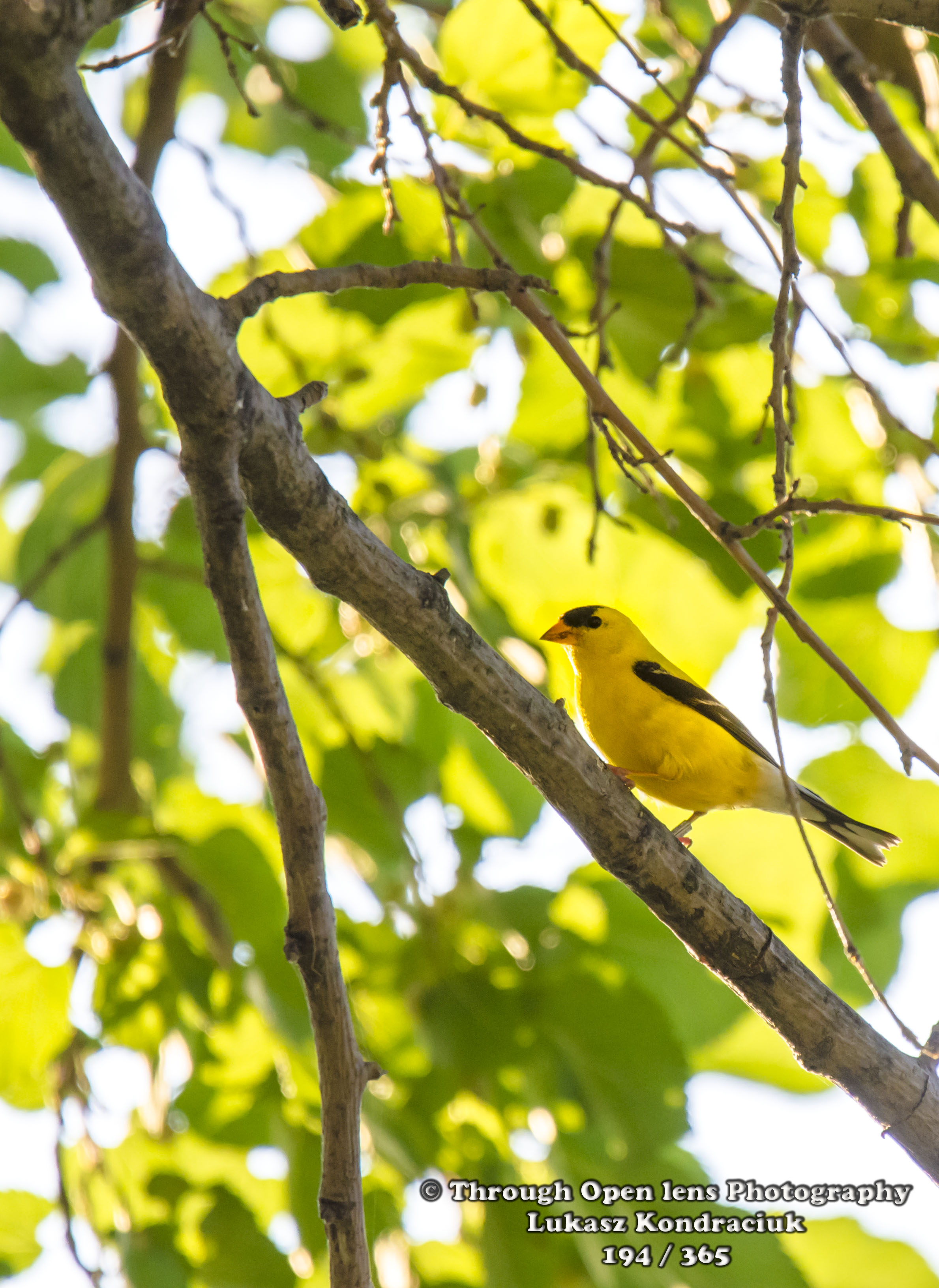
“Hey I Was Yellow First, Now The Minions Get The Fame”!

American Goldfinch

F/6.3, 1/500, ISO 400.

The American Goldfinch

Day 194 / 365

What do you give a sick bird?
Tweetment.

Interesting Fact: They are one of the latest nesting birds, starting in late June or early July, when most other songbirds are finishing with breeding. Their late timing may be related to the availability of suitable nesting materials and seeds for feeding young. ( http://identify.whatbird.com/obj/91/overview/American_Goldfinch.aspx )

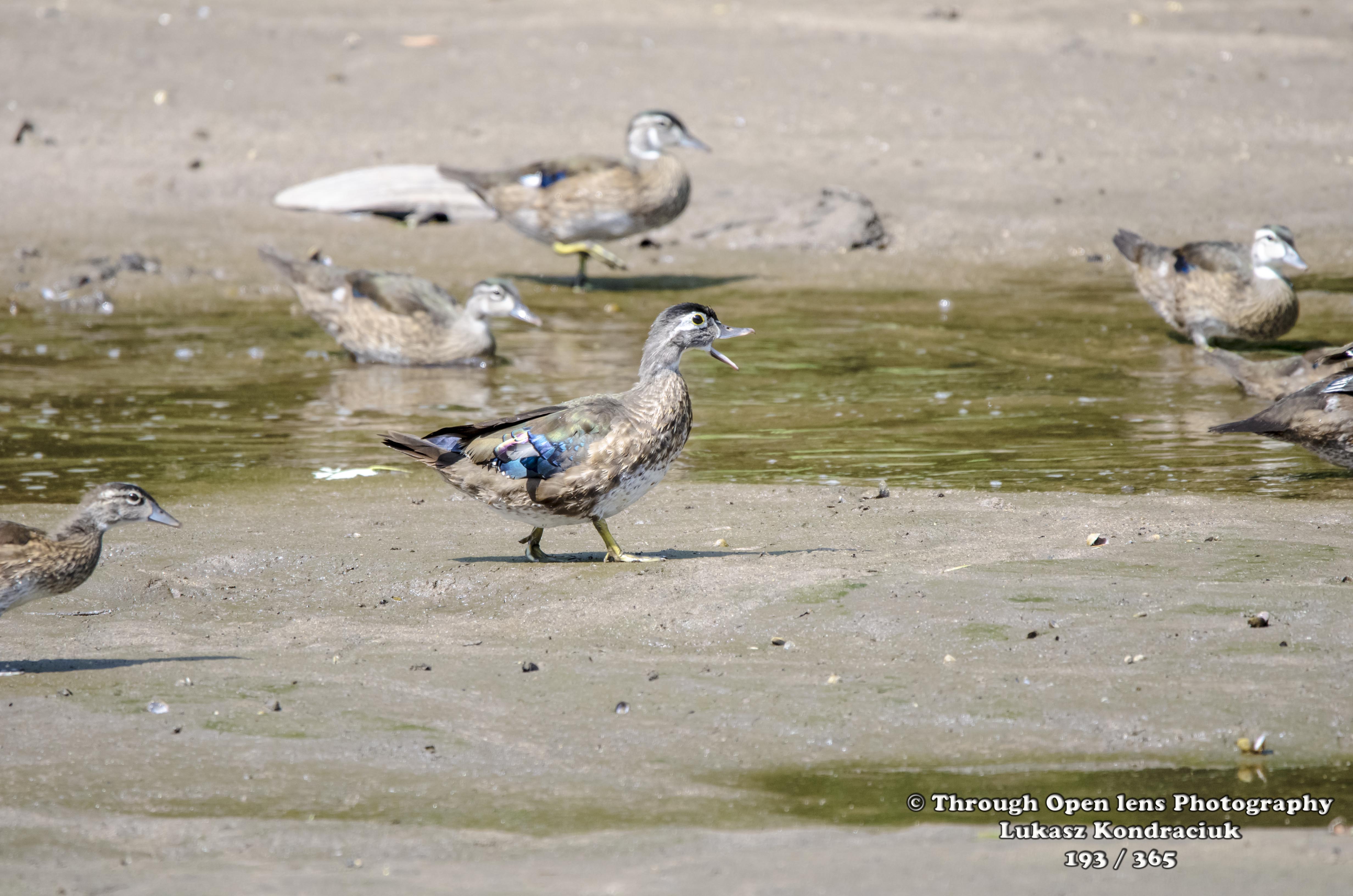
RUUUNNNNN!!!

wood duck Female

F/6.3, 1/800, ISO 800.

Wood Duck ( Female )

Day 193 /365

Why don`t ducks tell jokes when they fly?
Because they would quack up!

Interesting Fact: The Wood Duck nests in trees near water, sometimes directly over water, but other times over a mile away. After hatching, the ducklings jump down from the nest tree and make their way to water. The mother calls them to her, but does not help them in any way. The ducklings may jump from heights of over 50 feet without injury. ( http://www.allaboutbirds.org/guide/Wood_Duck/lifehistory )

“Just Don’t Call Me Tweety Bird”!

Baltimore Oriole  Female

F/6.3, 1/1000, ISO 500.

Baltimore Oriole ( Female )

Day 192 / 365

When should you buy a bird?

When it’s going cheep!

Interesting Fact: Baltimore Orioles sometimes use their slender beaks to feed in an unusual way, called “gaping”: they stab the closed bill into soft fruits, then open their mouths to cut a juicy swath from which they drink with their brushy-tipped tongues.  ( http://www.allaboutbirds.org/guide/Baltimore_Oriole/lifehistory )

Everyday They’re Out There Making DuckTales! Woo-oo!


Ruddy Duck

F/6.3, 1/1000, ISO 800.

Juvenile Ruddy Ducks

Day 187 / 365

Three ducks are in a pond.
One went “Quack quack!”
And the other duck said “Thats funny I was just about to say that!”

Interesting Fact: Ruddy Ducks lay big, white, pebbly-textured eggs—the largest of all duck eggs relative to body size. Energetically expensive to produce, the eggs hatch into well-developed ducklings that require only a short period of care. ( http://www.allaboutbirds.org/guide/Ruddy_Duck/lifehistory )

I Look Down On People

European Starling 1

F/ 6.3, 1/125, ISO 200.

European Starling

Day 171 / 365

“That car looks clean, it is time to piss off the owner.”


A pirate strolls into his favorite bar and the bartender says, “Whoa, dude, what happened to you?”
The pirate says, “What do you mean?”
The bartender says, “Well, for starters, you never used to have a peg leg.”
“Oh, that,” replies the pirate. ” Well, you see, we had a sea battle and a cannon ball blew off my leg. But the ship’s surgeon fixed me up with this peg leg and I’m as good as new.”
“Well, what about the hook?” asks the barkeep.
“We had another sea battle and some guy lopped off my hand,” the pirate explains, “but the ship’s surgeon fixed me up with this hook and now I’m as good as new!”
“What about the eye patch?” asks the bartender.
“One day I was on the top mast keeping watch,” says the pirate, “when an bird flew over and pooped in my eye.”
The bartender is incredulous. “You mean to tell me that bird poop will put out your eye?”
“Well,” the pirate explained, “this happened shortly after I got the hook.”

( http://www.verifine.org/Humor/pirate.html )

Interesting Fact: Starlings are great vocal mimics: individuals can learn the calls of up to 20 different species. Birds whose songs starlings often copy include the Eastern Wood-Pewee, Killdeer, meadowlarks, Northern Bobwhite, Wood Thrush, Red-tailed Hawk, American Robin, Northern Flicker, and many others. ( http://www.allaboutbirds.org/guide/European_Starling/lifehistory )

How Many Can I Fit In My Mouth?

Brewer's Blackbird

F/6.3, 1/640, ISO 800.

Common Grackle             

Day 170 /365

Where does a blackbird go for a drink?

To a crow bar.

Interesting Fact: In winter, Common Grackles forage and roost in large communal flocks with several different species of blackbird. Sometimes these flocks can number in the millions of individuals. (  https://www.allaboutbirds.org/guide/Common_Grackle/lifehistory )

Mock Me If You Can!

Northern Mockingbird

F/6.3, 1/125, ISO 1600.

Northern Mockingbird

Day 169 / 365

What do you call a very rude bird?
A mockingbird!

Interesting Fact:  The often observed behavior of birds flashing their white wing patches is still unexplained. Theories include it being used to startle prey or intimidate predators. ( http://identify.whatbird.com/obj/158/overview/Northern_Mockingbird.aspx )


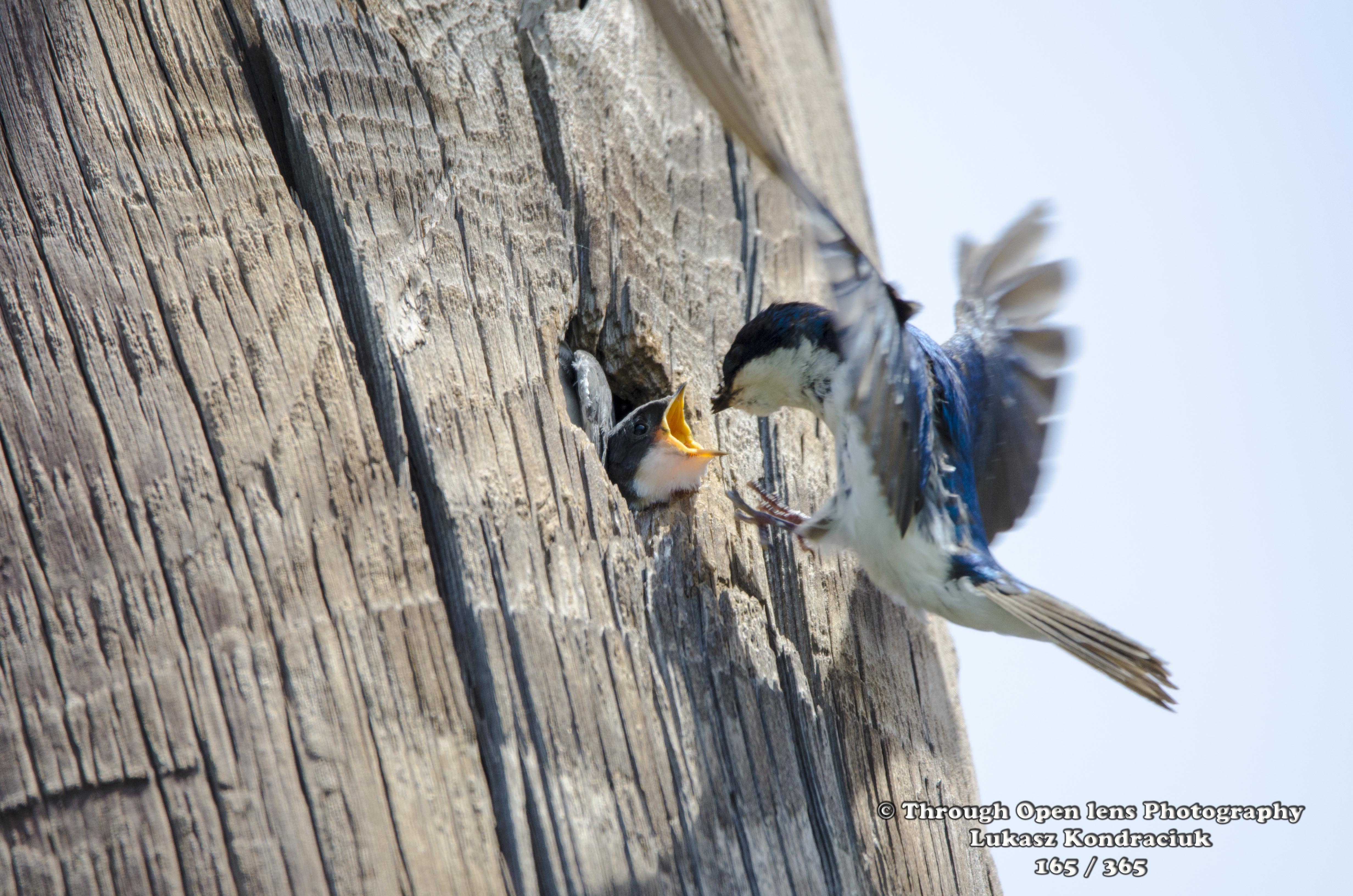
Feed Me Seymour! Feed Me!

Tree Swallow

F/6.3, 1/1000, ISO 450.

Tree Swallow

Day 165 / 365

What did the little bird say to the big bird?

Peck on someone your own size!

Interesting Fact: Tree Swallows winter farther north than any other American swallows and return to their nesting grounds long before other swallows come back. They can eat plant foods as well as their normal insect prey, which helps them survive the cold snaps and wintry weather of early spring. ( http://www.allaboutbirds.org/guide/tree_swallow/lifehistory )