Nite Nite Sleep Tight

Mallard

F/6.3, 1/320, ISO 1600.

Mallard Ducks

Black and White  Day 4 of 5

Day 92 / 365

What time does a duck wake up?

At the quack of dawn!

Interesting Fact: Ducks are strong fliers; migrating flocks of Mallards have been estimated traveling at 55 miles per hour.  ( http://www.allaboutbirds.org/guide/Mallard/lifehistory )

I was challenged by Cynthia at http://cynthiamvoss.wordpress.com/  to take up the Black and White 5-Day Challenge.  Part of the fun is to nominate another blogger, one on each day.

Today, I nominate Alix  of https://alixbleus.wordpress.com/ Alix, if you accept, the goal is to post one B&W photo each day for five days, and to nominate a fellow blogger each day to join in.

There is no pressure to accept this challenge. It’s just for fun!    🙂
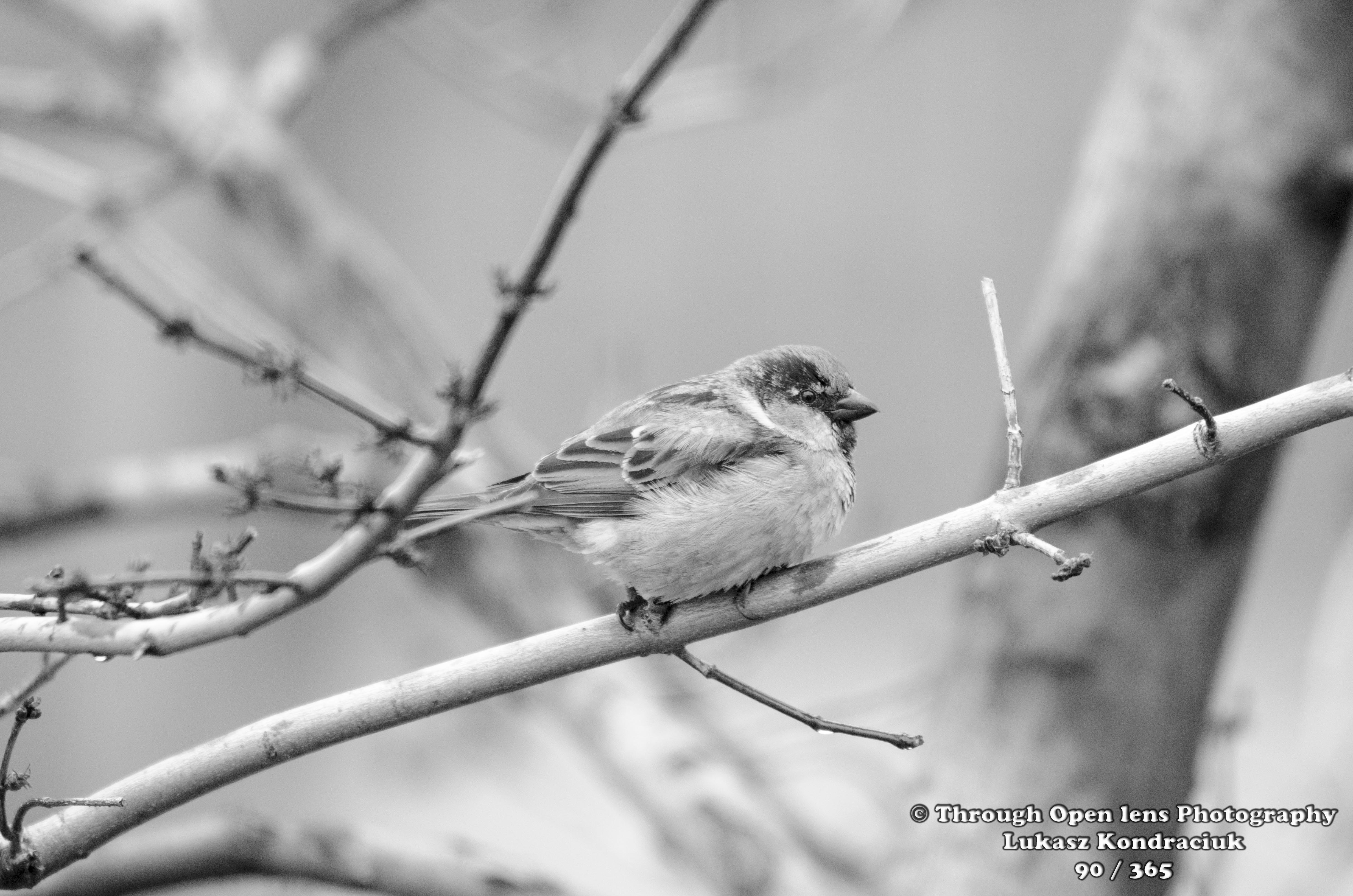
 

Backyard Bully!

House Sparrow

F/6.3, 1/320, ISO 1600.

House Sparrow

Black and White  Day 2 of 5

Day 90 / 365

This little guy was bullying all the other birds today. So small yet so feisty.

Interesting Fact: The House Sparrow takes frequent dust baths. It throws soil and dust over its body feathers, just as if it were bathing with water. In doing so, a sparrow may make a small depression in the ground, and sometimes defends this spot against other sparrows. ( http://www.allaboutbirds.org/guide/House_Sparrow/lifehistory )

I was challenged by Cynthia at http://cynthiamvoss.wordpress.com/  to take up the Black and White 5-Day Challenge.  Part of the fun is to nominate another blogger, one on each day.

Today, I nominate Maggie of https://magscorner.wordpress.com/ Maggie, if you accept, the goal is to post one B&W photo each day for five days, and to nominate a fellow blogger each day to join in.

There is no pressure to accept this challenge. It’s just for fun!    🙂

Das Auto

vw beetle

F/5.6, 48.0, ISO 100.

Day 84 / 365

Beetle still puts a big smile on my face.     🙂

Interesting Fact: The Beetle will float: The Beetle may have been inexpensive, but it was never cheap. Gaps were tight and doors sealed well. Additionally, it was a unibody car with a very flat floor with few openings. All of this meant that the car would actually float for at least several minutes after hitting the water before turning into a small U-boat.  ( http://www.hagerty.com/articles-videos/Articles/2013/01/25/Secrets-of-the-Volkswagen-Beetle )

Quack, Quack, Another Duck!

Green-winged Teal

F/6.3, 1/40, 1600.

Green-winged teal

Day 83 / 365

Why did the duck fly south for the winter?

Because it was too far to walk.

Interesting Fact:   This is the smallest North American dabbling duck.  ( http://identify.whatbird.com/obj/350/overview/Green-winged_Teal.aspx )

Keep On Shoveling!

Northern Shoveler

F/6.3, 1/1000, ISO 640.

Northern Shoveler

Day 82 /365

His shoveling skills, would come in very handy during all these snow storms we had.

Interesting Fact: They are often referred to as the “Spoonbill” or “Spoony” because of their unique spatulate shaped bill, which has about 110 fine projections (called lamellae) along the edges, for straining food from water.  ( http://identify.whatbird.com/obj/97/overview/Northern_Shoveler.aspx )

Please Don’t Ring My Neck!

Ring-necked Duck

F/6.3, 1/500, ISO 360.

Ring-necked Duck

Day 81 / 365

Why did the duck tell you a joke?
Because he wanted to QUACK you up!

Interesting Fact: Because it never gathers in large flocks it has not been hunted extensively like some of its relatives. A fast flier, it undertakes longer migrations than most other diving ducks. ( http://identify.whatbird.com/obj/95/overview/Ring-necked_Duck.aspx )

Stealth Mode!

Common Merganser 2

F/6.3, 1/1000, ISO 560.

Common Merganser

Day 73 / 365

She suspects him of cheating, so she decided to follow him today.    She is literally on his tail.      🙂

Interesting Fact: Common Mergansers usually nest in natural tree cavities or holes carved out by large woodpeckers. Sometimes mergansers take up residence in next boxes, provided the entrance hole is large enough. On occasion they use rock crevices, holes in the ground, hollow logs, old buildings, and chimneys.  ( http://www.allaboutbirds.org/guide/Common_Merganser/lifehistory )

Through Open Lens Turns 1 Today!

It has been one year since my first post.  What a great year!  Thank You everyone for your support.

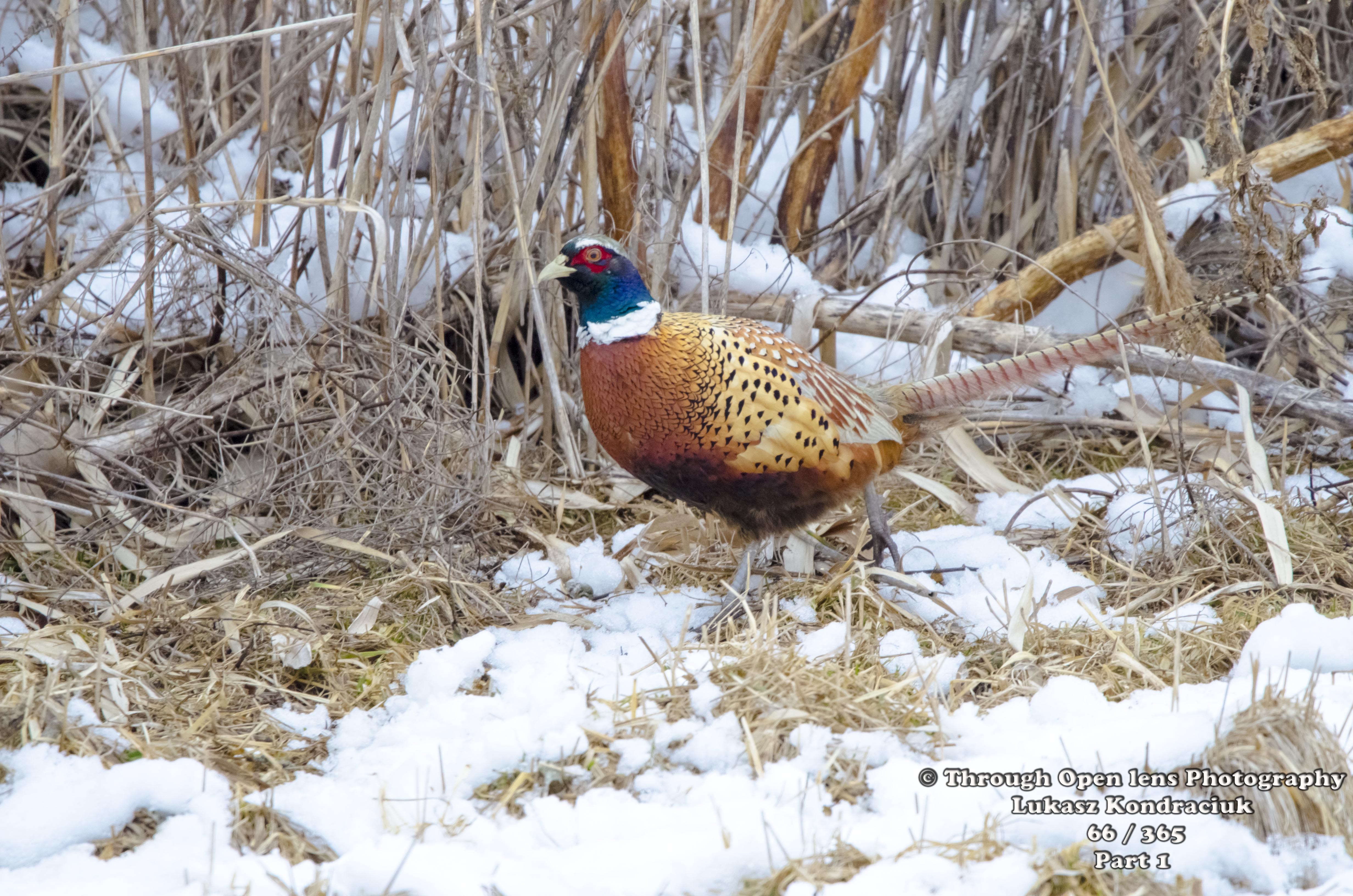
pheasants

F/6.3, 1/320, ISO 1600.

Ring-Necked Pheasant

Day 66 / 365 Part 1

“Oh sh*t people, time to run”.

Interesting Fact: Ring-necked Pheasants sometimes cope with extreme cold by simply remaining dormant for days at a time. ( http://www.allaboutbirds.org/guide/ring-necked_pheasant/lifehistory )

owl

F/6.3, 1/125, ISO 800.

Short Eared Owl

Day 66 / 365   Part 2

“I can see clearly now the snow has stopped”!

Interesting Fact: The Short-eared Owl may compete with the Barn Owl in some areas. Some successful nest box programs to attract Barn Owls have coincided with the decline of the Short-eared Owl in the same area. ( http://www.allaboutbirds.org/guide/short-eared_owl/lifehistory )


Ready, Set, Snow!

European Starling

F/6.3, 1/500, ISO 1600.

European Starlings

Day 64 / 365

“My family immigrated from Europe”.

Interesting Fact: All of the 200 million European Starlings found in North America today are descendants of approximately 100 birds released in New York City’s Central Park in the early 1890s by an industrialist who wanted to establish, in the U.S., all birds mentioned in the works of Shakespeare. ( http://identify.whatbird.com/obj/160/_/European_Starling.aspx )

Snow Again!

Common Merganser

F/6.3, 1/800, ISO 800.

Common Merganser

Day 60 / 365

You quack me up!

Interesting Fact: These large fish-eaters have serrated edges to their bills to help them grip their prey. Along with the Smew and the other Mergansers, they are often known as “sawbills.” ( http://identify.whatbird.com/obj/416/_/Common_Merganser.aspx )