I Look Down On People

European Starling 1

F/ 6.3, 1/125, ISO 200.

European Starling

Day 171 / 365

“That car looks clean, it is time to piss off the owner.”


A pirate strolls into his favorite bar and the bartender says, “Whoa, dude, what happened to you?”
The pirate says, “What do you mean?”
The bartender says, “Well, for starters, you never used to have a peg leg.”
“Oh, that,” replies the pirate. ” Well, you see, we had a sea battle and a cannon ball blew off my leg. But the ship’s surgeon fixed me up with this peg leg and I’m as good as new.”
“Well, what about the hook?” asks the barkeep.
“We had another sea battle and some guy lopped off my hand,” the pirate explains, “but the ship’s surgeon fixed me up with this hook and now I’m as good as new!”
“What about the eye patch?” asks the bartender.
“One day I was on the top mast keeping watch,” says the pirate, “when an bird flew over and pooped in my eye.”
The bartender is incredulous. “You mean to tell me that bird poop will put out your eye?”
“Well,” the pirate explained, “this happened shortly after I got the hook.”

( http://www.verifine.org/Humor/pirate.html )

Interesting Fact: Starlings are great vocal mimics: individuals can learn the calls of up to 20 different species. Birds whose songs starlings often copy include the Eastern Wood-Pewee, Killdeer, meadowlarks, Northern Bobwhite, Wood Thrush, Red-tailed Hawk, American Robin, Northern Flicker, and many others. ( http://www.allaboutbirds.org/guide/European_Starling/lifehistory )

How Many Can I Fit In My Mouth?

Brewer's Blackbird

F/6.3, 1/640, ISO 800.

Common Grackle             

Day 170 /365

Where does a blackbird go for a drink?

To a crow bar.

Interesting Fact: In winter, Common Grackles forage and roost in large communal flocks with several different species of blackbird. Sometimes these flocks can number in the millions of individuals. (  https://www.allaboutbirds.org/guide/Common_Grackle/lifehistory )

Mock Me If You Can!

Northern Mockingbird

F/6.3, 1/125, ISO 1600.

Northern Mockingbird

Day 169 / 365

What do you call a very rude bird?
A mockingbird!

Interesting Fact:  The often observed behavior of birds flashing their white wing patches is still unexplained. Theories include it being used to startle prey or intimidate predators. ( http://identify.whatbird.com/obj/158/overview/Northern_Mockingbird.aspx )


Rise Above!

Water Lily

F/5.6, 1/40, ISO 320, Photoshop CS6.

Water Lilies

Day 168 / 365

What do you call a girl with a frog on her head?
Lily!

Interesting Fact:  The water lily is a big balanced plant that floats above the water. Usually the lily has white female flowers and also pink male flowers. The flowers are the size of soccer balls.  The plants come from seeds that come from water that rises 10 cm. a day. Soon it will produce 5-10 leaves a month. The large  lilies provide food for fish and wildlife.  ( http://interestingfacts.blog.com/2010/07/14/beautiful-water-lily/ )

Some Days You Just Have To Get Creative

factory

F/5.6, 1/500, ISO 280, Photoshop CS6.

Day 167 / 365

Two factory workers are talking.
The woman says, “I can make the boss give me the day off.”
The man replies, “And how would you do that?”
The woman says, “Just wait and see.” She then hangs upside-down from the ceiling.
The boss comes in and says, “What are you doing?”
The woman replies, “I’m a light bulb.”
The boss then says, “You’ve been working so much that you’ve gone crazy. I think you need to take the day off.”
The man starts to follow her and the boss says, “Where are you going?”
The man says, “I’m going home, too. I can’t work in the dark.”

Interesting Fact: One of the earliest factories was John Lombe‘s water-powered silk mill at Derby, operational by 1721. By 1746, an integrated brass mill was working at Warmley near Bristol. Raw material went in at one end, was smelted into brass and was turned into pans, pins, wire, and other goods. Housing was provided for workers on site. Josiah Wedgwood in Staffordshire and Matthew Boulton at his Soho Manufactory were other prominent early industrialists, who employed the factory system. ( https://en.wikipedia.org/wiki/Factory#History )

Sometimes, It’s The Simple Things That Matter

candlelight

F/5.0, 1/60, ISO 100.

Day 166 / 365

What is the only time a man thinks about a candlelight dinner?

When the power goes off.

Interesting Fact: A form of private street lighting began in Dublin as early as 1616 when the Candlelight Law was passed, “compelling every fifth house to display a light within prescribed hours of the night for the guidance of street-users”. ( http://www.connemaracandles.ie/trivia.htm )


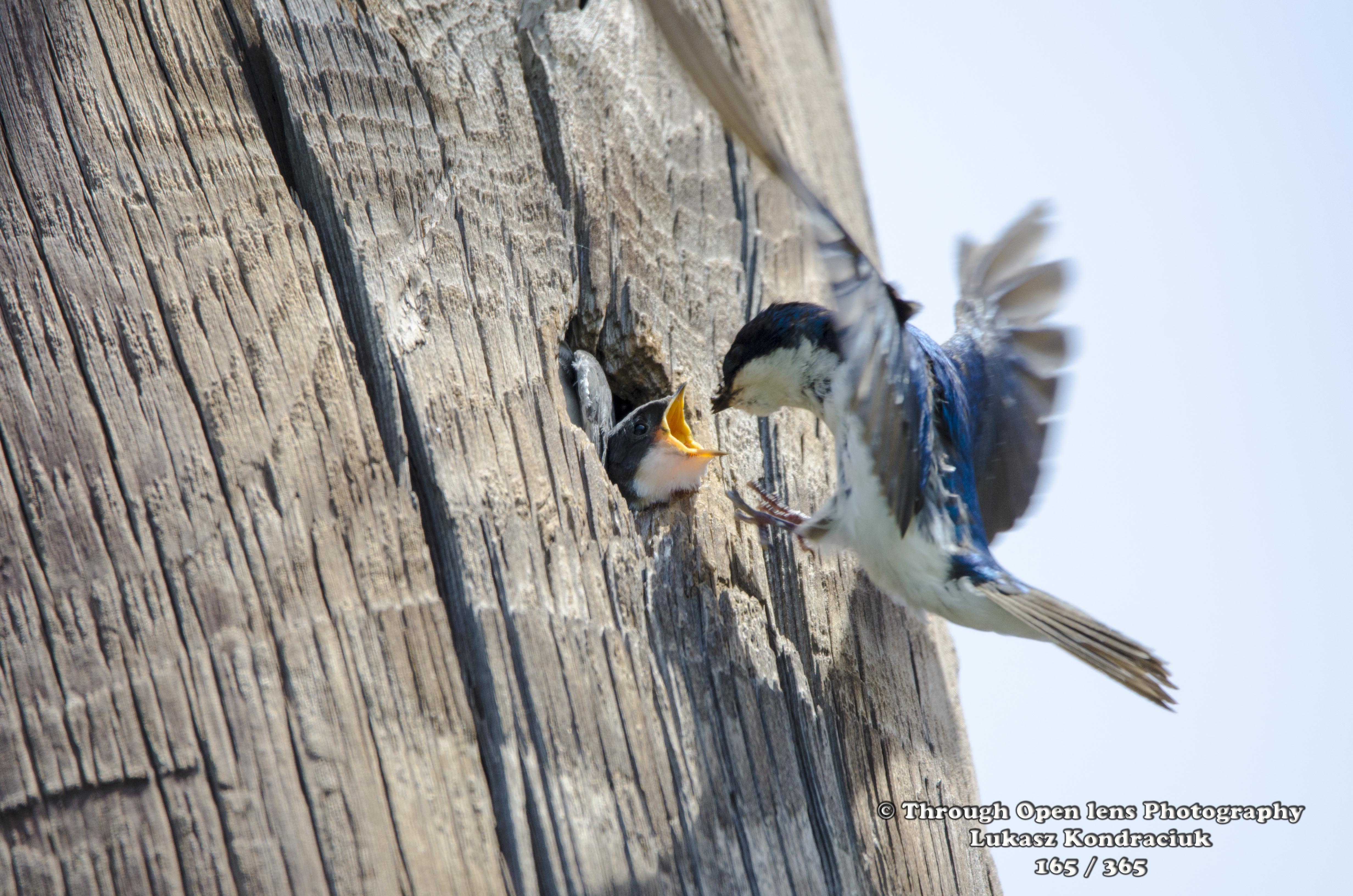
Feed Me Seymour! Feed Me!

Tree Swallow

F/6.3, 1/1000, ISO 450.

Tree Swallow

Day 165 / 365

What did the little bird say to the big bird?

Peck on someone your own size!

Interesting Fact: Tree Swallows winter farther north than any other American swallows and return to their nesting grounds long before other swallows come back. They can eat plant foods as well as their normal insect prey, which helps them survive the cold snaps and wintry weather of early spring. ( http://www.allaboutbirds.org/guide/tree_swallow/lifehistory )

Eat, Sleep, Fish, Repeat!

Snowy Egret 1

F/6.3, 1/1250, ISO 400.

Snowy Egret

Day 164 / 365

Why does the Egret stand on one leg?

Because if it lifts the other leg, it falls.

Interesting Fact: At the end of the nineteenth century, the beautiful plumes of the Snowy Egret were in great demand by market hunters as decorations for women’s hats. In 1886, plumes were valued at $32 per ounce, which was twice the price of gold at the time. They were hunted nearly to extinction before laws were passed to protect them. ( http://identify.whatbird.com/obj/48/_/Snowy_Egret.aspx )


Hungry Much!

First course meal.  Crab.

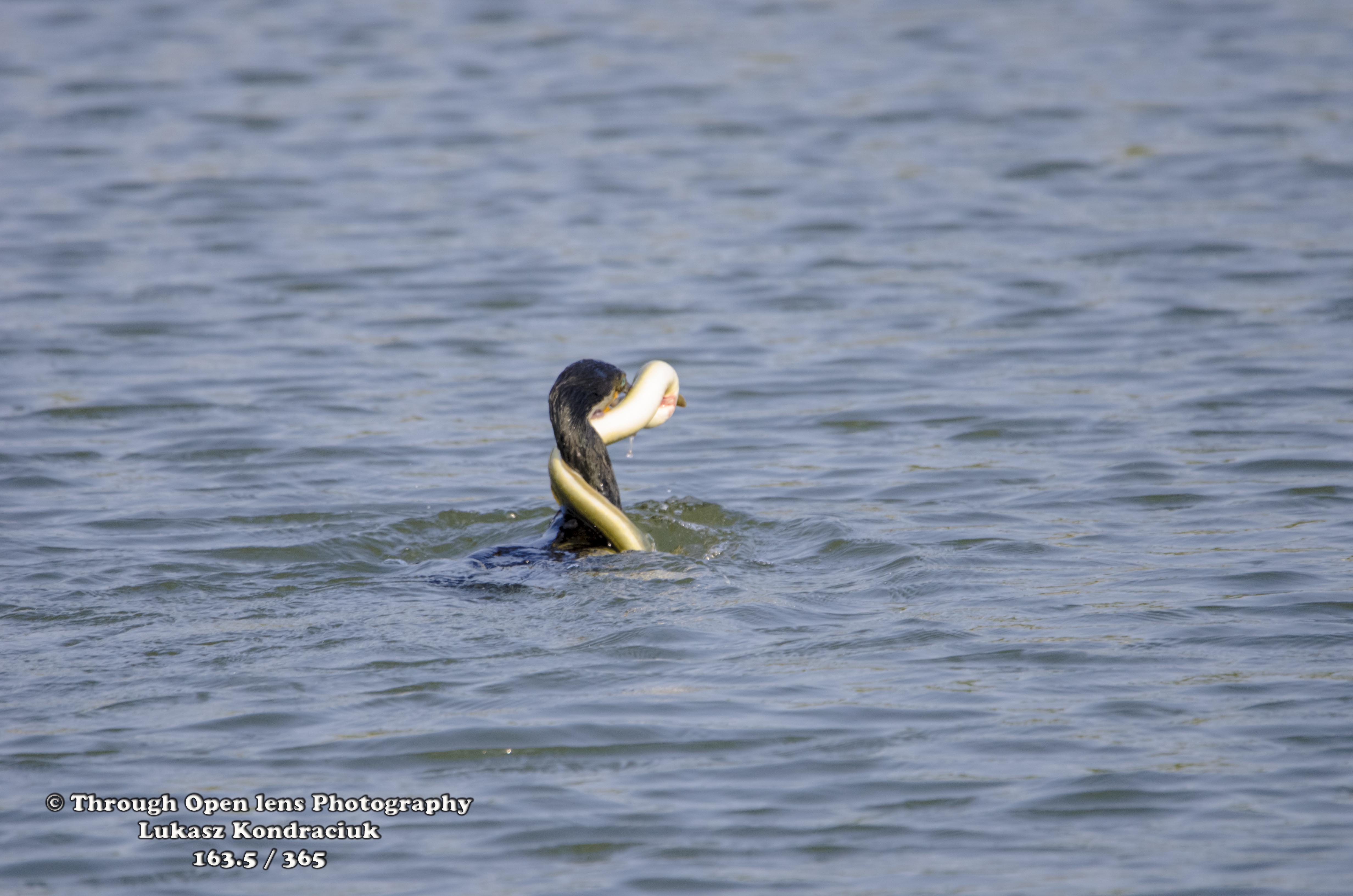
Double-crested Cormorant

F/ 6.3, 1/1000, ISO 500.

Double-crested Cormorant

Day 163 / 365

Second course meal.  Eel.

Double-crested Cormorant 1

F/6.3,  1/1000, ISO 720.

Don’t forget, you are what you eat.

Interesting Fact: A cormorant’s diet is almost all fish, with just a few insects, crustaceans, or amphibians. They eat a wide variety of fish (more than 250 species have been reported), and they have impressive fishing technique: diving and chasing fish underwater with powerful propulsion from webbed feet. The tip of a cormorant’s upper bill is shaped like a hook, which is helpful for catching prey. When cormorants happen to catch a crustacean like a crayfish, they exhibit a little flair in eating it—hammering the prey on the water to shake its legs off, then flipping it in the air and catching it headfirst for easy swallowing. ( http://www.allaboutbirds.org/guide/Double-crested_Cormorant/lifehistory#at_food )

Save The Clocktower! ( Back To The Future ) 

Lightning Strike Over Hoboken

F/4.5, 13.0, ISO 100.

Day 162 / 365

What did the lightning bolt say to the other lightning bolt?

You’re shocking!

Interesting Fact: The average temperature of lightning is around 20000 °C (36000 °F). When lightning strikes the ground it seeks out the shortest route to something with a positive charge, this might be a tree, a tall building or if they’re very unlucky, a person. ( http://www.sciencekids.co.nz/sciencefacts/weather/lightning.html )