Wiggle It Just A Little Bit

Palm Warbler

F/6.3, 1/80, ISO 500.

Palm Warbler

Day 281 / 365

A little boy comes in to a pet store.

Little boy : I’d like to buy some bird seed.
Clerk: How many birds do you have?
Little boy : None! I want to grow some!


Interesting Fact: The Palm Warbler can be most easily recognized by the tail-wagging habit that shows off its yellow undertail. ( http://identify.whatbird.com/obj/335/overview/Palm_Warbler.aspx )

I’ve Been Waiting Patiently For You To Come In And Now! Get out!

Killdeer

F/8.0, 1/250, ISO 400.

Killdeer

Day 279 / 365

Why do birds fly south for the winter?

It’s quicker than driving.

Interesting Fact: They are ground-nesting birds that are famous for hiding their nests right out in the open. They really use no nesting materials and rely on distraction displays to protect their offspring. ( http://identify.whatbird.com/obj/101/overview/Killdeer.aspx )

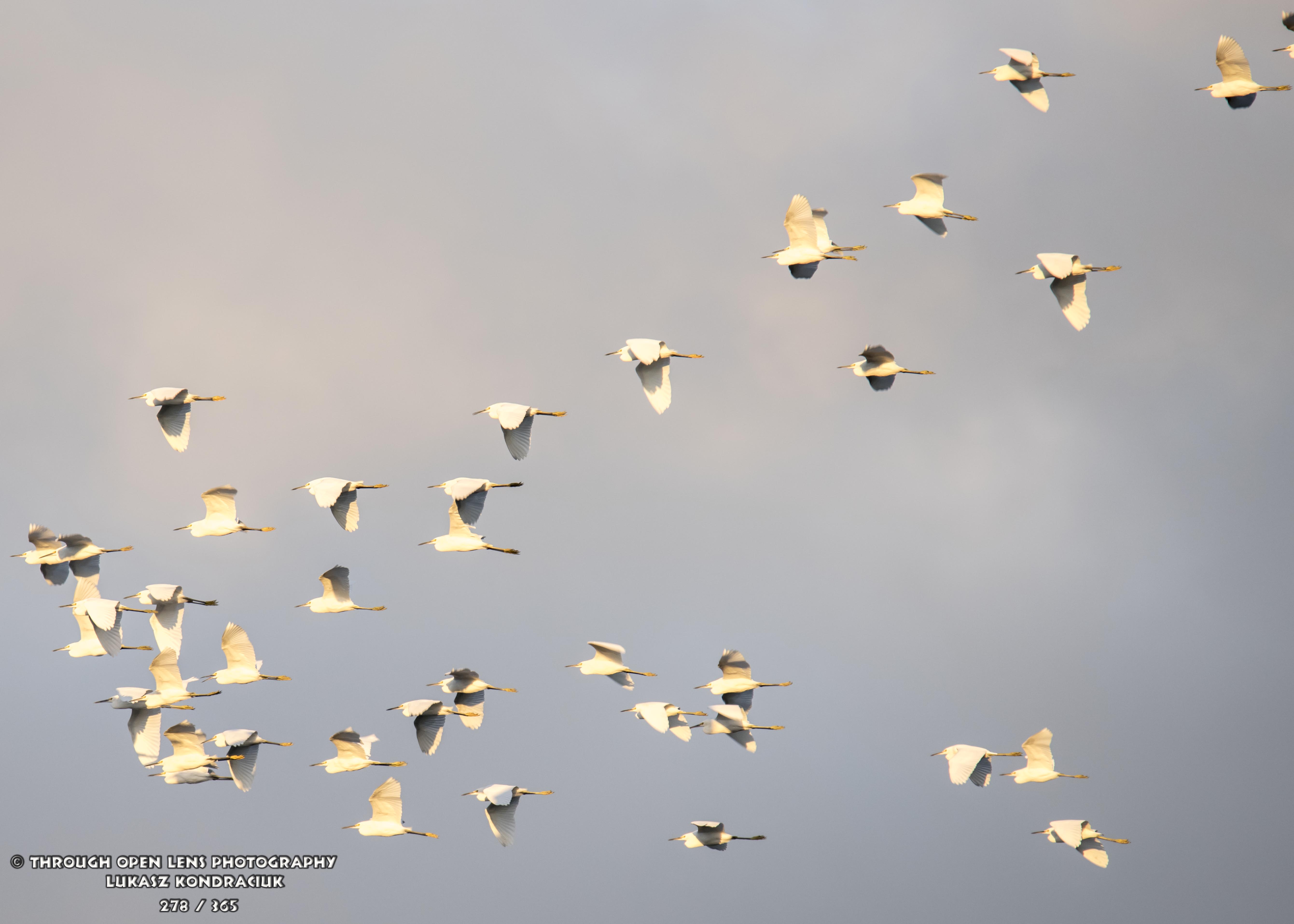
Birds Of A Feather Flock Together

Snowy Egrets Flock

F/9.0, 1/320, ISO 320.

Snowy Egrets

Day 278 / 365

Why did the Snowy Egret fly away when they get scared?

Because it didn’t want to run away like a chicken.

Interesting Fact: There is evidence that a pair of Snowy Egrets cannot recognize each other except at the nest. Even there, a bird arriving to relieve its mate must perform an elaborate greeting ceremony in order to avoid being attacked as an intruder. ( http://identify.whatbird.com/obj/48/_/Snowy_Egret.aspx )

Why Is It That When You Have The Best Hair Days, It Manages To Rain???

rain

F/5.3, 1/60, ISO 320.

Day 275 / 365

What did the evaporating raindrop say?

I’m going to pieces.

Interesting Fact: The highest amount of rainfall ever recorded in one year is 25.4 meters (1000 inches) in Cherrapunji, India. ( http://www.sciencekids.co.nz/sciencefacts/weather/rain.html )

Walking On Water Ain’t Easy!

Great Blue Heron 1

F/ 6.3, 1/160, ISO 320.

Great Blue Heron

Day 273 / 365

What holiday is observed by all birds?

Feather’s Day!

Interesting Fact: Great Blue Herons aren’t likely to visit a typical backyard. However, they are sometimes unwelcome visitors to yards that include fish ponds. A length of drain pipe placed in the pond can provide fish with a place to hide from feeding herons. Herons, like most of our birds, are legally protected by the Migratory Bird Treaty Act. ( http://www.allaboutbirds.org/guide/great_blue_heron/lifehistory )

May You Always Have A Seashell In Your Pocket And Sand Between Your Toes!

seashells

F/11.0, 1/500, ISO 160.

Day 271 / 365

Why does the mermaid wear seashells?

Because she grew out of her B-shells.

Interesting Fact: The turn of a snail’s shell is called a whorl. In 99 percent of all snail species, that whorl goes in a clockwise direction. ( http://www.ehow.com/facts_5233555_seashell-kids.html )

Super Blood Moon

Blood Moon

F/6.3, 1/250, ISO 500, Photoshop CS6.

Day 270 / 365

How does a man on a moon get his haircut?

Eclipse it.

Interesting Fact: There is a total eclipse of the moon on the night of September 27-28, 2015. It happens to be the closest supermoon of 2015. It’s the Northern Hemisphere’s Harvest Moon, or full moon nearest the September equinox. It’s the Southern Hemisphere’s first full moon of spring. This September full moon is also called a Blood Moon, because it presents the fourth and final eclipse of a lunar tetrad: four straight total eclipses of the moon, spaced at six lunar months (full moons) apart. Phew! ( http://earthsky.org/tonight/total-lunar-eclipse-blood-moon-hunters-moon-september-27-28-2015 )


Brotherly Love

brotherly love

F/5.6, 1/60, ISO 400.

Day 269 / 365

What did the beach say to the wave?…

“Long tide, no sea.”

Interesting Fact: Most beaches are found on the coast, where wave action, currents, tides and seawater rises continuously rework and shape the sediment. As a result, beaches are usually regarded as dynamic, natural phenomenon.  ( http://www.sciencekids.co.nz/sciencefacts/earth/beaches.html )


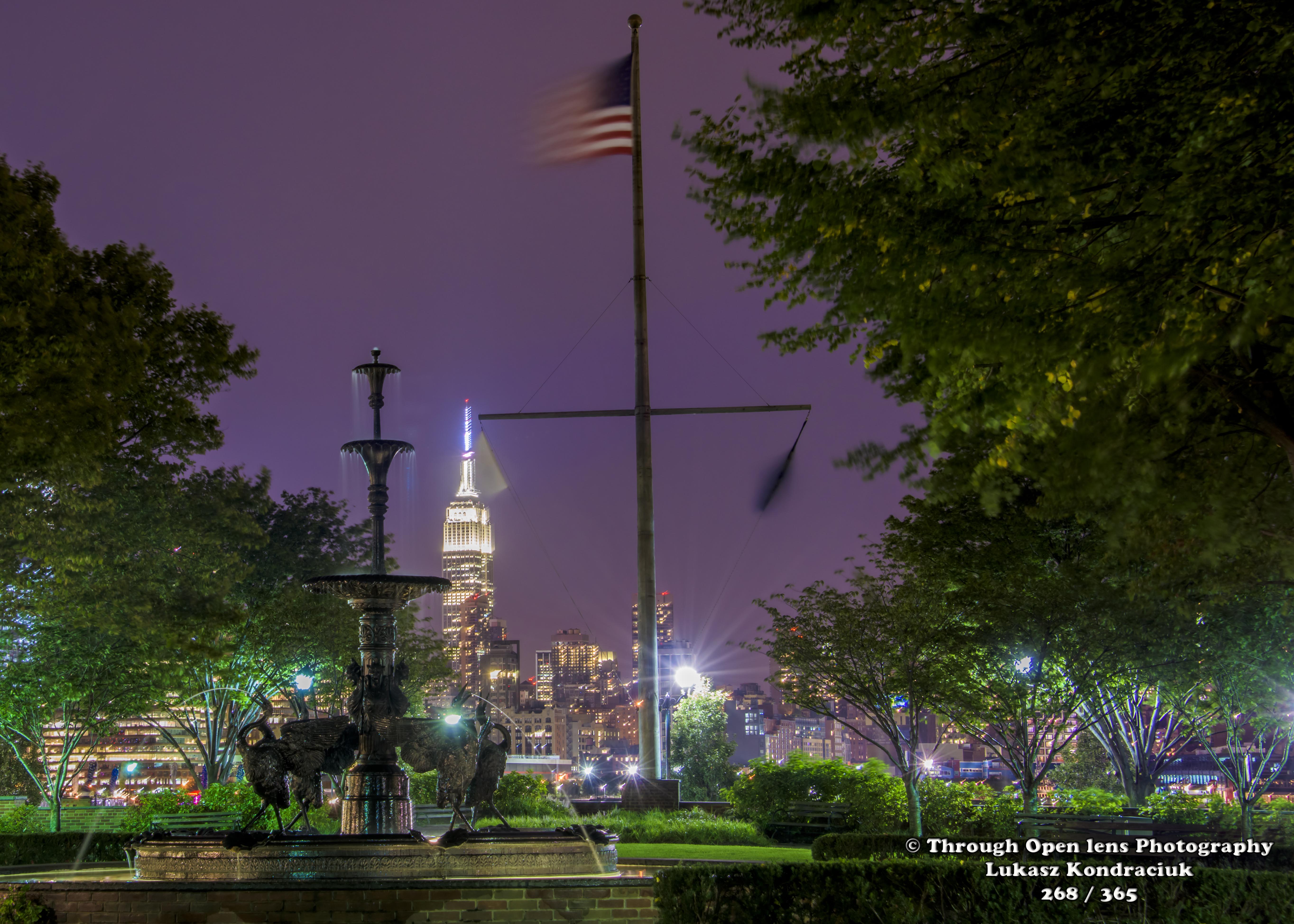
I Found Fountain Of Youth, But I Wasn’t Thirsty.

hoboken park

F/10.0, 30.0, ISO 100.

Day 268 / 365

A drunk falls into one of the fountains in Trafalgar Square. Floundering around, he looks up and sees Nelson standing on his column.

“Don’t jump!” he shouts. “This is the shallow end!”

Interesting Fact: The ancient Greeks were apparently the first to use aqueducts and gravity-powered fountains to distribute water. According to ancient historians, fountains existed in Athens, Corinth, and other ancient Greek cities in the 6th century BC as the terminating points of aqueducts which brought water from springs and rivers into the cities. In the 6th century BC the Athenian ruler Peisistratos built the main fountain of Athens, the Enneacrounos, in the Agora, or main square. It had nine large cannons, or spouts, which supplied drinking water to local residents. ( https://en.wikipedia.org/wiki/Fountain )

Enjoy Every Sunset And Look Forward To Every Sunrise!

sunset

F/11.0, 1/320, ISO 100.

Day 267 / 365

Why did the sun go to school?

To get brighter!

Interesting Fact: Sunset or sundown, is the daily disappearance of the Sun below the western horizon as a result of Earth’s rotation. The time of sunset is defined in astronomy as the moment when the trailing edge of the Sun’s disk disappears below the horizon. The ray path of light from the setting Sun is highly distorted near the horizon because of atmospheric refraction, making the sunset appear to occur when the Sun’s disk is already about one diameter below the horizon. Sunset is distinct from dusk, which is the time at which the sky becomes completely dark, which occurs when the Sun is approximately eighteen degrees below the horizon. The period between sunset and dusk is called twilight. ( https://en.wikipedia.org/wiki/Sunset)