I’m Walking Here!

Common Grackle 2

F/6.3, 1/1600, ISO 250.

Common Grackle 

How do men exercise at the beach?

By sucking in their stomach every time they see a girl in a bikini.

Interesting Fact: Common Grackles are resourceful foragers. They sometimes follow plows to catch invertebrates and mice, wade into water to catch small fish, pick leeches off the legs of turtles, steal worms from American Robins, raid nests, and kill and eat adult birds. ( https://www.allaboutbirds.org/guide/Common_Grackle/lifehistory )

Have You Tried Deez Nuts!

Squirrel

F/6.3, 1/80, ISO 250.

Squirrel

Why do squirrels swim on their back?

To keep their nuts dry!

Interesting Fact: Squirrels tend to run in erratic paths. This is intended to deceive potential predators as to its chosen direction so that it may escape. ( http://www.onekind.org/education/animals_a_z/squirrel )

Got Crabs?

Common Loon


F/ 10.0, 1/400, ISO 800.

Common Loon ( Juvenile )

Did you hear about the crab that went to the seafood disco?

He pulled a muscle

Interesting Fact: The Common Loon swims underwater to catch fish, propelling itself with its feet. It swallows most of its prey underwater. The loon has sharp, rearward-pointing projections on the roof of its mouth and tongue that help it keep a firm hold on slippery fish. ( https://www.allaboutbirds.org/guide/Common_Loon/lifehistory )


Eat So You Will Be Big And Strong!

White-throated Sparrow

F/ 6.3, 1/60, ISO 320.

White-throated Sparrow

Day 353 / 365

A couple of birds made a date to meet on the ledge outside the tenth floor of a skyscraper. The female was there on time, but the male arrived an hour late. “Where were you? I was worried sick.” “It was such nice day, I decided to walk.”
Interesting Fact: Although they look nothing alike and aren’t particularly closely related, the White-throated Sparrow and the Dark-eyed Junco occasionally mate and produce hybrids. The resulting offspring look like grayish, dully marked White-throated Sparrows with white outer tail feathers. ( https://www.allaboutbirds.org/guide/White-throated_Sparrow/lifehistory )

Don’t Chirp With Your Mouth Full!

House Finch

F/ 10.0, 1/400, ISO 320.

House Finch

Day 347 / 365

Three birds were walking down the street. Two walked into a bar, the other one ducked!

Interesting Fact: The red of a male House Finch comes from pigments contained in its food during molt (birds can’t make bright red or yellow colors directly). So the more pigment in the food, the redder the male. This is why people sometimes see orange or yellowish male House Finches. Females prefer to mate with the reddest male they can find, perhaps raising the chances they get a capable mate who can do his part in feeding the nestlings. ( https://www.allaboutbirds.org/guide/House_Finch/lifehistory )

That Taste A Little Weird?

Gadwall

F/ 11.0, 1/400, ISO 320.

Gadwall Ducks

Ring Billed Gulls

Day 218 / 365

A duck goes into a bar and says, ‘I would like a drink. I am old enough.’
The bartender replies, ‘You need to be able to prove who you are.’
The duck pulls out a mirror. He looks in it, nods his head, and says, ‘Yep, that’s me.’
.
Interesting Fact: Female Gadwall produce an egg a day while they are laying their 7–12-egg clutches. To meet their demand for protein during this stressful time, female Gadwall eat more invertebrates than males during this period—in addition to using reserves of nutrients they’ve stored in their bodies during the winter. ( https://www.allaboutbirds.org/guide/Gadwall/lifehistory )

Don’t Worry We Goat This! 

Goats 1

F/13.0, 1/125, ISO 320.

Goats

Day 277 / 365

What do you call a goat with a beard?

Goatee!

Interesting Fact: Goats have excellent coordination. They have great balance and are thus able to survive in precarious areas such as steep mountains. They can even climb trees and some species can jump over 5 feet high. ( http://www.onekind.org/be_inspired/animals_a_z/goat/ )

Money Hungry!

Piggy Bank

F/4.8, 1/60, ISO 160.

Day 222 / 365

I was thinking about making piggy banks for a living.

I hear there’s good money in them.

I’ve rejected a new job making piggy banks.

I didn’t want change.

Interesting Fact: In English, the word “pig” can refer to two things: the animal and earthenware, which is used to make crockery. People often saved money in kitchen pots and jars made of pig, called “pig jars”. By the 18th century, the term “pig jar” had evolved to “pig bank”. [3] As earthenware was supplanted by other materials, such as glass, plaster, and plastic, the name gradually began to refer specifically to the shape of the bank, instead of what was used to make it. ( https://en.wikipedia.org/wiki/Piggy_bank )

How Many Can I Fit In My Mouth?

Brewer's Blackbird

F/6.3, 1/640, ISO 800.

Common Grackle             

Day 170 /365

Where does a blackbird go for a drink?

To a crow bar.

Interesting Fact: In winter, Common Grackles forage and roost in large communal flocks with several different species of blackbird. Sometimes these flocks can number in the millions of individuals. (  https://www.allaboutbirds.org/guide/Common_Grackle/lifehistory )

Search For The Easter Bunny

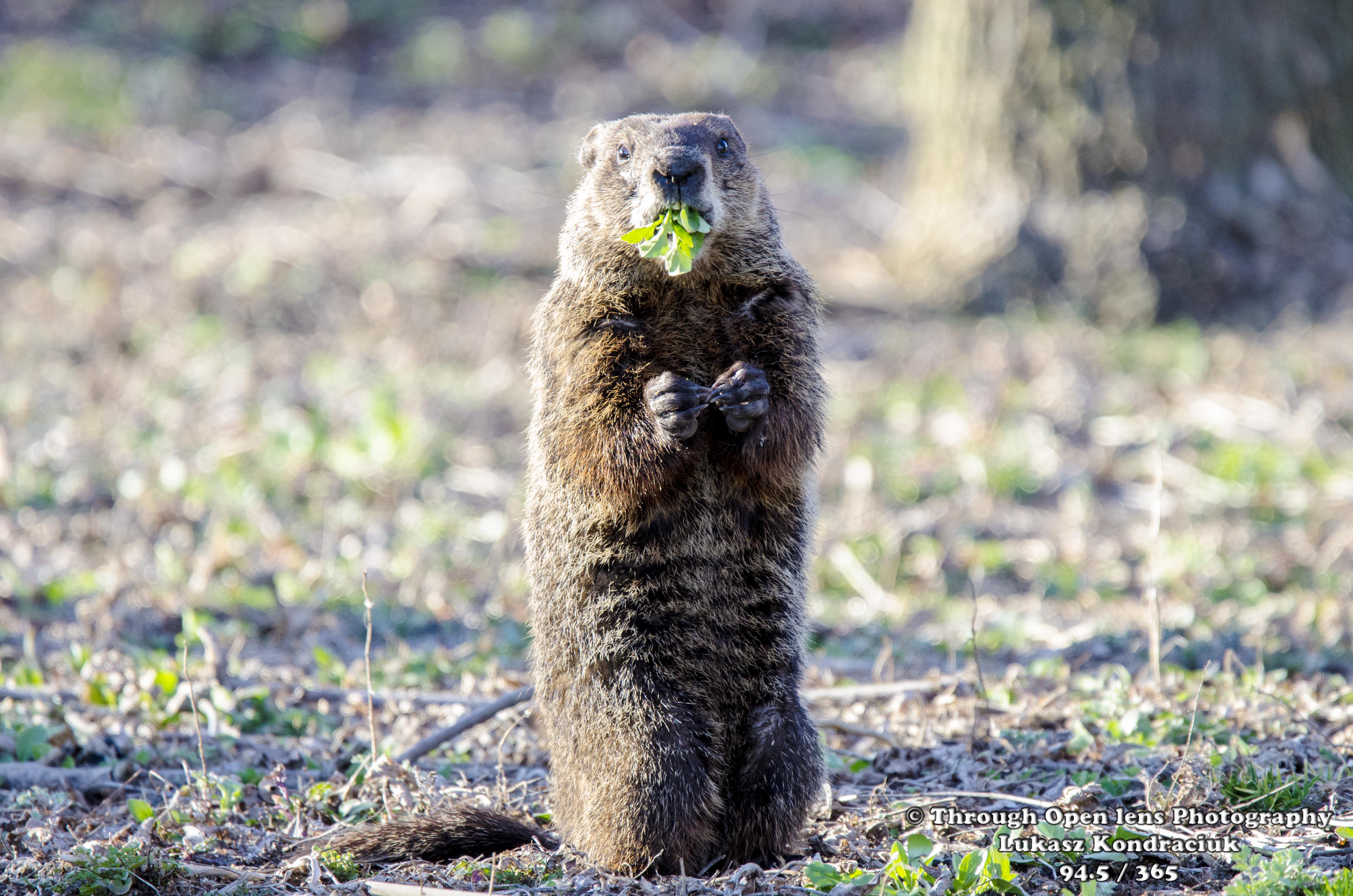
Groundhog

F/6.3, 1/400, ISO 1600.

Groundhog

Day 94 /365

On my search for the Easter Bunny,  I came across Mr. Groundhog who just recently came out of hibernation. While stuffing his face, he pointed me in the right direction.

Interesting Fact: Groundhogs are skilled climbers and swimmers, which helps them to escape less-skilled predators. ( http://www.havahart.com/groundhog-facts )

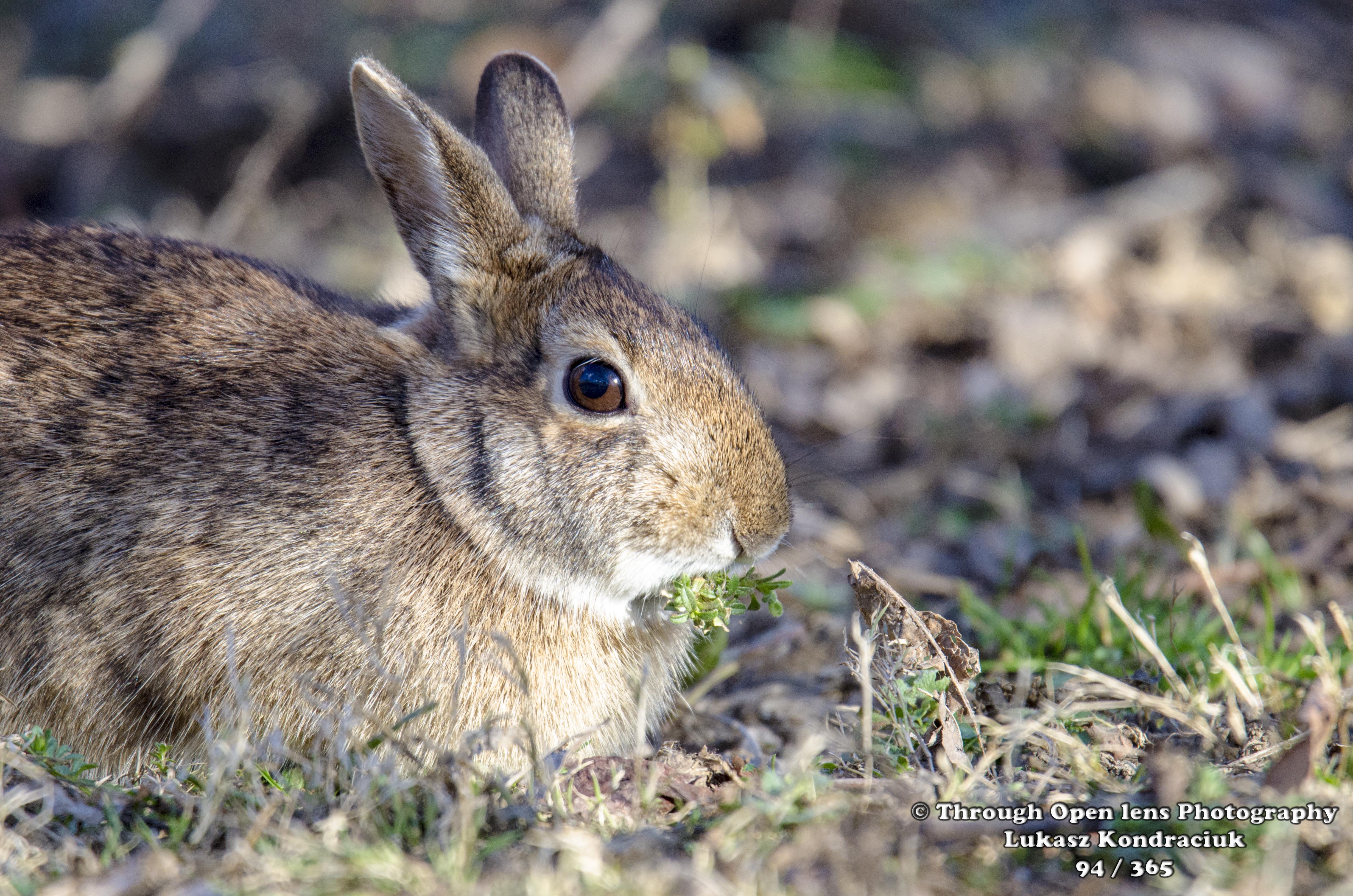
bunny

F/6.3, 1/500, ISO 1000.

Cottontail Rabbit

Finally, I found him.  He was eating to get his strength up for Easter Sunday tomorrow.

Interesting Fact: Cottontail rabbits are almost completely mute animals. They communicate with each other by thumping with their back feet against the ground. ( http://animals.pawnation.com/cottontail-rabbits-1901.html )