Ice Ice Baby!

Northern Pintail Duck

F/ 6.3, 1/500, ISO 280.

Northern Pintail Duck

Why did the bride refuse to get married in an igloo?

She got cold feet.

Interesting Fact:  The Northern Pintail is among the earliest nesting ducks in North America, beginning shortly after ice-out in many northern areas.  ( https://www.allaboutbirds.org/guide/Northern_Pintail/lifehistory )

Duck Punk!

hooded merganser female

F/6.3, 1/500, ISO 250.

Hooded Merganser ( Female )

Duck Week Continues!

What do ducks like to eat?

Quackers!

Interesting Fact: Hooded Mergansers find their prey underwater by sight. They can actually change the refractive properties of their eyes to improve their underwater vision. In addition, they have an extra eyelid, called a “nictitating membrane,” which is transparent and helps protect the eye during swimming, like a pair of goggles. ( https://www.allaboutbirds.org/guide/Hooded_Merganser/lifehistory )

That Taste A Little Weird?

Gadwall

F/ 11.0, 1/400, ISO 320.

Gadwall Ducks

Ring Billed Gulls

Day 218 / 365

A duck goes into a bar and says, ‘I would like a drink. I am old enough.’
The bartender replies, ‘You need to be able to prove who you are.’
The duck pulls out a mirror. He looks in it, nods his head, and says, ‘Yep, that’s me.’
.
Interesting Fact: Female Gadwall produce an egg a day while they are laying their 7–12-egg clutches. To meet their demand for protein during this stressful time, female Gadwall eat more invertebrates than males during this period—in addition to using reserves of nutrients they’ve stored in their bodies during the winter. ( https://www.allaboutbirds.org/guide/Gadwall/lifehistory )

Hooked On Quack!

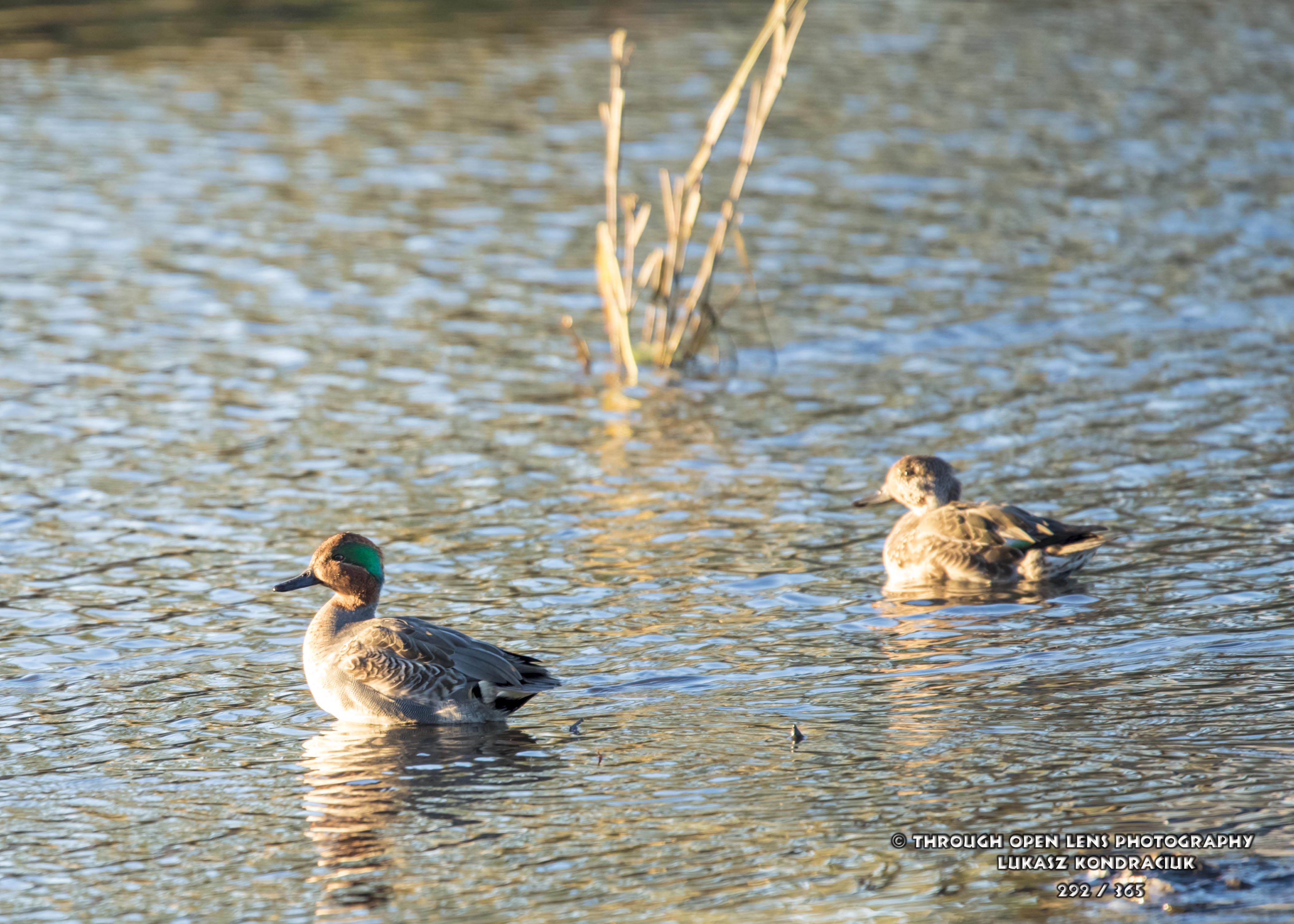
Green-winged Teal

F/6.3, 1/160, ISO 500.

Green-Winged Teal

Day 292 / 365

A duck, a skunk and a deer went out for dinner at a restaurant one night.

When it came time to pay,

the skunk didn’t have a scent,

the deer didn’t have a buck,

so they put the meal on the duck’s bill.

Interesting Fact: Green-winged Teal, more than any other species of duck, prefer to seek food on mud flats. Where mud flats are lacking, they prefer shallow marshes or temporarily flooded agricultural lands. They usually eat vegetative matter consisting of seeds, stems, and leaves of aquatic and emergent vegetation. ( http://www.withmephotographyblog.com/8-interesting-facts-about-the-green-winged-teal )

I’m Just Hanging Out

Golden-crowned Kinglet

F/6.3, 1/500, ISO 800.

Golden-crowned Kinglet

Day 289 / 365

When is the best time to buy birds?

When they’re going cheap!

Interesting Fact: The tiny Golden-crowned Kinglet is hardier than it looks, routinely wintering in areas where nighttime temperatures can fall below –40° Fahrenheit. ( https://www.allaboutbirds.org/guide/Golden-crowned_Kinglet/lifehistory )

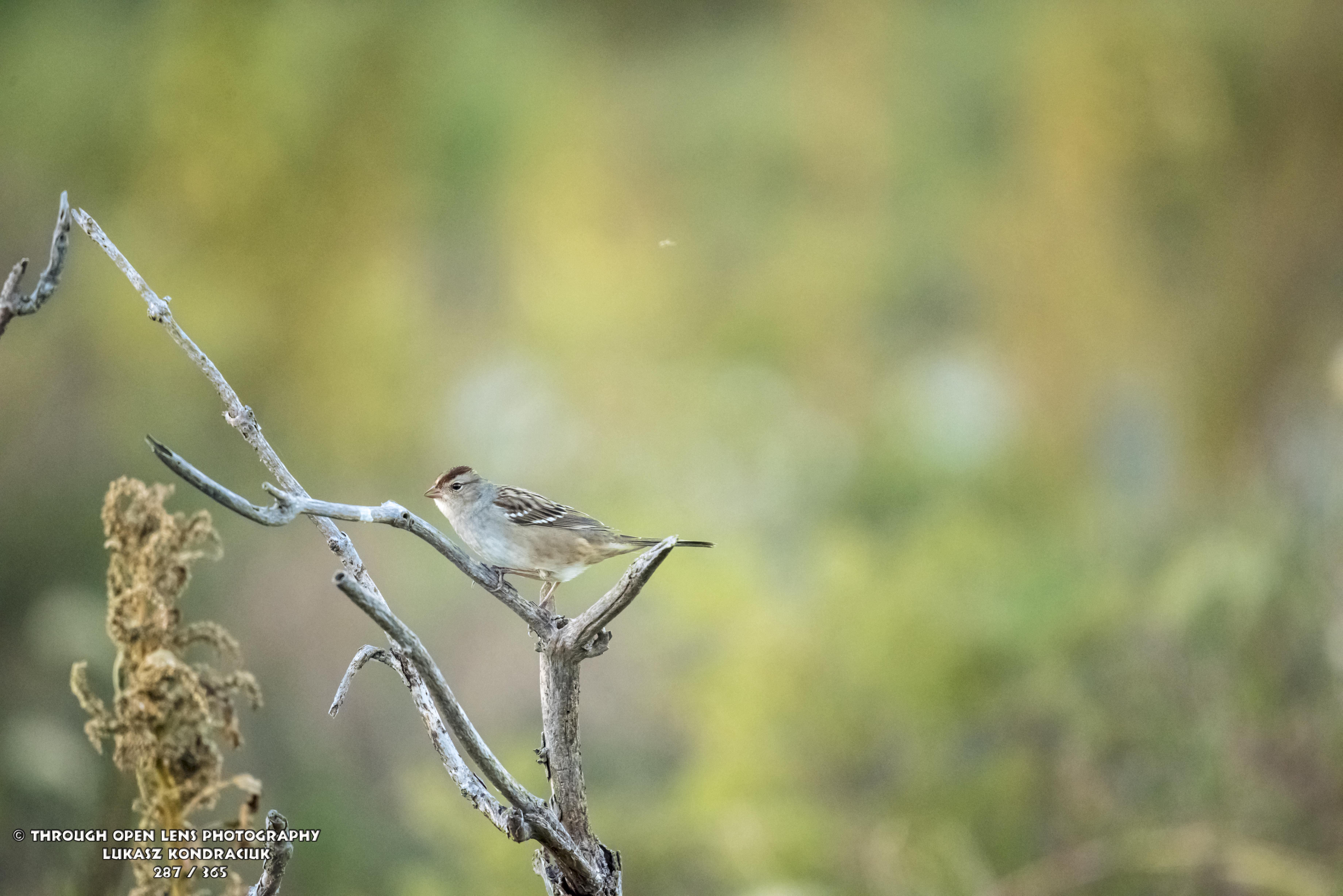
“I Am Training To Be A Spy”

American Tree Sparrow

F/6.3, 1/640, ISO 5600.

American Tree Sparrow

Day 287 / 365

Older couple were walking through the park when a sparrow flew overhead. The bird poop landed right on old man’s head.
Seeing the mess, old woman said, “I wish we had some toilet tissue.”
The Old man replied, “What good would it do. He’s probably a half a mile away by now.”

Interesting Fact: American Tree Sparrows need to take in about 30 percent of their body weight in food and a similar percentage in water each day. A full day’s fasting is usually a death sentence. Their body temperature drops and they lose nearly a fifth of their weight in that short time.  ( http://www.allaboutbirds.org/guide/American_Tree_Sparrow/lifehistory )

Birds Of A Feather Flock Together

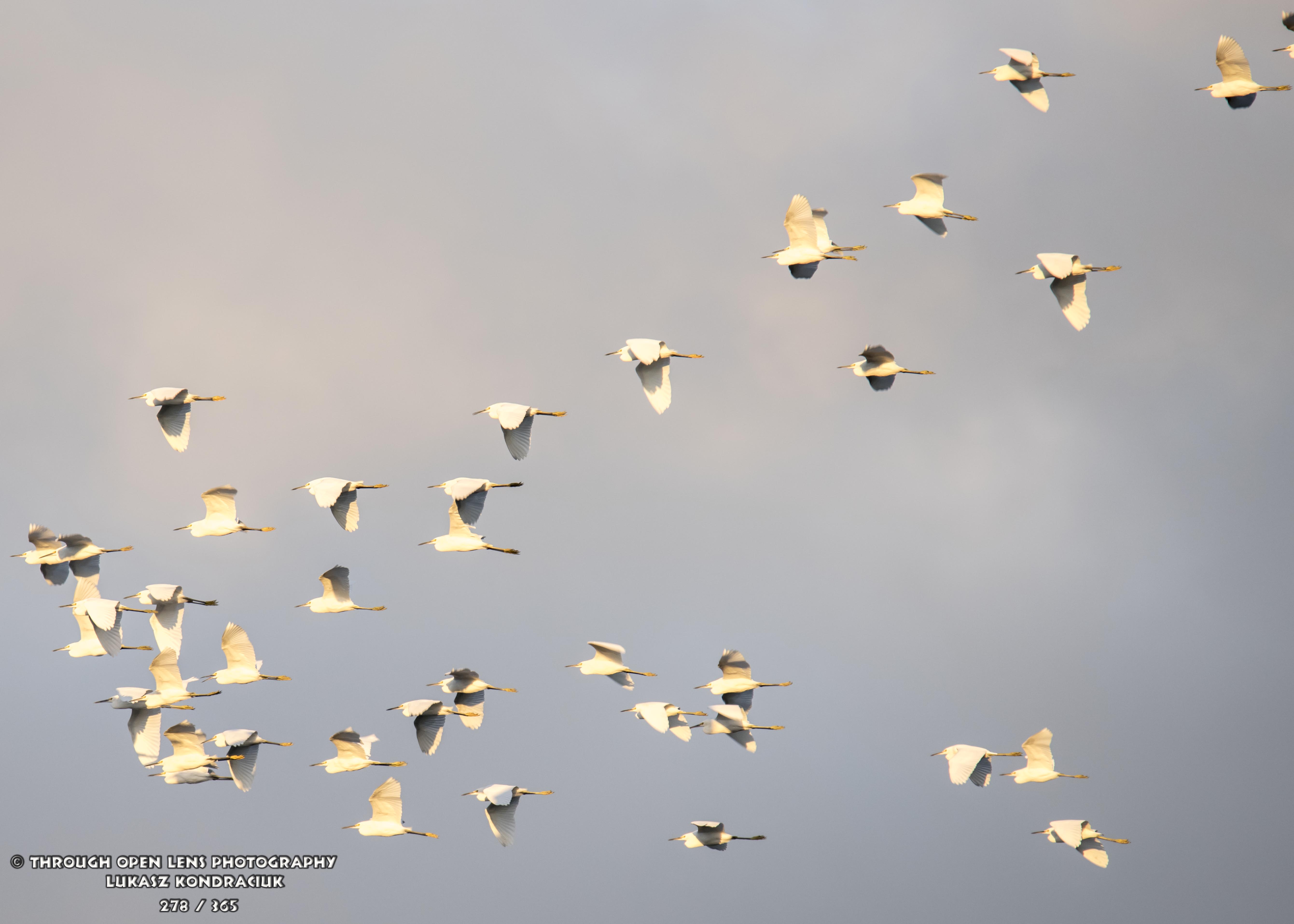
Snowy Egrets Flock

F/9.0, 1/320, ISO 320.

Snowy Egrets

Day 278 / 365

Why did the Snowy Egret fly away when they get scared?

Because it didn’t want to run away like a chicken.

Interesting Fact: There is evidence that a pair of Snowy Egrets cannot recognize each other except at the nest. Even there, a bird arriving to relieve its mate must perform an elaborate greeting ceremony in order to avoid being attacked as an intruder. ( http://identify.whatbird.com/obj/48/_/Snowy_Egret.aspx )

Enjoy Every Sunset And Look Forward To Every Sunrise!

sunset

F/11.0, 1/320, ISO 100.

Day 267 / 365

Why did the sun go to school?

To get brighter!

Interesting Fact: Sunset or sundown, is the daily disappearance of the Sun below the western horizon as a result of Earth’s rotation. The time of sunset is defined in astronomy as the moment when the trailing edge of the Sun’s disk disappears below the horizon. The ray path of light from the setting Sun is highly distorted near the horizon because of atmospheric refraction, making the sunset appear to occur when the Sun’s disk is already about one diameter below the horizon. Sunset is distinct from dusk, which is the time at which the sky becomes completely dark, which occurs when the Sun is approximately eighteen degrees below the horizon. The period between sunset and dusk is called twilight. ( https://en.wikipedia.org/wiki/Sunset)

High Dive Competition

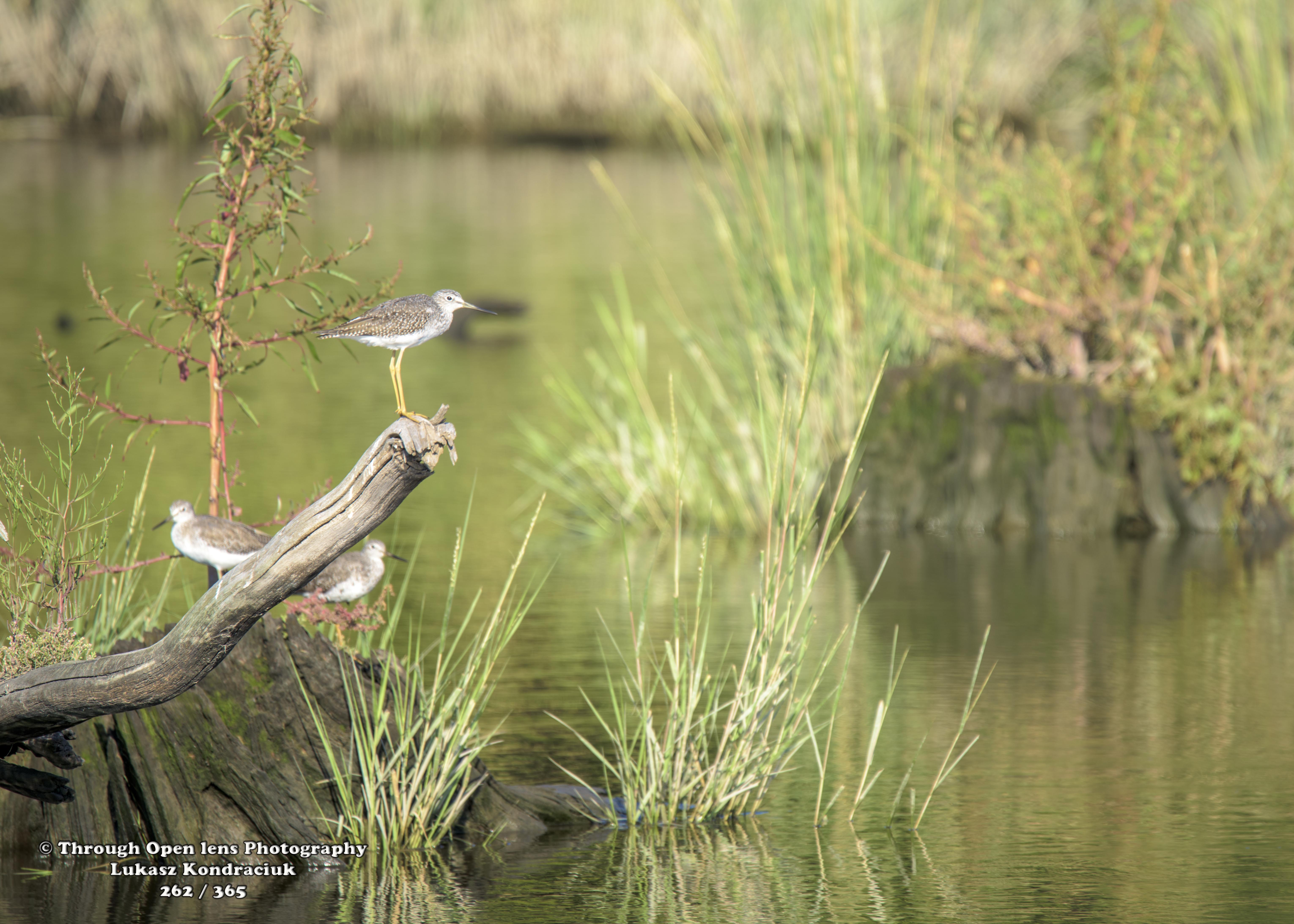
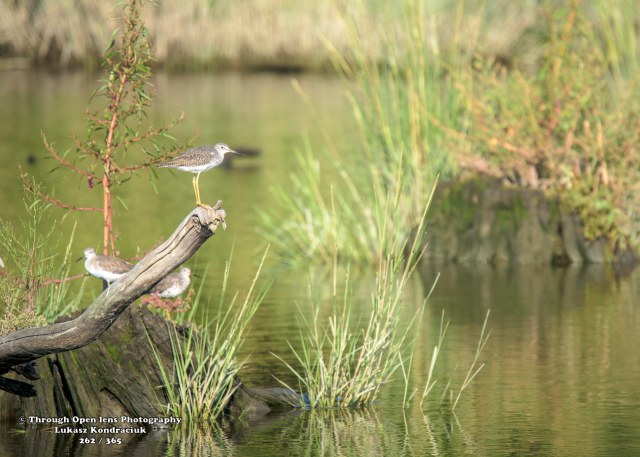
Greater Yellowlegs 3

F/7.1, 1/160, ISO 100.

Greater Yellowlegs

Day 262 / 365

A man met a gorgeous woman and knew immediately that he wanted to marry her. “But, we don’t know anything about each other,” she said.
“That doesn’t matter,” he replied. “We’ll learn about each other as we go along.”
So, she agreed. They married and went to a beautiful resort for their honeymoon.
One morning, as they were laying by the pool, he got up off of his towel, climbed up to the diving board, and did a two and a half tuck gainer. This was followed by three rotations in a jackknife position, where he straightened out and cut the water like a knife. After a few more demonstrations, he came back and lay down on the towel.
“Wow,” she said, “That was incredible!”
“I used to be an Olympic diving champion,” he explained. “See, I told you we’d learn more about each other as we went along.”
With that, she got up, jumped into the pool, and started swimming laps. After about thirty laps, she climbed back out and lay down on her towel, barely out of breath.
“That was amazing!” he exclaimed. “Were you an Olympic endurance swimmer?”
“No,” she replied, “”I was a hooker in Venice and worked both sides of the canal!”

Interesting Fact:  Although the Greater Yellowlegs is common and widespread, its low densities and tendency to breed in inhospitable, mosquito-ridden muskegs make it one of the least-studied shorebirds on the continent. ( http://www.allaboutbirds.org/guide/Greater_Yellowlegs/lifehistory )


You Make Me Blush!

House Finch

F/ 6.3, 1/640, ISO 800.

House Finch

Day 257 / 365

Why do birds lay eggs?

If they dropped them, they d break!

Interesting Fact: The House Finch was originally a bird of the western United States and Mexico. In 1940 a small number of finches were turned loose on Long Island, New York, after failed attempts to sell them as cage birds (“Hollywood finches”). They quickly started breeding and spread across almost all of the eastern United States and southern Canada within the next 50 years. ( http://www.allaboutbirds.org/guide/House_Finch/lifehistory )