You Can Run, But You Can’t Hide

Peregrine Falcon

F/10.0, 1/400, ISO 250.

Peregrine Falcon

Day 291 / 365

What birds spend all their time on their knees?

Birds of prey!

Interesting Fact: The name “peregrine” means wanderer, and the Peregrine Falcon has one of the longest migrations of any North American bird. Tundra-nesting falcons winter in South America, and may move 25,000 km (15,500 mi) in a year. Maps of the migration of individual falcons determined by satellite telemetry can be seen at Environment Canada. ( http://www.allaboutbirds.org/guide/Peregrine_Falcon/lifehistory )
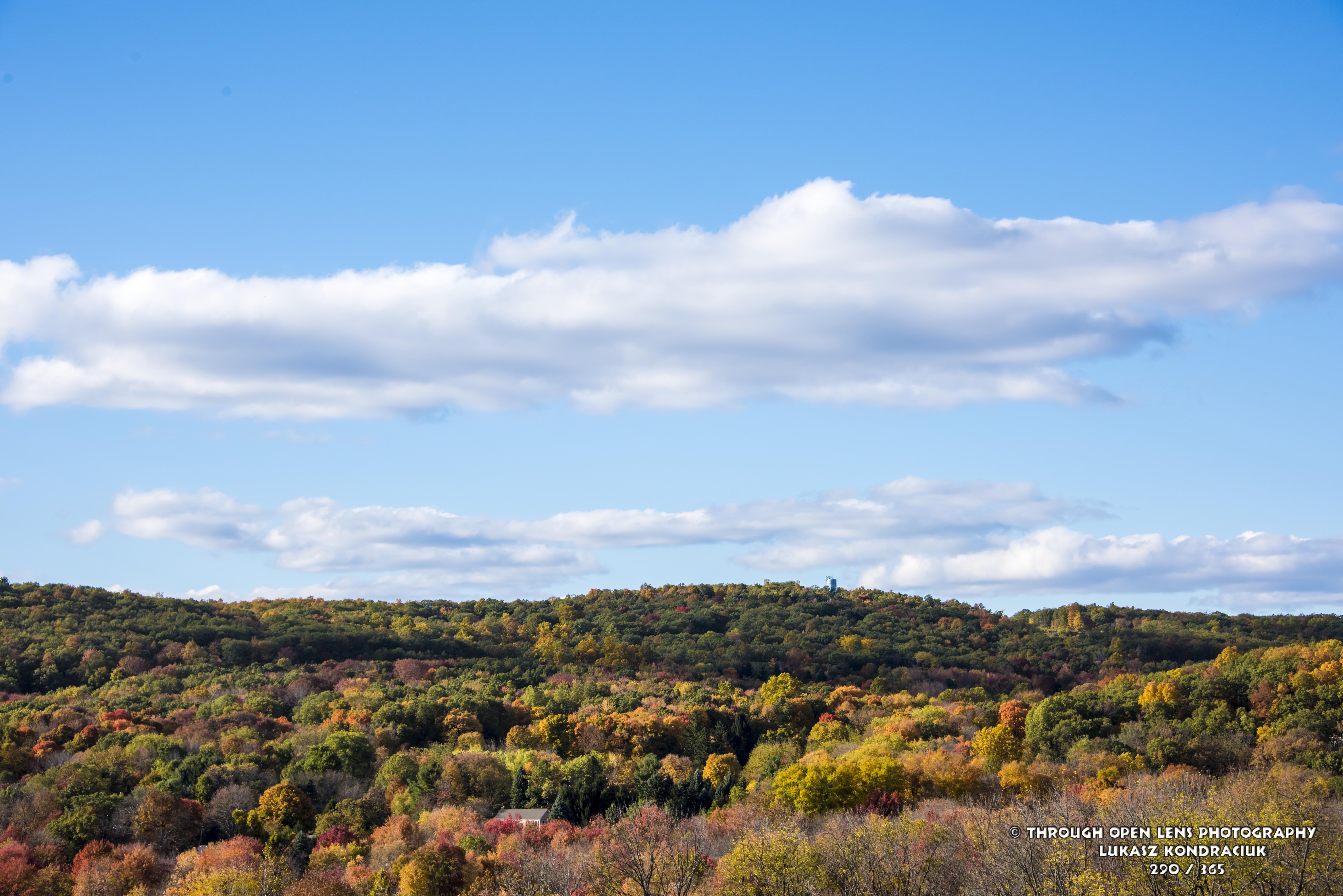
 I Am Hooked On Autumn!

autumn

F/ 9.0, 1/400, ISO160.

Day 290 / 365

What did the tree say to autumn?

Leaf me alone.

Interesting Fact: Evergreen trees will not lose their leaves like deciduous trees. Their leaves, also called needles, are covered with a thick wax. This wax protects the inner components of the needles, preventing them from freezing. ( http://www.richmond.com/life/celebrations/article_aa9e91de-402a-11e4-8c0f-001a4bcf6878.html )

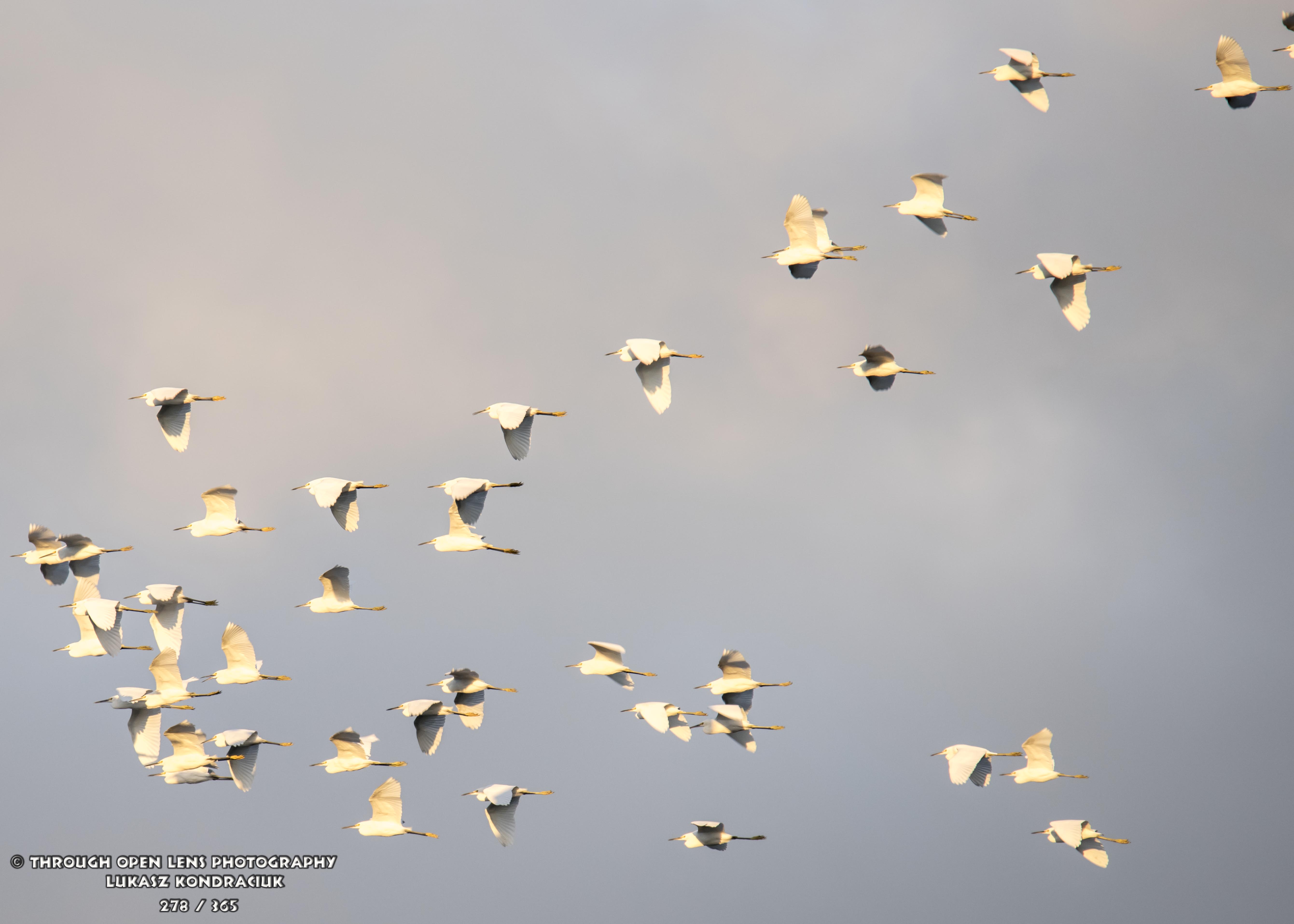
Birds Of A Feather Flock Together

Snowy Egrets Flock

F/9.0, 1/320, ISO 320.

Snowy Egrets

Day 278 / 365

Why did the Snowy Egret fly away when they get scared?

Because it didn’t want to run away like a chicken.

Interesting Fact: There is evidence that a pair of Snowy Egrets cannot recognize each other except at the nest. Even there, a bird arriving to relieve its mate must perform an elaborate greeting ceremony in order to avoid being attacked as an intruder. ( http://identify.whatbird.com/obj/48/_/Snowy_Egret.aspx )

Super Blood Moon

Blood Moon

F/6.3, 1/250, ISO 500, Photoshop CS6.

Day 270 / 365

How does a man on a moon get his haircut?

Eclipse it.

Interesting Fact: There is a total eclipse of the moon on the night of September 27-28, 2015. It happens to be the closest supermoon of 2015. It’s the Northern Hemisphere’s Harvest Moon, or full moon nearest the September equinox. It’s the Southern Hemisphere’s first full moon of spring. This September full moon is also called a Blood Moon, because it presents the fourth and final eclipse of a lunar tetrad: four straight total eclipses of the moon, spaced at six lunar months (full moons) apart. Phew! ( http://earthsky.org/tonight/total-lunar-eclipse-blood-moon-hunters-moon-september-27-28-2015 )


Enjoy Every Sunset And Look Forward To Every Sunrise!

sunset

F/11.0, 1/320, ISO 100.

Day 267 / 365

Why did the sun go to school?

To get brighter!

Interesting Fact: Sunset or sundown, is the daily disappearance of the Sun below the western horizon as a result of Earth’s rotation. The time of sunset is defined in astronomy as the moment when the trailing edge of the Sun’s disk disappears below the horizon. The ray path of light from the setting Sun is highly distorted near the horizon because of atmospheric refraction, making the sunset appear to occur when the Sun’s disk is already about one diameter below the horizon. Sunset is distinct from dusk, which is the time at which the sky becomes completely dark, which occurs when the Sun is approximately eighteen degrees below the horizon. The period between sunset and dusk is called twilight. ( https://en.wikipedia.org/wiki/Sunset)

Fly Me To The Moon

moon 2

F/6.3, 1/2500, ISO 500, Photoshop CS6.

Day 266 / 365

When is the moon not hungry?

When it is full!

Interesting Fact: When a month has two full moons, the second full moon is called a blue moon. Another definition of a blue moon is the third full moon in any season (quarter of year) containing 4 total full moons. ( http://www.moonconnection.com/moon_facts.phtml )

Mother Nature Has A Big Canvas

clouds 1

F/4.5, 1/2500, ISO 500.

Day 265 / 365

What do you call a sheep with no legs?

A cloud.

Interesting Fact: Ancient cloud studies were not made in isolation, but were observed in combination with other weather elements and even other natural sciences. In about 340 BC the Greek philosopher Aristotle wrote Meteorologica, a work which represented the sum of knowledge of the time about natural science, including weather and climate. For the first time, precipitation and the clouds from which precipitation fell were called meteors, which originate from the Greek word meteoros, meaning ‘high in the sky’. From that word came the modern term meteorology, the study of clouds and weather. Meteorologica was a work of intuitive rather than scientific study. Nevertheless, it was the first known work that attempted to treat a broad range of meteorological topics. ( https://en.wikipedia.org/wiki/Cloud )

Going Down Down Down

American Kestrel 2

F/6.3, 1/1250, ISO 400, Photoshop CS6.

American Kestrel

Day 260 / 365

Teacher: “What is the difference between a bird and fly?”
Student:  “Well…a bird can fly…..but a fly can’t bird.”

Interesting Fact: Unlike humans, birds can see ultraviolet light. This enables kestrels to make out the trails of urine that voles, a common prey mammal, leave as they run along the ground. Like neon diner signs, these bright paths may highlight the way to a meal—as has been observed in the Eurasian Kestrel, a close relative. ( http://www.allaboutbirds.org/guide/American_Kestrel/lifehistory )


I Want To Fly Like An Eagle

American Kestrel 1

F/6.3, 1/800, ISO 800.

American Kestrel

Day 255 / 365

Why did the American Kestrel cross the road, roll in the mud, and cross back?

He was a dirty double-crosser!

Interesting Fact: When nature calls, nestling kestrels back up, raise their tails, and squirt feces onto the walls of the nest cavity. The feces dry on the cavity walls and stay off the nestlings. The nest gets to be a smelly place, with feces on the walls and uneaten parts of small animals on the floor. ( http://www.allaboutbirds.org/guide/American_Kestrel/lifehistory )


“Are You My Dinner? “

Red-tailed Hawks

F/6.3, 1/125, ISO 200.

Red-tailed Hawk

Day 242 / 365

Did you know my fiancé does a great bird impression.

She watches me like a hawk.

Interesting Fact: In flight, this hawk travels at speeds from 20 to 40 mph (64 km/h); however, when diving to catch prey, their speed may exceed 120 mph (190 km/h). ( http://beautyofbirds.com/redtailedhawks.html )