We Own The Night


new-york-city-manhattan-1

F/18.0, 26.0, ISO 80

New York City, Manhattan

A couple had lived together in the backwoods for over fifty years.

To celebrate their fiftieth anniversary, he took her to a large city and they checked into a plush hotel.

She said to the bellman, “We refuse to settle for such a small room. No windows, no bed, and no air conditioning.”

“But, madam!”, replied the bellman.

“Don’t ‘But madam’ me,” she continued. “You can’t treat us like we’re a couple of fools just because we don’t travel much, and we’ve never been to the big city, and never spent the night at a hotel. I’m going to complain to the manager.”

“Madam,” the bellman said, “this isn’t your room; this is the elevator!”

Interesting Fact: The name “Manhattan” derives from the word Manna-hata, as written in the 1609 logbook of Robert Juet, an officer on Henry Hudson‘s yacht Halve Maen (Half Moon).[35] A 1610 map depicts the name as Manna-hata, twice, on both the west and east sides of the Mauritius River (later named the Hudson River). The word “Manhattan” has been translated as “island of many hills” from the Lenape language.[36] The United States Postal Service prefers that mail addressed to Manhattan use “New York, NY” rather than “Manhattan, NY”.[
Don’t You Forget About Me

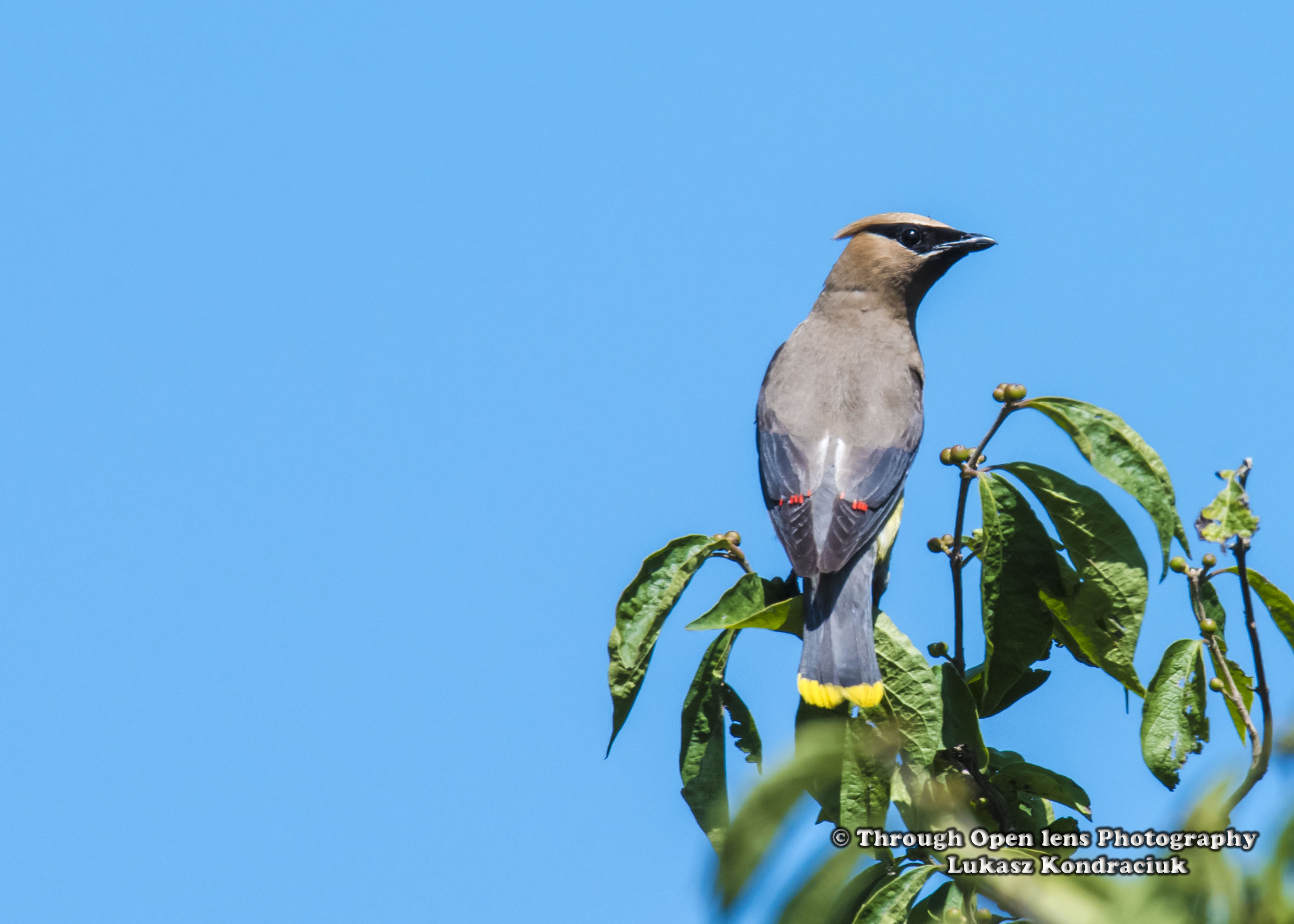
cedar-waxwing-1

F/ 11.0, 1/500, ISO 250.

Cedar Waxwing

What did the pencil sharpener say to the pencil?

Stop going in circles and get to the point! 

Interesting Fact: Cedar Waxwings with orange instead of yellow tail tips began appearing in the northeastern U.S. and southeastern Canada in the 1960s. The orange color is the result of a red pigment picked up from the berries of an introduced species of honeysuckle. If a waxwing eats enough of the berries while it is growing a tail feather, the tip of the feather will be orange. ( https://www.allaboutbirds.org/guide/Cedar_Waxwing/lifehistory )

Ready, Set, Go!

Vesper Sparrow

F/7.1, 1/200, ISO 320.

Vesper Sparrow

Couples first day at a resort decided to hit the beach.
When the guy went back to there room to get something to drink, one of the hotel maids was making the bed.
He grabbed his cooler and was on my way out when he paused and asked, “Can we drink beer on the beach?”
“Sure,” she said, “but I have to finish the rest of the rooms beforehand.”

Interesting Fact: The Vesper Sparrow responds quickly to changes in habitat; it is often the first species to occupy reclaimed mine sites and abandon old farm fields as they return to forest.  ( https://www.allaboutbirds.org/guide/Vesper_Sparrow/lifehistory )

Where Are We?

House Finches

F/10.0, 1/400, ISO 200.

House Finch

What did the bra say to the hat?

You go on ahead while I give these two a lift!

Interesting Fact: The total House Finch population across North America is staggering. Scientists estimate between 267 million and 1.4 billion individuals. ( https://www.allaboutbirds.org/guide/House_Finch/lifehistory )


“Peace Is Not Merely A Distant Goal That We Seek, But A Means By Which We Arrive At That Goal.”

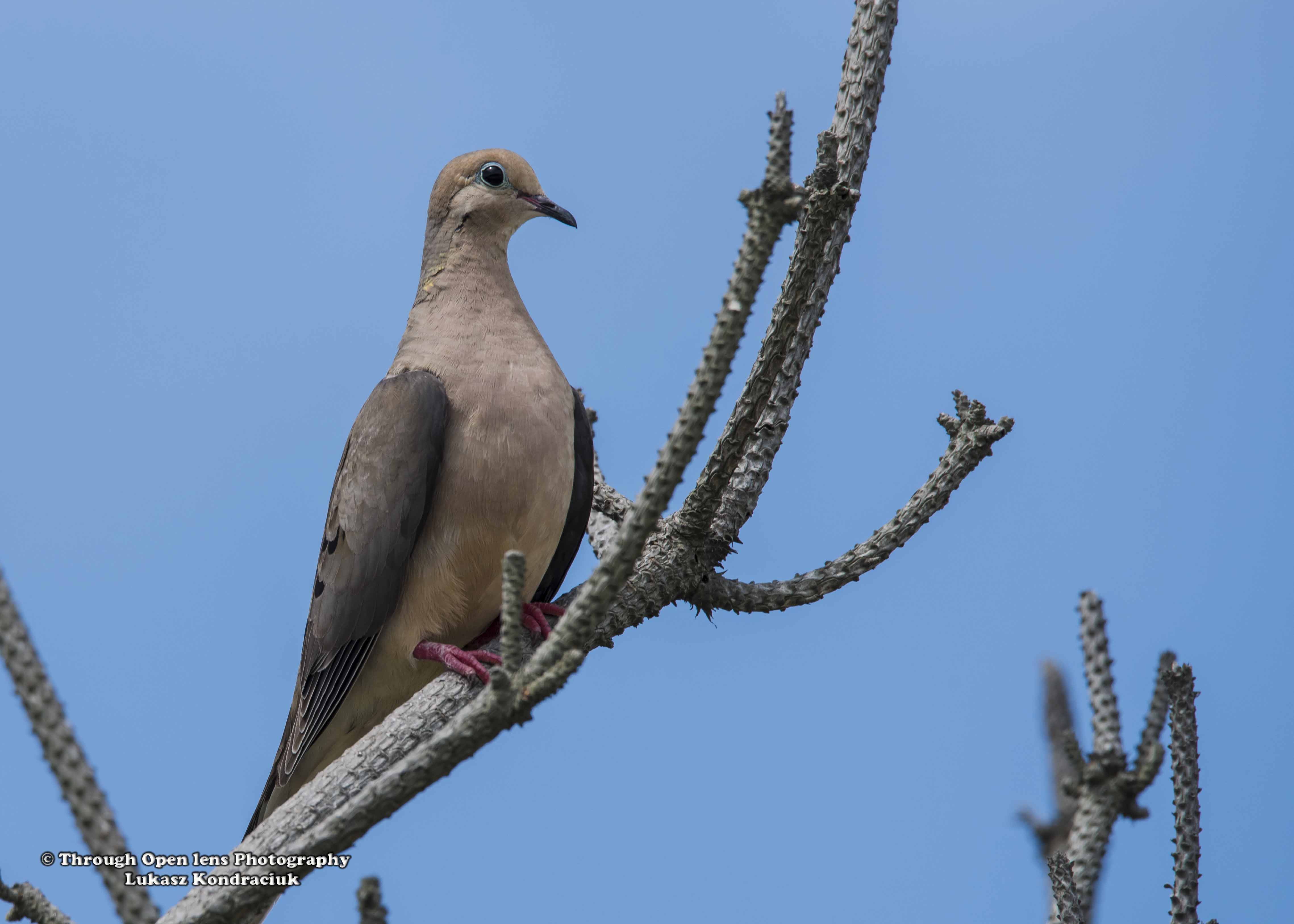
Mourning Dove 1

F/10.0, 1/400, ISO 160.

Mourning Dove

Why did the rubber chicken cross the road?

She wanted to stretch her legs.

Interesting Fact: Mourning Doves eat roughly 12 to 20 percent of their body weight per day, or 71 calories on average. ( https://www.allaboutbirds.org/guide/Mourning_Dove/lifehistory )

AHHHH! You Scared Me!

White-Tailed Deer 3

F/ 7.1, 1/200, ISO 200.

Why do male deer need braces?

Because they have buck teeth!

Interesting Fact: Adult white-tails have reddish-brown coats in summer which fade to a duller grayish-brown in winter. Male deer, called bucks, are easily recognizable in the summer and fall by their prominent set of antlers, which are grown annually and fall off in the winter. Only the bucks grow antlers, which bear a number of tines, or sharp points. During the mating season, also called the rut, bucks fight over territory by using their antlers in sparring matches. ( http://animals.nationalgeographic.com/animals/mammals/white-tailed-deer/ )


I Am Not Crazy… Well, Maybe I Am But You Got To Love Me.

Eastern Towhee 1

F/8.0, 1/250, ISO 250.

Eastern Towhee

Why was the math textbook so sad?

He had a lot of problems!

Interesting Fact: The Eastern Towhee and the very similar Spotted Towhee of western North America used to be considered the same species, the Rufous-sided Towhee. The two forms still occur together in the Great Plains, where they sometimes interbreed. This is a common evolutionary pattern in North American birds – a holdover from when the great ice sheets split the continent down the middle, isolating birds into eastern and western populations that eventually became new species. ( https://www.allaboutbirds.org/guide/Eastern_Towhee/lifehistory )

I Always Have To Deal With Paparazzis

White-Tailed Deer 1

F/5.6, 1/50, ISO 100.

White-Tailed Deer

Who did Bambi invite to his birthday party?

His nearest and deer-est friends.

Interesting Fact: White-tailed deer, the smallest members of the North American deer family, are found from southern Canada to South America. In the heat of summer they typically inhabit fields and meadows using clumps of broad-leaved and coniferous forests for shade. During the winter they generally keep to forests, preferring coniferous stands that provide shelter from the harsh elements. ( http://animals.nationalgeographic.com/animals/mammals/white-tailed-deer/ )

A Little Birdie Told Me…

Chipping Sparrow

F/7.1, 1/200, ISO 500.

Chipping Sparrow 

Bacon and eggs walk into a bar and order a beer, the bartender says sorry, we don’t serve breakfast.

Interesting Fact: Chipping Sparrows typically build their nests low in a shrub or tree, but every once in a while they get creative. People have found their nests among hanging strands of chili peppers, on an old-fashioned mower inside a tool shed, and on a hanging basket filled with moss. ( https://www.allaboutbirds.org/guide/Chipping_Sparrow/lifehistory )

Hey What’s Going On Down There, Keep It Down!

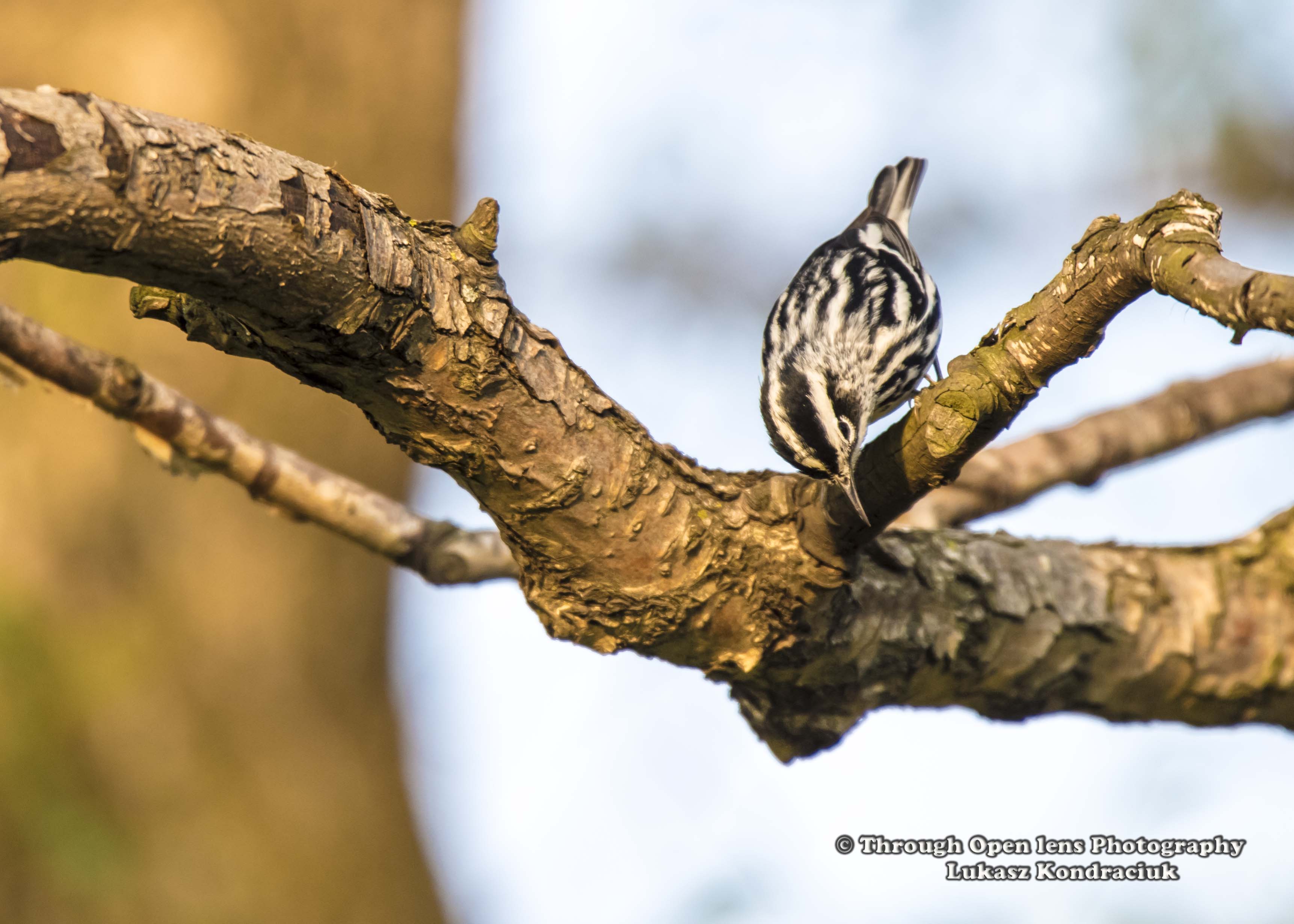
Black and white Warbler

F/7.1, 1/200, ISO 320.

Black-and-white Warbler

A couple of hunters are out in the woods when one of them falls to the ground. He doesn’t seem to be breathing, his eyes are rolled back in his head. The other guy whips out his cell phone and calls the emergency services. He gasps to the operator: “My friend is dead! What can I do?”

The operator, in a calm soothing voice says: “Just take it easy. I can help. First, let’s make sure he’s dead.” There is a silence, then a shot is heard.

The guy’s voice comes back on the line. He says: “OK, now what?

Interesting Fact: As warblers go, Black-and-white Warblers are combative: they’ll attack and fight with other species that enter their territory, including Black-capped Chickadees, Red-breasted Nuthatches, and American Redstarts. This aggressive behavior extends to the wintering grounds, where they defend territories and when feeding in mixed flocks will drive other Black-and-white Warblers away. ( https://www.allaboutbirds.org/guide/Black-and-white_Warbler/lifehistory )