Knock, Knock, Knocking On Heavens Door!

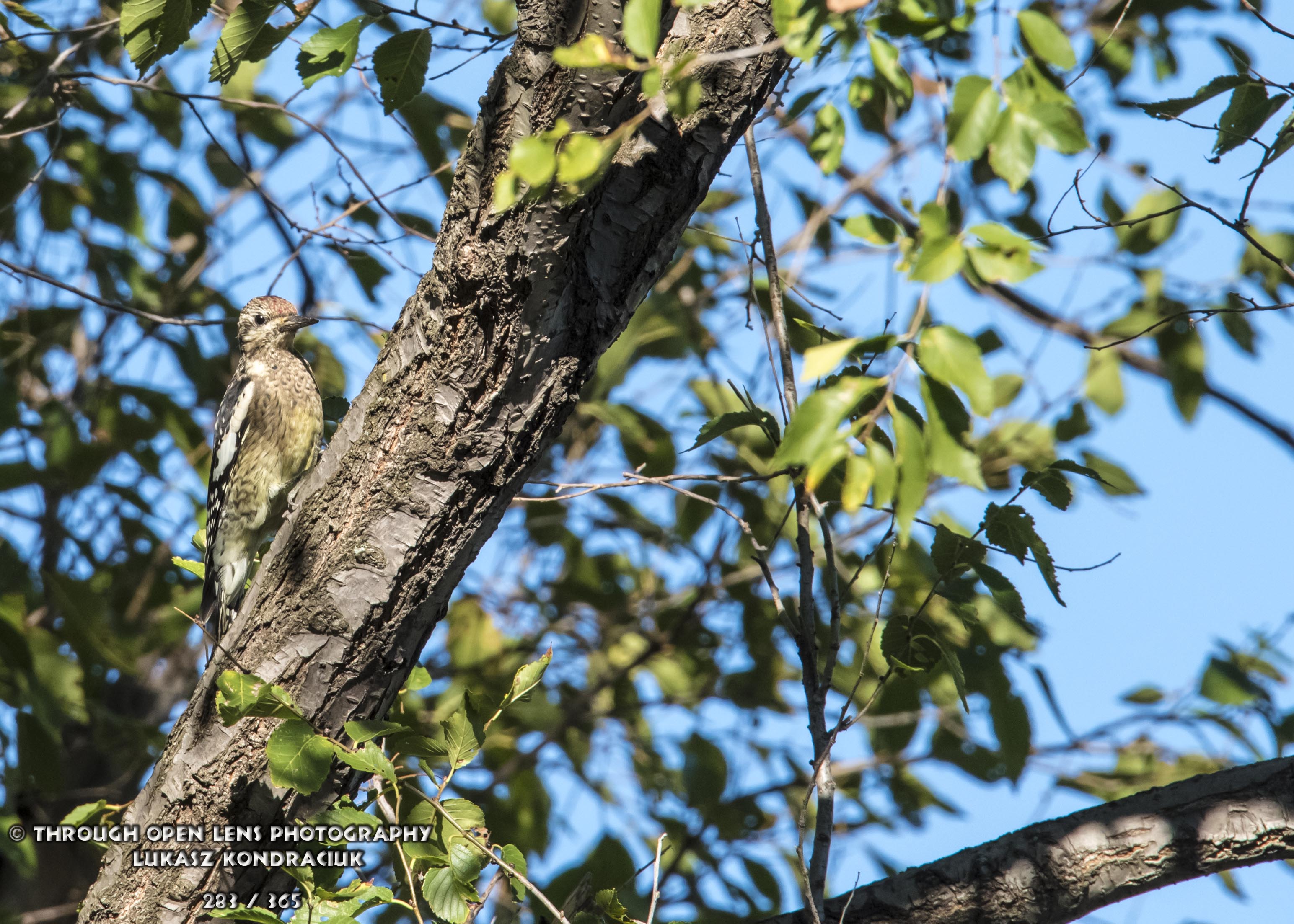
Yellow bellied sapsucker juvenile

F/11.0, 1/640, ISO800.

Yellow Bellied Sapsucker ( Juvenile )

Day 284 / 365

I used to have a woodpecker called Woody, until he attacked my fiancé.

I still can’t believe Woody would peck her.

Interesting Fact: The Yellow-bellied Sapsucker makes two kinds of holes in trees to harvest sap. Round holes extend deep in the tree and are not enlarged. The sapsucker inserts its bill into the hole to probe for sap. Rectangular holes are shallower, and must be maintained continually for the sap to flow. The sapsucker licks the sap from these holes, and eats the cambium of the tree too. New holes usually are made in a line with old holes, or in a new line above the old.  ( http://www.allaboutbirds.org/guide/Yellow-bellied_Sapsucker/lifehistory )

Wiggle It Just A Little Bit

Palm Warbler

F/6.3, 1/80, ISO 500.

Palm Warbler

Day 281 / 365

A little boy comes in to a pet store.

Little boy : I’d like to buy some bird seed.
Clerk: How many birds do you have?
Little boy : None! I want to grow some!


Interesting Fact: The Palm Warbler can be most easily recognized by the tail-wagging habit that shows off its yellow undertail. ( http://identify.whatbird.com/obj/335/overview/Palm_Warbler.aspx )

I’ve Been Waiting Patiently For You To Come In And Now! Get out!

Killdeer

F/8.0, 1/250, ISO 400.

Killdeer

Day 279 / 365

Why do birds fly south for the winter?

It’s quicker than driving.

Interesting Fact: They are ground-nesting birds that are famous for hiding their nests right out in the open. They really use no nesting materials and rely on distraction displays to protect their offspring. ( http://identify.whatbird.com/obj/101/overview/Killdeer.aspx )

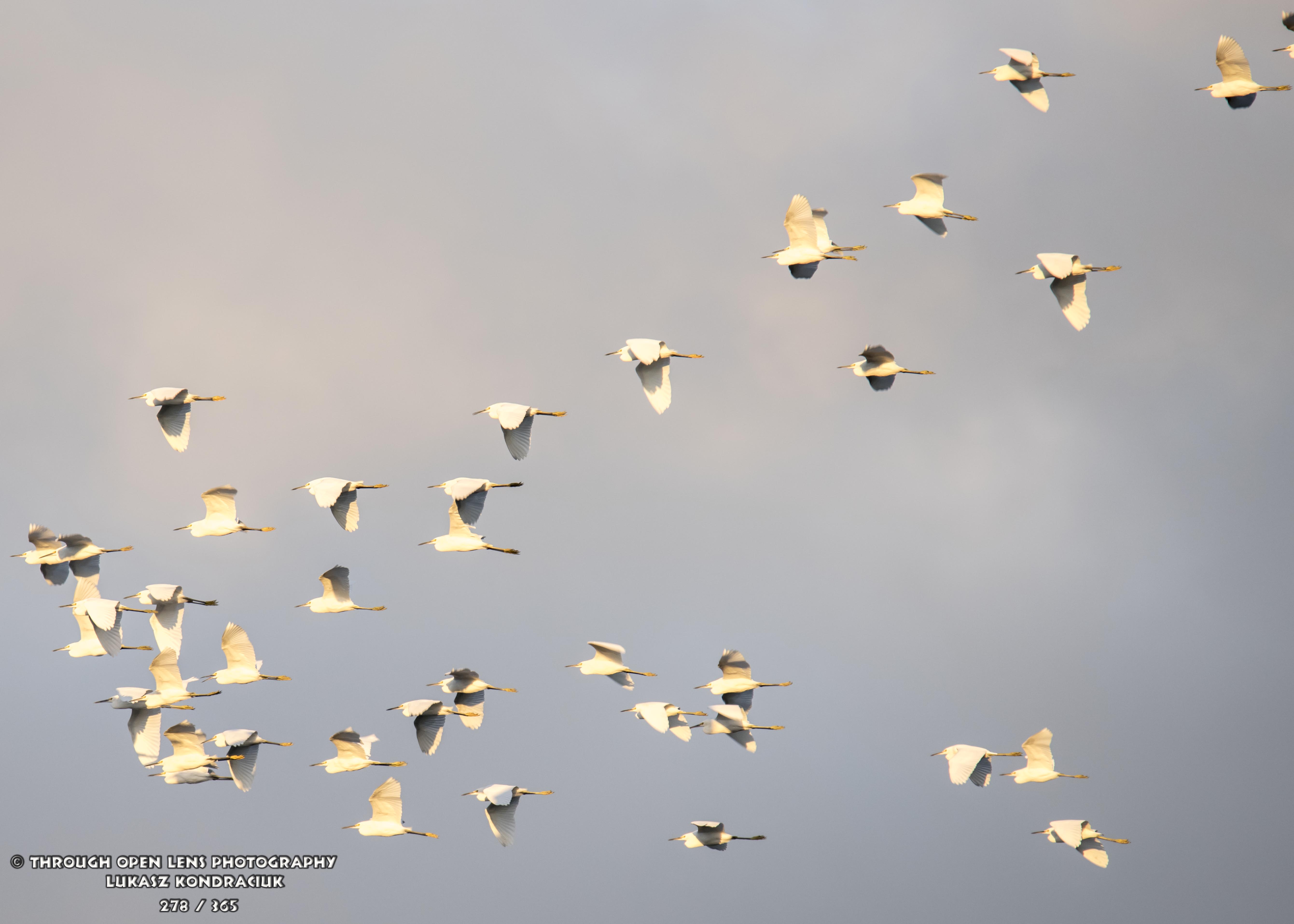
Birds Of A Feather Flock Together

Snowy Egrets Flock

F/9.0, 1/320, ISO 320.

Snowy Egrets

Day 278 / 365

Why did the Snowy Egret fly away when they get scared?

Because it didn’t want to run away like a chicken.

Interesting Fact: There is evidence that a pair of Snowy Egrets cannot recognize each other except at the nest. Even there, a bird arriving to relieve its mate must perform an elaborate greeting ceremony in order to avoid being attacked as an intruder. ( http://identify.whatbird.com/obj/48/_/Snowy_Egret.aspx )

Walking On Water Ain’t Easy!

Great Blue Heron 1

F/ 6.3, 1/160, ISO 320.

Great Blue Heron

Day 273 / 365

What holiday is observed by all birds?

Feather’s Day!

Interesting Fact: Great Blue Herons aren’t likely to visit a typical backyard. However, they are sometimes unwelcome visitors to yards that include fish ponds. A length of drain pipe placed in the pond can provide fish with a place to hide from feeding herons. Herons, like most of our birds, are legally protected by the Migratory Bird Treaty Act. ( http://www.allaboutbirds.org/guide/great_blue_heron/lifehistory )

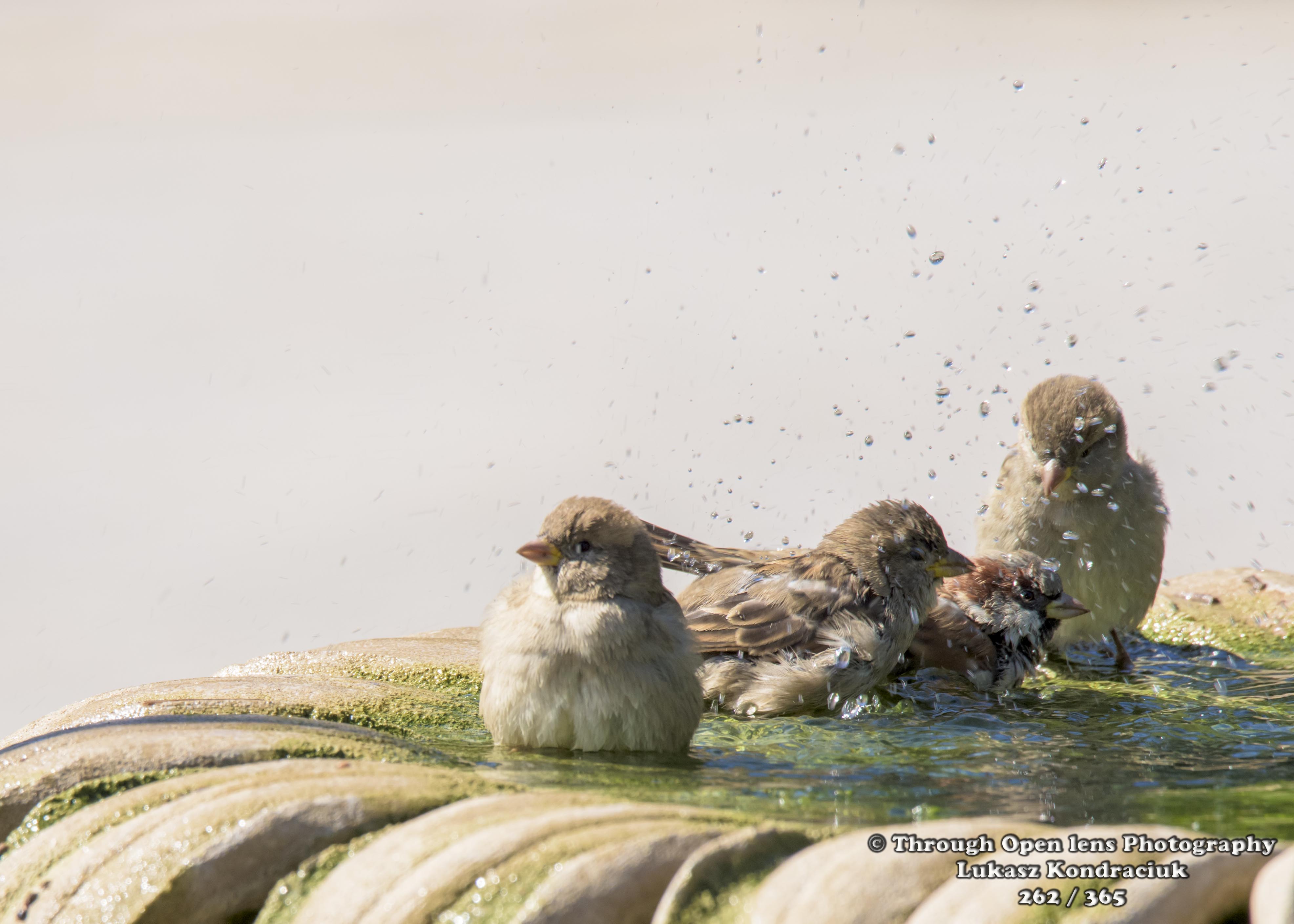
Pool Party!

House Sparrows

F/11.0, 1/400, ISO 400.

House Sparrows

Day 263 / 365

Two small time thieves had been sent by the Big Boss to steal a van load of goods from a bathroom suppliers. One stayed in the van as look out and the other went into the storeroom. Fifteen minutes went by, then half an hour, then an hour, and no sign of him. The look out finally grew impatient and went to look for his partner. Inside the store the two came face to face. “Where have you been?” demanded the worried look out “The boss told me to take a bath, but I couldn’t find the soap and a towel.”

Interesting Fact: House Sparrows in flocks have a pecking order much the way chickens in a farmyard do. You can begin to decipher the standings by paying attention to the black throats of the males. Males with larger patches of black tend to be older and dominant over males with less black. By wearing this information on their feathers, sparrows can avoid some fights and thereby save energy. ( http://www.allaboutbirds.org/guide/House_Sparrow/lifehistory )


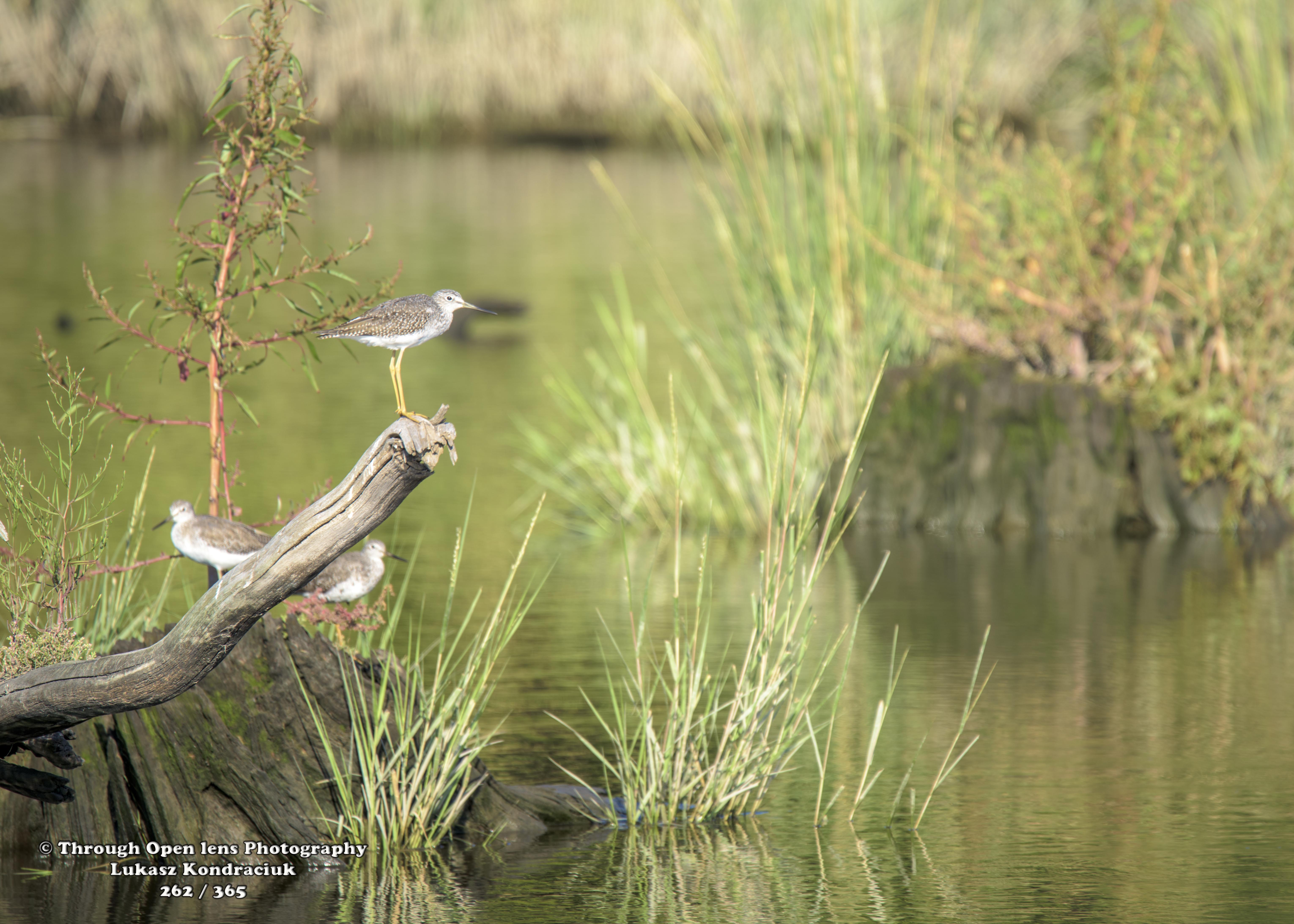
High Dive Competition

Greater Yellowlegs 3

F/7.1, 1/160, ISO 100.

Greater Yellowlegs

Day 262 / 365

A man met a gorgeous woman and knew immediately that he wanted to marry her. “But, we don’t know anything about each other,” she said.
“That doesn’t matter,” he replied. “We’ll learn about each other as we go along.”
So, she agreed. They married and went to a beautiful resort for their honeymoon.
One morning, as they were laying by the pool, he got up off of his towel, climbed up to the diving board, and did a two and a half tuck gainer. This was followed by three rotations in a jackknife position, where he straightened out and cut the water like a knife. After a few more demonstrations, he came back and lay down on the towel.
“Wow,” she said, “That was incredible!”
“I used to be an Olympic diving champion,” he explained. “See, I told you we’d learn more about each other as we went along.”
With that, she got up, jumped into the pool, and started swimming laps. After about thirty laps, she climbed back out and lay down on her towel, barely out of breath.
“That was amazing!” he exclaimed. “Were you an Olympic endurance swimmer?”
“No,” she replied, “”I was a hooker in Venice and worked both sides of the canal!”

Interesting Fact:  Although the Greater Yellowlegs is common and widespread, its low densities and tendency to breed in inhospitable, mosquito-ridden muskegs make it one of the least-studied shorebirds on the continent. ( http://www.allaboutbirds.org/guide/Greater_Yellowlegs/lifehistory )


Going Down Down Down

American Kestrel 2

F/6.3, 1/1250, ISO 400, Photoshop CS6.

American Kestrel

Day 260 / 365

Teacher: “What is the difference between a bird and fly?”
Student:  “Well…a bird can fly…..but a fly can’t bird.”

Interesting Fact: Unlike humans, birds can see ultraviolet light. This enables kestrels to make out the trails of urine that voles, a common prey mammal, leave as they run along the ground. Like neon diner signs, these bright paths may highlight the way to a meal—as has been observed in the Eurasian Kestrel, a close relative. ( http://www.allaboutbirds.org/guide/American_Kestrel/lifehistory )


Don’t Turn Around, Just Walk Away.

American Robin 1

F/ 6.3, 1/60, ISO 1600.

American Robin

Day 259 / 365

What did the cat say after eating two robins lying in the sun?

I just love baskin’ robins.

Interesting Fact: Robins eat different types of food depending on the time of day: more earthworms in the morning and more fruit later in the day. Because the robin forages largely on lawns, it is vulnerable to pesticide poisoning and can be an important indicator of chemical pollution. ( http://www.allaboutbirds.org/guide/American_Robin/lifehistory )


Move Along There’s Nothing To See Here!

Cooper's Hawk

F/6.3, 1/800, ISO 800.

Cooper’s Hawk

Day 258 / 365

“Look at that speed!” said one hawk to another as the jet fighter plane hurtled over their heads.

“Hmph!” snorted the other. “You would fly fast too if your tail was on fire!”

Interesting Fact: A Cooper’s Hawk captures a bird with its feet and kills it by repeated squeezing. Falcons tend to kill their prey by biting it, but Cooper’s Hawks hold their catch away from the body until it dies. They’ve even been known to drown their prey, holding a bird underwater until it stopped moving. ( http://www.allaboutbirds.org/guide/Coopers_Hawk/lifehistory )