You Can Run, But You Can’t Hide

Peregrine Falcon

F/10.0, 1/400, ISO 250.

Peregrine Falcon

Day 291 / 365

What birds spend all their time on their knees?

Birds of prey!

Interesting Fact: The name “peregrine” means wanderer, and the Peregrine Falcon has one of the longest migrations of any North American bird. Tundra-nesting falcons winter in South America, and may move 25,000 km (15,500 mi) in a year. Maps of the migration of individual falcons determined by satellite telemetry can be seen at Environment Canada. ( http://www.allaboutbirds.org/guide/Peregrine_Falcon/lifehistory )

Swim At Your Own Risk!

Pied-Billed Grebe Juvenile

F/6.3, 1/640, ISO 6400.

Pied-Billed Grebe ( Juvenile )

Day 286 / 365

What robs you while you’re in the bathtub?

A robber ducky.

Interesting Fact: Pied-billed Grebes can trap water in their feathers, giving them great control over their buoyancy. They can sink deeply or stay just at or below the surface, exposing as much or as little of the body as they wish. The water-trapping ability may also aid in the pursuit of prey by reducing drag in turbulent water. ( http://www.allaboutbirds.org/guide/Pied-billed_Grebe/lifehistory )

Don’t Turn Around, Just Walk Away.

American Robin 1

F/ 6.3, 1/60, ISO 1600.

American Robin

Day 259 / 365

What did the cat say after eating two robins lying in the sun?

I just love baskin’ robins.

Interesting Fact: Robins eat different types of food depending on the time of day: more earthworms in the morning and more fruit later in the day. Because the robin forages largely on lawns, it is vulnerable to pesticide poisoning and can be an important indicator of chemical pollution. ( http://www.allaboutbirds.org/guide/American_Robin/lifehistory )


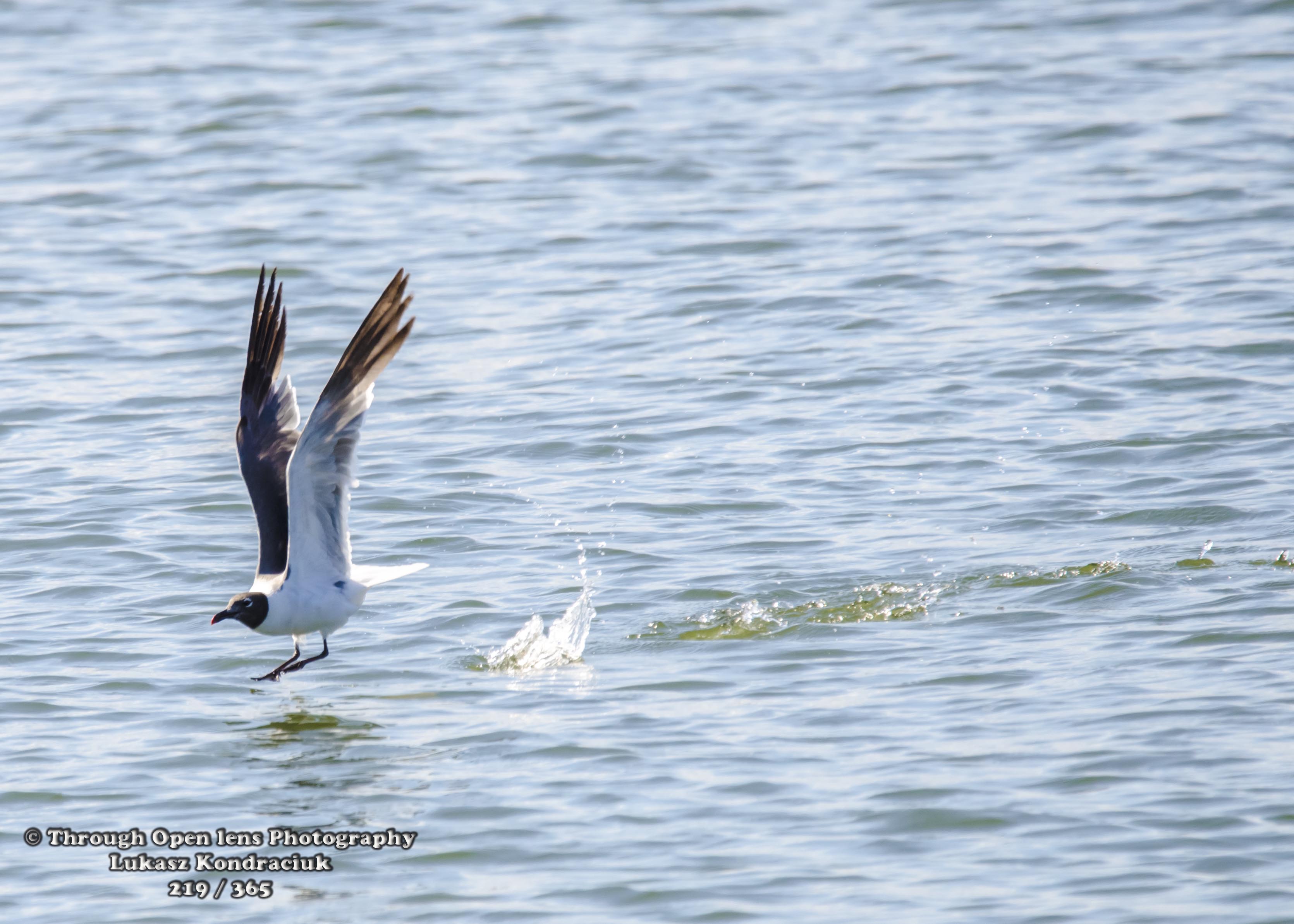
Today I Will Be Happier Than A Seagull With A Stolen Chip!

© Through Open lens Photography

F/6.3, 1/1250, ISO 400.

Bonaparte’s Gull

Day 219 / 365

A man and his pet seagull walk into a bar. It’s about 5pm, but they’re ready for a good night of drinking.
They start off slowly, watching TV, drinking beer, eating peanuts. As the night goes on they move to mixed drinks, and then shooters, one after the other.
Finally, the bartender says: “Last call.”
So, the man says, “One more for me… and one more for my seagull.”
The bartender sets them up and they shoot them back. Suddenly, the seagull falls over dead.
The man throws some money on the bar, puts on his coat and starts to leave.
The bartender, yells: “Hey buddy, you can’t just leave that lyin’ there.”
To which the man replies: “That’s not a lion, that’s a seagull.”

Interesting Fact: The smallest gull seen over most of North America, it is also the only gull that regularly nests in trees. ( http://identify.whatbird.com/obj/459/_/Bonapartes_Gull.aspx )

Watch Out, Here I Come!!!

Eastern Kingbirds

F/ 6.0, 1/500, ISO 800.

Eastern Kingbirds

Day 218 / 365

Why does the bird bring toilet paper to the party?

Because he is a party pooper.

Interesting Fact:  Kingbirds are “passerines,” a taxonomic group commonly referred to as perching birds or songbirds. But kingbirds and other flycatchers are in a different subgroup from true songbirds, and they don’t have nearly as complex voices. Rather than learning their calls they probably perform them innately. The young begin to give adult calls at about two weeks of age. ( http://www.allaboutbirds.org/guide/Eastern_Kingbird/lifehistory )


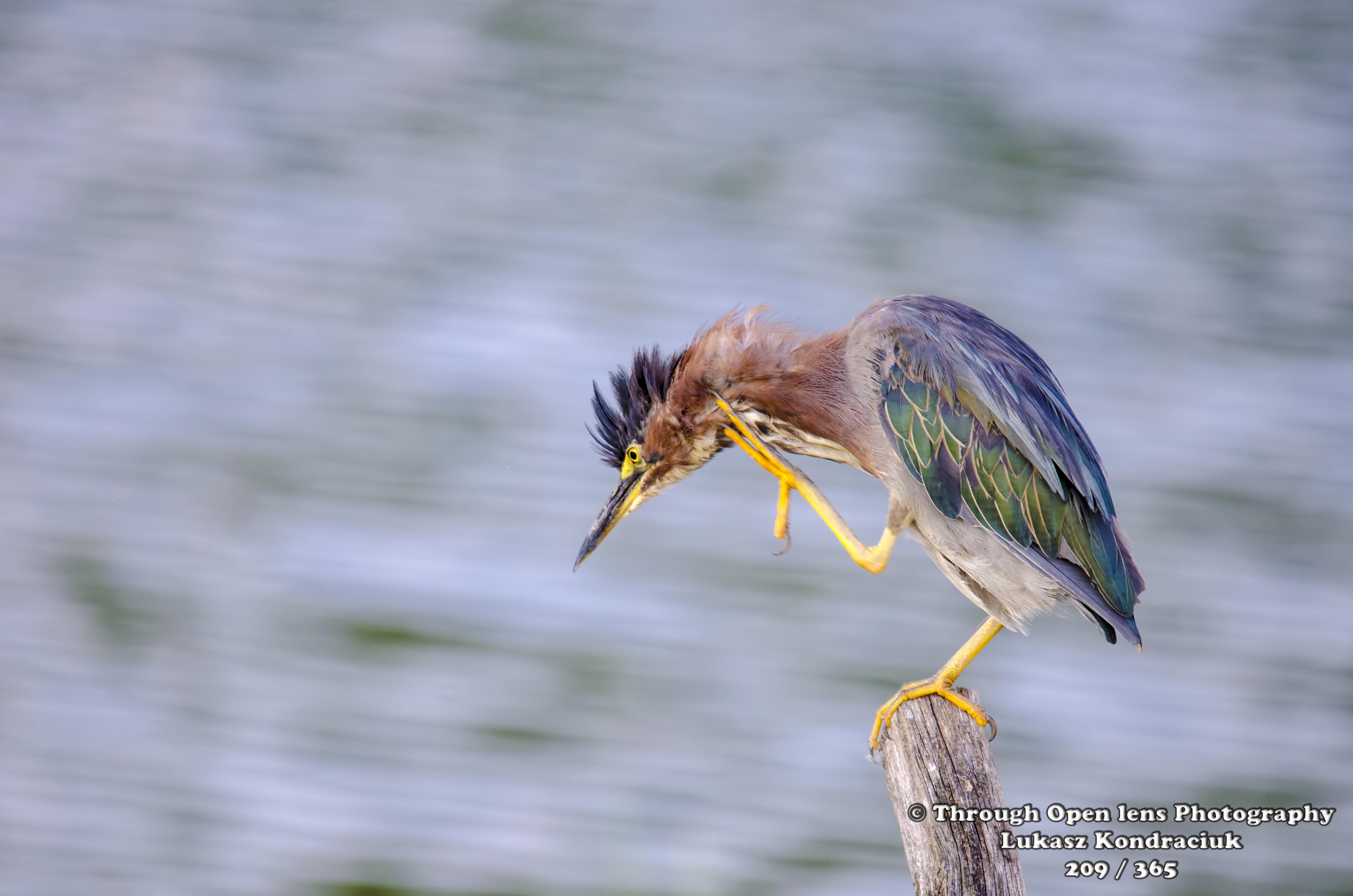
I Got 99 Problems But An ITCH Ain’t One

Green Heron

F/6.3, 1/250, ISO 500.

Green Heron

Day 209 / 365

Why did the heron cross the road?

The chicken was on vacation.

Interesting Fact: The Green Heron is one of the world’s few tool-using bird species. It creates fishing lures with bread crusts, insects, earthworms, twigs, feathers, and other objects, dropping them on the surface of the water to entice small fish. ( http://www.allaboutbirds.org/guide/Green_Heron/lifehistory )

Keep Calm And Swim On!

Common Loon Juvenile

F/6.3, 1/1000, ISO 560.

Common Loon ( Juvenile )

Day 208 /365

How do people swimming in the ocean say HI to each other?

They Wave!

Interesting Fact: Loons are well equipped for their submarine maneuvers to catch fish. Unlike most birds, loons have solid bones that make them less buoyant and better at diving. They can quickly blow air out of their lungs and flatten their feathers to expel air within their plumage, so they can dive quickly and swim fast underwater. Once below the surface, the loon’s heart slows down to conserve oxygen. ( http://www.allaboutbirds.org/guide/common_loon/lifehistory )

Mock Me If You Can!

Northern Mockingbird

F/6.3, 1/125, ISO 1600.

Northern Mockingbird

Day 169 / 365

What do you call a very rude bird?
A mockingbird!

Interesting Fact:  The often observed behavior of birds flashing their white wing patches is still unexplained. Theories include it being used to startle prey or intimidate predators. ( http://identify.whatbird.com/obj/158/overview/Northern_Mockingbird.aspx )


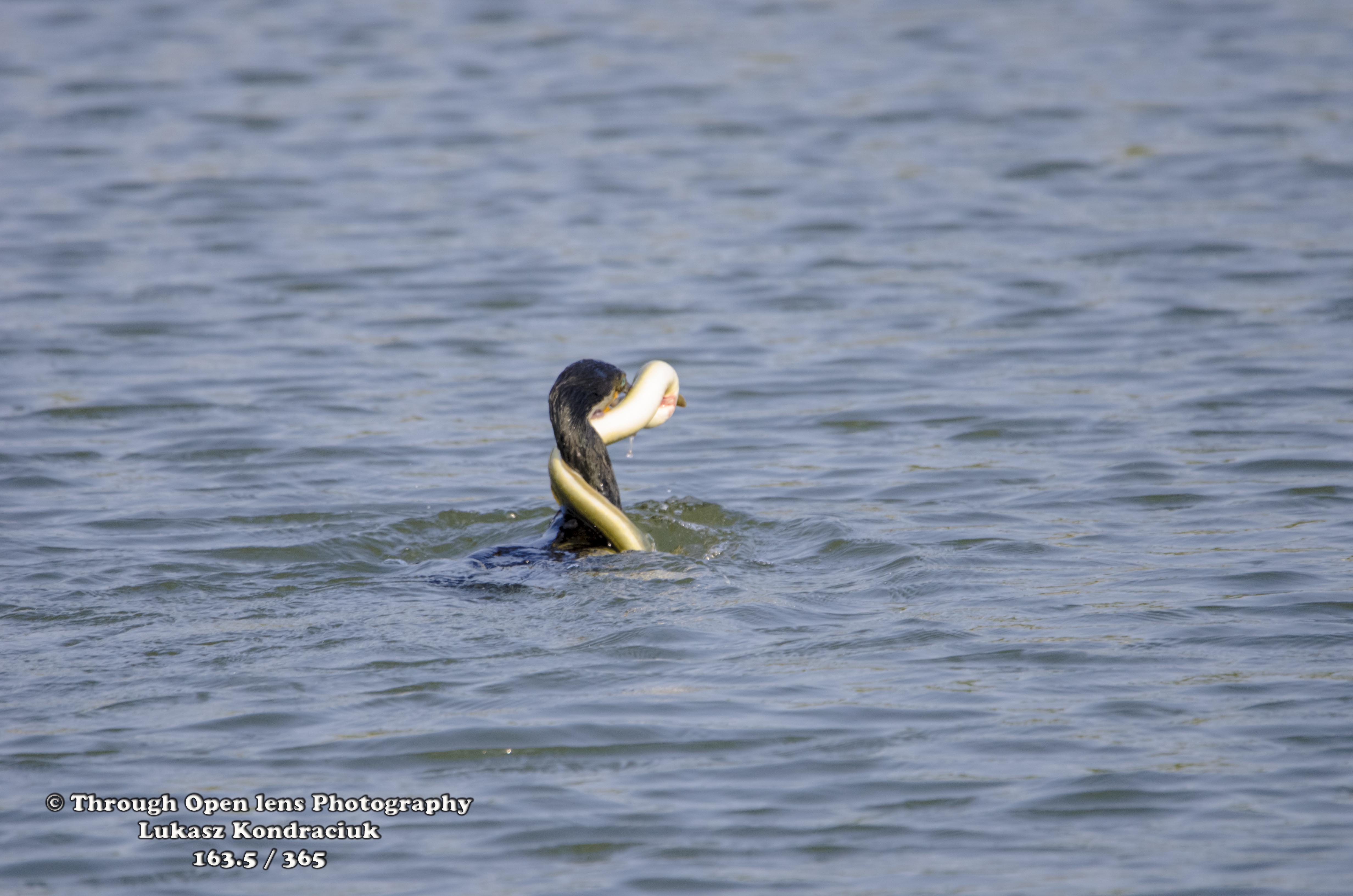
Hungry Much!

First course meal.  Crab.

Double-crested Cormorant

F/ 6.3, 1/1000, ISO 500.

Double-crested Cormorant

Day 163 / 365

Second course meal.  Eel.

Double-crested Cormorant 1

F/6.3,  1/1000, ISO 720.

Don’t forget, you are what you eat.

Interesting Fact: A cormorant’s diet is almost all fish, with just a few insects, crustaceans, or amphibians. They eat a wide variety of fish (more than 250 species have been reported), and they have impressive fishing technique: diving and chasing fish underwater with powerful propulsion from webbed feet. The tip of a cormorant’s upper bill is shaped like a hook, which is helpful for catching prey. When cormorants happen to catch a crustacean like a crayfish, they exhibit a little flair in eating it—hammering the prey on the water to shake its legs off, then flipping it in the air and catching it headfirst for easy swallowing. ( http://www.allaboutbirds.org/guide/Double-crested_Cormorant/lifehistory#at_food )

I Ain’t Afraid Of Nobody

Eastern Kingbird

F/6.3, 1/320, ISO 1600

Eastern Kingbird

Day 161 / 365

I see you, if you come any closer I will show you why they call me kingbird.

Interesting Fact: The scientific name Tyrannus means “tyrant, despot, or king,” referring to the aggression kingbirds exhibit with each other and with other species. When defending their nests they will attack much larger predators like hawks, crows, and squirrels. They have been known to knock unsuspecting Blue Jays out of trees. ( http://www.allaboutbirds.org/guide/Eastern_Kingbird/lifehistory )