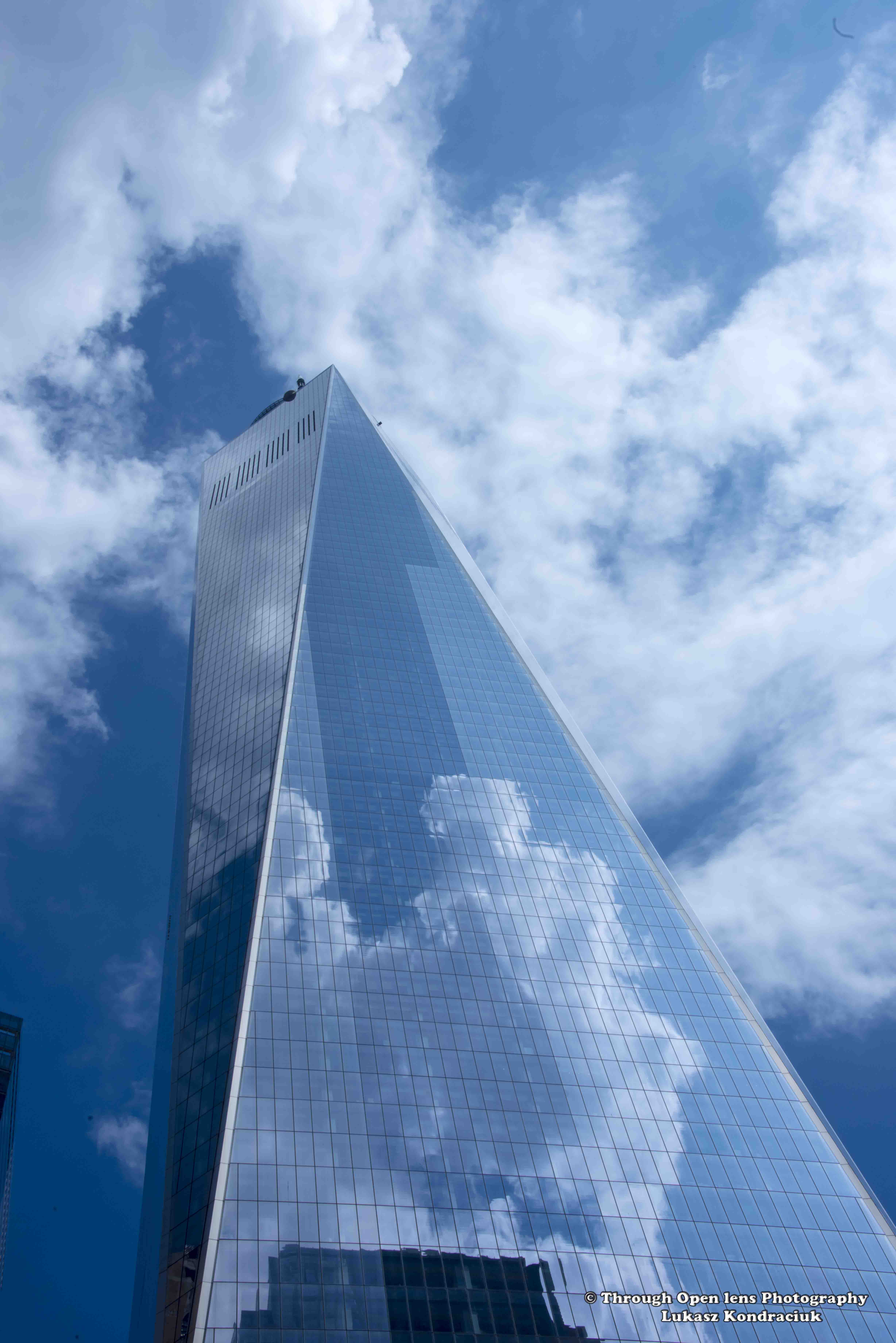
Look Up In The Sky!

OneWTC


F/25, 1/250, ISO 250.

What do you call a sheep with no legs?

A cloud.

Interesting Fact: One World Trade Center (also known as the Freedom Tower,[13] 1 World Trade Center, One WTC and 1 WTC) is the main building of the rebuilt World Trade Center complex in Lower Manhattan, New York City. It is the tallest building in the Western Hemisphere, and the sixth-tallest in the world. The supertall structure has the same name as the North Tower of the original World Trade Center, which was completely destroyed in the terrorist attacks of September 11, 2001. The new skyscraper stands on the northwest corner of the 16-acre (6.5 ha) World Trade Center site, on the site of the original 6 World Trade Center. The building is bounded by West Street to the west, Vesey Street to the north, Fulton Street to the south, and Washington Street to the east. ( https://en.wikipedia.org/wiki/One_World_Trade_Center )

Let’s Get Little Bit Closer

flower

F/5.6, 1/500, ISO 200.

Why can’t you iron four-leaf clover?

Because you shouldn’t press your luck!!

Interesting Fact: Many flowers have important symbolic meanings in Western culture.[28] The practice of assigning meanings to flowers is known as floriography. Some of the more common examples include:

  • Red roses are given as a symbol of love, beauty, and passion.[29]
  • Poppies are a symbol of consolation in time of death. In the United Kingdom, New Zealand, Australia and Canada, red poppies are worn to commemorate soldiers who have died in times of war.
  • Irises/Lily are used in burials as a symbol referring to “resurrection/life”. It is also associated with stars (sun) and its petals blooming/shining.
  • Daisies are a symbol of innocence.

( https://en.wikipedia.org/wiki/Flower#Symbolism )


Talk Derby To Me!

Saratoga Race

F/ 5.6, 1/1250, ISO 400.

Saratoga Race

Why was the horse naked?

Because the jockey fell off.

Interesting Fact: Saratoga Springs was the site of standardbred racing as early as 1847.[3] On August 3, 1863, casino operator and future congressman John Morrissey organized the first thoroughbred race card on the track previously used for harness racing (and now the location of the Oklahoma Training Track).[4] The current course was opened across the street from the old standardbred track the following year.[5] Among those instrumental to the creation of the Saratoga Race Course were John Hunter (later the first chairman of The Jockey Club), William R. Travers, John Morrissey, and Cornelius Vanderbilt.

Lazy Like A Log

Log

F/11.0, 1/500, ISO 320.

Pretend you’re in a box, under the ocean, and there’s no way out. How do you survive?

You stop pretending!

Interesting Fact: Beaches became popular as tourist attractions during the 18th century. Today, beachside towns and beach resort areas are a magnet for tourist who come to sunbathe, swim, stroll the beach, build sandcastles, surf and bodyboard. ( http://www.sciencekids.co.nz/sciencefacts/earth/beaches.html )


Ready, Set, Go!

Vesper Sparrow

F/7.1, 1/200, ISO 320.

Vesper Sparrow

Couples first day at a resort decided to hit the beach.
When the guy went back to there room to get something to drink, one of the hotel maids was making the bed.
He grabbed his cooler and was on my way out when he paused and asked, “Can we drink beer on the beach?”
“Sure,” she said, “but I have to finish the rest of the rooms beforehand.”

Interesting Fact: The Vesper Sparrow responds quickly to changes in habitat; it is often the first species to occupy reclaimed mine sites and abandon old farm fields as they return to forest.  ( https://www.allaboutbirds.org/guide/Vesper_Sparrow/lifehistory )

Reflection On This

Great Blue Heron 4

F/6.3, 1/100, ISO 320.

Great Blue Heron

How do you prevent a Summer cold?

Catch it in the Winter!

Interesting Fact: The white form of the Great Blue Heron, known as the “great white heron,” is found nearly exclusively in shallow marine waters along the coast of very southern Florida, the Yucatan Peninsula, and in the Caribbean. Where the dark and white forms overlap in Florida, intermediate birds known as “Wurdemann’s herons” can be found. They have the body of a Great Blue Heron, but the white head and neck of the great white heron. (  https://www.allaboutbirds.org/guide/Great_Blue_Heron/lifehistory )

Where Are We?

House Finches

F/10.0, 1/400, ISO 200.

House Finch

What did the bra say to the hat?

You go on ahead while I give these two a lift!

Interesting Fact: The total House Finch population across North America is staggering. Scientists estimate between 267 million and 1.4 billion individuals. ( https://www.allaboutbirds.org/guide/House_Finch/lifehistory )


Day And Night

Moth

F/8.0, 1/200, ISO 100.

Skipper Butterfly

Why did the boy throw butter out the window?

To see butter fly. 

Interesting Fact: A skipper or skipper butterfly is a butterfly of the family Hesperiidae. They are named after their quick, darting flight habits. More than 3500 species of skippers are recognized, and they occur worldwide, but with the greatest diversity in the Neotropical regions of Central and South America. ( https://en.m.wikipedia.org/wiki/Skipper_(butterfly)

Now That Is Fresh Sushi

Great Egret

F/6.3, 1/640, ISO 200.

Great Egret

What kind of music should you listen to while fishing?

Something catchy!

Interesting Fact: The Great Egret is the symbol of the National Audubon Society, one of the oldest environmental organizations in North America. Audubon was founded to protect birds from being killed for their feathers.  ( https://www.allaboutbirds.org/guide/great_egret/lifehistory )


Got You!

Bumblebee

F/8.0, 1/125, ISO 320.

Bumblebee

Why do bees hum?

Because they’ve forgotten the words!

Interesting Fact: Bumblebees eat pollen and nectar collected from various flowers. They produce minimal amount of honey that is used as food for the young bumblebees. ( http://www.softschools.com/facts/animals/bumblebee_facts/582/ )