Go Green!

Yellow-Rumped Warbler

F/6.3, 1/80, ISO 1000.

Yellow-Rumped Warbler

Day 288 / 365

I was in a park earlier and I saw a “keep off the grass” sign.

I couldn’t help but think… how did it get there?

Interesting Fact: Yellow-rumped Warblers are perhaps the most versatile foragers of all warblers. They’re the warbler you’re most likely to see fluttering out from a tree to catch a flying insect, and they’re also quick to switch over to eating berries in fall. Other places Yellow-rumped Warblers have been spotted foraging include picking at insects on washed-up seaweed at the beach, skimming insects from the surface of rivers and the ocean, picking them out of spiderwebs, and grabbing them off piles of manure.  ( http://www.allaboutbirds.org/guide/Yellow-rumped_Warbler/lifehistory )
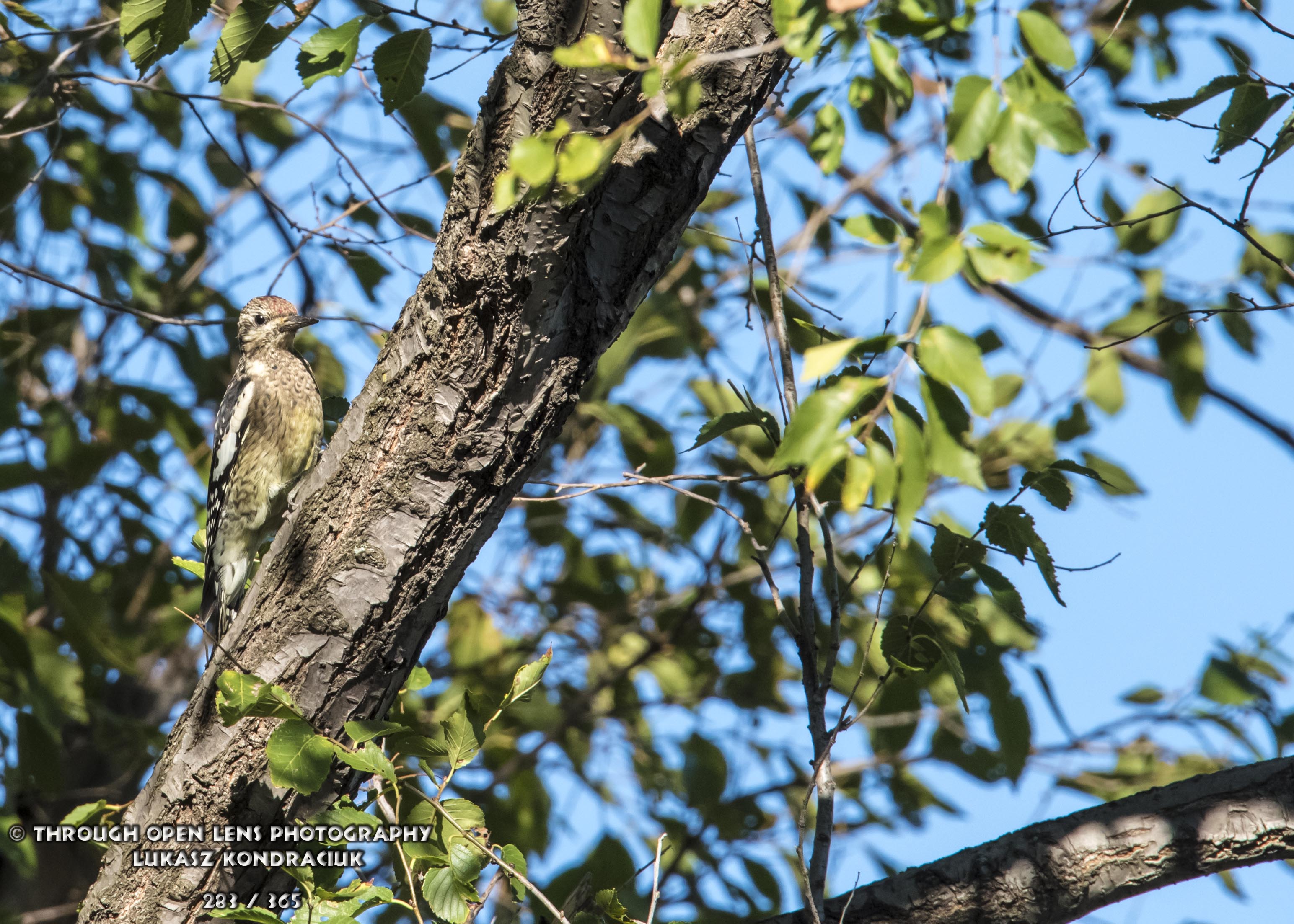
Knock, Knock, Knocking On Heavens Door!

Yellow bellied sapsucker juvenile

F/11.0, 1/640, ISO800.

Yellow Bellied Sapsucker ( Juvenile )

Day 284 / 365

I used to have a woodpecker called Woody, until he attacked my fiancé.

I still can’t believe Woody would peck her.

Interesting Fact: The Yellow-bellied Sapsucker makes two kinds of holes in trees to harvest sap. Round holes extend deep in the tree and are not enlarged. The sapsucker inserts its bill into the hole to probe for sap. Rectangular holes are shallower, and must be maintained continually for the sap to flow. The sapsucker licks the sap from these holes, and eats the cambium of the tree too. New holes usually are made in a line with old holes, or in a new line above the old.  ( http://www.allaboutbirds.org/guide/Yellow-bellied_Sapsucker/lifehistory )

I’ve Been Waiting Patiently For You To Come In And Now! Get out!

Killdeer

F/8.0, 1/250, ISO 400.

Killdeer

Day 279 / 365

Why do birds fly south for the winter?

It’s quicker than driving.

Interesting Fact: They are ground-nesting birds that are famous for hiding their nests right out in the open. They really use no nesting materials and rely on distraction displays to protect their offspring. ( http://identify.whatbird.com/obj/101/overview/Killdeer.aspx )

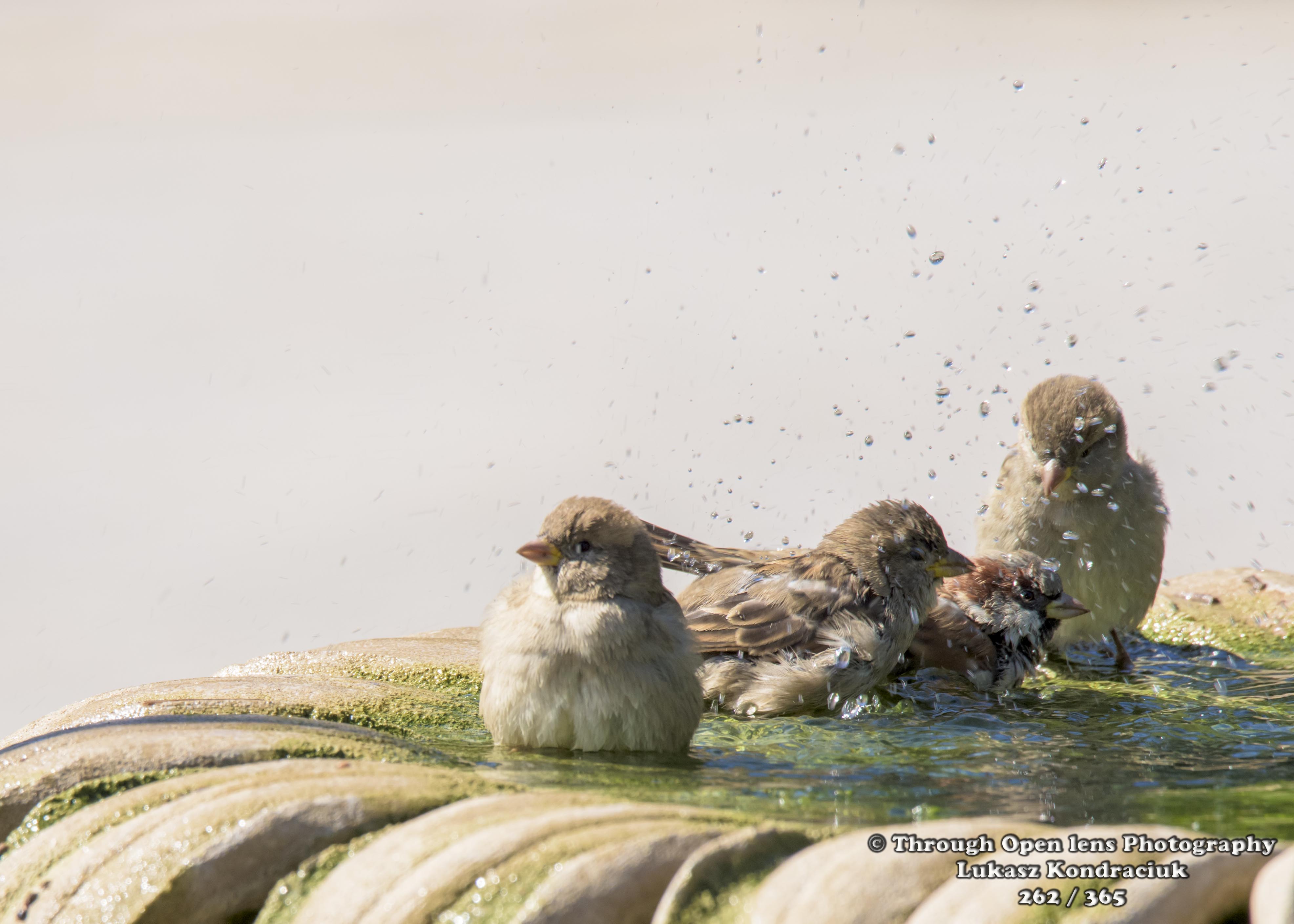
Pool Party!

House Sparrows

F/11.0, 1/400, ISO 400.

House Sparrows

Day 263 / 365

Two small time thieves had been sent by the Big Boss to steal a van load of goods from a bathroom suppliers. One stayed in the van as look out and the other went into the storeroom. Fifteen minutes went by, then half an hour, then an hour, and no sign of him. The look out finally grew impatient and went to look for his partner. Inside the store the two came face to face. “Where have you been?” demanded the worried look out “The boss told me to take a bath, but I couldn’t find the soap and a towel.”

Interesting Fact: House Sparrows in flocks have a pecking order much the way chickens in a farmyard do. You can begin to decipher the standings by paying attention to the black throats of the males. Males with larger patches of black tend to be older and dominant over males with less black. By wearing this information on their feathers, sparrows can avoid some fights and thereby save energy. ( http://www.allaboutbirds.org/guide/House_Sparrow/lifehistory )


Going Down Down Down

American Kestrel 2

F/6.3, 1/1250, ISO 400, Photoshop CS6.

American Kestrel

Day 260 / 365

Teacher: “What is the difference between a bird and fly?”
Student:  “Well…a bird can fly…..but a fly can’t bird.”

Interesting Fact: Unlike humans, birds can see ultraviolet light. This enables kestrels to make out the trails of urine that voles, a common prey mammal, leave as they run along the ground. Like neon diner signs, these bright paths may highlight the way to a meal—as has been observed in the Eurasian Kestrel, a close relative. ( http://www.allaboutbirds.org/guide/American_Kestrel/lifehistory )


Move Along There’s Nothing To See Here!

Cooper's Hawk

F/6.3, 1/800, ISO 800.

Cooper’s Hawk

Day 258 / 365

“Look at that speed!” said one hawk to another as the jet fighter plane hurtled over their heads.

“Hmph!” snorted the other. “You would fly fast too if your tail was on fire!”

Interesting Fact: A Cooper’s Hawk captures a bird with its feet and kills it by repeated squeezing. Falcons tend to kill their prey by biting it, but Cooper’s Hawks hold their catch away from the body until it dies. They’ve even been known to drown their prey, holding a bird underwater until it stopped moving. ( http://www.allaboutbirds.org/guide/Coopers_Hawk/lifehistory )


I Want To Fly Like An Eagle

American Kestrel 1

F/6.3, 1/800, ISO 800.

American Kestrel

Day 255 / 365

Why did the American Kestrel cross the road, roll in the mud, and cross back?

He was a dirty double-crosser!

Interesting Fact: When nature calls, nestling kestrels back up, raise their tails, and squirt feces onto the walls of the nest cavity. The feces dry on the cavity walls and stay off the nestlings. The nest gets to be a smelly place, with feces on the walls and uneaten parts of small animals on the floor. ( http://www.allaboutbirds.org/guide/American_Kestrel/lifehistory )


This Fence Can’t Hold Me! I’m Breaking Out!

Yellow-breasted Chat

F/6.3, 1/640, ISO 800.

Yellow-breasted Chat

Day 247 / 365

Why did the Yellow-breasted Chat scale the chain-link fence?

To see what was on the other side.

Interesting Fact: Unlike most warblers, this species has been known to mimic the calls of other birds, and it’s the largest North American warbler.  ( http://identify.whatbird.com/obj/342/overview/Yellow-breasted_Chat.aspx )

You Can’t See Me I’m A Flower!

The American Goldfinch

F/6.3, 1/800, ISO 800.

The American Goldfinch

Day 244 / 365

Why did the little bird get in trouble at school?

He got caught peeping on a test.

Interesting Fact: The American Goldfinch changes from winter plumage to breeding plumage by a complete molt of its body feathers. It is the only member of its family to have this second molt in the spring; all the other species have just one molt each year in the fall. ( http://identify.whatbird.com/obj/91/_/American_Goldfinch.aspx )

Bad Hair Day!

Red-tailed Hawks1

F/ 6.3, 1/1000, ISO 500.

Red-tailed Hawk

Day 243 / 365

How do witches keep their hair in place while flying?
With scare spray.

Interesting Fact: Red-tailed Hawks have a very keen eyesight that is 8 times as powerful as a human’s, allowing them to see prey as small as a mouse from 100 feet (~30 meters) away. ( http://beautyofbirds.com/redtailedhawks.html )