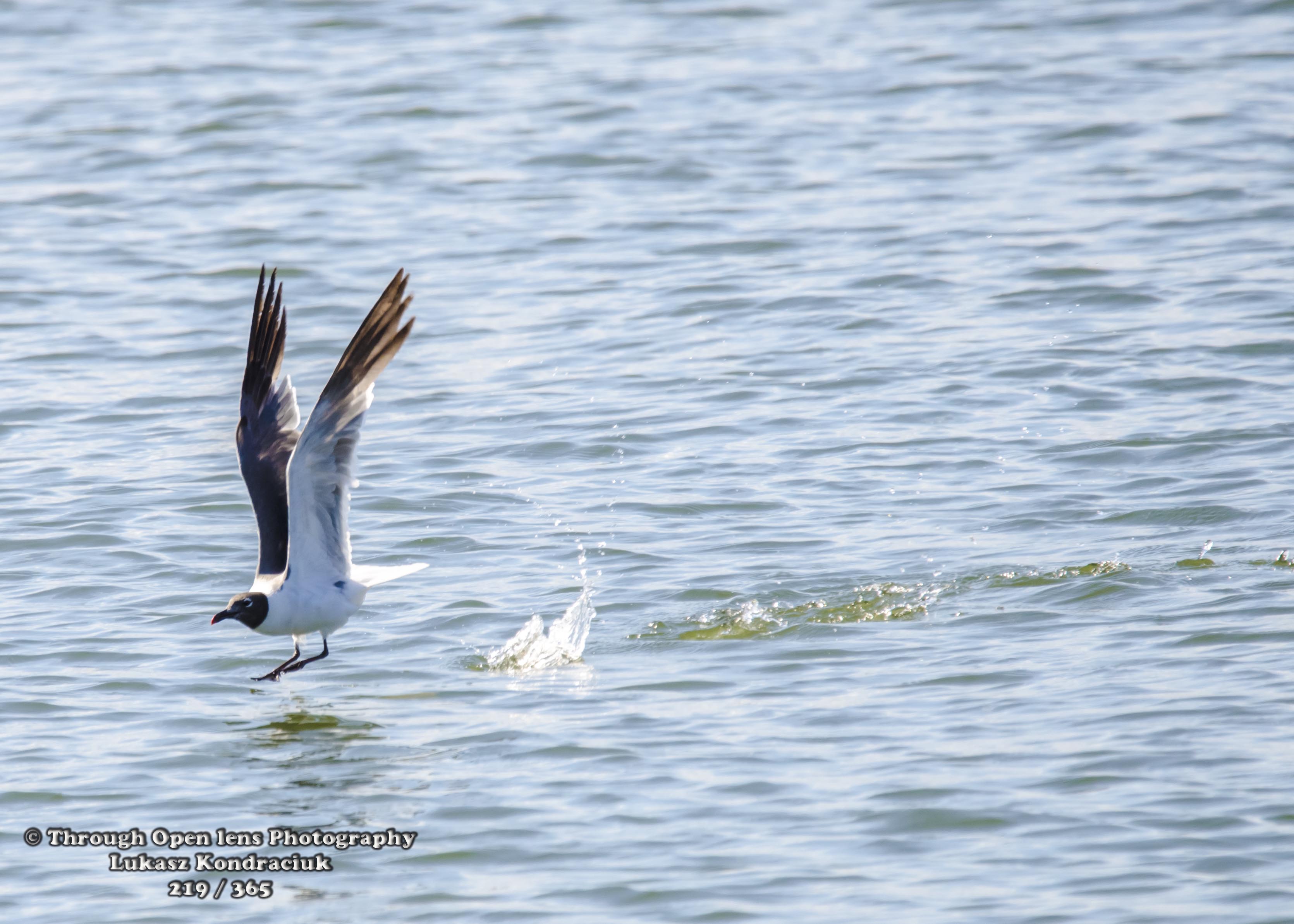
Today I Will Be Happier Than A Seagull With A Stolen Chip!

© Through Open lens Photography

F/6.3, 1/1250, ISO 400.

Bonaparte’s Gull

Day 219 / 365

A man and his pet seagull walk into a bar. It’s about 5pm, but they’re ready for a good night of drinking.
They start off slowly, watching TV, drinking beer, eating peanuts. As the night goes on they move to mixed drinks, and then shooters, one after the other.
Finally, the bartender says: “Last call.”
So, the man says, “One more for me… and one more for my seagull.”
The bartender sets them up and they shoot them back. Suddenly, the seagull falls over dead.
The man throws some money on the bar, puts on his coat and starts to leave.
The bartender, yells: “Hey buddy, you can’t just leave that lyin’ there.”
To which the man replies: “That’s not a lion, that’s a seagull.”

Interesting Fact: The smallest gull seen over most of North America, it is also the only gull that regularly nests in trees. ( http://identify.whatbird.com/obj/459/_/Bonapartes_Gull.aspx )

Watch Out, Here I Come!!!

Eastern Kingbirds

F/ 6.0, 1/500, ISO 800.

Eastern Kingbirds

Day 218 / 365

Why does the bird bring toilet paper to the party?

Because he is a party pooper.

Interesting Fact:  Kingbirds are “passerines,” a taxonomic group commonly referred to as perching birds or songbirds. But kingbirds and other flycatchers are in a different subgroup from true songbirds, and they don’t have nearly as complex voices. Rather than learning their calls they probably perform them innately. The young begin to give adult calls at about two weeks of age. ( http://www.allaboutbirds.org/guide/Eastern_Kingbird/lifehistory )


There Is Always Hope For A Better Day !

Clouds

F/ 7.1, 1/800, ISO 200.

Day 217 / 365

Where do clouds go to the bathroom?

Anywhere they want

Interesting Fact: Clouds are formed when water on Earth evaporates into the sky and condenses high up in the cooler air. Learn more about the water cycle. ( http://www.sciencekids.co.nz/sciencefacts/weather/clouds.html )

Grass Is Always Greener On The Other Side!

grass nyc

F/22.0, 30.0, ISO 100.

Day 216 / 365

What do you call a cow who works for a gardener?

A lawn moo-er.

Interesting Fact:  There are over 6000 different species of grass in the world; some examples are rice, wheat, corn, oats and sugarcane. Grass is the familiar name given to the family of plants known as the graminae. The sizes vary from short lawn grasses, to as tall as 40m, which is 120 feet. ( http://www.thefactsite.com/2010/08/facts-about-grass.html )

That Is What It Sounds Like When Doves Cry

Mourning Dove

F/6.3, 1/160, ISO 1600.

Mourning Dove

Day 215 / 365

What art style is loved by doves?


The Coo-bist Period.

Interesting Fact: During the breeding season, you might see three Mourning Doves flying in tight formation, one after another. This is a form of social display. Typically the bird in the lead is the male of a mated pair. The second bird is an unmated male chasing his rival from the area where he hopes to nest. The third is the female of the mated pair, which seems to go along for the ride. ( http://www.allaboutbirds.org/guide/Mourning_Dove/lifehistory )


He’s On My Tail! It’s Time For Some Maneuvers!

attack from above 1

F/ 7.1, 1/800, ISO 200.

Day 214 / 365

Where do clouds go to the bathroom?

Anywhere they want

Interesting Fact: Mobbing in animals is an antipredator behavior which occurs when individuals of a certain species mob a predator by cooperatively attacking or harassing it, usually to protect their offspring. A simple definition of mobbing is an assemblage of individuals around a potentially dangerous predator.[1] This is most frequently seen in avian species, though it is also known to occur in many other animals such as the meerkat. While mobbing has evolved independently in many species, it only tends to be present in those whose young are frequently preyed upon. This behavior may complement cryptic adaptations in the offspring themselves, such as camouflage and hiding. Mobbing calls may be used to summon nearby individuals to cooperate in the attack. ( https://en.wikipedia.org/wiki/Mobbing_(animal_behavior) )


Buzzing Around!

Bumblebee

F/6.3, 1/800, ISO 800.

Bumblebee

Day 212 / 365

Who is the bees favorite singer?

Sting!

Interesting Fact: Bumblebees produce buzzing sound as a result of vibration of muscles used for flying. These muscles increase temperature of the body and facilitate gathering of pollen. ( http://www.softschools.com/facts/animals/bumblebee_facts/582/ )


Every Flower Must Grow Through Dirt.

Light Pink Gladiolas

F/14.0, 1/60, ISO 160.

Light Pink Gladiolus

Day 211 / 365

What did the old flower say to the younger flower?

What’s up, bud?

Interesting Fact: The British and Mediterranean gladiolus plants were often used for medicinal purposes. For example, the English used the plant’s corms (stem base) as a bandage and to extract thorns or splinters. The corms were also powdered and mixed with goat’s milk to soothe symptoms of colic. Parts of the gladiolus, however, are poisonous if eaten, and certain species cause irritation or allergic reaction when handled. Today we primarily use the gladiolus as a decorative flower in gardens and bouquets. ( http://www.nanzandkraft.com/blog/5-fun-facts-gladiolus-augusts-official-flower/ )

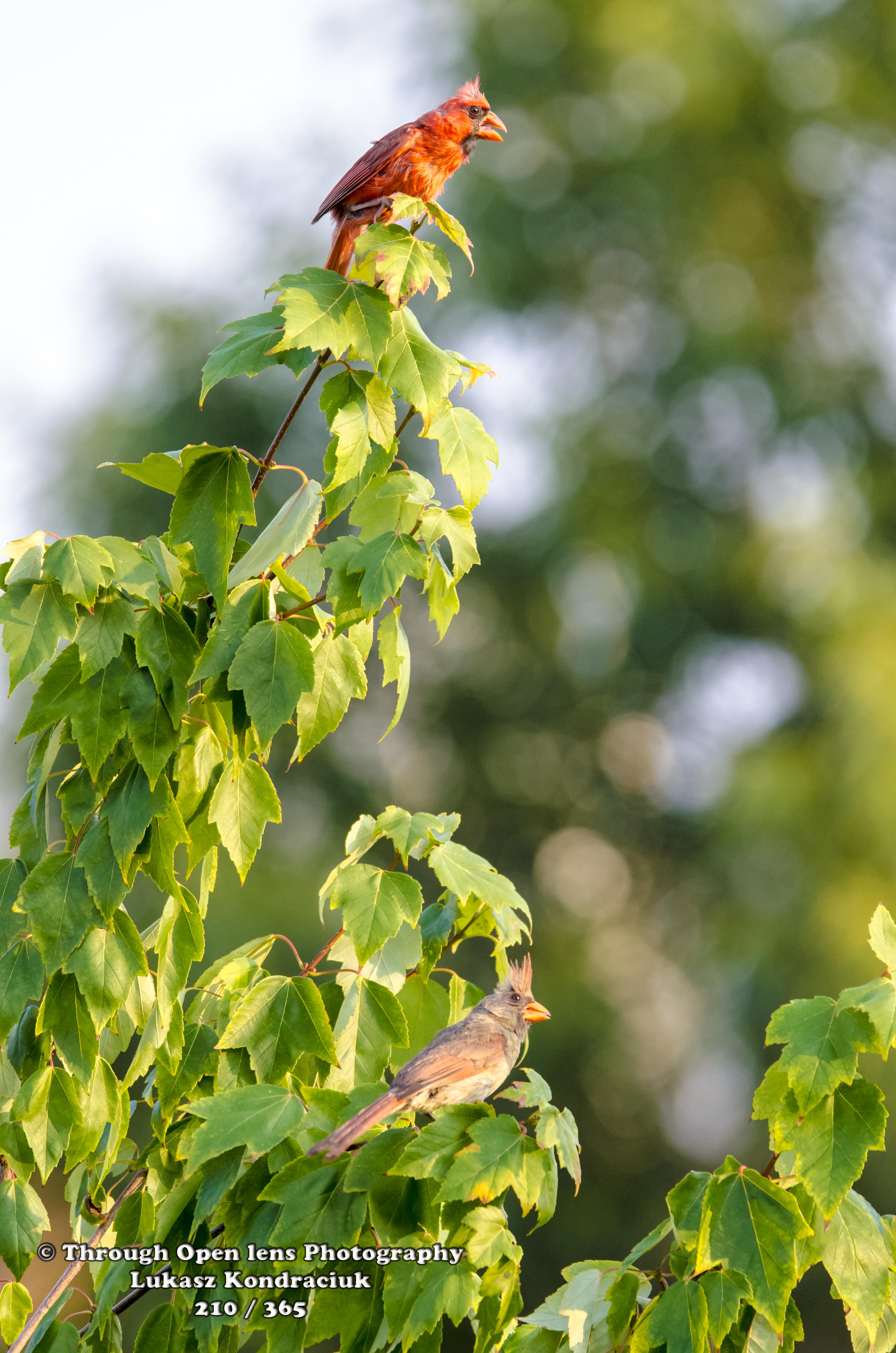
I Can See You From Here!!!

Northern Cardinal 2

F/6.0, 1/500, ISO 1400.

Northern Cardinal

Day 210 / 365

The early bird gets the worm, but of course the early worm gets eaten. So it’s kind of a mixed message.

Interesting Fact: Only a few female North American songbirds sing, but the female Northern Cardinal does, and often while sitting on the nest. This may give the male information about when to bring food to the nest. A mated pair shares song phrases, but the female may sing a longer and slightly more complex song than the male. ( http://www.allaboutbirds.org/guide/Northern_Cardinal/lifehistory )


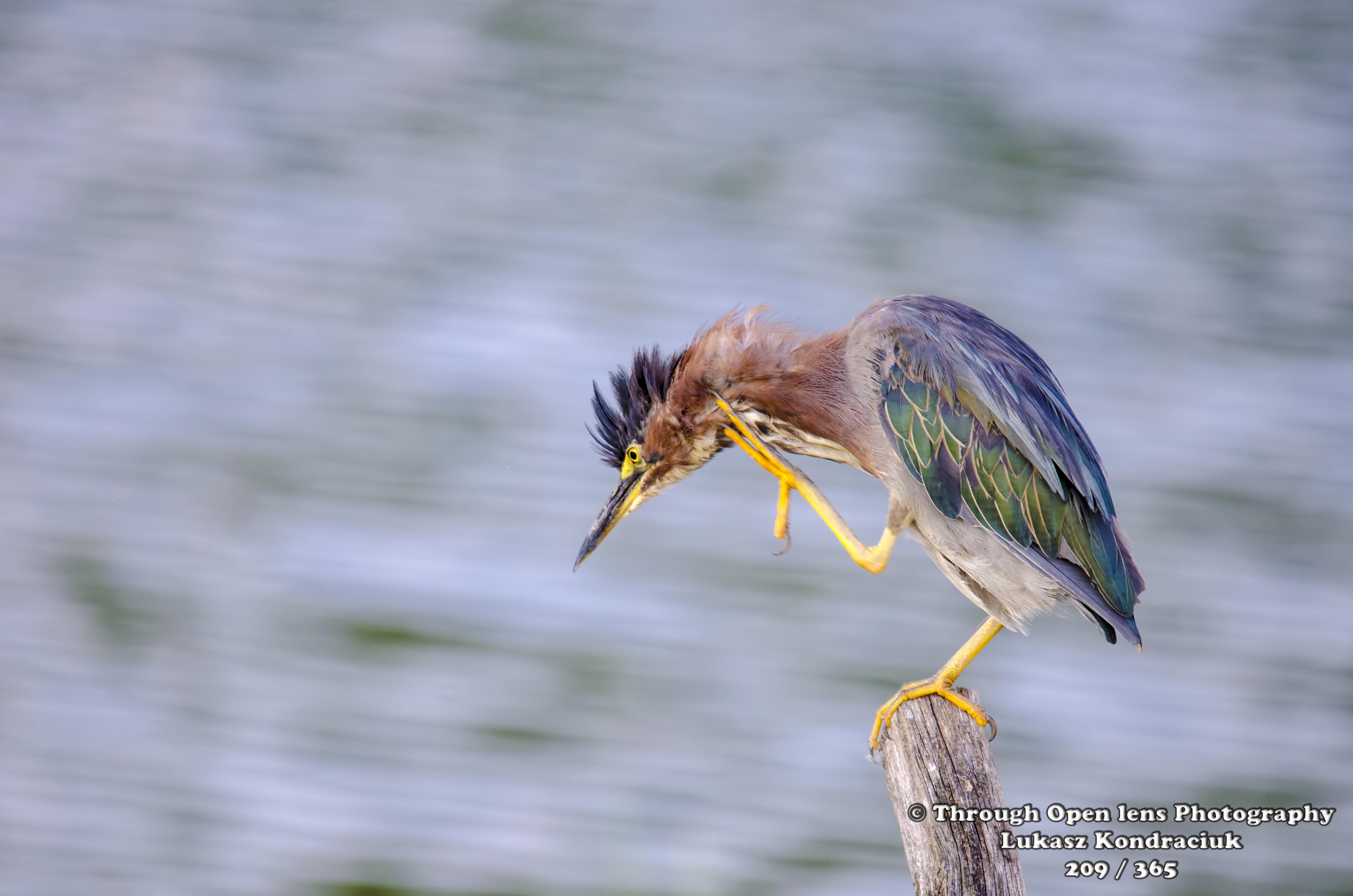
I Got 99 Problems But An ITCH Ain’t One

Green Heron

F/6.3, 1/250, ISO 500.

Green Heron

Day 209 / 365

Why did the heron cross the road?

The chicken was on vacation.

Interesting Fact: The Green Heron is one of the world’s few tool-using bird species. It creates fishing lures with bread crusts, insects, earthworms, twigs, feathers, and other objects, dropping them on the surface of the water to entice small fish. ( http://www.allaboutbirds.org/guide/Green_Heron/lifehistory )