I Choose To Be Happy Today!

European Starling 2

F/6.3, 1/500, ISO 200.

European Starling

Day 220 / 365

What kind of birds do you usually find locked up?

Jail-birds!

Interesting Fact: A female European Starling may try to lay an egg in the nest of another female. A female that tries this parasitic tactic often is one that could not get a mate early in the breeding season. The best females find mates and start laying early. The longer it takes to get started, the lower the probability of a nest’s success. Those parasitic females may be trying to enhance their own breeding efforts during the time that they cannot breed on their own. ( http://www.allaboutbirds.org/guide/European_Starling/lifehistory )
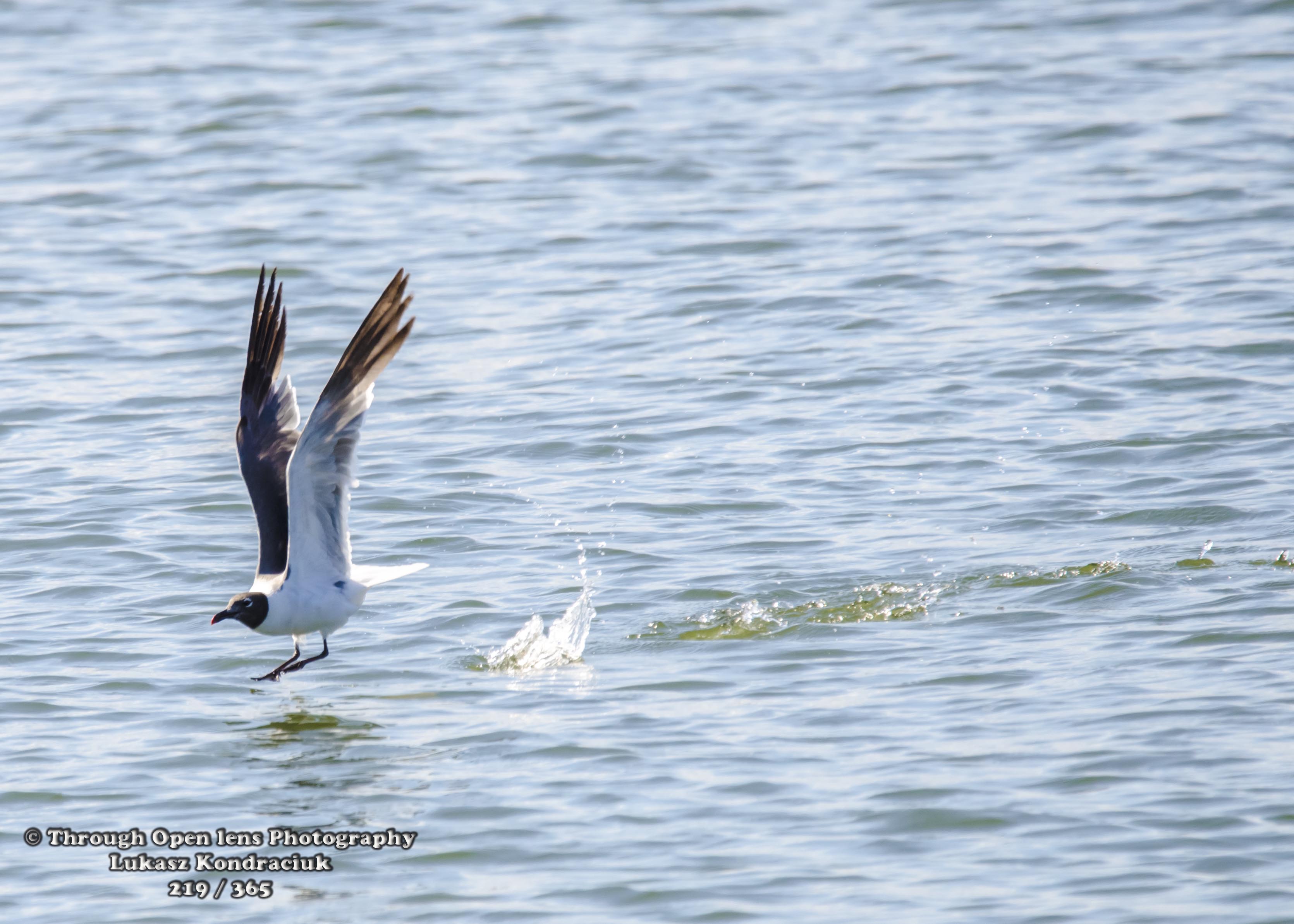
 

Today I Will Be Happier Than A Seagull With A Stolen Chip!

© Through Open lens Photography

F/6.3, 1/1250, ISO 400.

Bonaparte’s Gull

Day 219 / 365

A man and his pet seagull walk into a bar. It’s about 5pm, but they’re ready for a good night of drinking.
They start off slowly, watching TV, drinking beer, eating peanuts. As the night goes on they move to mixed drinks, and then shooters, one after the other.
Finally, the bartender says: “Last call.”
So, the man says, “One more for me… and one more for my seagull.”
The bartender sets them up and they shoot them back. Suddenly, the seagull falls over dead.
The man throws some money on the bar, puts on his coat and starts to leave.
The bartender, yells: “Hey buddy, you can’t just leave that lyin’ there.”
To which the man replies: “That’s not a lion, that’s a seagull.”

Interesting Fact: The smallest gull seen over most of North America, it is also the only gull that regularly nests in trees. ( http://identify.whatbird.com/obj/459/_/Bonapartes_Gull.aspx )

Watch Out, Here I Come!!!

Eastern Kingbirds

F/ 6.0, 1/500, ISO 800.

Eastern Kingbirds

Day 218 / 365

Why does the bird bring toilet paper to the party?

Because he is a party pooper.

Interesting Fact:  Kingbirds are “passerines,” a taxonomic group commonly referred to as perching birds or songbirds. But kingbirds and other flycatchers are in a different subgroup from true songbirds, and they don’t have nearly as complex voices. Rather than learning their calls they probably perform them innately. The young begin to give adult calls at about two weeks of age. ( http://www.allaboutbirds.org/guide/Eastern_Kingbird/lifehistory )


That Is What It Sounds Like When Doves Cry

Mourning Dove

F/6.3, 1/160, ISO 1600.

Mourning Dove

Day 215 / 365

What art style is loved by doves?


The Coo-bist Period.

Interesting Fact: During the breeding season, you might see three Mourning Doves flying in tight formation, one after another. This is a form of social display. Typically the bird in the lead is the male of a mated pair. The second bird is an unmated male chasing his rival from the area where he hopes to nest. The third is the female of the mated pair, which seems to go along for the ride. ( http://www.allaboutbirds.org/guide/Mourning_Dove/lifehistory )


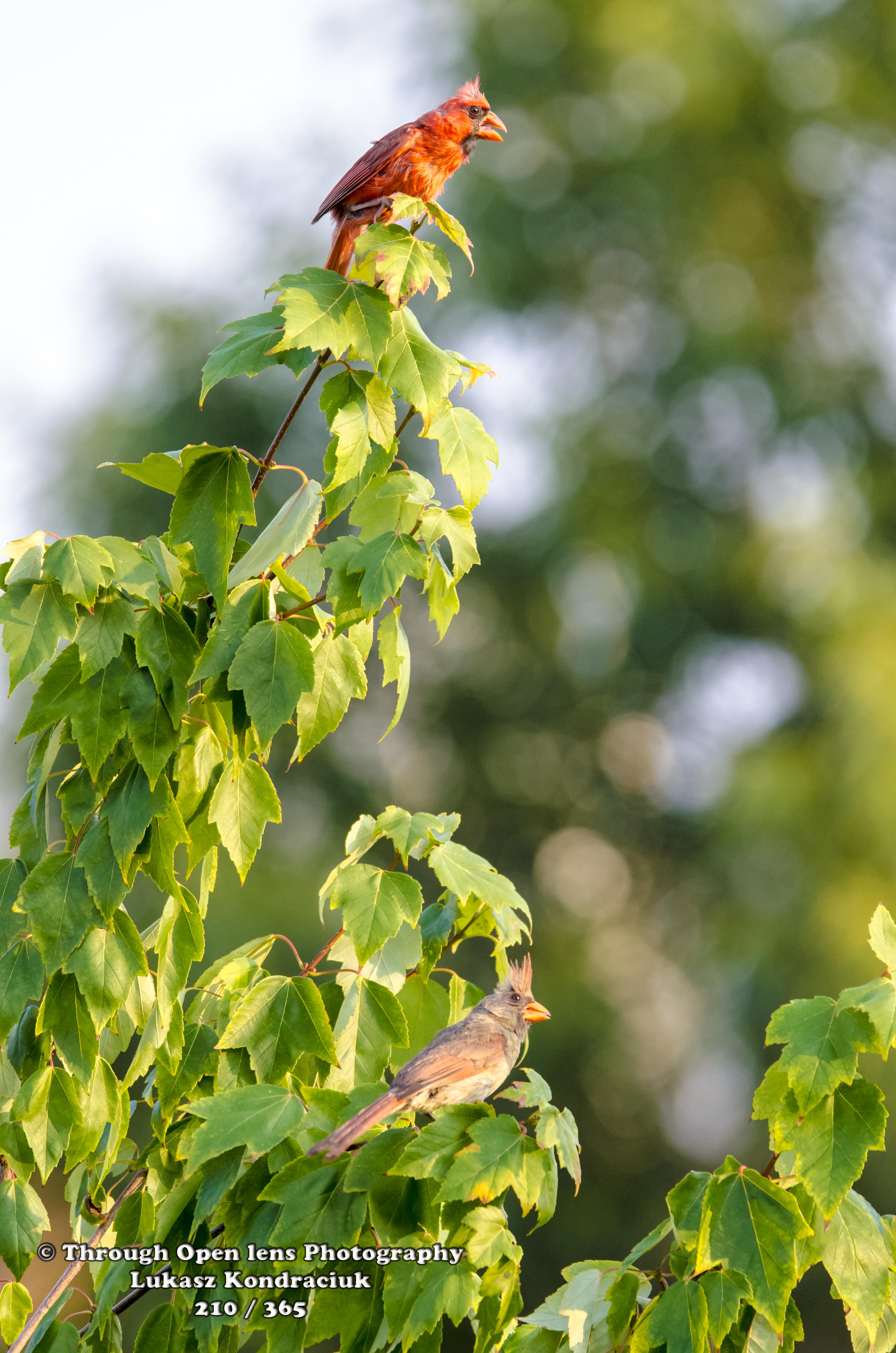
I Can See You From Here!!!

Northern Cardinal 2

F/6.0, 1/500, ISO 1400.

Northern Cardinal

Day 210 / 365

The early bird gets the worm, but of course the early worm gets eaten. So it’s kind of a mixed message.

Interesting Fact: Only a few female North American songbirds sing, but the female Northern Cardinal does, and often while sitting on the nest. This may give the male information about when to bring food to the nest. A mated pair shares song phrases, but the female may sing a longer and slightly more complex song than the male. ( http://www.allaboutbirds.org/guide/Northern_Cardinal/lifehistory )


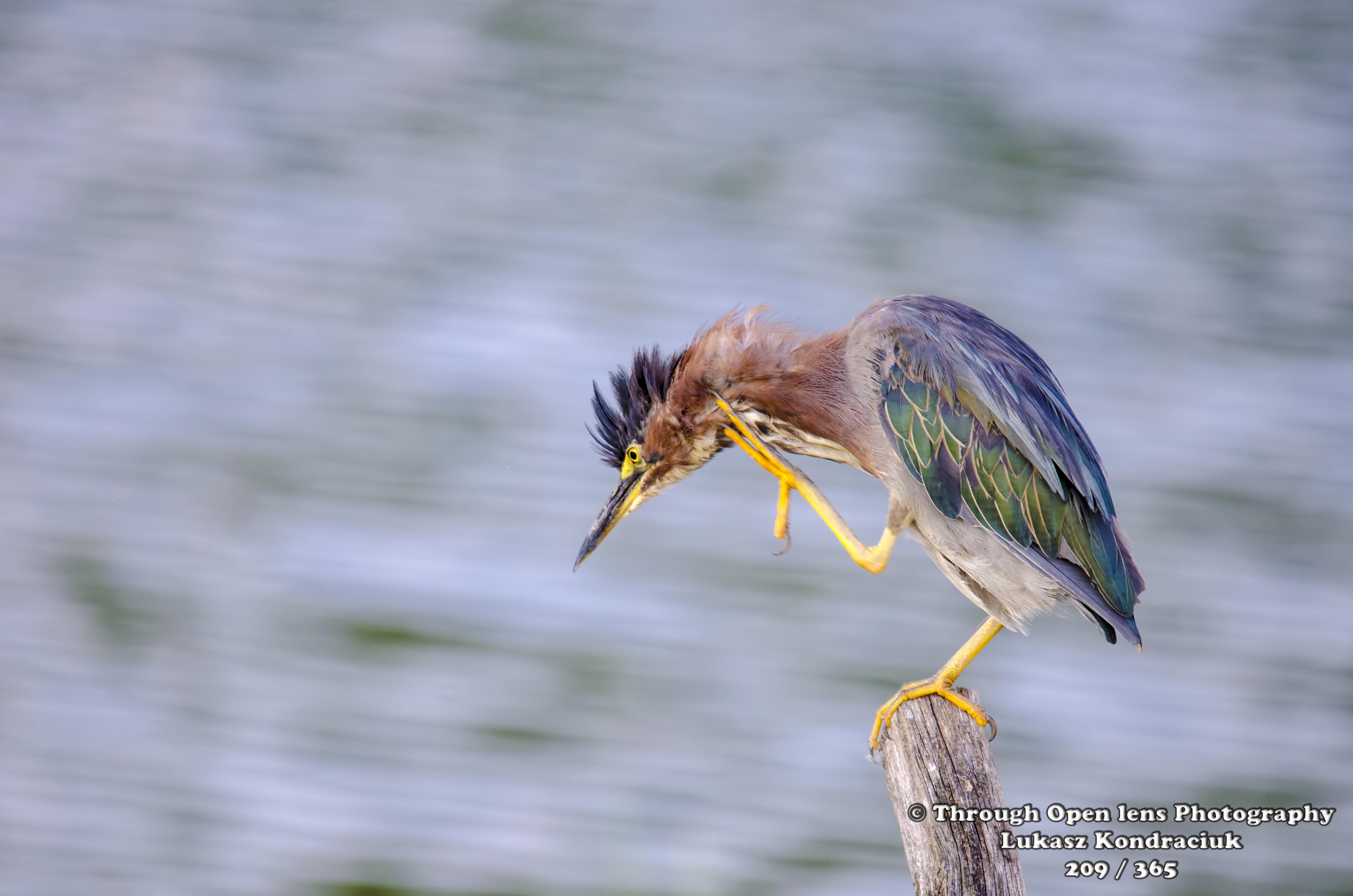
I Got 99 Problems But An ITCH Ain’t One

Green Heron

F/6.3, 1/250, ISO 500.

Green Heron

Day 209 / 365

Why did the heron cross the road?

The chicken was on vacation.

Interesting Fact: The Green Heron is one of the world’s few tool-using bird species. It creates fishing lures with bread crusts, insects, earthworms, twigs, feathers, and other objects, dropping them on the surface of the water to entice small fish. ( http://www.allaboutbirds.org/guide/Green_Heron/lifehistory )

Keep Calm And Swim On!

Common Loon Juvenile

F/6.3, 1/1000, ISO 560.

Common Loon ( Juvenile )

Day 208 /365

How do people swimming in the ocean say HI to each other?

They Wave!

Interesting Fact: Loons are well equipped for their submarine maneuvers to catch fish. Unlike most birds, loons have solid bones that make them less buoyant and better at diving. They can quickly blow air out of their lungs and flatten their feathers to expel air within their plumage, so they can dive quickly and swim fast underwater. Once below the surface, the loon’s heart slows down to conserve oxygen. ( http://www.allaboutbirds.org/guide/common_loon/lifehistory )

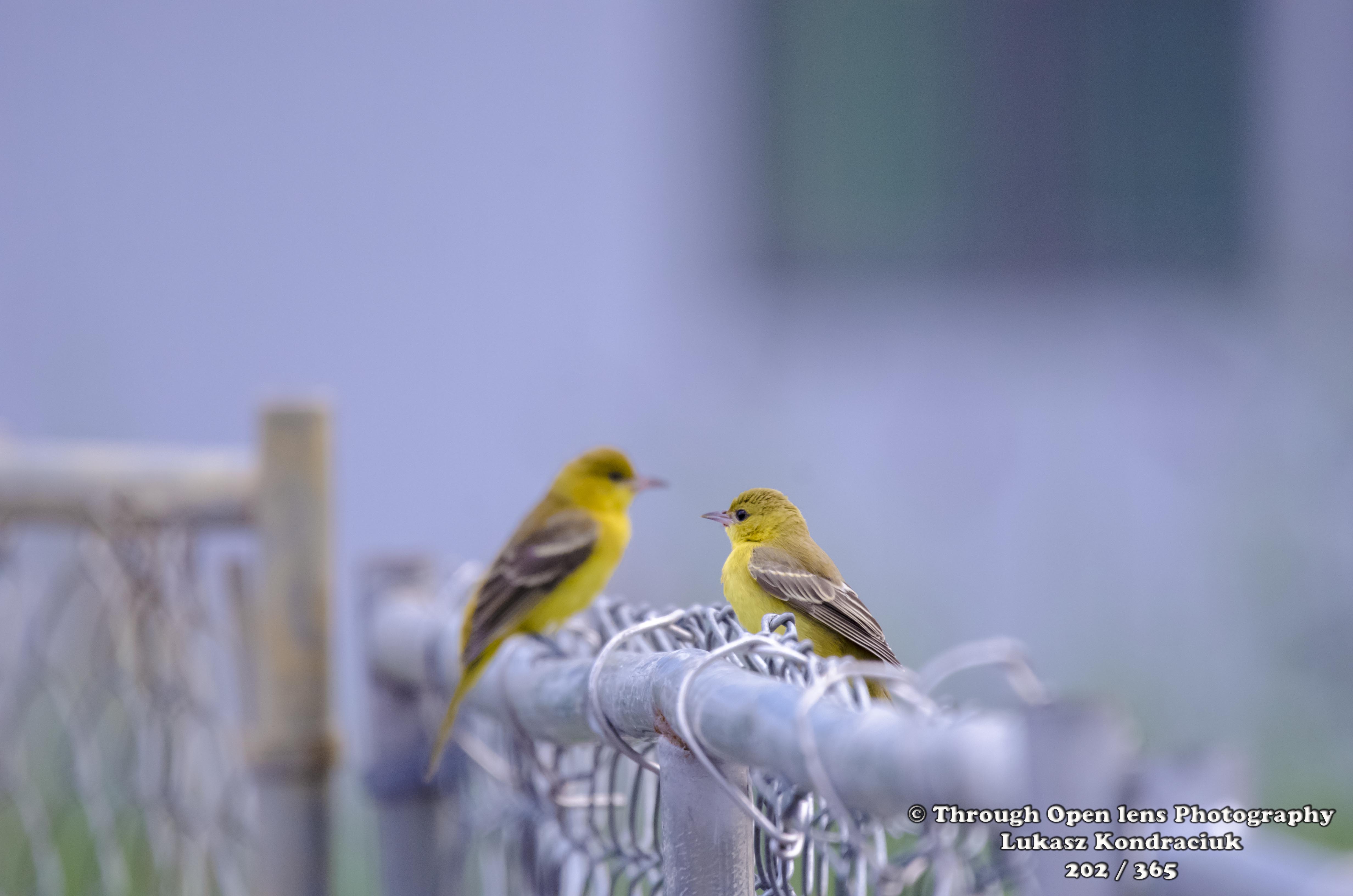
Love Your Neighbor As Yourself But Don’t Take Down The Fence!

yellow warbler 1

F/6.3, 1/125, ISO 1400.

Yellow Warblers

Day 202 / 365

A man walked into the office of a talent agent on the 72nd floor of a skyscraper. “I’ve got a great act,” he tells the agent. “Just watch this.” The man opens the window, perches on the ledge and starts flapping his arms. Then he pushes off and flys around outside the window executing intricate aerobatic maneuvers. Having finished his demonstration, the man flaps in to a perfect landing on the window sill and steps back into the agent’s office. “What do you think of that?” he asked the agent. The talent agent yawned. That’s it? Bird imitations?”

Interesting Fact: Long distance migrant. Yellow Warblers breed across central and northern North America and spend winters in Central America and northern South America. They migrate earlier than most other warblers in both spring and fall. Like many other migrating songbirds, Yellow Warblers from eastern North America fly across the Gulf of Mexico in a single nonstop journey; some Yellow Warblers in fall take an overland route around the Gulf. ( http://www.allaboutbirds.org/guide/Yellow_Warbler/lifehistory )

Kissing Burns 6.4 Calories A Minute Wanna Work Out!

Barn Swallow 1

F/6.3, 1/640, ISO 800.

 Barn Swallow

Day 198 / 365

If the bird of wisdom is an owl, and the bird of peace is the dove, what is the bird of TRUE love?

Interesting Fact: Barn Swallow parents sometimes get help from other birds to feed their young. These “helpers at the nest” are usually older siblings from previous clutches, but unrelated juveniles may help as well.  ( http://www.allaboutbirds.org/guide/Barn_Swallow/lifehistory )

Feeling A Little Blue!

Blue Grosbeak

F/6.3, 1/1250, ISO 400.

Blue Grosbeak

Day 197 / 365

A mother bird, a daddy bird and their baby bird were getting ready to migrate. The mother bird said, ” My instincts tell me to go north. ” The daddy bird said, ” My instincts tell me to go south. ” The baby bird said, ” My end stinks too, but it doesn’t tell me where to go! ”

Interesting Fact: Many Blue Grosbeaks migrate directly southward from their breeding areas to their wintering grounds. Western birds head over land and eastern birds cross the Gulf of Mexico. Migrating grosbeaks pass through the Caribbean Islands including Puerto Rico, the Bahamas, the Turks and Caicos Islands, the Antilles, the Swan Islands, the Cayman Islands, and the Virgin Islands. ( http://www.allaboutbirds.org/guide/Blue_Grosbeak/lifehistory )